

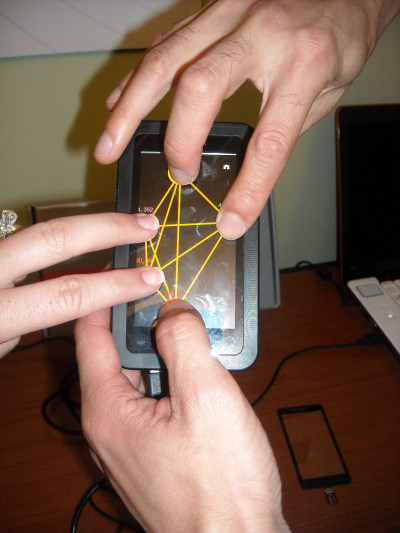
Signatures by finger on touchscreen: still not carved in stone
Have you noticed the paper signature has all but disappeared from transactions where goods and money are exchanged? In common day-to-day commerce, you're far more likely to sign your name on a credit card terminal's touchscreen than to put a pen down on an actual slip of paper. Likewise, if you deal in the transport and exchange of packages or heavy shipments of materials and supplies, you're increasingly likely to apply your signature only to digital signature capture pads.
Yet when it comes to legally binding contracts, similar practices have not become nearly as common. As a member of the press, I frequently get emailed nondisclosure forms or loaner agreement forms which I have to print out and physically sign, and then either fax, or re-scan and return, despite the fact that I have five touchscreen devices at my disposal at any given time, and could easily apply a digital signature.

WinRAR 4.0 improves decompression performance by 30%
After four months of intensive testing, WinRAR 4.00 finally gets to drop the "beta" tag, with its first full public release appearing today.
The new build benefits from significantly improved RAR decompression speeds, although this does depend on data type. Text unpacking is unchanged, but more complex file types will see decompression performance improve by up to 30 percent.

CyberDuck quacks its way from Macintosh to Windows
David Kocher has announced the final release of CyberDuck 4.0 for Mac and Windows. CyberDuck is a FTP client that is also capable of providing access to various cloud-based storage providers, including Google Docs, Amazon S3, WebDAV and Windows Azure (but not Windows Live SkyDrive) through a desktop application.
Version 4.0 represents the first official release for Windows users -- the version number has jumped straight to 4.0 to provide synchronicity with the Mac client, which was developed first.
TeeWee: Twitter for iOS without the annoying Quick Bar
There was a murmur of excitement when an official Twitter client was released for iOS and it quickly gathered a loyal following despite the huge number of alternative tools that are available. A recent update to the app, however, annoyed many users due to the inclusion of the Quick Bar that displays trending topics in a ticker at the top of the app interface. TeeWee is a replacement client that closely mimics the official app but does not feature the Quick bar.
As there is no easy way to downgrade apps in iOS, the recent update annoyed many Twitter users to the point of looking for an alternative client. TeeWee fits the bill perfectly. The app includes support for multiple Twitter accounts, URL shortening and features such as geotagging of tweets.
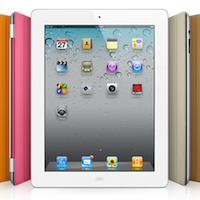
You will buy iPad 2
Yesterday I asked Betanews readers "Who will buy iPad 2?" -- wondering is it you? Readers who took time to email are much more likely to buy iPad 2 than those who commented. Based on readers' answers to questions about iPad 1 or iPhone 4, I expected that most Betanews readers wouldn't buy Apple's second-generation tablet when it goes on sale this Friday. Surprisingly, many respondents say they will buy iPad 2. The majority of people who wouldn't buy iPad 2 aren't interested in any tablet.
"I plan on buying," Scott Adams writes by email. "I did not buy iPad 1. I wanted one but knew that if I had waited it would be much improved. I knew it would have FaceTime. I had thought that it would have Retna [display] also. I have been waiting for about 7 months now. So, I knew at launch unless I really hated it that I would buy it." Contrary to widely blogged rumors, iPad 2 doesn't have Retna display.
Windows Thin PC: because budgets are shifting to tablets
When Microsoft announced the release of Windows 7 SP1 in early February, the company also released some information about a couple of upcoming products: Windows Thin PC (WinTPC) and Microsoft BitLocker Administration and Monitoring (MBAM.)
Monday, Microsoft shared the first round of information about WinTPC, how it will fit in with volume licensing somewhere between Windows Virtual Desktop access (VDA), and Microsoft Software Assurance (SA), and why it is coming out in the first place.
Whose iPhone data is faster, Verizon or AT&T?
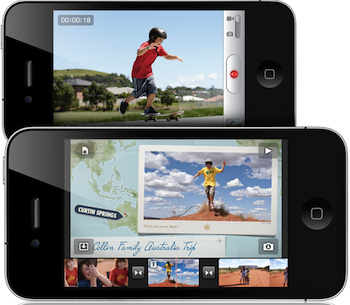
Amongst all the other things that Verizon and AT&T can lob at each other in the ever increasingly bitter battle for iPhone subscribers is this: Mean download speed for iPhone 4 on AT&T is twice that on Verizon. This is according to Metrico Wireless, a Maryland-based independent wireless performance research firm. That said, Web pages load in about the same amount of time on iPhone 4's running on either network.
Metrico took thousands of measurements to gauge wireless data on both carriers. While AT&T's iPhone was faster at downloading data, results were notably mixed elsewhere. AT&T performed about 10 percent better in moving vehicles at downloading data. Conversly, when uploading data while stationary the Verizon iPhone performed about 10 percent better in terms of completing data transfer sessions.

Trend Micro launches parental controls for social networks
Trend Micro on Monday became the latest security software company to release a parental control package aimed at protecting kids from trouble on social networking sites.
Referring to a recent study from Pew Internet research, Trend Micro on Monday said over 90% of kids ages 12-17 are on the Internet, and over 70 percent of teens have a social networking profile of one kind or another. In McAfee's 2008 report The Secret Online Lives of Teens (.pdf here) the security company estimated that percentage to be considerably higher at 81% and growing.
Tweak Windows Services easily with SMART 2.0
Lee Whittington has released version 2.0 of his Services-tweaking utility, SMART Windows Services Tweaker. SMART, an acronym for Services Management And Realeasy Tweaking, offers a number of preset options for tweaking Windows Services to boost both startup time and overall performance.
Version 2.0 features a redesigned interface, a new custom settings option, plus the ability to find out more about selected Services via a Microsoft Bing web search or by visiting the relevant page on the BlackViper website, which is used by SMART to determine the settings for each of the three available preset options.

Tip: Access your files in the cloud from iPad and iPhone
Online backup providers are ten-a-penny these days, so finding your own unique selling point in an increasingly crowded market takes a little bit of thought. SpiderOak has been selling online backup space for around 18 months now -- it's not the cheapest option, but it does boast a user-friendly client that makes the whole backup process that little bit easier. It works across Windows, Mac and Linux, and it's capable of syncing folders between different computers to ensure you always have access to the latest versions of your files, whatever computer you're sitting at. SpiderOak also offers a free iPhone app, recently updated to version 1.2 with full iPad support, which allows you to access and use your backup files directly from your mobile device.
The great thing about SpiderOak is that it offers a free lifetime's 2GB worth of storage, believing that when you use that up you'll want to upgrade to a subscription offering more storage. That's all well and good, but SpiderOak charges $100 a year (or $10 a month) for 100GB storage space. That's off-putting to many, and it's a shame it doesn't follow Wuala's example in offering smaller packages for less (such as its extremely competitive entry level 10GB package for just €19 a year).
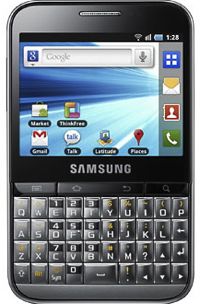
Samsung debuts Galaxy Pro, 10.1-inch Galaxy Tab not delayed
Likely aiming to attract those familiar with RIM's BlackBerry, Samsung on Monday debuted the Galaxy Pro, an Android smartphone that combines a full QWERTY keyboard and a 2.8" touch-screen display. The device will ship in the UK later this month and across Europe, the Middle East, and Southeast Asia shortly after.
The phone appears to be targeted to the lower end of the business segment as well as the everyday consumer. The Pro will have Flash support and an included 3-megapixel camera, but for the business-centric user it will include Exchange and tethering capabilities. It also would include Samsung's TouchWiz user interface.

Tip: Use RunWithAffinity to restrict apps to specific CPU cores
Launch the typical Windows program and by default it'll be able to take advantage of any, or if it's multi-threaded all of your CPU's cores. But it doesn't have to be this way. RunWithAffinity allows you to create shortcuts that will run certain programs on a defined processor core only, and there are situations where that can be very useful.
Some very old games can have problems running on multi-core CPUs, for instance. If you're having problems getting some old favorite to run as it should, then it's worth trying to launch it using one core only -- this just might help.
Fragmentation is root cause of Android's recent malware problems
The revelation that Google has pulled 58 malicious applications from the Android Market after they infected over a quarter of a million devices brings the promise, potential and future of the Android platform into question. The threat of mobile malware is no longer theoretical or a way for iOS users to bash Android. It's a very real concern.
Before I criticize Android, I'd like to say that Android does a lot of things very well. This article is not about that. I must also perform the obligatory smartphone disclosure, so that all my biases can be addressed in advance. In the last five years I have owned a Sidekick, smartphones running Windows Mobile 5 through 6.5, a few Nokia mobiles, a Blackberry, several Android devices and most recently a Windows Phone 7 smartphone.
Western Digital acquires Hitachi GST in serious enterprise SSD play
Monday, storage and network hardware company Western Digital announced that it will be acquiring Hitachi Global Storage Technologies for $3.5 billion in cash and 25 million WD common shares.
The total transaction will be approximately $4.3 billion, and Hitachi GST president and CEO Steve Milligan will join Western Digital as president under the company's current CEO John Coyne.
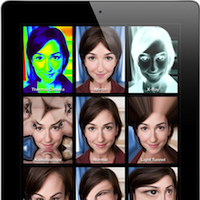
Who will buy iPad 2?
Is it you? I'd like to know. Apple's second generation tablet goes on sale this Friday. There was a ridiculous amount of rumor and hype pre-launch event and overly large amount of buzz post-launch. Has someone started calling this thing the Jesus tablet yet, like iPhone as the Jesus phone? No wait! Moses brought the tablets down from the mountain top, right? You get the point. There's much buzz. But who really is going to buy, particularly among Betanews readers.
If you plan to buy iPad, please also answer if you're a repeat buyer (meaning you purchased iPad 1) or if you're a new buyer. If new, why now and not before? For those people resisting the temptation to follow the presumed crowd, why not iPad? Did you buy or do you plan to buy another tablet, or perhaps none at all? Why? Please respond in comments, or email joewilcox at gmail.com.



