



New CRM software from SAP lets iPhone, WinMo, BlackBerry replace PC clients
Sybase's new mobile sales application for iPhone, Windows Mobile, and BlackBerry lets users connect to SAP CRM remotely from their phones, much as they would from a desktop or laptop PC. And a new mobile workflow app from Sybase and SAP lets users play roles in multi-part business processes from their phones, an SAP representative tells Betanews.
With new business apps for iPhone, WM6, and BlackBerry smartphones rolled out on Tuesday, Sybase and SAP have now completed the first phase of a long-term pact around mobile customer relationship management and (enterprise resource planning software. In the week ahead, iPhone and Windows Mobile client software will be available for both Sybase Mobile Sales for CRM and Sybase Mobile Workflow for SAP Business Suite, said Prashant Chatterjee, director of mobility and industry analytics for SAP.
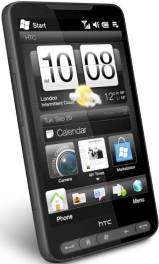
Got a Windows Mobile phone? There's no Windows 7 Phone Series upgrade for you
Could someone please give back Steve Ballmer's brain? He really needs it. The Web is buzzing about a Microsoft executive telling APC Magazine that existing Windows Mobile handsets will not be eligible for Windows Phone 7 Series upgrades. Is Ballmer, Microsoft's CEO, out of his fraking mind for letting this happen? Oh, right, someone took away his brain. Please return it.
What's all the fuss about? Firstly, the no-upgrade policy gives every possible Windows Mobile buyer every reason not to purchase. Secondly, the hottest WinMo phone, the HTC HD2, is suddenly a Windows Phone 7 Series brick. According to Natasha Kwan, Microsoft's Asia-Pacific region Mobile Communications Business GM, the HD2 "doesn't qualify because it doesn't have the three buttons." The smartphone has too much of a good thing--five buttons.

Apple aims to take down Android by court order
At the heart of Apple's very serious charges against HTC -- among the most prominent manufacturers of Android-based phones today -- is whether the methodology Android uses to run Java programs using a specialized derivative of the Java Virtual Machine, called Dalvik, actually borrowed (or stole) ideas directly from the NeXT operating system. NeXTSTEP, you may recall, included radical innovations to the system kernel enabling inter-application communication (IAC), on a level far beyond anything Macintosh had used at the time. It was Steve Jobs' revenge against the company that had spurned him, and as history has borne out, Jobs was the victor in that little skirmish.
One of the ten patents Apple is defending in its lawsuit against HTC, drafted yesterday and filed this morning in US District Court in Delaware, deals specifically with NeXT's methodology. Apple acquired NeXT at the end of 1996, which is how Jobs re-entered the universe of Apple -- many believe, to have saved the company. Earlier that year, NeXT received a patent on a framework for IAC designed to compete with COM/DCOM and CORBA, the two other leading object methodologies of the time.
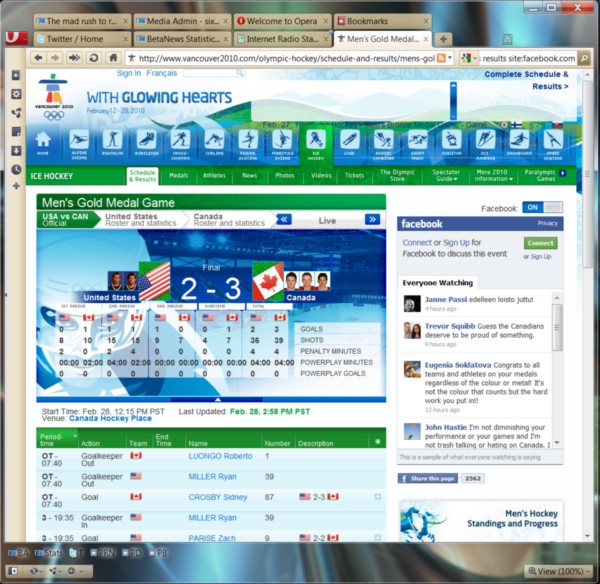
The new champion: Opera's all-or-nothing bid to build the best browser
Download Opera 10.5 Release Version for Windows from Fileforum now.
Usually software companies have the luxury of picking their own deadlines, and typically -- especially in the case of open source or free programs -- those deadlines are allowed to slip or even lapse. But the European Commission gave Opera a solid opportunity to get back in the game, to be discussed once again in the same company as Mozilla Firefox, Google Chrome, and Apple Safari.
Apple sues HTC for iPhone patent infringement
Apple has sued smartphone maker HTC for patent infringement, citing 20 patents related to the iPhone's user interface, architecture, and hardware, a statement from the company said this morning.
A statement from Apple CEO Steve Jobs today said, "We can sit by and watch competitors steal our patented inventions, or we can do something about it. We've decided to do something about it. We think competition is healthy, but competitors should create their own original technology, not steal ours."

Google buys Flickr's editing tool, Picnik
Web-based photo editing suite Picnik announced today that it has been acquired by Google for an unspecified amount that Picnik CEO Jonathan Sposato called a "very, very happy number."
The startup opened in 2005 and was chosen to be Flickr's default photo editor in 2007 when Yahoo was introducing a host of new features to the popular photo sharing site. Long before Adobe released its Web-based version of Photoshop, Picnik was already going strong.
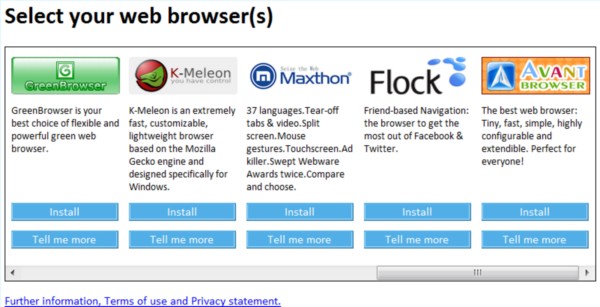
Early word on EU 'choice screen:' May not be random, may not be obvious
As IE6 and IE7 users throughout Europe turn on their Windows Vista- and XP-based computers to notice, for the first time, the opportunity to switch Web browsers from Microsoft Internet Explorer to something they may have never heard of, their manufacturers are preparing for an influx of new customers.
But they may also be preparing to lower expectations just in case the market share numbers for Firefox or Chrome or Opera or Safari fail to swing wildly positive overnight. Last week, Mozilla launched its opentochoice.org blog, ostensibly to help spread the word about the impact the choice screen may make on European computing habits. On Friday, however, the blog posted the results of a six-country, 6,000 respondent consumer poll conducted by advertising research firm Ipsos MORI.
Pew Internet study offers Microsoft's mobile strategy a glimmer of hope
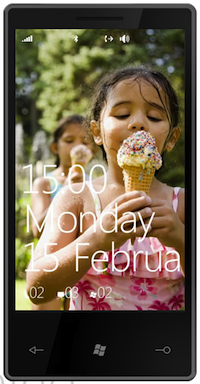
How disastrous is Microsoft's hobbled mobile strategy? Today's Pew Internet report, "Understanding the Participatory News Consumer," offers some glimpse and even some hope. The report reveals that more Americans than ever rely on their cell phones for news and other information. Speaking personally, I find the Google News widget on my Nexus One to be indispensable.
Fifty-three percent of US adults "access the Internet wirelessly either through a laptop or a cell phone, BlackBerry or other handheld device," according to the report. Adults? What about measuring teen Internet usage -- and not just cell phones but WiFi devices like Apple's iPod touch? (More griping about Pew overlooking teens will come later in the post.)

US government lays down the law in messy online ticketing fiascos
Four men from a San Francisco company called Wiseguy Tickets Inc. have been indicted in a $25 million online ticket fraud scheme, the US Department of Justice announced today.
The four men -- Kenneth Lowson, 40, Kristofer Kirsch, 37, Faisal Nahdi, 36, and Joel Stevenson, 37 -- have been indicted on conspiracy to commit wire fraud and to gain unauthorized access and exceed authorized access to computer systems, and 42 additional counts of wire fraud; gaining unauthorized access and exceeding authorized access to computer systems; or causing damage to computers in interstate commerce.

The porn-free iPhone? Not exactly
At first blush, Apple's decision to cull a few thousand sexually suggestive titles from its iTunes App Store may seem like a puritanical attempt to cleanse its consumer-friendly image of any taint of smuttiness. But like everything related to Apple, the reality distortion field that surrounds the company makes even this assessment a questionable one.
Don't think for a second that wannabe-porn (what Apple called "overtly sexual content" in its removal notices to affected developers) won't be returning soon to any platform with an Apple logo on it. And don't think for a second that Apple will be upset about welcoming more skin to its ecosystem.

Do not even turn on your PS3 today, Sony warns
Since yesterday evening, PlayStation 3 users have been reporting difficulties in connecting their consoles to the PlayStation Network for online gameplay and system updates. While it was first thought to be a network-related issue, Sony has warned that there is a much more widespread issue currently affecting older PlayStation 3's.
Sony's offical statement lists the following errors as a part of this internal clock bug:

Let the Internet Explorer 6 death watch begin
All praise the great gods of the InterWeb for their divine intervention. March 1, 2010 is Internet Explorer 6's judgment day, when mighty Google and Microsoft looked down from the heavens -- or Mt. Olympus, if you prefer - and cast IE6 into the abyss. Starting today, Google is beginning to phase out support for Internet Explorer 6, while Microsoft presents European Union Windows users with a ballot screen for choosing even the most obscure browser, but not IE6. Microsoft's once mighty browser has fallen -- and not a second soon enough.
IE6's heart turned evil long ago. Microsoft released the browser in 2001 only to later let development languish. Only after Mozilla released Firefox in late 2004 and, around the same time, Google showed that bundled search could make browsers profitable did Microsoft start seriously working on IE7. But by the then, IE6's cold-hearted proprietary standards had polluted the InterWeb with wicked metatags.
The mad rush to release Opera 10.5: Two months' work in one weekend?
Download Opera 10.5 Release Candidate 4 for Windows from Fileforum now.
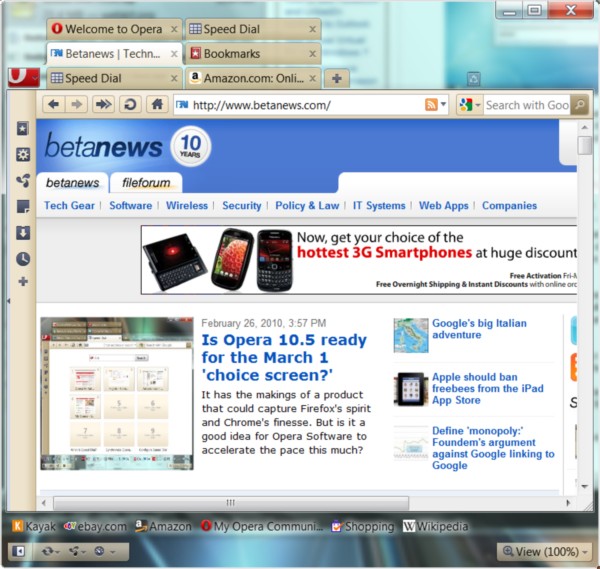
Just a handful of weeks ago, the developers of Opera 10.5 were calling their "pre-alpha" build dangerous if used to run a nuclear reactor facility. Over the weekend, in what appears to have been a round-the-clock effort to compress a few months' work into a few days' time, Opera Software ticked through four release candidates of its latest Windows-based Web browser.
Greener Gadgets 2010: The race to make things out of better things
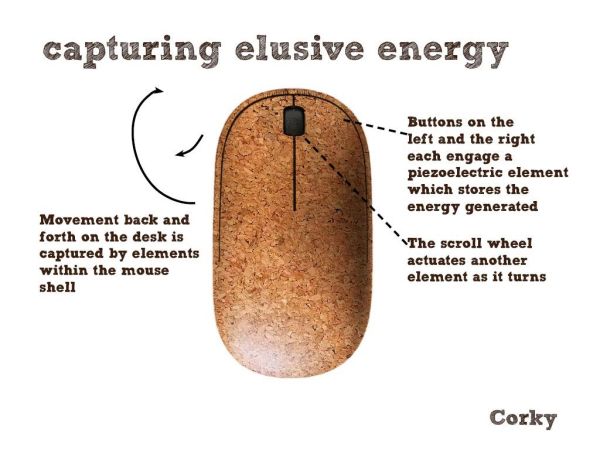
When you buy a PC or some other CE gadget, what kinds of substances are actually inside it...and what's being used to ship it to your house? At the Consumer Electronics Association's Greener Gadgets 2010 in New York City last week, ecologically oriented speakers touched on that question, in some cases proposing alternative materials -- such as cork or "Ecocradle" -- that they'd like to see show up in those places instead.
Yves Behar, founder of the Fuseproject product design agency, held forth on how gadgets can be "desirable" and "in demand" while at the same time friendly to the environment.

Digital Music Forum: Sony Music chief foresees the endgame for CDs
Over the next three to five years, a lot more people will be giving up their collections of music CDs in favor of music subscriptions and downloads to smartphones, according to speakers at this week's Digital Music Forum in New York City.
As the major force behind the future trend, panelists cited music applications and services ranging from Spotify and Comes with Music to Shazam, Slacker, and a new offering called Thumbplay Music which just entered private beta this week.