


Bad Vista-to-Windows 7 upgrade experiences #2: No TV in Media Center
Typically when you upgrade a computer from one operating system to the very next level up, you don't want the new system replacing or deleting anything without your knowledge and approval. Windows 7 thus far seems to be quite good on this score. But perhaps it's too good in the case of its new and somewhat enhanced Windows Media Center, whose new reliance on an upstream recording prevention mechanism that's part of its PlayReady scheme, among other things, renders obsolete Vista's media settings.
As a result, if you have a TV tuner in your Vista-based PC, and you follow all the instructions for migrating to Win7, the new Media Center could insist you don't have a TV there at all. Betanews was able to reconstruct the conditions of a situation some upgraders are reporting where their built-in tuners disappear. Luckily, we also have a solution to the problem that worked for us, and that may hopefully work for you if you're in similar circumstances.
But let's concede right off the bat, it's not an easy or intuitive solution, so don't blame yourself thinking there's something you missed.

Bad Vista-to-Windows 7 upgrade experiences #1: 'Hosed' Intel SSDs
Although we had good reason to expect that most folks' experiences with Windows 7 upgrades this past week would be, as we put it, "without the crap," the exceptions are starting to show up. One of the more serious cases involves Intel, which has withdrawn its latest solid-state drive firmware update after multiple reports from disgruntled users of complete storage system failure following their Windows 7 upgrades.
The new firmware, along with Windows 7, was supposed to support a new internal file management methodology called TRIM. Its purpose was to compensate for a problem typical of memory-based storage, as opposed to traditional magnetic disks: Since memory systems must keep track of their contents even some of those contents aren't really in use, over time, SSDs' performance can lag. While traditional disks don't have to retain a memory of the contents of sectors pointing to "deleted" files, SSDs do...and they can't wipe the contents of those sectors individually. Instead, they have to wait until entire blocks become disused -- which happens less and less often as drives become more and more fragmented. TRIM was supposed to overcome that deficiency with a kind of self-optimizing mechanism, letting SSDs wipe blocks more often, thus overcoming lags and keeping performance levels high over time.
Motorola and Verizon unveil the Droid, Google Maps navigation
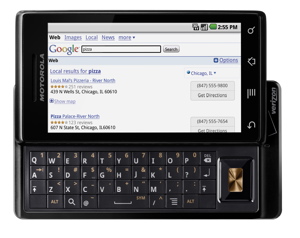
After a long period of rumors, leaks and teaser marketing campaigns, Verizon and Motorola have officially announced Droid, Verizon's first Android smartphone, and the first Android device running Eclair. It will be available on Friday, November 6, for $199 with a two year contract and mail-in rebate.
Motorola's Contribution:
Symbian Dev program tries to limit fragmentation
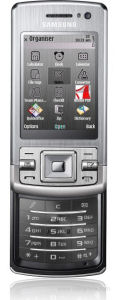
Though Symbian Foundation Executive Director Lee Williams publicly deemed Google's approach to spreading Android the "perfect storm of fragmentation," yesterday the Foundation launched the beta of its developer program for what looks to be a pretty fragmented app store architecture in its own right.
Here's how it works: The program is called Symbian Horizon, and in this program, developers have their applications approved through the Symbian Signed identification process. This process adds one of four kinds of "tamper-proof digital certificates" to an app, one of which involves the app's stamp of approval from one of three independent testing facilities. Each of these facilities charges the developer a different amount, and each runs a different test.

Amazon lowers EC2 cloud service fees, adds MySQL relational instancing
Come November 1, Amazon's Web Services division will be lowering the per-hour prices for all of its current five instance types (AMIs), while adding two new AMI types on the high-end, according to a multitude of announcements from Amazon today. At the new high end of the scale will be a "quadruple extra-large" AMI with 68.4 GB of dedicated RAM, and the virtual computing power of a 1 GHz, 26-core Intel Xeon processor (albeit a 2007 model).
The new high-end instances won't come cheap -- they'll carry a premium of $2.40 per instance-hour for Linux editions, and $2.88 per instance-hour for Windows Server 2003. The previous high-end AMI, still called "extra large," had been priced at nearly one-third that amount.

US Chamber: Fake site by Yes Men not a parody but a fraud
In a lawsuit filed yesterday in US District Court for DC, the US Chamber of Commerce charged the company that manages the team of self-styled comedians and social activists known as the Yes Men with criminal fraud, including the creation of a fake Web site designed to resemble the real Chamber site, specifically to promote sales of their new film and paraphernalia surrounding that film. Along the way, the Chamber bypassed any allegation that might lead directly to the "parody defense" -- that appropriating the appearance of the target of parody is necessary in order to "bring to mind" the subject of that parody, as the law puts it.
Instead, the Chamber went straight for the heart, alleging that the creation of a Web site at www.chamber-of-commerce.us was done to dilute the value of the real Chamber trademark. "Defendants' use of Plaintiff's marks without the authorization or consent of the Chamber causes tarnishment by associating those marks with Defendants, whose positions and tactics are inconsistent with positions and conduct of the Chamber, its members, and prospective members."
iPhone cannot win the smartphone wars
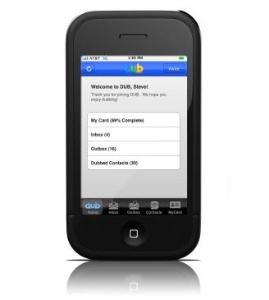
I'm going to make a bold prediction: Apple's iPhone will lose the mobile device wars. Such statement will send some iPhone fans howling -- perhaps appropriately so with the full moon days passed and Halloween days away. :)
Put another way: iPhone is to Android -- and somewhat Symbian OS -- handsets as Macintosh was to the DOS/Windows PC in the 1980s and 1990s. The Mac's rocky start in 1984-85 gave way to great success because of several killer applications, with desktop publishing being among the most important. But by the mid 1990s, Windows PCs pushed down Mac market share. The iPhone is poised to track similarly. Gartner predicts that Android OS shipments will exceed iPhone OS by 2012 (see chart). I'm a believer.
Nokia invokes a 'NATO defense' strategy against Apple's iPhone
The usual reason commonly given for the creation of technology standards is to enable a more open, seamless process for licensing and adoption. But in its lawsuit filed last week against iPhone maker Apple, Nokia is attempting a rather interesting spin on this definition, a spin which may very well reflect reality: It argues that standards are broadly licensed in order to increase the size of the market which those standards can address.
As a result, when a transgression against the standard comes about -- for instance, by way of failure to pay royalties -- the rights holders throughout the market enabled by that standard, have a duty to come to its defense. An attack against one, in other words, is an attack against the whole portfolio.
Android 2.0 features revealed
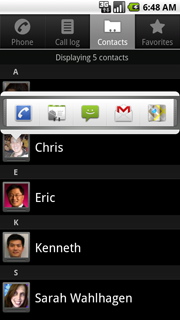
It's undoubtedly been a huge quarter for Google's Android mobile operating system, and exciting developments are all falling into place.
Two weeks ago, the ceremonial giant foam pastry was planted on Google's front lawn. This time it was an eclair, and it signified the readiness of Android 2.0, codenamed "Eclair," which we get a first look at today.
All the right moves: Roku's Netflix streamer branches out
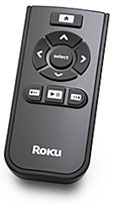
One of the major attractions of the Netflix Instant streaming service is its low cost of entry. For $9 a month, subscribers have access to a substantial and ever-growing library of content on their PC, available whenever they have a connection and some time to spare. And if a subscriber wanted to view that content on his HDTV, he can do so through game consoles, DVRs, connected optical media players, and of course, through the branded Netflix player by Roku which debuted in spring 2008.
The $99 streaming device certainly proved to be a breakout hit for Roku, providing the simplest, cheapest, and most elegant way to access Netflix Instant in the living room.

Google flexes Twitter integration with Social Search Lab
Monday, a new experimental Google search feature called Social Search was made live in Google Labs, following up on last week's announcement that Google and Twitter had established a partnership.
But the implementation of this Twitter data is much more conservative than many were expecting. Following the Web 2.0 Summit in San Francisco, a lot of talk in the search community revolved around "Realtime Search," (a buzzword formerly known as "conversational search") where chatter (articles, blog posts, comments, forum entries, status updates, tweets, videos, and podcasts) on a particular subject is indexed in real time, putting searchers more or less directly into the conversations as they occur.
Nokia lawyers up, chooses to fight Apple in court rather than the market
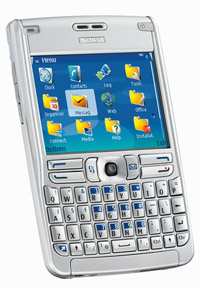
If timing is everything in business, Nokia apparently didn't get the memo. Apple's iPhone has been on sale for about 28 months now, but only last week did Nokia file a wide-ranging lawsuit in Delaware District Court that covers no fewer than ten alleged patent infringements.
This isn't anything new in the tech industry. In a business where intellectual property accounts for a disproportionately huge slice of any given product's value proposition -- and ultimately its market success -- fights over who came up with what idea first are common. For example, Research in Motion has paid out over a billion dollars over the last three years to settle two significant patent lawsuits that, if left unresolved, could have shuttered its popular BlackBerry devices for good.

Public Firefox 3.6 beta now expected Wednesday, 3.5.4 Tuesday
During a Mozilla developers' planning meeting today, it was officially announced that Firefox users will begin seeing notices for version 3.5.4's availability beginning tomorrow (October 27). Full information about security issues addressed by this regular update will probably be released at that time, although Betanews tests indicate that Windows 7 users in particular will probably notice a bit of a speed boost, on account of improved document load times.
The first public beta of Firefox 3.6, which adds even more Windows 7 integration, will be released the following day. It will probably not be the final public beta for the product, as a development cycle for Beta 2 has been ongoing since the Beta 1 code was frozen last October 14.

At long last, Microsoft to release Outlook .PST file specifications
Three weeks ago, the European Commission signaled its approval of Microsoft's revised plan for a more vendor-neutral Web browser selection screen for European Windows users. But that revised plan was buffered with a big bonus: a promise to supply the general public with a wealth of interoperability information, including about proprietary formats.
Among the most sought after formats on that list has been for Outlook Personal Folders -- the much-maligned .PST file format, whose lack of comprehension has been the pet peeve of certainly every developer who's ever worked on a calendar or smartphone synchronization utility. Now the manager for Microsoft's new Office Interoperability Group announced this morning that work is under way on public documentation for the file format.

PS3 Netflix: The best use of BD-Live yet
Finally, Sony's PlayStation 3 home video game console and Blu-ray player will be receiving Netflix Instant streaming, a feature which has appeared on a number of other pieces of hardware, including rival console Xbox 360 and connected Blu-ray players from manufacturers such as Samsung, LG, and even Sony itself.
But unlike those other platforms, which connect to Netflix Instant Streaming through an interface native to the console, PlayStation 3 users will be required to boot up the service from a Netflix Blu-ray disc, which utilizes BD-Live to access the online content. BD-Live is a Blu-ray standard which lets a disc have downloadable bonus content instead of limiting it to content burned onto the disc.