

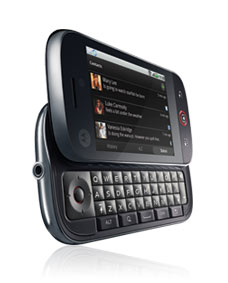
Motorola debuts Cliq, with social media-based Android UI
Not to be confused with HTC's Android-based Tattoo, which was known as "Click" before it was released, Motorola today debuted the latest T-Mobile Android called Cliq.
As expected, Cliq is an HVGA touchscreen QWERTY slider with quad-band GSM, WCDMA/EDGE/GPRS and HSPA 7.2, A-GPS, Wi-Fi and Bluetooth 2.0 connectivity. It offers up to 32GB of storage via microSD, but the speed of processor and amount of RAM were not announced today.

Add-on maker i4i: Microsoft destroyed its market to compete with it
The central question with regard to the i4i patent infringement case, which Microsoft is now appealing, is whether the Canadian software firm and one-time Microsoft partner had a legitimate and exclusive right in 2001 to produce XML authoring tools that enabled markup code to be distinguished from content. In its response to Microsoft's appeal filed Tuesday (PDF available here), as first reported by TechFlash blogger Todd Bishop, i4i says it knew Microsoft had been trying to build an XML authoring tool for Microsoft Word, but in the absence of one had deferred to i4i as a preferred provider.
Only during an April 2001 joint presentation of Word's and i4i's functionality to a US government customer, i4i says, did Microsoft learn that i4i had a patent on its metadata/content separation technology. And only after that time did Microsoft apparently pursue a course to compete with i4i using the basic concepts of that technology.
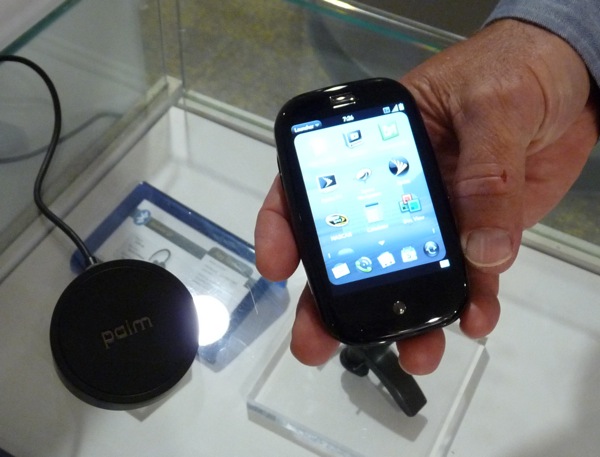
Palm Pre sync vs. Apple iTunes, round 2
Yesterday was a big day for both Palm and Apple, with Palm debuting its newest WebOS handset called the Pixi, and Apple refreshing its iPod line, iTunes, and iPhone OS.
All the while, though, the cat and mouse game between the two companies over connectivity was continuing. The Palm Pre was launched with the "unofficial" ability to sync with iTunes; and as most people expected, it was blocked by Apple in an incremental iTunes update. Just nine days later, Palm issued the WebOS 1.1 update which, among other things, brought the iTunes media sync functionality back.

China is the next Silicon Valley, proclaims Symbian Foundation director
China Mobile, also known as the mobile network with the most subscribers in the world, has put its considerable weight behind the open source mobile environment, first by offering its own Android-based Open Mobile System "OPhones," and now by teaming with The Symbian Foundation.
In a joint statement with the Symbian Foundation yesterday, China Mobile announced they will now encourage developers to create Symbian apps by including Symbian Signed services in the China Mobile Market submission process, and to support Symbian's app publishing software called Horizon. The addition of both of these services makes the submission and approval of Symbian apps much easier.

AT&T moves toward 90% HSPA rollout completion by 2012, but whither New York?
Earlier this year, AT&T announced its 7.2 Mbps HSPA upgrade, as a part of a plan to improve it wireless data services. The plan included the addition of new cell sites, more 3G spectrum, and thousands of additional fiber backhaul connections on old sites to help manage AT&T's massive wireless traffic driven by the popular and data hungry iPhone.
Today, the wireless network operator announced the HSPA 7.2 rollout will begin in six major US markets this year: Charlotte, Chicago, Dallas, Houston, Los Angeles, and Miami, where six compatible handsets and two LaptopConnect cards are expected to be available to customers.

Obama challenges Internet disinformation during Cronkite tribute
During a public memorial event in tribute to the life and career of the late CBS anchorman Walter Cronkite, who passed away in July, President Obama spoke in an almost candid fashion about the evolution of news media in the age of the Internet. Specifically, he wondered aloud -- and with surprisingly stark honesty that might have even raised Cronkite's celebrated bushy eyebrows -- about whether the legendary news anchor would be able to perform the same job, in the same manner -- managing editor of a globally respected news service -- with the challenges posed by the nature of today's media.
"He was excited about all the stories that a high-tech world of journalism would be able to tell," the President said, "and all the newly emerging means with which to tell it. Naturally, we find ourselves wondering how he would have covered the monumental stories of our time. In an era where the news that City Hall is on fire can sweep around the world at the speed of the Internet, would he still have called to double-check? Would he have been able to cut through the murky noise of the blogs and the tweets and the sound bites, to shine the bright light on substance? Could he still offer the perspective that we value? Would he have been able to remain a singular figure in an age of dwindling attention spans and omnipresent media?

Silverlight 4 to do for PCs what HD DVD couldn't
A Microsoft spokesperson has confirmed to Betanews that the company is planning to demonstrate technology currently being planned for version 4 of Silverlight, its media distribution platform based on .NET, designed to provide both an interactivity layer and digital rights management services for movie studios and other content providers. These services, the company now says, are intended to "enable movie studios and retailers to provide the same rich interactive experiences via digital copy and Internet distribution as consumers get with DVD or Blu-ray."
As many DVD and Blu-ray Disc collectors already know, "digital copy" in this instance refers to a separate file distributed with a disc that usually plays in ordinary DVD or BD players, but which plays interactively on PCs. If Microsoft's plan as it currently describes it becomes successful, movie discs produced in the near future could bear the Silverlight logo.
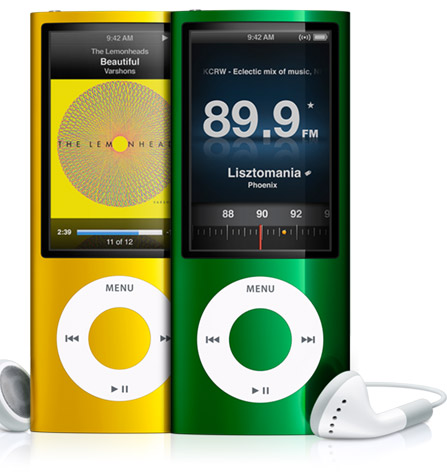
Steve Jobs returns to the stage with an overhauled iPod Nano
Steve Jobs triumphantly returned to the spotlight to present this year's lineup of new iPods, iPhone OS 3.1, iTunes 9, and improvements to the iTunes store. In iPhone OS 3.1, a free incremental download that goes live today, the App Store has Genius recommendations, and a ringtone store with over 30,000 ringtones from all of the "big four" major labels priced at $1.29 each.
iTunes 9 also goes live today, receiving improved Genius functionality as well. Here, it applies to "Genius Mixes," a Pandora-esque playlist feature where songs of a similar nature are played sequentially. The database for Genius Mixes currently contains over 54 billion songs. iTunes syncing has also been improved, rather than only being able to sync content by playlist, all of the content going to your iPhone or iPod (apps, music, events, photos, etc.) can be arranged.
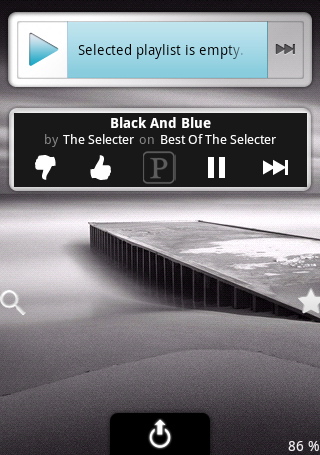
Popular apps highlight the difference between Android and iPhone
Two of the most popular iPhone apps, Pandora and Facebook, have finally been brought to the Android platform. These apps place increased emphasis on one of Android's strengths that really makes the user experience different from the iPhone: homescreen presence.
Last week, Apple rolled out Facebook 3.0 for the iPhone which improved upon the previous app by adding new features such as Facebook Events and direct-to-Facebook video uploading. It was received with great praise by the iPhone crowd.

Microsoft: SMB 2.0 hole does affect Vista, not Windows 7
A security advisory issued by Microsoft late yesterday takes to task a security consultant for a British ISP who apparently, and possibly even accidentally, discovered a way that the Server Message Block 2.0 driver can trigger an instant Windows crash. Rather than report the incident directly to Microsoft, Laurent Gaffié went public with his findings first, in such a way that appears to have triggered the enthusiasm of the black-hat side of the security community.
"Microsoft is concerned that this new report of a vulnerability was not responsibly disclosed, potentially putting computer users at risk," reads yesterday's Security Advisory 975497. "We continue to encourage responsible disclosure of vulnerabilities. We believe the commonly accepted practice of reporting vulnerabilities directly to a vendor serves everyone's best interests."
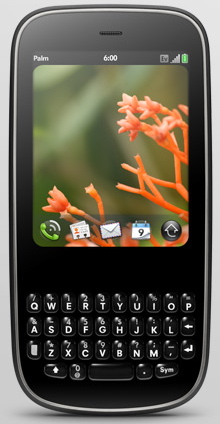
Never mind the iPods, there's a new Palm device!
The second WebOS device from Palm, known as the Pixi has officially debuted. Like Palm's other devices, it will be making its debut on Sprint. Palm's Jon Zilber said in the company's official blog this evening that it will be released in time for the holidays, but did not disclose a price.
Looking something like a Pre in the open position, the Pixi has a slightly smaller 2.63" touchscreen (the Pre's screen is 3.1") but a similarly designed full QWERTY keyboard. With quite a narrow profile, the Pixi ends up being Palm's thinnest phone ever, measuring in at .43" in thickness.
For comparison's sake, the iPhone 3G is .48" thick with a 4.5" x 2.4" footprint. The Pixi has a footprint of only 3.9" x 2.3", so while it is marginally thinner than the iPhone, it also is smaller overall.

Vista SMB 2.0 exploitable hole points to need for new filters
Nearly two years ago, I proclaimed Microsoft's adoption of Server Message Block version 2 the #6 of ten best new features of Windows Server 2008. Essentially, it provides a way for servers utilizing the Common Internet File System to utilize modern filing tools such as symbolic links and transaction batches, to expedite the process of sending large files over the Internet.
It has taken this long for anyone to find what was described earlier today as a glaring hole in Windows SMB 2.0 security, but it's an embarrassing little hole nonetheless: A security researcher discovered that if you get the order of the words in the SMB 2.0 message headers wrong, in such a way that you end up sending an ampersand (&), where a zero should be in the high word of the Process ID field, then you can end up sending a message block that could literally crash the remote recipient. Conceivably, an exploit could be crafted that could remotely crash a Vista-based client.
Nokia completes LTE modem as 4G network rollouts approach
Finnish wireless giant Nokia announced that it has completed trials with the "first ever Long Term Evolution (LTE) capable Internet Modem."
The product upon which the trials were conducted was the Nokia Internet Modem RD-3, a development tool by no means intended for consumer use. The company says it will be used with network vendors as well as measurement equipment manufacturers and operators. The RD-3 is interoperable with GSM/EDGE and WCDMA/HSPA and supports multiple LTE frequency bands with a theoretical peak of 100 Mbps downstream.

Top 10 Windows Server 2008 R2 Features #10: Boot from virtual devices
Last month, Microsoft made available to its TechNet partners the first release-to-manufacturing code for Windows Server 2008 R2, the next edition of the server operating system that premiered in January 2008. While I've said here before that I feel Windows 7 is "Vista service pack 3" (and I meant that in a good way), Microsoft is right up front about the fact that R2 is the Windows 7 kernel applied to WS2K8, the result of that alone being an immediate improvement in the system.
But there are other bonuses as well -- so many, in fact, that it took me much more time than I anticipated to pore through the multiple lists of new features, research the potential impact of each one, confer with others as to their significance, and peek into how they are already impacting businesses' deployment plans. In a number of key aspects, WS2K8 R2 is actually the complete package that WS2K8 should have been, minus the Vista core that led some shops to stick with Windows Server 2003.

Has 'beta' lost its meaning?
About 11 years ago (please ignore the rapidly aging "10 Years" banner overhead), a very bright young man put together a hosting service for new software, and a news feed to help publicize it. I'll spare you the part where I praise my boss for his wisdom and insight and great sense of timing, although all of that's certainly true.
In 1998, the term "beta" was generally used to mean "new software;" and so "Beta News" was interpreted quite correctly to mean "new software news." Some enterprising person may be able to dig up something I published elsewhere during that time where I complained about what I perceived as the misappropriation of "beta" to simply mean "new."