



FiOS could give more 'economic stimulus' to Verizon than others
Bloggers from Verizon and The New York Times slugged it out on Friday over parts of the economic stimulus package considered by Congress that give broadband providers extra incentives for ultra-fast services like FiOS.
In the NYT's Bits blog on Friday, Saul Hansell suggested that wording tucked into the Senate version of the economic stimulus bill would supply Verizon with a larger share of the stimulus pie than most of its rivals.

Infinite Canvas revealed
For comics geeks, any tech that unfurls the promised "infinite canvas" of digital comics is something to behold. Microsoft Live Labs has taken a crack at bringing that ideal -- a comics layout and viewing page in cyberspace, unconstrained by print thinking and limitations -- with a "funky side project" that's attracting attention from some of the greats.
"Infinite canvas" is a phrase coined by Scott McCloud (Understanding Comics, the tech introduction to Google Chrome), and he's one of the creatives highlighted on the site. The idea is that since a screen doesn't have to behave like a printed page, the possibilities for storytelling are expanded. Images can be of various sizes and can be arranged or overlaid in various ways. Text can escape bubbles and captions and behave in ways that emphasize (or subvert) what the words say.

eJamming Audiio P2P music collaboration launches beta 14
At CES 2008, Intel's Paul Otellini used eJamming Audiio, BigStage, and the band Smashmouth to show off how a group of musicians located on various corners of the globe could get together via P2P and play live in a virtual environment.
BetaNews tested the eJamming Audiio software last year and found that it was suitable for recording and collaborating with others in a VoIP-enhanced environment, but playing instruments live had too many latency issues to be feasible. In using MIDI drums, a guitar and bass in three different locations in the United States, each musician found they had to get accustomed to latency in their own signal, and then the latency of the others as well. In the end, it was nearly impossible to play live.
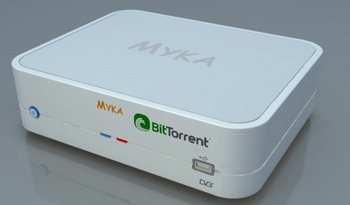
Myka TorrentTV gets facelift, shows off UI
The BitTorrent-fed set top box by Myka which was promised to be released by April has evoked skepticism in some, but the company persists. Today it has updated its site, complete with a UI walkthrough (on a prototype device) and a new look for its product...with no BitTorrent logo on it. Last week, BitTorrent told us that Myka had not been cleared to use the BitTorrent logo despite being cleared to use the technology. Myka appears to have remedied this swiftly and simply.

Phishers use Facebook to launch targeted attacks
From the Red Tape blog over at MSNBC.com, an amazing tale of a vicious -- and profitable -- phishing scheme that appears to be extraordinarily targeted toward its victim and his friends. It ends poorly, especially if you were hoping Facebook wasn't going to give you the creeps afterward.
Microsoft employee Bryan Rutberg was the target, and Bob Sullivan's description of his ordeal is great reading. The criminals guessed or figured out Rutberg's Facebook password, then locked him out of his own account. They then posted a frantic status message ("BRYAN IS IN URGENT NEED OF HELP!!!") and started sending emails requesting money to various of his friends -- but not to Rutberg's wife, whom the scammers had de-friended.

Fannie Mae dodges a contractor's logic bomb
A disgruntled contractor at Fannie Mae, fired for coding incompetence, attempted to stash a logic bomb on the mortgage giant's servers. Fortunately, it was incompetently implemented, and the 35-year-old accused man is in custody.
Rajendrasinh Babubha Makwana, an Indian national, was employed by a subcontractor for OmniTech as a Unix engineer at Fannie Mae's Urbana, Maryland facility, according to an affidavit sworn by the FBI agent investigating the case. On October 24 at about 1:30 pm, Makwana was fired by Fannie Mae for inadvertently writing a script that switched up permissions on the company's Unix servers. He told his supervisors at OmniTech and turned in his badge and laptop to Fannie Mae around 4:45 pm that day.
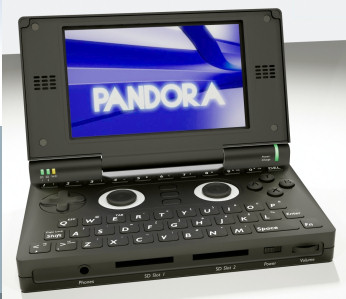
Open source gaming console Pandora shows up on video
A video of a working prototype of the open-source gaming handheld Pandora, nearly complete in its fabricated case, has emerged. The device has been in the later stages of development since late last year.
Pandora is like the mutant offspring of a Fujitsu Lifebook u2010 and a Nintendo DS with mitochondrial DNA from the Sony PSP. It is powered by a Texas Instruments OMAP3 system on a chip and Linux-based OS and has been regarded as a sort of abandonware, open source, and PC gaming console-slash-PDA-slash-portable media player. Perhaps it would be best described as a GP2x with a keyboard and touchscreen.

Google Chrome gets updates, pretends to be Safari
Remember Google Chrome? The new browser that was one of Betanews' Top 20 Stories of 2008, and certainly across the Internet as a whole? Well, after the initial hype that Chrome (and its subsequent first vulnerabilities) caused, the browser quietly broke the 1 percent mark of browser share this month. Google this week released updates addressing one moderate, and one severe security threat, and provides fixes for Yahoo Mail and Windows Live Hotmail.
The Moderate security update addresses a cross-site scripting vulnerability linked to the Adobe Reader plugin, and the severe update is for a bug in the V8 JavaScript engine that could allow malicious users to "clickjack" sensitive information by bypassing same-origin checks.

Free online games see sharp increase
comScore data released this week showed online casual gaming has reached 86 million users in 2008, an increase of 27% year over year. Additionally, the time individual users spend on gaming sites increased 42%.
Casual gaming is the category where Yahoo is definitely king, with 19.5 million unique visits in December, a 20% increase over 2007 and 4 million visits more than second place EA Online, and 6 million more than Disney Games, which holds third place.

Whitehouse.gov incorporates RDFa mashup lingo
President Obama's TIGR (Technology, Innovation and Government Reform) team has already extolled the merits of mashups, and now we're seeing the beginnings of mashup language RDFa take root on WhiteHouse.gov.
Viewing the site's copyright policy source reveals the use of RDFa tags such as xmlns,and property. These provide a set of XHTML attributes (metadata) to augment the visual data with information meant for other machines to read, recognize and catalog.
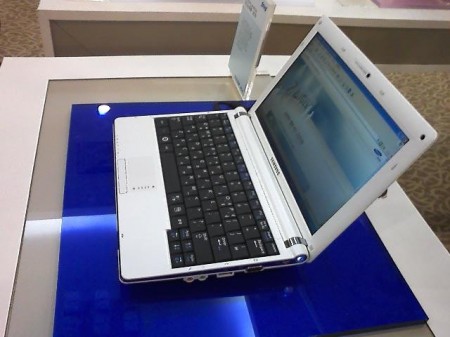
Survey finds Netbooks to be secondary devices: surprised?
ABI research released the results of a survey today called "U.S. Consumer Interest in Netbooks," which found that of more than 1000 netbook users, only 11% used theirs as their primary household computer.
Sales of netbooks in 2008 were in excess of 11 million, and analysts began to track the effect it was having on notebook and desktop sales. In November, marketing executives from Acer and Asus estimated between 8-20% of netbook buyers were lost notebook sales.
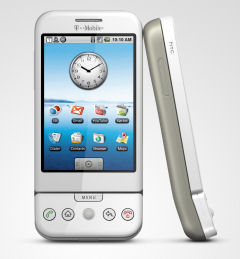
Exec confirms more G-series T-Mobile phones
T-Mobile's Senior Vice President of Engineering and Operations Neville Ray was quoted yesterday in an interview as saying: "We will be launching more G series phones and other products. You will see us launch a data card product. This will be happening in the coming weeks and months."
Ray discussed T-Mobile's expanded 3G coverage in the U.S., and elaborated a bit on the company's plans for its AWS spectrum, saying, "We did purchase a large volume of spectrum and doubled our spectrum assets in the U.S. with the 1700 MHz spectrum and 2100 MHz spectrum. We effectively doubled our assets. So the network we are launching uses 10 MHz of spectrum and we have 30 MHz so we have headroom to grow. There also are spectrum efficiencies with HSPA and HSPA+.

Britain considers whether its citizens are entitled to 2 Mbps broadband
In a sweeping proposal yesterday, the UK's communications and technology minister, Lord Carter, has proposed a system whereby all citizens are guaranteed broadband Internet service with as much as 2 Mbps bandwidth, by 2012.
The interim report entitled "Digital Britain," published officially by the country's Department for Business, Enterprise, and Regulatory Reform (PDF available here), outlines a possibility for ministers in Parliament and the Prime Minister to consider. Just as the government mandated mail service to all citizens in 1840, and basic online data service to all citizens in 1984 under what the UK calls a universal service obligation, the report -- written with the blessing of Lord Carter -- suggests a similar USO be applied for broadband service.

Details leaked on unannounced Sidekick LX 2009
While it's unofficial, the long rumored but still unannounced Sidekick LX 2009 could well include 3G support, GPS with turn-by-turn instructions, and more, according to a detailed spec sheet that appeared online.
The spec sheet -- spotted and captured by a blog reader when she took a survey on QuizPoints -- also shows that T-Mobile's LX 2009 will come with Microsoft Live Local Search and Maps. An accompanying photo reveals a device with a thin design and a large QWERTY keyboard.

The oldest trick in the book, literally, defeats UAC in Windows 7
Though the fellows sounding the warning today are the best in the business, it didn't take a lot of know-how to develop a proof-of-concept that the new User Access Control panel can be disabled by VBScript.
Windows 7 is still in the public beta process, and will be for some months to come. The purpose of true beta testing is to isolate and identify serious problems (we should know). So it's to any researcher's credit that a potentially threatening problem be brought into the open prior to Microsoft finalizing the code for everyday use.