Google showed ads on YouTube Red even though it's supposed to be ad-free
One of the perks -- arguably the main perk -- of paying for YouTube Red is that your subscription fee gives you an ad-free experience. At least that's the idea...
Google has now admitted that it was in fact running ads on its premium video service despite promising not to. This was not a change of heart or policy, however; the search giant is putting it down to an "underlying issue" which it is working to fix. In addressing the issue with users, though, it seems Google also failed to understand its own policies.

Privacy: With iOS 11 and Safari's cookie blocking, Apple is kicking advertisers in the teeth
Apple news has been dominated -- understandably -- by the launch of the iPhone X, iPhone 8/8Plus and Apple Watch Series 3. But there's also iOS 11 to consider. The latest version of Apple's mobile operating system hit iPhones and iPads around the world yesterday, bringing with it a raft of new features.
The release of iOS 11 includes an updated version of Safari and, importantly, a feature called Intelligent Tracking Prevention. Enabled by default, the feature blocks certain cookies from websites, making it harder for advertisers to follow users around the web. Users and privacy advocates are happy; advertisers, it must be said, are not, saying "Apple's unilateral and heavy-handed approach is bad for consumer choice and bad for the ad-supported online content and services consumers love."
Facebook updates ad targeting policies after anti-Semitic 'Jew haters' campaigns
Facebook has been forced to amend its ad targeting policies after an investigation by ProPublica found that the social network was permitting advertisers to target individuals with anti-Semitic beliefs.
The New York-based news organization found that advertisers were able to use a number of categories such as "Jew hater," "How to burn Jews," "History of 'why jews ruin the world,'" and "Hitler did nothing wrong." All of these categories were created by users -- rather than Facebook or advertisers -- as they self-reported their education and employment history with offensive terms and labels.
Facebook introduces monetization limitations and new advertiser controls
Today Facebook introduces new limitations on what sort of content can be monetized on its network. It's a move that is designed to keep the social network relatively family friendly, and Facebook also wants to address advertiser concerns about the type of content their ads appear next to.
The company is not only clamping down on what can be monetized, it is also doing more to keep advertisers happy, including using third-party verification to measure ad performance. On top of this, Facebook is seeking accreditation from the Media Rating Council for Instagram, Facebook and Audience Network.

Malvertising continues to rise as tactics change
The second quarter of 2017 saw over 18 percent more adverts containing blacklisted content -- phishing, scams, exploit kits, and malware -- than Q1 according to a new report.
The study from threat management company RiskIQ shows some seasonal changes in the pattern of traffic, with a 24.2 percent drop in exploit kits, and a 42.7 percent drop in malware. However this was more than offset by a huge 131.3 percent rise in phishing-related ads.
Facebook is overestimating its ad reach
Facebook ad metrics are facing scrutiny after it transpired the social network is overestimating the potential audience advertisers can expect to reach. A senior analyst from Pivotal Research Group points out that Facebook's Adverts Manager tool suggests demographic figures that exceed official numbers.
For example, advertisers are told that they could hit up to 41 million 18- to 24-year-olds in the US, but according to recent census data only 31 million 18- to 24-year-olds live in the US. The discrepancy is not isolated, as there are similar instances of inflated potential reach suggestions for various age groups in the US, UK and Canada.
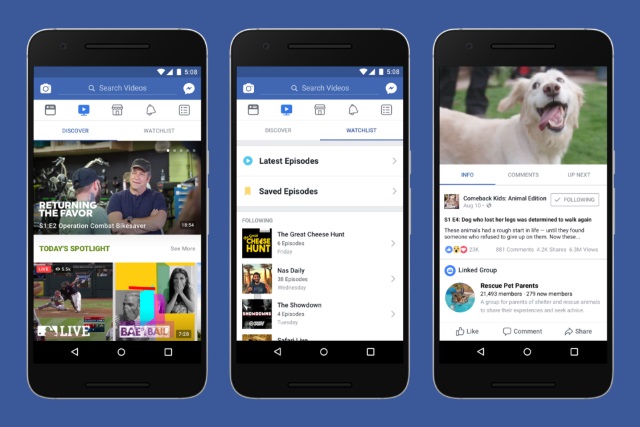
Facebook Watch is now available right across the US
Facebook Watch may sound like it's going to be a cheap alternative to the Apple Watch, but it's really just Facebook's latest jump into video. Launched a month ago, Facebook Watch is now available to everyone in the US.
The initial launch was a limited one, and just last week the rollout expanded to a wider group of users. But now everyone in the US is able to see the Watch tab on desktop and mobile platforms, giving access to original video content.

FTC spanks Lenovo for bundling security-compromising adware on laptops
Lenovo has settled with the Federal Trade Commission after selling laptops with VisualDiscovery adware pre-installed. The Superfish-developed adware was installed without users' consent and made machines vulnerable to man-in-the-middle attacks.
On top of this, the adware shared users' browsing data with third parties. As part of the settlement, Lenovo must gain explicit consent from users before engaging in similar tactics in the future, and must not misrepresent software that serves to inject ads into browsing sessions. The FTC did not, however, prohibit Lenovo from installing adware on its hardware, nor did it impose a financial penalty on the Chinese company.
New blockchain platform helps cut online ad fraud
While digital advertising is increasingly popular, it suffers from a lack of trust due to fraud and, despite predictive technology, has relatively low accuracy. As a result, a high percentage of spend gets wasted.
Advertising ecosystem Papyrus, launching today, aims to bring together users, publishers, advertisers and developers of decentralized applications in a new way that permits them to interact in an environment with built-in fraud prevention and which offers an unprecedented level of control.
Google Play apps spread malware through advertising SDK
Through the use of an advertising software development kit contained in 500 apps on the Google Play Store, cybercriminals were able to spy on users and even infect their mobile devices with malware.
That's according to security firm Lookout, which discovered that the Android apps in question all had the lgexin ad SDK built into them which gave unauthorized third parties access to user devices.

New solution aims to cut mobile app fraud
One of the ways developers can boost the popularity of their mobile apps is via pay-per-click advertising. But this leaves them open to fraud where bots can be used to generate large numbers of hits.
Mobile advertising technology firm AppLift is launching a new Fraud Buster tool, which combats app install fraud in real time to ensure users are genuine and deliver increased return on advertising spending.

OnePlus 5 camera promo features people getting killed with a chainsaw
It is hard not to fall asleep watching promo videos for smartphones. That's why we rarely write about them. Today we make an exception for the new OnePlus 5 camera ad, which, depending on how you look at it, is either really stupid or brilliant -- but memorable nonetheless.
Called Lake Blood, it's the story of a chainsaw massacre. The promo features a teenage girl, a bloodied man and the chainsaw killer that's following him. It's not your typical combination of characters, is it?

Facebook clamps down on address cloaking to protect users from spam and porn
Facebook has introduced a ban on address cloaking, a technique used to bypass review procedures and display content that violates the social network's policies.
Cloaking is used to disguise the true nature of posts and ads from reviewers, so they will see different contents to real-world users when they click through. Facebook says that it will be working with other companies to find ways to fight cloaking and implement punishments. AI will be called upon to do some of the legwork.

Twitter looks to boost profits with $99 per month automatic tweet promotion beta
When Twitter revealed its Q2 earnings yesterday the figures weren't quite as bright as people would have hoped. With growth stalling, the company is seeking new ways to bring in money, and its latest idea is a tweet promotion service for a fixed monthly fee.
Twitter is testing a new ad program which automatically promotes tweets and profiles for $99 per month. The program is currently in private beta, but it could be rolled out to a wider audience at any stage.
Chill your boots! Ads in the HTC TouchPal keyboard was just a little weekend SNAFU
Over the weekend, distress rippled around the HTC community as advertisements suddenly appeared in the TouchPal keyboard. The keyboard is installed as the default on many of HTC's Android phones, including the HTC 10, and users took to social media to voice their unhappiness and concerns about privacy.
Despite the ire directed at the Taiwanese company, HTC is not directly responsible for the keyboard, or the update that pushed ads onto people. Rather, the developer issued an update resulting in the SNAFU that upset so many people.