
Google Earth and Microsoft Word are now on Mainframe2
Cisco Systems this week announced its $1 billion Intercloud that will link nine partner companies to offer an OpenStack-based, app-centric cloud system supposedly aimed at the Internet of Things. That’s a lot of buzzwords for one press release and what it means is Cisco doesn’t mean to be left behind or to be left out of the IT services business. But Cisco’s isn’t the big cloud announcement this week: the really big announcement comes today from little Mainframe2.
This morning at the big nVIDIA GPU Technical Conference in Silicon Valley Mainframe2 demonstrated two new PC applications -- Google Earth and Microsoft Word -- running on its graphical cloud. This is significant not only because it implies (there’s been no announcement) that Mainframe2 has two new customers, but both companies are cloud vendors in their own right, so we can guess that Mainframe2 will be supported at some point by both Google’s cloud platform and Microsoft Azure.

K2 makes SharePoint development easier
Microsoft's SharePoint, just in case you aren't familiar with it, is a set of web technologies with an Office-like interface that's designed to allow non-technical staff to build business apps.
SharePoint is typically employed to provide internet and intranet sites as well as enterprise document and content management. Now business application specialist K2 is aiming to help SharePoint users build better applications without the need for any coding.

Keepin' it virtually real -- Facebook buys Oculus VR for $2 billion
It has been a day of purchases today. If Intel purchasing wearable tech outfit Basis was not enough, everyone's favorite social network (or something like that), Facebook has splashed the cash on virtual reality startup Oculus VR. In a deal worth $2 billion, Mark Zuckerberg's company will hand over $400 million in greenbacks, in addition to 23.1 million Facebook shares. The purchase comes just weeks after Facebook bought messaging service Whatsapp for $19 billion.
Oculus VR is most readily associated with gaming, but Zuckerberg is more interested in the communication potential. Millions of people use Facebook to keep in touch with friends, family, celebrities and companies, but the firm wants to take things further. "We have a lot more to do on mobile, but at this point we feel we're in a position where we can start focusing on what platforms will come next to enable even more useful, entertaining and personal experiences", says Zuckerberg in a statement on Facebook.
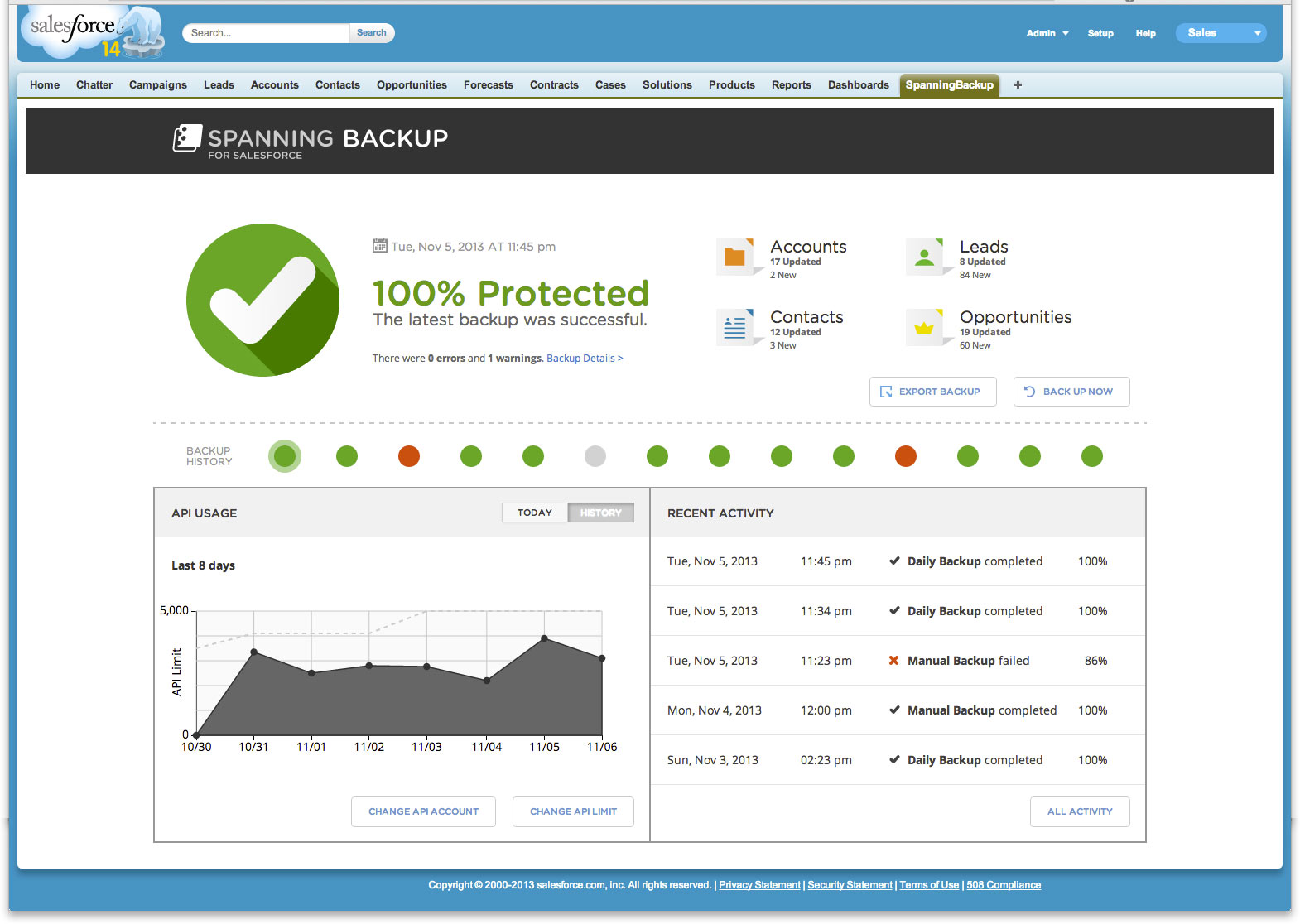
Spanning announces cloud-to-cloud backup for Salesforce
If something is already stored in the cloud you might wonder why you'd need to make an additional backup. Extra security is one reason, or the need to make backups more frequently.
Salesforce.com's backups take a daily snapshot of customer data but don’t provide for rapid and cost effective recovery. It is possible to export all your data each week but this is a manual process and prone to errors.

Cloud prices continue to fall
It's true of most technologies that as their popularity increases so prices begin to come down. The cloud is no exception to this as a new report from cloud portfolio management specialist RightScale shows.
Having analyzed price reductions from the four leading public cloud providers -- AWS, Rackspace, Google Compute Engine, and Azure -- in 2013, the report finds the pace of price reduction accelerating.

Dump the file server: Why we moved to the SharePoint Online cloud [review]
It's no secret that my company had its own internal usage relationship with Google Apps go sour in the last half year. As our mobility, security, and feature needs continued to grow, at least in my eyes, Google seemed too focused on appeasing education and other niche sectors. As such, they've been leaving healthcare and other business verticals behind.
Is Google Apps necessarily a bad product? Not by a long shot. I just see Office 365 as a slightly better shoe: one that fits snug like a glove for our needs. And it's not just our company that has made the move from Google Apps to Office 365. To be honest, we get about 1-2 inquiries each week with customers who are looking to move in a similar direction.

The most popular stories on BetaNews this past week March 16 -- 22
Not a good week for Microsoft this week. Things kicked off as Mozilla shunned the Windows Store by opting to stop development of a modern version of Firefox and then things got a little awkward following the investigation of an employee involved in leaking information about Windows. The company then came under fire for accessing the email account of an individual, despite its claims that "Outlook and Hotmail email are and should be private".
There was better news as an LTE version of Surface 2 went on sale opening up a new income stream for the company and new mobile computing opportunities for customers. More good news for users came when OneNote was not only released for Mac, but also made free for all platforms. Mihaita wasn't overly impressed with the Mac version, though.

NSA lawyer says data collection occurred with tech firms' 'full knowledge and assistance'
The NSA story isn't new. Scratch that. It's not really a story; it's a saga. Just when it seems safe to feel that there can't possibly be any more revelations to knock us sideways... oops... there's another little surprise for you! Just a week ago, I argued that Google's encryption of Chinese web searches amounts to little more than a PR exercise, designed to try to get the disgruntled user back on its side. This is not something that is related to the NSA revelations. When we found out that the likes of Facebook, Microsoft, Google and Yahoo (to name but a few) had been handing data over to the US government, all of these companies were falling over themselves to appear to be doing everything they could legally do to let their customers know what had been happening with their data.
Of course, it's not just the UK that has this problem, although that’s certainly where the attention has been focused -- the UK had (or possibly has) its own Optic Nerve program which was used to spy on webcam chats. The story we have heard time and time again is that these companies did not know what was going on. That the government had been collecting data without their knowledge. There were concessions that in some cases, FISA requests had been received but there were limitations on what could be publically revealed. Each company tried to outdo the others by appearing to reveal as much data as it could as quickly as humanly possible.

Netflix, please stop telling me what to watch
Netflix and I go way back -- to February 1999, when renting my first-ever DVD. I am a streaming customer now and increasingly dissatisfied. Netflix is the overly friendly store clerk -- the kind you never find in retail -- persistently making suggestions for stuff I wouldn't ever want. "Excuse me, because you bought toilet paper last time, lookee here! Beano gas-relief pills and Febreze air freshener are on sale this week". Yeah, right. Let me soak your hoity-toity head in the toidy bowl, bud.
Online retailers like Netflix (yeah, you too, Amazon) attempt to improve service by tracking what you consume and helpfully suggesting something like it. Last decade, analysts labeled the process "personalization". But they frequently invent or change labels to sell new services, and I don't rightly know what the thing is called now. I call it goddamn annoying and limiting. The more I watch, the less often compelling content comes my way.

Cloud storage price wars! First blood to Google!
And so it begins. The price war in the cloud. There are few tech companies that would not like you to store all of your files in the cloud, and there are several big names vying for attention. The obvious contenders for the crown are Microsoft with SkyDrive (sorry, OneDrive), Dropbox and Google Drive -- of course there are plenty of others, but these are the names that trip readily off the tongue. As computer users we have become increasingly comfortable with the idea of storing files online; in fact we almost demand it. If an app or service does not offer cloud storage, there are instant complaints about the lack of between device syncing.
But cloud storage does come at a cost. On the face of it, online storage is available free of charge. All of the big names -- and many of the smaller ones -- provide gigabytes, in varying quantities, of space gratis. But for cloud storage to be truly useful, everything needs to be stored there. The 5GB of free space from one provider is not to be sniffed at, but 5GB disappears very quickly. Opt to store all of your photos online, for instance, and the gigabytes will very quickly be eaten up.

Bitrix24 takes on OneDrive, Google Drive, and Dropbox
Bitrix24 has released a new desktop app for its online collaboration service, introducing the ability to synchronize and work with group and company files.
"We are currently the only online storage and file sharing service that has a free plan with group and company drives -- Box, OneDrive, Dropbox and Google Drive all charge for the privilege or don’t offer the option at all. Nor do we restrict our users concerning what tools they use for document editing -- they can use MS Office installed on their PC, or MS Office Online, or Google Docs. Obviously, that alone is not enough to compete with these giants, so we decided to add communication and collaboration tools right inside the app as well," says Dmitry Valyanov, President of Bitrix, Inc.
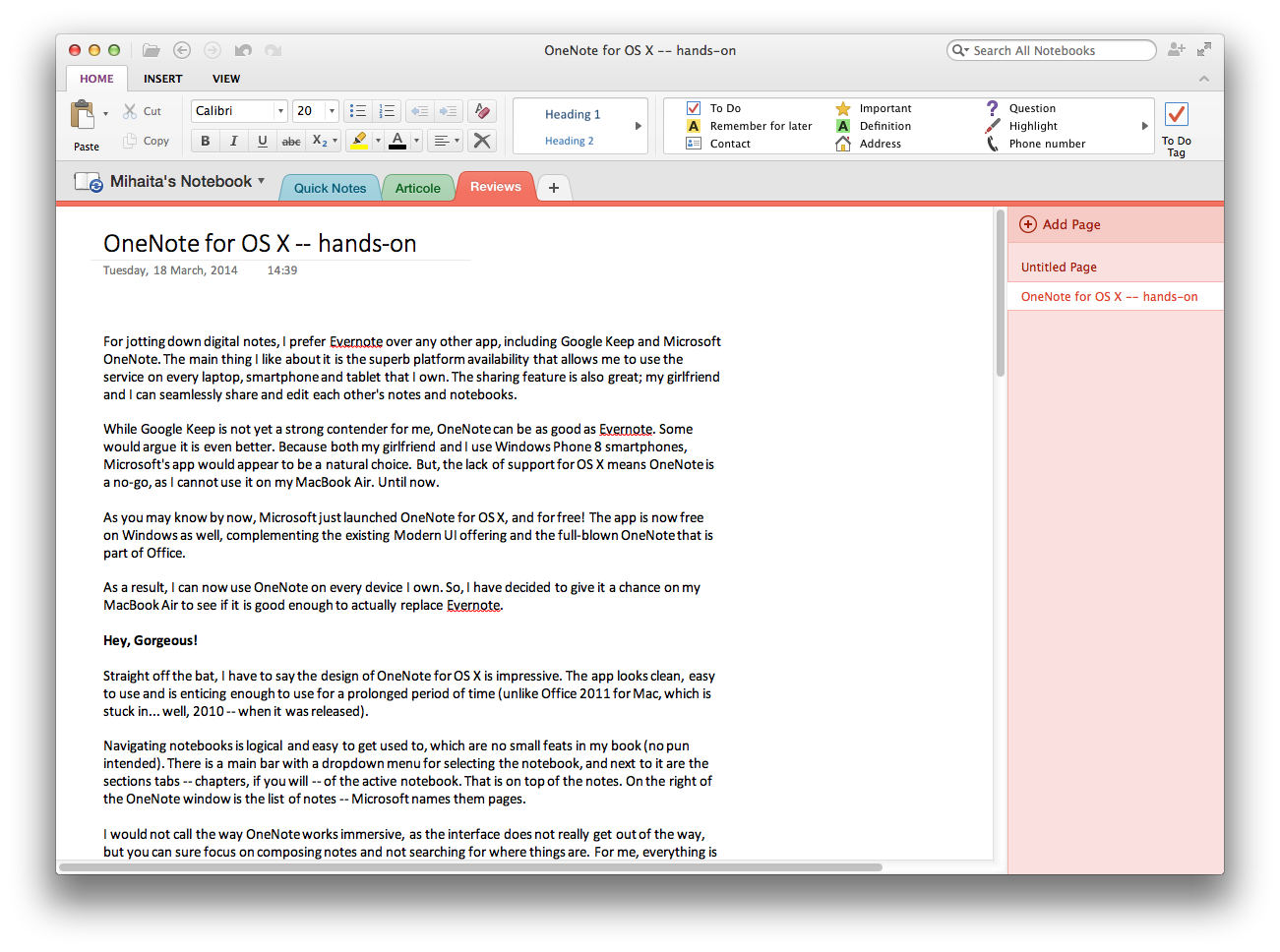
OneNote for OS X is nice, but Evernote's better [Review]
For jotting down digital notes, I prefer Evernote over any other app, including Google Keep and Microsoft OneNote. The main thing I like about it is the superb platform availability that allows me to use the service on every laptop, smartphone and tablet that I own. The sharing feature is also great; my girlfriend and I can seamlessly share and edit each other's notes and notebooks.
While Google Keep is not yet a strong contender for me, OneNote can be as good as Evernote. Some would argue it is even better. Because both my girlfriend and I use Windows Phone 8 smartphones, Microsoft's app would appear to be a natural choice. But, the lack of support for OS X means OneNote is a no-go, as I cannot use it on my MacBook Air. Until now.

The most popular stories on BetaNews this past week March 9 -- 15
This is the week that saw the web celebrating its 25th birthday and Tim Berners-Lee took the opportunity to call for a web bill of rights, which I argued is essential for the future of democracy.
Another week means a fresh batch of security concerns. In Europe, users were warned of the dangers of connecting to public wifi hotspots, while a new report found that cybercriminals are becoming increasingly sophisticated in their techniques. Ian was on hand with advice for anyone trying to tackle or avoid viruses.

Google's Chinese web encryption is nothing more than PR and posturing
We are spied upon. Someone, somewhere, knows what you have been doing online. It might be your snooping friend taking a look at your browsing history, or it might be that weird looking guy on the next table in the coffee shop watching your every click. It might be advertisers using cookies, or it could be your own government. This is now just about expected; it is part and parcel of using the internet. In some parts of the world, access to the internet is not only monitored, but also restricted and controlled. But it didn’t used to be like this, and it needn't stay like this.
In some regions the idea of mass spying is a relatively recent concept. The activities of the NSA, GCHQ and other government organizations are something only the most recent generation of internet users is "used" to -- for the rest us, it is at best an unpleasant sea change, and at worst just the tip of the iceberg. As it was revealed that governments were not only spying on citizens' online activities but also getting other companies involved by requiring them to hand over user data, big names such as Microsoft, Google, and Apple were falling over themselves to appear to be going out of their way to reveal everything they could about the demands made of them. It was the PR machine in action, trying to make the best of a very, very bad situation.

Google Drive price cut gives a little and takes a lot
This week, World Wide Web inventor Tim Berners-Lee calls for a "bill of rights" for the Internet. Much of the media coverage focuses on governments, but I see corporations as greater concerns. Who has more direct access to your stuff? Google is front and center, but by no means alone, profiting from your content.
Today's big Google Drive price cut -- $1.99 and $9.99 monthly down from $4.99 and $49.99 for 100GB and 1TB, respectively -- makes me wonder. The search and information giant offers more value for less money. The question: Who benefits more? Customers paying less, or Google getting their business? I have to wonder when, if not already, the company will use contextual data gathered from your Drive for targeted everything, from Now to ads and more.