
Syed Farook's iCloud password was changed by officials; Trump proposes Apple boycott
Apple is standing fast on its decision not to help -- publicly, at least -- the FBI to gain access to the iPhone owned by Syed Farook, one of the San Bernardino terrorists. In the latest twist in the saga, Apple has revealed that the password for the Apple ID associated with the phone was changed whilst Farook was in custody.
Apple says that this closes off another route to accessing the data the FBI seeks. Had the password not been changed, the company says, it may have been possible to retrieve backup data without the need to create a backdoor into the suspect's phone. Meanwhile, wading in to the Apple/FBI debate with all of the elegance of an epileptic elephant, serial buffoon Donald Trump has called for a boycott of Apple products -- despite tweeting from an iPhone himself.

Apple is using a straw man argument to fight the FBI
Listen to Tim Cook and you’d be forgiven for thinking that Apple was standing up for the little guy, sticking up for the likes of you and I in fighting the FBI. The FBI, Apple would have you believe, wants Apple to break encryption, thereby weakening security for everyone. But that's not really the case at all.
The FBI has not asked for encryption to be broken; it wants access to data on the San Bernardino shooter's iPhone, and it wants to do so by using the (as yet unknown) PIN that has been used to lock it. Get it wrong too many times and the device is wiped. The FBI wants custom firmware to be made available that would allow it to brute force the PIN. It's nothing to do with cracking encryption, but that's not what Apple wants you to believe. It's an exercise in misdirection and a classic straw man argument. The problem is, if the straw man goes up in flames, will Apple too?

Poll: Should Apple help the FBI unlock the San Bernardino iPhone?
The US courts say Apple should help the FBI access the contents of an iPhone belonging to one of the San Bernardino shooters, but Apple is refusing, on the grounds that it doesn’t want to erode the security of Apple customers.
I’m personally on Apple’s side, as is my colleague Joe Wilcox, but Donald Trump wants Apple to use "common sense" and open its phone up, while John McAfee is claiming he can help the FBI unlock Apple’s device within "three weeks", primarily through the use of social engineering. The FBI for its part says it doesn’t want Apple to create a backdoor in all iPhones, just unlock the one belonging to the killer.
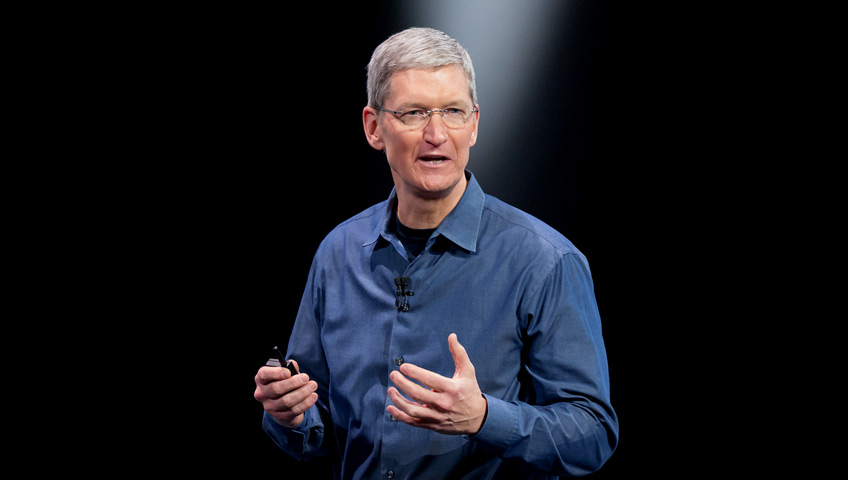
Tim Cook is absolutely right
Some documents are historically significant. They mark moments, comment on them, in manner demanding future citation and even use in courts or classrooms. That's how I read Apple CEO Tim Cook's "Open Letter to Our Customers", about breaking iPhone encryption. His exposition spotlights seminal moment in the United States of America: Government's further expansion of powers encroaching indiviuals' rights to privacy and one company standing up and saying "No".
Some people will scoff at my comparison, but it truly is what I see. Cook is like Rosa Parks, refusing to take a seat at the back of the bus—or in this instance behind one court judge and the FBI. Cook and Apple stand up for us all. I applaud law enforcement's efforts to protect us from terrorism but tyranny shouldn't be the means; taking away Constitutionally-given freedoms to protect them. Tim Cook is right.
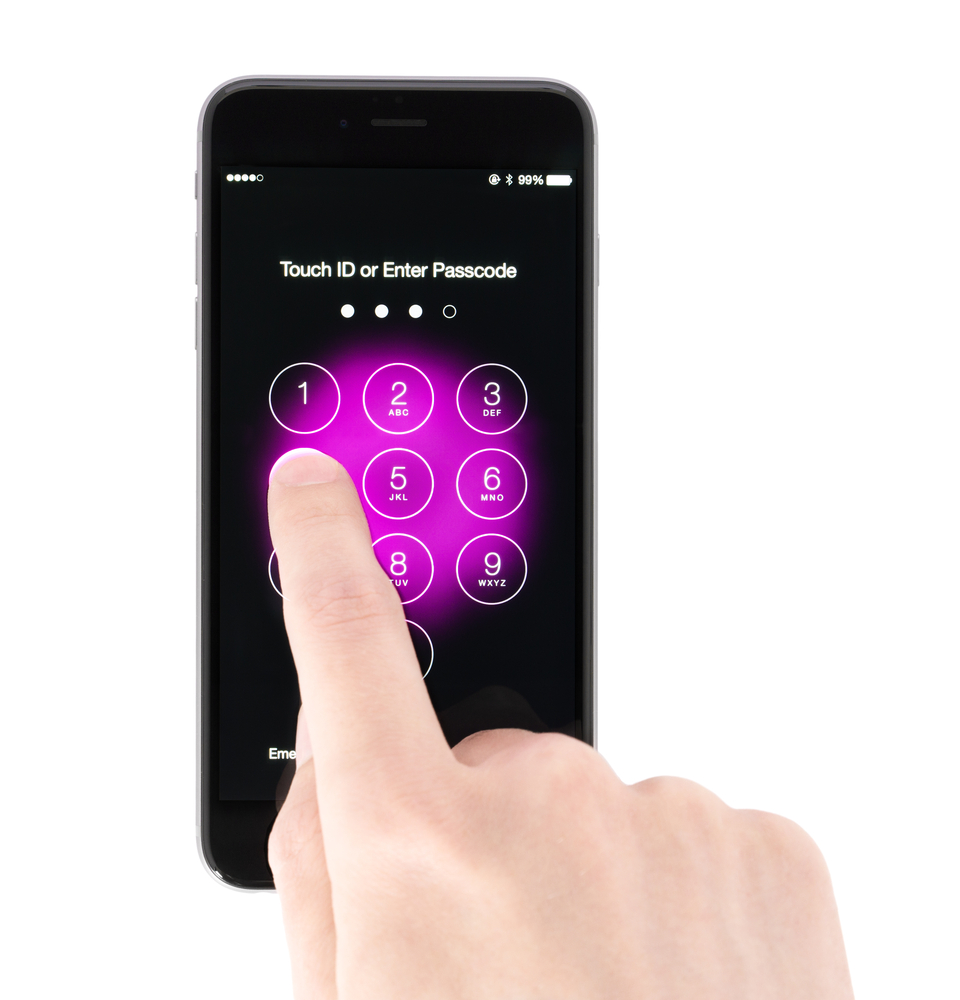
Why Apple is right to reject the order to unlock a killer's phone
Apple has been ordered by the US courts to help the FBI gain access to data on an iPhone belonging to San Bernardino gunman Syed Rizwan Farook. Farook and his wife killed 14 people in the California city late last year before being shot dead by police.
The FBI says the phone contains information crucial to the investigation, and needs Apple’s help to unlock it. Data on Apple devices is encrypted by default -- and has been since September 2014 -- which means no one, other than the device owner, can access it. And that includes Apple itself.
Mozilla wants to educate us all on encryption
Terrorists use encryption. They also breathe air, drive cars, and drink water. What do I mean by saying this? Well, just because a bad person uses something, doesn't make the thing they use evil. In fact, encryption is not evil at all -- it is a tool to protect the privacy and communications of all people.
Sadly, not everybody understands encryption. There is nothing wrong with being ignorant on a subject -- not everyone can be knowledgeable about everything. With that said, some politicians and other decision-makers could enact policy about encryption due to knee-jerk reactions to things they don't understand. Luckily, Mozilla has a new initiative aimed at educating people as to what encryption actually is.

Gmail now warns you if your emails are not TLS encrypted
To celebrate Safer Internet Day the other day, Google gave away an extra 2GB of cloud storage to anyone who completed a simple security audit of their account. At the same time the company also introduced a couple of important security enhancements to Gmail.
The first change sees the appearance of a simple indicator that makes it clear when an email is received through, or is about to be sent through, a service that doesn’t support TLS encryption. A broken padlock icon indicates that TLS encryption is not available, serving as a warning that there is the potential for the email in question to be dangerous or for the message to be intercepted.
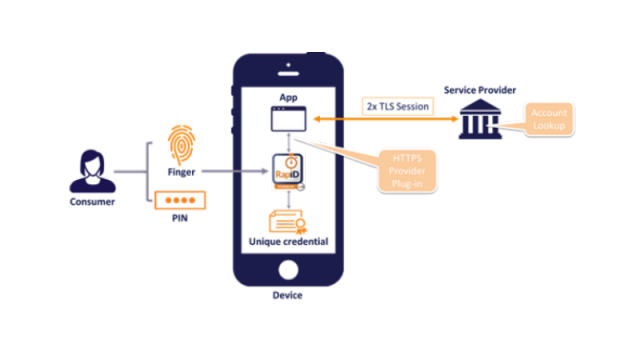
Security solution RapID wants to kill the password
At a time where cyber security is infiltrating the consciousness of consumers and businesses alike, finding the right balance between security and convenience has never been more important.
To that end, digital identity and credentials firm Intercede has launched RapID, a new security solution that delivers password and token free access to cloud services from mobile applications.

Industry's reaction to Europe's new EU-US Privacy Shield
After months of negotiations, this week saw the European Commission (EC) announce a replacement to Safe Harbor after it was declared invalid in October 2015.
The new framework, dubbed the EU-US Privacy Shield, has been put in place to protect the rights of Europeans when their data is transferred to the United States and ensure legal certainty for businesses.
It's all a facade: Encryption may do nothing to reduce surveillance or increase privacy
Living in a technological age where there is a near-fanatical obsession with privacy, a move towards encryption seems to make perfect sense. While there have been calls from some governments to ban encryption and demands for decryption keys to be handed over, there is a drive by companies and online services to try to increase security and privacy with encryption.
But a new report (Don't Panic: Making progress on the encryption debate) from Harvard University's Berkman Center for Internet & Society suggests that encryption may be all but pointless when it comes to curtailing surveillance. While governments and surveillance agencies may balk at the idea of people using encryption to 'go dark' online, and many people embrace the idea as a means of increasing their privacy, the report suggests that the task of surveillance is not going to be made impossible, and could be helped by the Internet of Things (IoT).
Facebook's Android app gains privacy-enhancing Tor support
Back towards the end of 2014, Facebook unveiled a new .onion address that allowed Tor users to visit the social network securely. Following on from this, the company is now giving Android users the ability to browse the site using Tor and the Facebook app.
Security, privacy and anonymity may be words readily associated with Tor, but few people would use them in the same sentence as Facebook. The social network says that there is increased demand for secure connections to Facebook from Tor-enabled browsers, hence spreading to the largest mobile platform. The news will make some mobile users happy, but there are currently no plans to migrate the feature from Android to iOS.
France joins the Netherlands in saying no to cryptographic backdoors
Secure communications exist for many reasons, including free speech from behind the borders of certain nations, to business secrets being discussed. These days it's under attack from several sectors, including law enforcement agencies investigating crimes and those who claim to need info for catching terrorists -- something we've recently found can be futile in some cases.
Just the other day we heard that the state of New York is looking to legislate backdoors into mobile devices, a law that seems unlikely to pass, given the amount of opposition and evidence against it being effective to anyone but the hackers, who are likely to be quick to find these openings.
BlackBerry denies existence of security backdoors and blames 'cracked' encryption on user error
BlackBerry has spoken out to deny claims that its encryption has been cracked by groups associated with the police in the Netherlands. The company has long-prided itself on the level of security it offers, but that security has been called into question recently.
Reports circulated that Mexican drug lord El Chapo was able to be found partly because of his decision to use a BlackBerry (specifically a BlackBerry Z30, fact fans) to arrange interviews with actor Sean Penn. Coming after claims by the Netherlands Forensic Institute (NFI) that it had been able to decrypt hundreds of encrypted emails on a BlackBerry handset, the Canadian company felt compelled to respond -- by blaming user error.
New York is trying to force backdoors into phones with legislation
Cryptography has become popular in the post-Edward Snowden era. Everyone seems to be worried about being spied upon and is looking for ways to avoid it. While the majority of users likely have nothing to hide, it's still a creepy feeling to know that someone can, and possibly is, checking what you say and do.
There has been a lot of talk about adding backdoors, mostly from those who want to spy and those who simply don't understand the technology. The latest of this is currently taking place in New York.
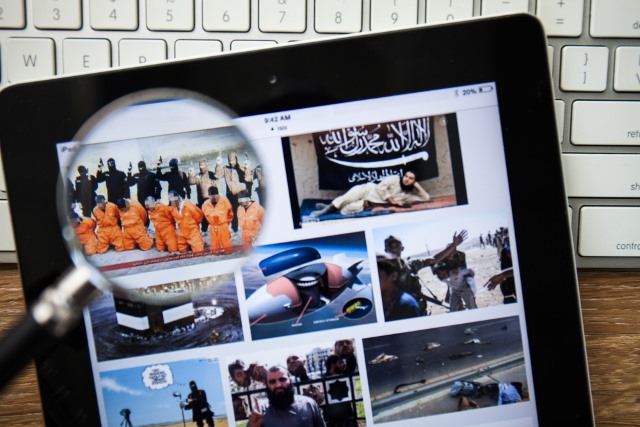
Tech firms ready to work with US spy agencies to combat IS and online terrorism
Silicon Valley met with the US government on Friday to discuss how to tackle online terrorist propaganda from the likes of IS. At a closed-door meeting, Tim Cook and representative of Facebook, Twitter, Microsoft and other tech firms spoke with White House officials to try to find a way to combat terrorists on the web.
Joined by the likes of the NSA and FBI, the technology firms, and the Obama administration are seeking ways to stop terrorist propaganda being disseminated online. IS has already proved itself to be a masterful manipulator of the media, and has successfully used social networks such as Facebook and Twitter to get its message out.