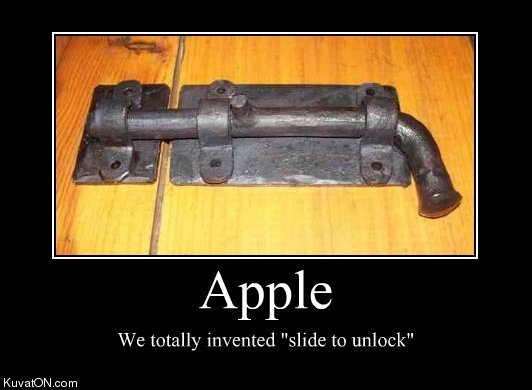
I'm boycotting Apple
Patent bullying and ongoing competition by litigation and intimidation are reasons why. For me the last straw came earlier this week when Apple sought to ban importation of Samsung Galaxy S III (the request for preliminary injunction is before a judge and a ruling could come as early as next week). The phone launched in 28 countries on May 29 and goes on sale from five US carriers within the next 30 days. Many tech reviewers and pundits have called Galaxy S III an iPhone 4S killer. Apple doesn't have a competitive product in market so instead seeks to block Samsung's -- all under the guise of protecting innovations.
Apple is an amazing marketer that manages perceptions very well. One of these regards innovation and the idea that other companies imitate Apple, often badly, and its trendy ideas must be protected. Perception is one thing. Reality is another. Apple isn't as innovative as its corporate "reality distortion field" would have everyone believe. But the company has gotten quite good at something: Unleashing a torrent of suits to secure patents and to defend them -- and many cover processes that should never have been awarded patents in the first place. Apple has gotten quite good at gaming the patent system. I want no part of it.
iPhone kills carrier profits
Second in a series. Two days ago, I established that iPhone's market share is heavily dependent on carrier subsidies. Now let's take a look how iPhone subsidies affect carriers and the potential impact this could have on Apple.
To Summarize, under iPhone's current subsidy structure, it is practically impossible for carriers to break-even. Even when factoring higher churn rate of other smartphones and lower cost of retaining iPhone users, Apple's device still costs carriers too much to be really profitable compared to other smartphones. Essentially, Android, BlackBerry and Windows Phone users subsidize iPhone owners. Carriers make more money from non-iPhone smartphone owners, while raising data and early-termination fees to offset iPhone costs.
If Windows Phone is No. 2 by 2016, I'll clean Steve Ballmer's toilet
In March of last year, I boasted: "If Windows phone is No. 2 by 2015, I'll kiss Steve Ballmer's feet". Looks like Microsoft's CEO and I get a year's reprieve. Once again, IDC makes ridiculous, bold claims about how Windows Phone will ascend to second place in market share, now in 2016. Oh, pleeease forgive my skepticism considering how Windows Phone share has done nothing but fall like a rock -- 1.9 percent sales share in Q1, according to Gartner.
It's a year later in the forecast, so I'm making a new pledge. Since my prediction and ego would be in the toilet, I'll clean Ballmer's if Windows Phone rises like IDC predicts. It's a pledge I never expect to fulfill, so it's easy to make. Besides, in this newer forecast, IDC places an escape clause, suggesting waning confidence Nokia can lift Windows Phone so high.
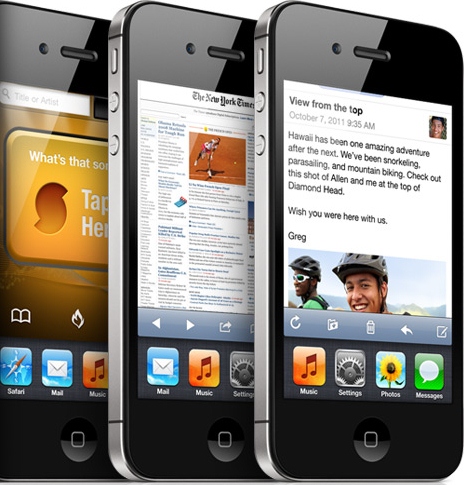
iPhone market share heavily depends on carrier subsidies
First in a series. Recently, there have been some articles stating that carrier subsidies may pose a risk to Apple. But before we accept or reject this assertion at face value, it would be prudent to find out just how much of an impact they have. We can do this by delving into a statistical analysis to isolate the key drivers of the iPhone's country-wise market share. So let's dive right in.
To start off with the analysis, we need to create a shortlist of a few key drivers that could have a major impact on the iPhone's market share. If these inputs do not have much of an impact, then the analysis would show us as much, so this initial shortlist doesn't have any bearing on the actual outcome of the analysis. My shortlist:
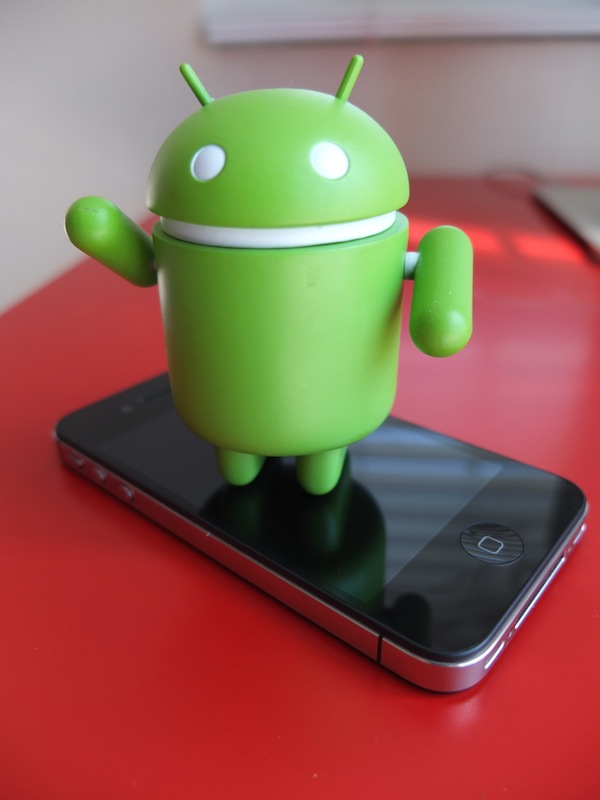
Android isn't in trouble
Asymco's Horace Dediu asks an interesting question today: "Trouble with the Robot?" -- referring to Android. He hones in on two seemingly convergent trends: a slight sequential dip in US Android share and sharp decline in US subscribers switching from feature phones to smartphones.
Based on his analysis of April data, iPhone sales remain fairly constant, while Android disproportionally declines. "Broken out by platforms, we see signs that the slowing in smartphone growth seems to be attributable to a slowing in Android adoption", Dediu explains. Stated differently, referring to comScore data he adds: "We see the lowest user growth for Android since 2009". The easy interpretation -- Android is now declining before iPhone -- would be wrong.
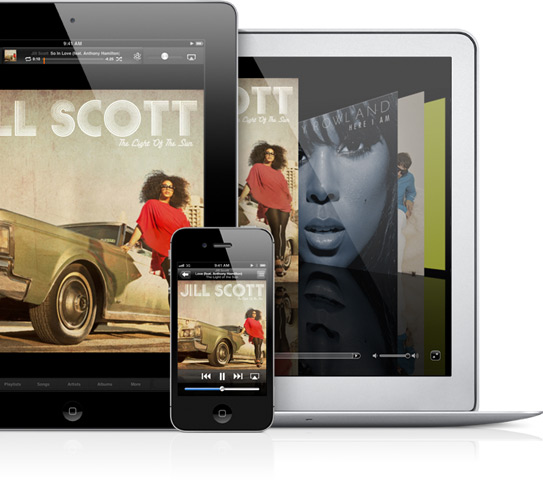
Is Intel Inside iPad, iPhone a pipedream?
Intel CEO Paul Otellini told investors this month that Apple could build its iPad and iPhone lineup on the Atom family of microprocessors any time it wants to. And he’s going to do everything in his power to make that prospect so enticing that Apple can’t refuse. Pipedream? Not hardly.
Now, I understand why some of you would consider this to be pure fantasy. Intel has been trying to pry its way into the smartphone and tablet markets for five years now, and until this year the company has had little to show for it.
Sorry, you can't mail your iPhone or iPad overseas 'til next year
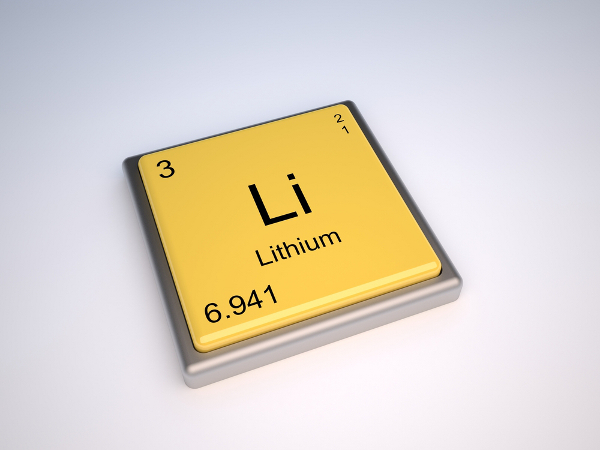
The United States Postal Service has put a ban the international shipment of lithium-based batteries (Lithium Metal, Lithium Alloy, and Lithium ion.) This ban includes electronic equipment with lithium batteries permanently installed such as mp3 players, tablets and smartphones, and will stay in place until January 1, 2013.
Because of the issues that Lithium batteries have with short circuiting, overheating, and exploding, special regulations have been placed on their transport for the last five years.
Frak, yeah, I'd use iPad if there was Google Chrome
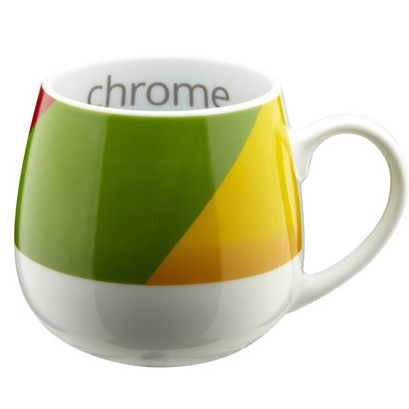
What timing. I posted my iPad for sale on Craigslist over the weekend -- and two people are jockeying to get ahead of the other to buy it today. But I'm suddenly unsure about selling, after seeing a Macquarie Capital report claiming that Chrome will come to iOS as early as this quarter. Hot damn!
I rarely make decisions based on rumors, nor should you. Besides, the "timing is unclear, but it could be as soon as Q2 and is very likely to be a 2012 event", according to Macquarie Capital. "Could" be this quarter and "likely" this year stink of pure speculation -- or big back door should there be no Chrome for iOS this year. In the end, I'll likely sell the iPad, but must convey this: Chrome would be a very good reason to buy an iOS device but be akin to Google cutting off one limb to save another.

iPhone camera app learns your appearance by your Facebook pics
In the three months ending on March 31, 2012, there were more than 300 million photos uploaded to Facebook every single day. Not only is it a staggering amount of content to organize, but it is also a huge stockpile of graphical data that can actually be put to use.
A new iPhone camera application was released on Thursday to take advantage of this mass of data.
Is iPhone 4S obsolete?
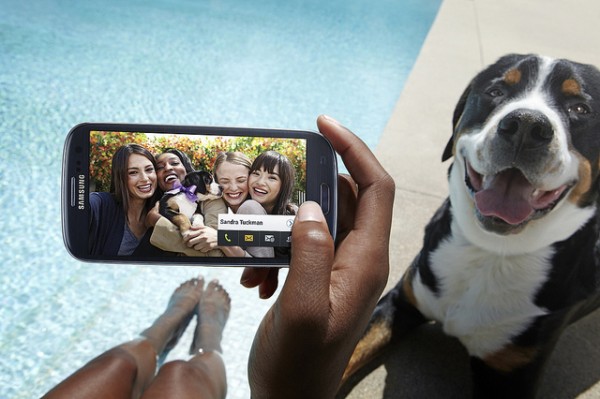
I repeatedly ask you questions in headlines, because I ask myself. This one is top of my mind following today's Samsung Galaxy S III announcement. My eyes bugger at the differences in size, features and most importantly benefits -- the majority of those coming from Samsung skinning Android 4 into seeming oblivion. It's hard to discern a way that Galaxy S3 isn't superior to iPhone 4S. If iOS 5 looked antiquated before, and it surely did, Samsung's TouchWiz-modified Ice Cream Sandwich makes it suddenly ancient.
But the question is bigger than hardware or software. Samsung isn't the world's No. 1 handset maker overall and in smartphones by lark. Apple is known for focusing on delivering benefits that matter, sometimes at the expense of hardware capabilities, and truly aspirational marketing. Galaxy S III evokes these qualities, with something more: real benefits without sacrificing hardware capabilities while using software to enrich the human experience. Then there's the aspirational marketing, as seen in the embedded video. Samsung does something Apple-like, only better.
Is there hope for Windows Phone?
That's the question I'm asking after looking over comScore US mobile subscriber data for the three months ending in March. After years of steady, steep declines, Windows Phone subscriber share held steady from February to March, which perhaps not coincidentally is when Nokia Lumia 900 went on sale. Could it be...
comScore measures subscribers 13 years and older. Microsoft mobile share among smartphone subscribers held steady at 3.9 percent month-on-month, the first real stop in drop in years. How mighty is Microsoft's fall? Market share was 19 percent in September 2009, for example. So 3.9 percent is nothing to skinny, but staying there rather than going down is small, but notable improvement.
There is no Apple without Steve Jobs
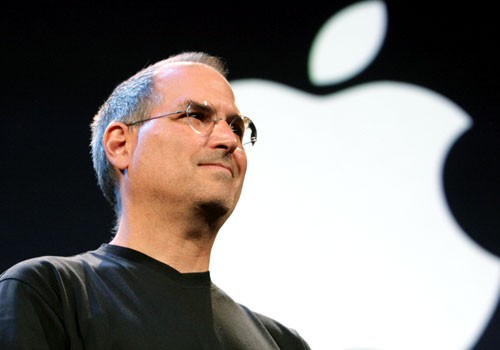
That's essentially George Colony's contention. "Apple will decline in the post-Steve Jobs era", the Forrester Research analyst opines. The sentiment is stunning in context of Apple's first two quarterly results following Tim Cook's ascension to chief executive. The company generated more revenue ($85.83 billion) than all fiscal 2010 ($65.23 billion). Net income ($24.12 billion) exceeds that of fiscal 2009 and 2010 combined ($22.25 billion). That's hella good performance.
Yesterday, I argued that "Apple is better off without Steve Jobs", in part based on recent performance that derives from Cook's running logistics for the better part of three years. But I also believe that no one knows the future, and that good reporting is about looking from different viewpoints. So today I offer counterpoint to yesterday's prognostication. Yeah, I'll rebut myself, something I frequently do. You just don't see the process, and Colony's argument is good foundation.

Apple had an 'incredible quarter in China'
Today after the closing bell, Apple announced fiscal 2012 second quarter results, with earnings up a staggering 94 percent year over year. But one region -- and within it a single country -- stood out for performance and closed on the United States as Apple's most important market as measured by sales.
Apple revenue to Asia-Pacific rose a staggering 114 percent to $10.15 billion. That data excludes Japan, where sales soared 91 percent. By comparison, Americas revenue topped $13.2 billion, up 41 percent year over year. During the quarter, Asia-Pacific pushed past Europe to be Apple's second most important region, as measured by revenue. In that region, China rises above all other countries.
Uh-oh, iPhone fanboys
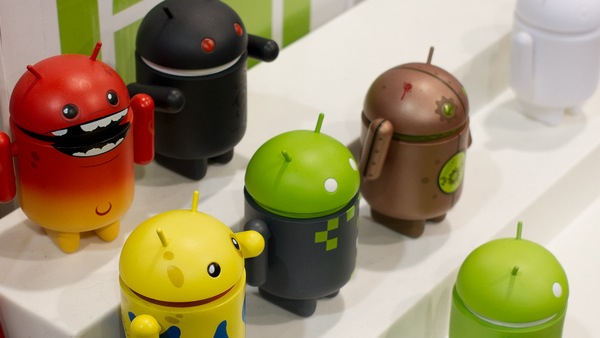
iPhone Idolators, please meet the Android Army. Now retreat! Android's share of the US smartphone market topped 50 percent in February, according to comScore. iOS gained share but trails considerably -- by like 20 points. You can have your iPhone, but many more Americans take Android. I'm waiting. What's your smarty-pants response to that, Apple apologists?
The findings butt against those from Nielsen -- a life raft of apology for those insisting iPhone will rule the world. Last week, Nielsen reported a huge surge in the number of new purchasers choosing iPhones compared to Android. For the three months ending in February, 48 percent of Americans who recently bought a smartphone, chose Android -- 43 percent iPhone, according to Nielsen. A year earlier, 27 percent of new acquirers chose Android versus 10 percent for iPhone.
iPhone is unstoppable
Now there's a headline I never expected to write, particularly following "Android is unstoppable" nine months ago. But in the United States, at least, iPhone has nearly matched pace with Androids. Looks like the Apple apologists will get their day. After years of wrongly boasting iPhone's leadership over Androids, they might yet be right.
For the three months ending in February, 48 percent of Americans who recently bought a smartphone, chose Android -- 43 percent iPhone, according to Nielsen. Those numbers are up considerably for both, but iPhone surged to close the gap, following the release of the 4S in October. A year ago, 27 percent of new acquirers chose Android versus 10 percent for iPhone.