
Kodi no longer free? If trolls get their way, you might have to pay!
Kodi is a tool used for piracy. So are television sets, the Windows 10 operating system, laptops, smartphones, and other things. In other words, almost anything can be used for bad purposes. A knife, for instance, can be used to cut food in a restaurant, but also used as a weapon in a robbery. Ultimately, the user is responsible for how they use a tool, and Kodi is no different. It shouldn't be vilified.
The makers of the software formerly known as XBMC have long fought this battle in the court of public opinion. Unfortunately, because of developers that create piracy-related addons, such as Covenant and Exodus, it is hard to sway the hearts and minds on the subject. To make matters worse, Kodi is apparently fighting on another front too -- it is battling what it calls "trademark trolls." Yes, apparently some people are looking to exploit the open source software's name for profit. This could potentially lead to people having to pay a fee when selling or buying Kodi devices.

Game of Thrones season 7 illegally viewed more than a billion times
Game of Thrones is a hugely popular show, and every year we see statistics regarding how many times different episodes have been downloaded illegally.
Season 7, which has just finished on HBO, was easily the most pirated yet, helped in no small part by leaks from hackers which saw episodes available to stream through Kodi, and download on pirate sites and BitTorrent before they were even broadcast.
Official Plex for Kodi addon now available to everyone -- with and without a Plex Pass
It has been hard to escape talk of Kodi recently. The media center software has caused a great deal of controversy due to the number of addons that can be used to access illegal content. Most recently, the software hit the headlines after legal intervention lead to the withdrawal of the unofficial MK Plex addon that allowed for access to Plex through Kodi free of charge.
But now there's no need to turn to the dark side to get your Plex fix in Kodi if you haven’t paid for a Plex Pass subscription. The official Plex for Kodi addon is now available, and most features are available without the need to pay anything.
Download new LibreELEC Krypton -- Kodi TV and movie addons like Exodus and Covenant should work
Linux and Kodi go so well together. If you want to set up a lightweight media center distribution, you should look no further than LibreELEC. This open source Linux-based operating system exists solely to run Kodi, making it work on fairly meager hardware, such as a Raspberry Pi.
Today, a new LibreELEC Krypton version gets a release -- 8.1.1 BETA. If you are worried about compatibility with your favorite addons such as Exodus and Covenant, don't -- they should work absolutely fine. Of course, if you do encounter any issues, it can be very easy to go back. Might as well have the latest and greatest, right?
MK Plex add-on for Kodi killed off by legal letter to TVAddons
Kodi has been in the news a great deal recently, thanks largely to a surge in interest in addons for the media center software. High profile addons like Phoenix disappeared, as did (temporarily) the addons site TVAddons.
The latest victim is a Plex addon from MetalKettle -- MK Plex. Eager to avoid legal action after receiving a letter from Plex's legal team, MetalKettle decided to shut up shop rather than continue to provide an addon that could be used to access Plex through Kodi without a paid-for Plex Pass subscription.

Download major Kodi update now -- TV and movie addons like Exodus and Covenant should work
Kodi is such an amazing piece of software. The multimedia center gets a bad reputation due to some piracy "addons," but not everyone uses it for illegal purposes. Actually, it is a great way to consume legally sourced media content, including family photos and videos. While some addons like Exodus and Covenant may provide pirated content, there are useful legal addons too. In other words, just like with most things, the software is totally legit, but the users are responsible for any nefarious aspects -- not the Kodi team.
Today, Kodi 17.4 is finally here -- a major update. Since it is primarily bug fixes, all of your addons should work totally fine. This includes popular piracy streaming addons, but we do not endorse those at all. It is recommended to install this update due to the significant number of fixes.

Roku cracking down on channels offering pirated content
Kodi is under the spotlight for third-party add-ons that allow pirated content, but it’s far from being the only way for users to view illegal TV shows and movies.
Roku has a feature called 'private channels' (also referred to as 'hidden channels') that is designed to allow developers to test their creations ahead of making them available through Roku’s own store. Perhaps inevitably though, some of these channels are being used to stream pirated (or adult) content, and Roku isn’t happy.

New LibreELEC Kodi Linux distro update arrives -- download it now!
Kodi is one of the best media centers available. Its cross-platform nature makes it usable on many different operating systems. Not only is it good for locally stored music and video, but with the use of add-ons, the sky is the limit. Fans of Premier League Football (soccer), for instance, can use Kodi to watch matches.
Where Kodi really shines, however, is with Linux. More specifically, the best experience is when the media center is the star of the show. Luckily, there are some Linux distros that exist solely to run Kodi. One such popular distro is LibreELEC -- a fork of OpenELEC. Today, an update to that operating system becomes available and you can download it immediately. There are images available for Raspberry Pi, WeTek, and of course, x86_64.

Kodi users now need to turn to VPNs to watch Premier League football
It has been difficult to avoid talk of Kodi for one reason or another recently, and it's something that's likely to be on the lips of fans of UK football now the 2017/18 Premier League season has started up.
Watching pirated streams of football matches through IPTV providers and other services has long been a popular use for Kodi, and the English Premier League (EPL) has had enough. The organization previously obtained a High Court order blocking illegal streams in real-time, and a more recently obtained injunction extended this ability. With the new season now under way, football fans are discovering that they now need a VPN like IPVanish to get their fix.
New Kodi update arrives -- download it now!
Kodi has been in the news a lot lately, and not for the best reasons. While the software itself isn’t illegal, using third-party add-ons to watch copyrighted content is, and many of those add-ons have been pulled recently following threats of legal action. Controversial add-on site TVAddons even vanished briefly from the web, before reappearing a week ago.
Despite all this, it’s business as usual for the Kodi Foundation which does its best to distance itself from the piracy accusations so often leveled at it, and the team has just released a new build for the popular open source media player.
TVAddons is back, but the Kodi addon site faces secretive lawsuit from Canadian telecos
It has been hard to avoid stories about Kodi in recent months as broadcasters and copyright holders panic about the software's potential for piracy. The controversial site TVAddons was the subject of a lawsuit from Dish Network, and shortly after this it disappeared from the web completely.
Rather than originating from the US as many people suspected, the lawsuit against TVAddons that led to its disappearance comes from Canadian telecoms firms Bell Canada, TVA, Videotron and Rogers. Now TVAddons is back, but the story about its legal battle -- involving claims of piracy of Game of Thrones -- is rather more complicated than just about anyone could have thought.
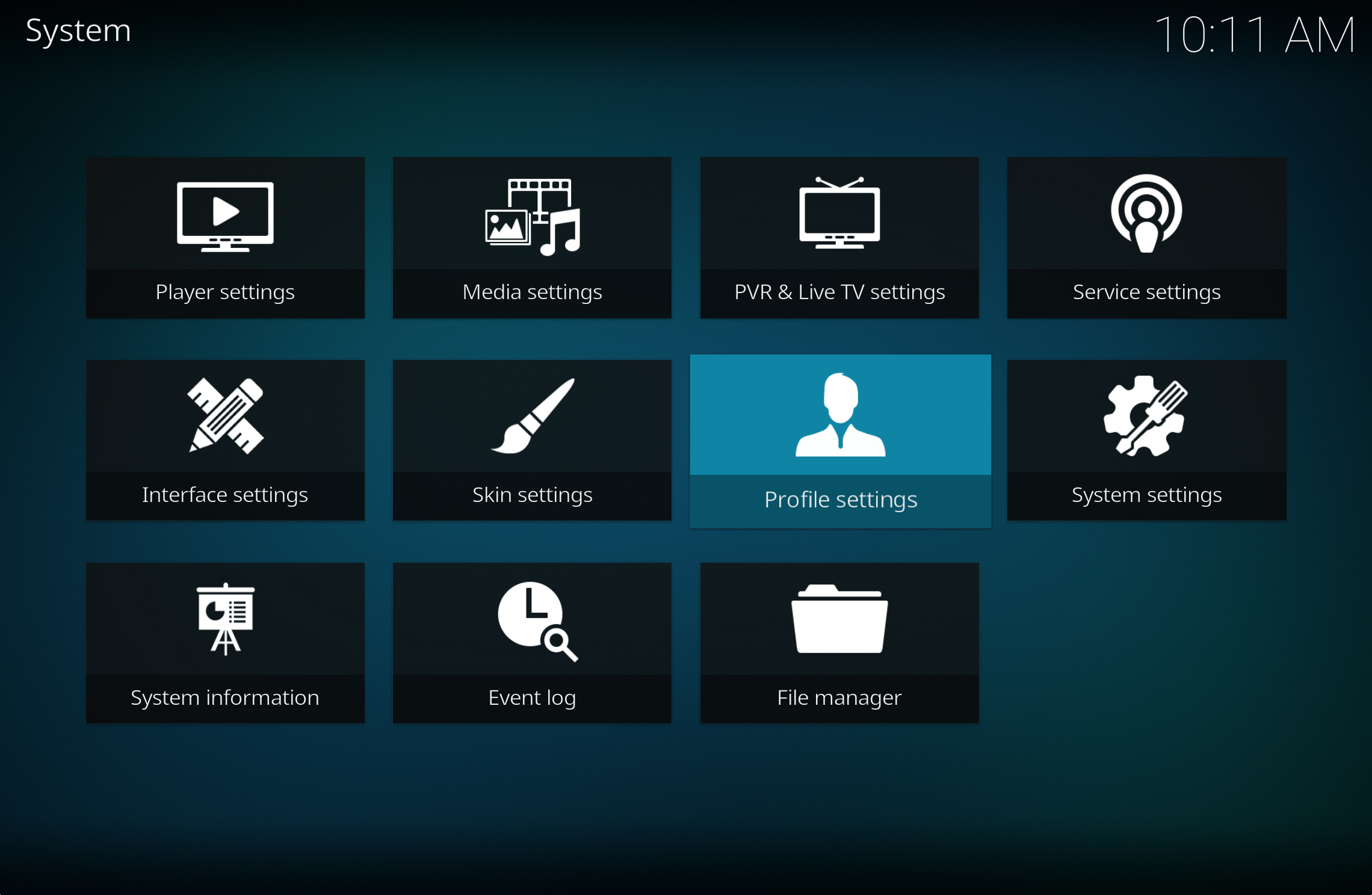
How to create and use separate user profiles in Kodi
Kodi is a very flexible media center that you can use to watch local media, or stream content via third-party add-ons.
If you share Kodi with other family members you can set up user profiles for each person who uses the software. This will let you all keep what you watch separate and you can control what content your children have access to.

Nearly half of football fans watch illegal streams of matches -- a third do so regularly
A survey by the BBC reveals that over a third of Premier League football (or soccer, if you insist) fans are getting their gaming fix using unofficial (that is, illegal) online streams.
Kodi boxes and similar dedicated devices are used by more than a quarter of fans for this very purpose. Perhaps unsurprisingly, it is younger adults who are more likely to make use of illegal streams.

Kodi users could be targeted in major anti-piracy crackdown
Kodi itself isn’t illegal, but using third-party add-ons to watch copyrighted content is. Over the past few weeks we’ve seen some developers pull their add-ons in the face of legal action, and 'fully-loaded' Kodi boxes have been in the firing line for a while.
So far ordinary Kodi users have escaped scrutiny, but that could be about to change as a major anti-piracy organization has expressed its intention to come after end users in "the very near future."
Subpoenas mean owners of TVAddons and ZemTV Kodi add-on could be revealed
In recent weeks numerous Kodi add-ons have disappeared, and the popular site TVAddons also suffered the same fate. It had been presumed that the disappearances were related to a lawsuit taken out by Dish Network, and now the broadcaster has been granted subpoenas to help identify those developing the ZemTV Kodi addon and running the TVAddons website.
The subpoenas relate to a number of online services including Facebook and Twitter, and successfully identifying defendants will be key to the success with any lawsuits relating to copyright infringement.