Microsoft Authenticator app gets phone sign in
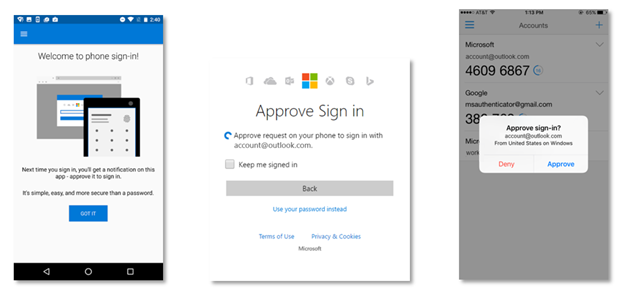
Microsoft is making it easier than ever to sign into a Microsoft account, adding a new authentication option in the Microsoft Authenticator app that lets you approve the sign in attempt using just your Android smartphone or iPhone.
Here's how it works. When you enter your Microsoft account handle you will get a prompt from Microsoft Authenticator to approve or deny the attempt. To take advantage of this option, you need to add your Microsoft account to the app or, if you already did so, turn on the "Enable phone sign-in" option.

Microsoft introducing 'Power Throttling' to the next version of Windows 10
The Windows 10 Creators Update is rolling out to users now, but Microsoft is working hard on the next big update to its operating system, and has already pushed out two new builds for Redstone 3 to Windows Insiders on the Fast ring.
The latest of these builds, 16176, includes a feature that Microsoft is calling "Power Throttling" (working name), which is designed to run "background work in a power-efficient manner", improving battery life significantly.

How to bypass Microsoft's next-gen processor update block on Windows 7 and 8.1
As you probably know by now, Microsoft is blocking Windows Updates on Windows 7 and 8.1 systems powered by next-generation processors like Kaby Lake and Ryzen.
It’s yet another of Microsoft’s desperate efforts to get users to switch to Windows 10, and one that -- understandably -- hasn’t gone down well with users who don’t want to upgrade to the new operating system. Thankfully, there is now a workaround.

Lloyds Bank offers Windows Hello facial and fingerprint recognition
Lloyds Bank customers will soon be able to log into their accounts through fingerprint scanners and facial recognition technology, rather than typing in passwords. According to the bank, it has teamed up with Microsoft to bring the Windows 10 authentication technology to its customers.
The biometric authentication technology, which Microsoft named Windows Hello, uses a combination of infrared technology and advanced software to identify the user in various lighting conditions. It was also emphasized that fraudsters can’t bypass the security measure by using a photograph.
How to access Microsoft Edge's secret full screen mode
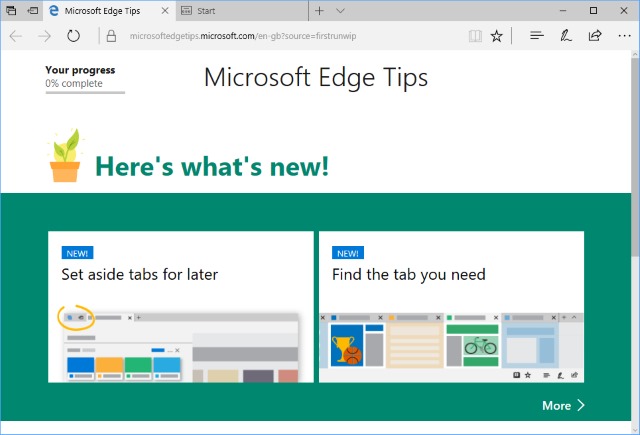
If you're looking for distraction-free web browsing, it makes sense to switch to full screen mode. This is something that is very easy to achieve in the likes of Chrome, Opera and Firefox, but Windows 10 users who have opted to stick with Microsoft Edge don’t seem to have such a good deal.
But this is just a matter of appearances. Edge does have a secret full screen mode that you can access very easily. Quite why Microsoft chose not to advertise the feature is anyone's guess, but there you go!

Microsoft says Golden State Warriors will beat Cleveland Cavaliers to become NBA Champions
Today at 3pm Eastern Time, the 2017 NBA Playoffs will begin. All of the playoff series are best of seven, meaning the first team to win four games in each is victorious and moves on. This happens for both the Eastern and Western conferences, until the best of both meet each other for the Finals.
This year, Microsoft -- through its "Bing Predicts" service -- says that Stephen Curry and the Golden State Warriors of the West will beat LeBron James and the the Cleveland Cavaliers of the East to become NBA Champions.

Microsoft already fixed the 'Shadow Brokers' exploits on supported versions of Windows
Say what you want about Microsoft, but the company stays on top of security. Yeah, it may issue more patches and fixes for Windows compared to some other operating systems, but that doesn't necessarily mean the OS is less secure -- it could mean that the company is simply more proactive and transparent than others. Quite frankly, I'd rather get many patches than be lulled into a false sense of security.
When hacking group "Shadow Brokers" started leaking NSA-discovered exploits, many people were understandably worried. While the leaks would enable operating system makers to issue patches -- thereby making the OS more secure -- it also meant that before the fixes were issued, many computers would be at an increased risk. Luckily, when it comes to the recently leaked Windows exploits, Microsoft was already prepared -- currently supported versions of the operating system are not impacted.
Which Windows phones will get Windows 10 Mobile Creators Update?
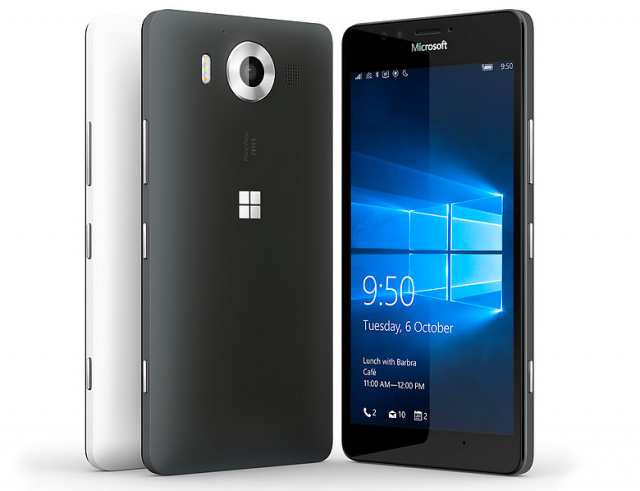
Windows 10 Creators Update is already live for those who have a desktop, laptop or tablet, but for Mobile users the wait is not yet over. However, the roll out is expected to kick off soon, with Microsoft announcing that it will release Windows 10 Mobile Creators Update on April 25. Question is, which devices will it support?
Windows 10 Mobile works on quite a few smartphones, but the launch of Windows 10 Mobile Creators Update will see this list reduced to just 13 smartphones. The devices that didn't make the cut are mostly older handsets, which launched in the Windows Phone 8.1 era.
Microsoft releases Windows 10 Redstone 3 Build 16176 to the Fast ring
The Creators Update is still rolling out to users globally, but Microsoft is hard at work on the next big update to Windows 10, codenamed Redstone 3.
Today it rolls out the second PC build to Insiders on the Fast ring, which includes some changes to OneCore, the core that Windows 10 shares across devices. But that's not all.

The Windows 10 update conundrum [Q&A]
Windows 10's growth seems to have stalled for the moment, despite the software giant's best (and worst) efforts to get consumers and businesses to upgrade.
I spoke to Charles Cho, senior Microsoft architect at PCM, Inc., about why this is, and why Microsoft is so desperate to get users to upgrade. He had some interesting insights on the update conundrum.

The desperate tricks Microsoft employs to force customers to upgrade to Windows 10
When Microsoft introduced Windows 7 back in 2009, the software giant didn’t need to persuade customers to upgrade -- they leapt at the chance. Back then, upgrading to the latest and greatest version of Windows was a no brainer.
Fast forward to today, and Microsoft is in a very different position. Windows 10 is a huge improvement over its predecessor, Windows 8.x, and yet it’s struggling to gain market share. Figures from NetMarketShare, and Microsoft itself show adoption of the new OS has stalled. That’s got to be hugely frustrating for Microsoft, especially when you consider the number of tricks it has pulled to force users to upgrade.
[Updated] Microsoft transparency report reveals first National Security Letter and shows doubling of FISA orders
Microsoft has published its latest transparency report and, for the first time, disclosed the contents of a National Security Letter it received. In addition to the debut appearance of such a letter in the report, Microsoft also reveals that in the reported period in 2016 the number of FISA orders more than doubled compared to the previous period.
As with previous reports, Microsoft is not permitted -- for reasons best known to the US government -- to reveal precise numbers when talking about the number of official requests for data it has received. As such, we know that in the most recent reporting period, it received between 1,000 and 1,499 FISA orders, up from 0-499.
How to upgrade Bash/Windows Subsystem for Linux in Windows 10 Creators Update
You can't help but have noticed that Microsoft has started the rollout of Windows 10 Creators Update. After testing with Windows Insiders, the third big update to Windows 10 is finally making its way to the masses. But while Creators Update brings some pretty major changes to Windows 10, Windows Subsystem for Linux is not automatically updated.
The arrival of Bash/Windows Subsystem for Linux (WSL) in Windows 10 Anniversary Update meant Ubuntu 14.04 support, but you can now manually update to gain Ubuntu 16.04 support in Creators Update. Microsoft says you need to perform one of two manual update methods: the recommended option of "Remove & Replace", or "Upgrade In-Place." Here's how to perform the update.
Microsoft's free cloud migration assessment sells the idea of hybrid cloud to enterprises
For enterprises, datacenters are at the heart of operations. With Azure, Microsoft has a vested interest in encouraging enterprises to move these operations to the cloud, and it is with this in mind that the company has launched a cloud migration assessment tool.
The free tool has been designed to give enterprises a way to determine whether it would make sense -- and how much it would cost -- to move to a hybrid cloud solution.

Windows 10 and Xbox One to gain 'self-service refunds'
Much like Steam, Microsoft's Xbox One is to gain a "self-service refund" function. The idea is to make it easier to get a refund on games and other content that is not up to scratch, not what was expected, or simply not enjoyable.
Currently in testing with alpha users, the feature is due for a wider rollout, and will also make its way to Windows 10 users in the Windows Store. Of course, it is not going to be possible to get your money back on just anything, and there are few criteria that need to be met in order to qualify.