



The Oscars are heading to YouTube under a new global deal
In a major coup for Google, YouTube has secured exclusive global rights to the Oscars and a wide range of Academy programming under a new multi year agreement that begins with the 101st ceremony in 2029. The deal moves the awards show and related content to YouTube worldwide, although the Academy’s existing domestic broadcast agreement will remain in place for the 100th ceremony.
Under the agreement, the Oscars will stream live -- and free -- on YouTube to viewers all around the world. In the US, the ceremony will also be available to YouTube TV subscribers. Coverage will include the red carpet, backstage access, and events tied to the Governors Ball.

Wacom adds ibisPaint X and file support improvements to MovinkPad
Wacom has released a new Android update for its MovinkPad lineup that changes how creative apps work together on the device. The update adds ibisPaint X as a built in app, links it more closely with Wacom Canvas and Wacom Shelf, and includes a free 180-day ibisPaint Prime Membership.
The update applies to the Wacom MovinkPad series, which is built around standalone drawing without a PC. The lineup includes the MovinkPad 11 and the recently announced MovinkPad Pro 14, both of which combine Wacom’s pen technology with an Android based environment.

Google rolls out Gemini 3 Flash, a faster AI model for Search and beyond
Google has announced the arrival of Gemini 3 Flash, its latest AI model built to respond faster than earlier systems, while still tackling complex prompts when needed. The model is being introduced across Google Search and the Gemini app, with the goal of making everyday AI interactions feel nippier, without stripping away the AI's more advanced capabilities.
Gemini 3 Flash is the newest member of the Gemini 3 model family. It follows Gemini 3 Pro and Gemini 3 Deep Think, but is designed for a different role. Instead of treating every prompt as a complex problem, Flash adjusts how much effort it applies based on the task in front of it.
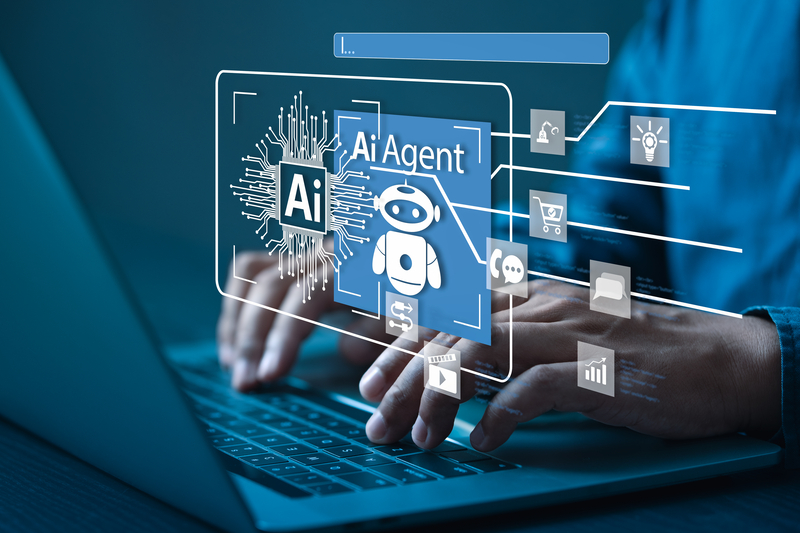
Generative simulators allow AI agents to learn their jobs safely
As AI systems increasingly shift from answering questions to carrying out multi-step work, a key challenge has emerged. The static tests and training data previously used often don't reflect the dynamic and interactive nature of real-world systems.
That’s why Patronus AI today announced its ‘Generative Simulators,’ adaptive simulation environments that can continually create new tasks and scenarios, update the rules of the world in a simulation environment, and evaluate an agent's actions as it learns.

Over half of public vulnerabilities bypass web application firewalls
According to a new report 52 percent of public vulnerabilities bypass leading web application firewalls (WAFs). Yet over 91 percent of bypassed vulnerabilities can be mitigated when rules are tailored with AI for the actual vulnerability and application context instead of generic attack patterns.
The report from Miggo Security is based on analysis of a sample of 360+ CVEs for WAF testing across leading WAF vendors.

Most schools underprepared for cybersecurity threats
A new report from endpoint management company Action1 shows cyber incidents have become the norm in schools worldwide, with most IT leaders now adopting a more realistic view of their cybersecurity readiness.
But despite rising budgets, persistent staffing shortages and structural barriers continue to leave learning environments exposed to increasingly sophisticated threats, especially AI-driven phishing and ransomware.
Less than a quarter of organizations are securing AI-generated code
A new report reveals that 95 percent of organizations now rely on AI tools to generate code, yet only 24 percent apply comprehensive IP, license, security, and quality evaluations to that AI-generated code.
The study from Black Duck shows that that organizations without strong dependency management, automation, and SBOM validation are already falling behind on their ability to detect and remediate critical issues.

Mass registration of fake online shops originates from China
A new campaign uses mass registration of fake online shop domains to impersonate legitimate retailers, facilitate financial fraud, and in certain instances, distribute malware through counterfeit checkout systems and redirect payloads.
Identified by the research division of BforeAI, analysis of the campaign’s registration and DNS telemetry indicates a well-structured operation with distinct clusters, primarily originating from Chinese infrastructure providers and utilizing domain privacy services to obscure attribution.

Motorola’s $299.99 moto g power 2026 adds water resistance and a larger display
If you’re in the market for a new smartphone to start the new year and don’t want to spend a fortune, Motorola has announced the moto g power 2026. The new device combines a large display, reinforced build, updated cameras, and latest Android software.
The phone is powered by a MediaTek Dimensity 6300 processor, paired with 8GB of RAM. Motorola also includes virtual memory expansion through RAM Boost, which allows the phone to allocate storage as temporary memory when required.

Revolut Mobile lands in the UK with impressive roaming data
Fintech giant Revolut has started to roll out its own mobile network across the UK. Revolut Mobile is designed – like Revolut’s banking products – with travel in mind, including a generous roaming package as standard.
The network will use Vodafone’s infrastructure and a special introductory price is available for anyone who jumps on board early on. There is a waitlist in place, with the full launch due in January 2026.

Citizen developers dominate, the rise of AI, code as the new Latin -- development predictions for 2026
Software development, perhaps more than any other area of IT, has seen a major impact from the rise of AI. It’s become easier for anyone to develop apps but that doesn’t come without risks.
Industry experts look ahead to what we can expect to see in the development space, from AI and more, as we head into 2026.

Mozilla has a new CEO and plans to make Firefox an AI browser
Mozilla now has a new CEO in Anthony Enzor-DeMeo, and this should be news enough. But the appointment has been accompanied by the announcement that the organization plans to transform Firefox into an AI Browser over the course of the next three years.
More than this, Firefox is set to evolve into something more than just a web browser. Details are scant at the moment, but the new CEO says that “Firefox will grow from a browser into a broader ecosystem of trusted software”.

Microsoft now runs resource-hogging AppX Deployment Service at Windows 11 startup
Earlier last week, Microsoft released a cumulative update for Windows 11 in the form of the KB5072033 update. In addition to the usual raft of fixes, changes and additions, there was a curious inclusion that Microsoft did not really shout about.
The company has taken the decision to make the AppX Deployment Service (also known as Appxsvc) an automatic startup item. While Microsoft says this is to improve reliability, it is something connected to reports of high resource usage.

Digital bank Monzo gains a full European banking licence
UK-based digital bank Monzo is ready to expand into Europe. The fintech has acquired a full banking licence from the Central Bank in Ireland, as well as from the European Central Bank.
Monzo has gone from strength to strength since it launched back in 2015. Now the company’s European headquarters will be in Dublin, where it will be regulated by the Central Bank of Ireland.

Governing AI where work actually happens [Q&A]
Enterprises are rushing to embrace AI copilots and browser-based assistants, but most struggle with governing how employees actually use them. Sensitive data gets uploaded, prompts leak strategy, and risky extensions run unchecked, all outside the reach of traditional network or app-layer controls.
We spoke to Michael Leland, field CTO at Island, to discuss why the UI surface is becoming the most strategic security layer as SaaS and AI copilots flood enterprise workflows.