
New asset management platform lets businesses see and secure devices
One of the basic problems businesses face in preventing attacks is effective discovery and identification of their technology assets.
This is made worse by the growth of BYOD and Internet of Things devices. Israel-based Axonius is looking to solve this problem with the launch of its Cybersecurity Asset Management Platform to enable customers to see and secure all their devices.
Mozilla's Facebook Container extension keeps your Firefox browsing isolated from Facebook
Facebook has been completely inescapable in the news over the last couple of weeks, and there are increasing concerns that the social network is all but inescapable online generally. In the wake of recent privacy concerns about Facebook, Mozilla -- already petitioning for Mark Zuckerberg to do more -- has launched a new extension for Firefox that helps to keep your browsing private.
Called "Facebook Container", the add-on has been designed to make it much harder for Facebook to track your web browsing when you're not using the social network.

Zoho launches revamped platform to create business mobile apps
Business operating system Zoho is launching an updated version of its Creator apps builder, delivering the ability to build native mobile apps to automate business processes.
Zoho Creator 5 introduces a drag-and-drop interface to complement its HTML/CSS screen creator, and includes pre-built design elements like buttons, layouts, and reports that users can drag onto their page.

The real problem with self-driving cars
Whatever happened to baby steps?
Last week a 49 year-old Arizona woman was hit and killed by an Uber self-driving car as she tried to walk her bicycle across a road. This first-ever fatal accident involving a self-driving vehicle and a pedestrian has caused both rethinking and finger-pointing in the emerging industry, with Uber temporarily halting tests while it figures out what went wrong and Google’s Waymo division claiming that its self-driving technology would have handled the same incident without injury. Maybe, but I think the more important question is whether these companies are even striving for the correct goal with their cars? I fear that they are over-reaching and simply trying to do too much too soon.

Top vulnerabilities shift focus from Adobe to Microsoft
A new report from threat intelligence specialist Recorded Future looks at the changing way in which attackers are using vulnerabilities.
In contrast to previous years, most of the criminal exploit kits and phishing campaigns seen in 2017 have favored Microsoft products, rather than the Adobe Flash vulnerabilities which previous research showed as being the most popular.

Facebook is testing self-destructing friend requests
Facebook is currently testing a new feature that would give users the chance to place time limits on friend requests. The idea is that requests that you ignore for a certain period of time would be automatically deleted.
While it's not a feature that will be of interest to everyone, it is something that could prove useful to anyone in the public eye who gets bombarded with endless requests to connect. Facebook has confirmed that automatically-expiring friend requests give users a way to more easily manage unwanted requests from people.
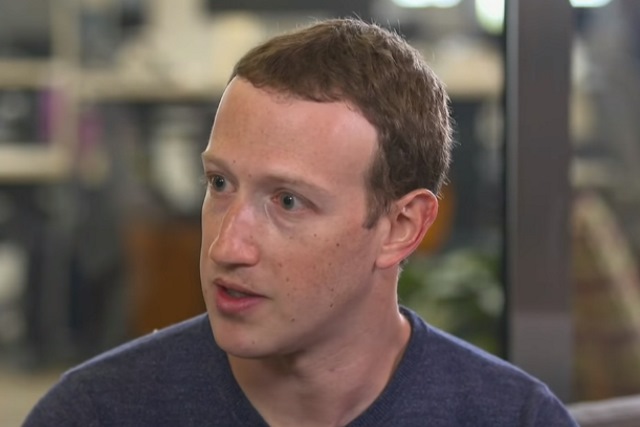
Mark Zuckerberg refuses to answer UK questions about Facebook privacy
Following the privacy scandal surrounding Cambridge Analytica's use of data from Facebook users, the social network has been under extreme pressure to answer questions from individuals, lawmakers, companies and governments around the world about not only what went wrong, but what will be done to prevent it from happening again.
The British parliament was among those seeking to probe Facebook about the breach of privacy, but Mark Zuckerburg has said that he will not appear before a committee to face questions. Instead, he intends to send either chief technology officer Mike Schroepfer, or chief product officer Chris Cox.
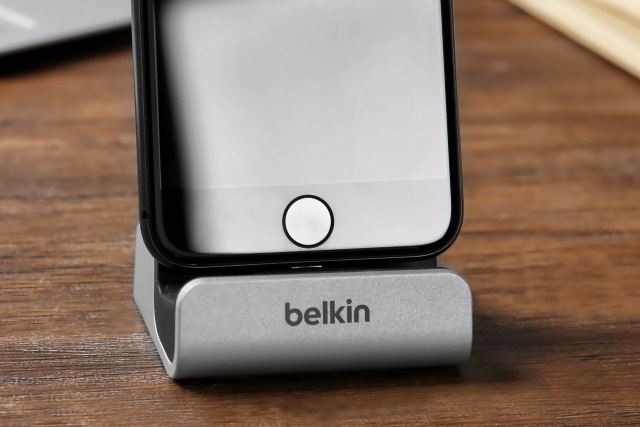
iPhone-maker Foxconn buys Belkin, Linksys, Phyn and Wemo for $866 million
Foxconn -- the Taiwanese company famed for producing iPhones -- has announced that it is acquiring Belkin International for $866 million in cash.
Belkin is also the owner of Linksys, Wemo and Phyn, making the purchase an interesting expansion for Foxconn Interconnect Technology Limited (FIT) and quite a shift in direction. The merger sees the company widening its interests into accessories, networking gear and smart home devices.

McAfee brings machine learning to enterprise security
Cyber security company McAfee is announcing an expanded product portfolio that evolves security operations capabilities and allows for rapid response to today’s threats.
McAfee's updated Enterprise Security Manager (McAfee ESM 11) uses a new data architecture optimized for scalability, performance, faster search, and collaboration. This is combined with the newly launched McAfee Behavioral Analytics, and enhanced McAfee Investigator, McAfee Advanced Threat Defense, and McAfee Active Response.

Almost six out of 10 organizations suffer ransomware attacks
New research reveals that 56 percent of surveyed decision makers from IT and risk, fraud or compliance functions report that their organization has suffered a ransomware attack in the last 12 months, compared to under half (48 percent) who said the same in 2016.
The study of 500 businesses in the UK, France, Germany and USA commissioned by SentinelOne and carried out by Vanson Bourne shows 69 percent say the most successful ransomware attack resulted in the attacker being able to encrypt some data, with five percent paying the ransom to decrypt the data.

WSL-DistroLauncher is an open source tool designed to lure Linux distros to the Microsoft Store
Is it cool that there are Linux distributions in the Microsoft Store? Eh, I suppose. While I don't fully trust Microsoft's commitment to both Linux and open source, understandably, some Linux users and administrators have the need to also run Windows 10. And so, from a convenience standpoint, the whole Windows Subsystem for Linux thing is appreciated (we are watching you though, Microsoft!).
Unfortunately, not all Linux distributions are available in the Microsoft Store. This is a problem, as Linux users are very tribal -- a Fedora user, for instance, might be unhappy using Debian. Microsoft hopes to solve this dilemma by making it even easier for distribution maintainers to get their distros into the store. How does the Windows-maker plan to do this? With an all-new GitHub-hosted open source tool called "WSL-DistroLauncher."

Google puts a limit on how many custom Android ROMs you can install
Having the option to install a custom ROM is something that many folks, myself included, love about Android. It's not something that is possible on every device running the operating system, as you may know, but on the smartphones and tablets that do support it, it can make a huge difference to the user experience.
Why? Because, if you like the hardware but you aren't getting along well with the stock distribution, chances are you will find something that works better that's been made by the community. Or, if the manufacturer ended support, you can still get newer versions of Android this way. Trouble is, Google, which has tolerated the practice so far, has decided to put a limit on how much fun you can have with it.
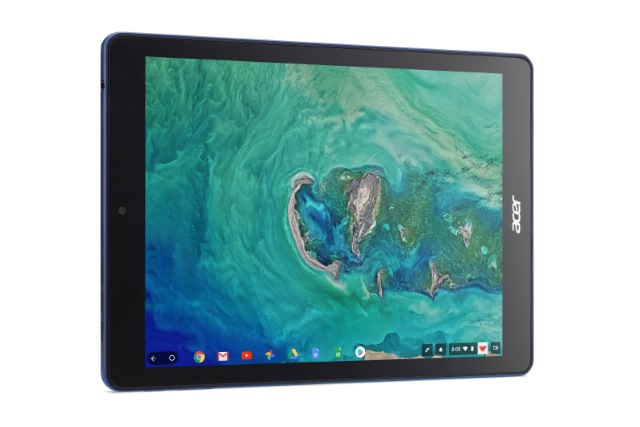
Acer Chromebook Tab 10 is a student-friendly Chrome OS tablet
Acer today revealed what it describes as the "first tablet running Chrome OS designed for education" -- the Acer Chromebook Tab 10 (or D651N).
Featuring a 9.7-inch QXGA LED-backlit display with a resolution of 2,048 x 1,536 (264 PPI), the Chromebook Tab 10 is equipped with a Wacom EMR stylus to allow for easy writing and drawing. Although not available at launch, there is planned support for Google Expeditions AR, and Acer is hoping that the tablet will find its way into the hands of students of all ages.

One in three consumers owns two or more smart home devices
Smart home technology is catching on in a big way with a third of US consumers now having two or more smart devices, according to a new study.
The Smart Home report from GfK Research shows a high level of awareness of the technology, with 58 percent of US consumers saying smart home technology is likely to change their lives in the next few years.

Facebook rolls out locally-focused News Feed globally
Facebook is constantly messing about with its News Feed, and it's only a matter of weeks since the social network said it was going to prioritize local news. Initially, this was only the case in the US, but now the change is rolling out around the globe.
The company says that "people around the world will see more news on Facebook from local sources covering their current city and other cities they may care about." Unfortunately for Facebook, however, it's unlikely to serve as too much of a distraction from the call/SMS logging controversy or the Cambridge Analytica debacle.