
Best Windows 10 apps this week
Two-hundred-and-fifty-nine in a series. Welcome to this week's overview of the best apps, games and extensions released for Windows 10 on the Windows Store in the past seven days.
Microsoft revealed this week that the company's Windows 10 operating system was installed on more than 600 million devices. Also, Microsoft Edge final is now available on iOS and Android.

Privacy: UK government to tweak Snooper's Charter after conceding it is illegal in its current form
The highly controversial Snooper's Charter -- also known as the Investigatory Powers Act -- is, the government has been forced to admit, illegal under European law in its current form.
The Brexit process may well be underway, but at the moment, the UK is still subject to EU law. As such, the government is making changes to the law. While the tweaks will not change the level of surveillance people are subjected to, they will restrict who has automatic access to that information.

NetMarketShare: Windows 7 still well ahead of Windows 10
According to the latest figures from NetMarketShare, Windows 10 is edging closer to Windows 7’s usage share, but it still has a way to go until it overtakes it.
In October, Windows 10 saw its slowest growth in months, posting a gain of just 0.17 percentage points. In November, however, it’s a very different picture.
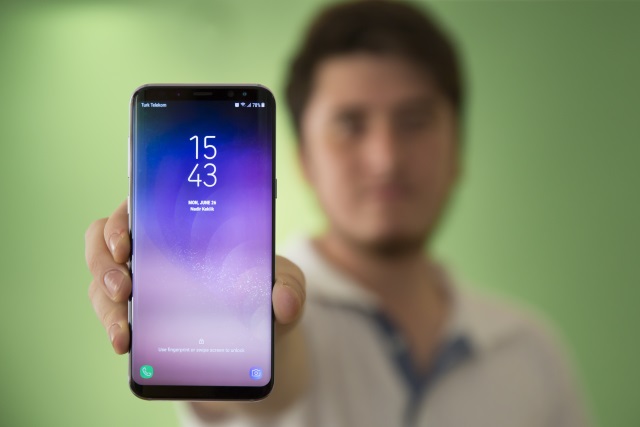
Google bans most Android apps from displaying lockscreen ads
It is near impossible to avoid ads these days, but Google has just introduced a new policy that makes at least one area of your smartphone a safe haven.
The new policy means that most apps will no longer be permitted to display ads on the lockscreen. But while this is something that will please Android users, it's not something that the company has really trumpeted.
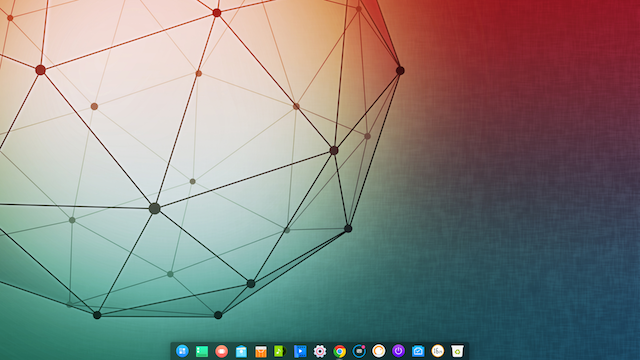
Want to switch from Apple macOS to Linux because of the 'root' security bug? Give deepin 15.5 a try!
Apple's macOS is a great operating system. Not only is it stable and beautifully designed, but it is very secure too. Well, usually it is. Unless you live under a rock, you definitely heard about the macOS High Sierra security bug that made the news over the last couple of days. In case you somehow are unaware, the bug essentially made it so anyone could log into any Mac running the latest version of the operating system.
Luckily, Apple has already patched the bug, and some people -- like me -- have forgiven the company. Understandably, not everyone will be as forgiving as me. Undoubtedly, there are Mac users that are ready to jump ship as a result of the embarrassing bug. While that is probably an overreaction, if you are set on trying an alternative operating system, you should not go with Windows 10. Instead, you should embrace Linux. In fact, rather serendipitously, a Linux distribution with a UI reminiscent of macOS gets a new version today. Called "deepin," version 15.5 of the distro is now ready to download.
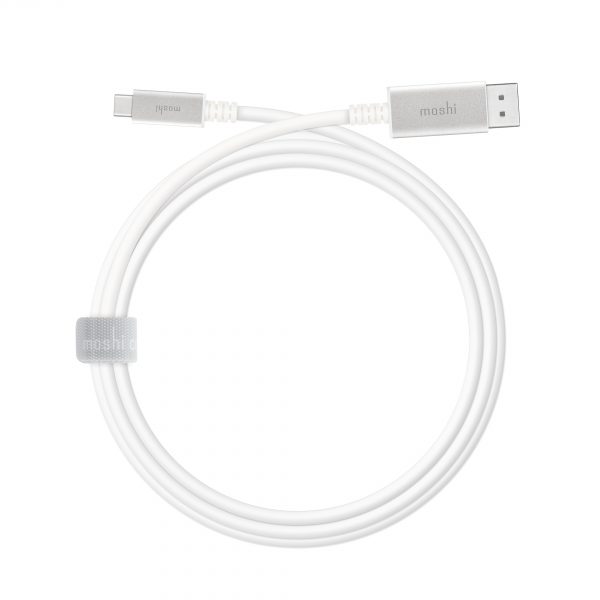
Moshi releases first-ever certified 5K USB-C to DisplayPort cable
While the MacBook Pro doesn’t have a dedicated video port, that really doesn’t matter. Thanks to its versatile USB-C ports, any port can output video with the correct cable or dongle. In other words, a USB-C to HDMI, VGA, or DisplayPort cable can allow you to easily connect a computer to a monitor or television.
Most USB-C to DisplayPort cables claim 4K support at the most, but there is a new cable that takes things up a notch. You see, a new product from a company called "Moshi" can apparently do 5K at 60Hz. The company claims this is the first-ever USB-C cable to be certified by VESA for that resolution. It can even do 4:4:4 chroma subsampling. While it is designed for MacBook and MacBook Pro, it should work fine with Windows and Linux computers too.

American Airlines computer glitch gives all pilots Christmas off
Christmas is quickly approaching and Santa is not the only one flying for the holiday. The yuletide season is one of the most popular travel times of the year. After all, as the song says There's No Place Like Home for the Holidays.
If you've planned your trip out and already booked your flight then you may not want to start packing just yet. There may be a small problem in that well thought-out itinerary, so alert mom and dad now.

Almost half of businesses think their leadership is digitally illiterate
Digital transformation is increasingly critical to business success, yet a new survey of technology professionals shows that 47 percent lack confidence in the digital literacy of their leadership.
The study by technology association ISACA shows less than 25 percent of organizations believe their senior leadership is very receptive to adopting emerging technologies, while 20 percent are believed to be not receptive at all.
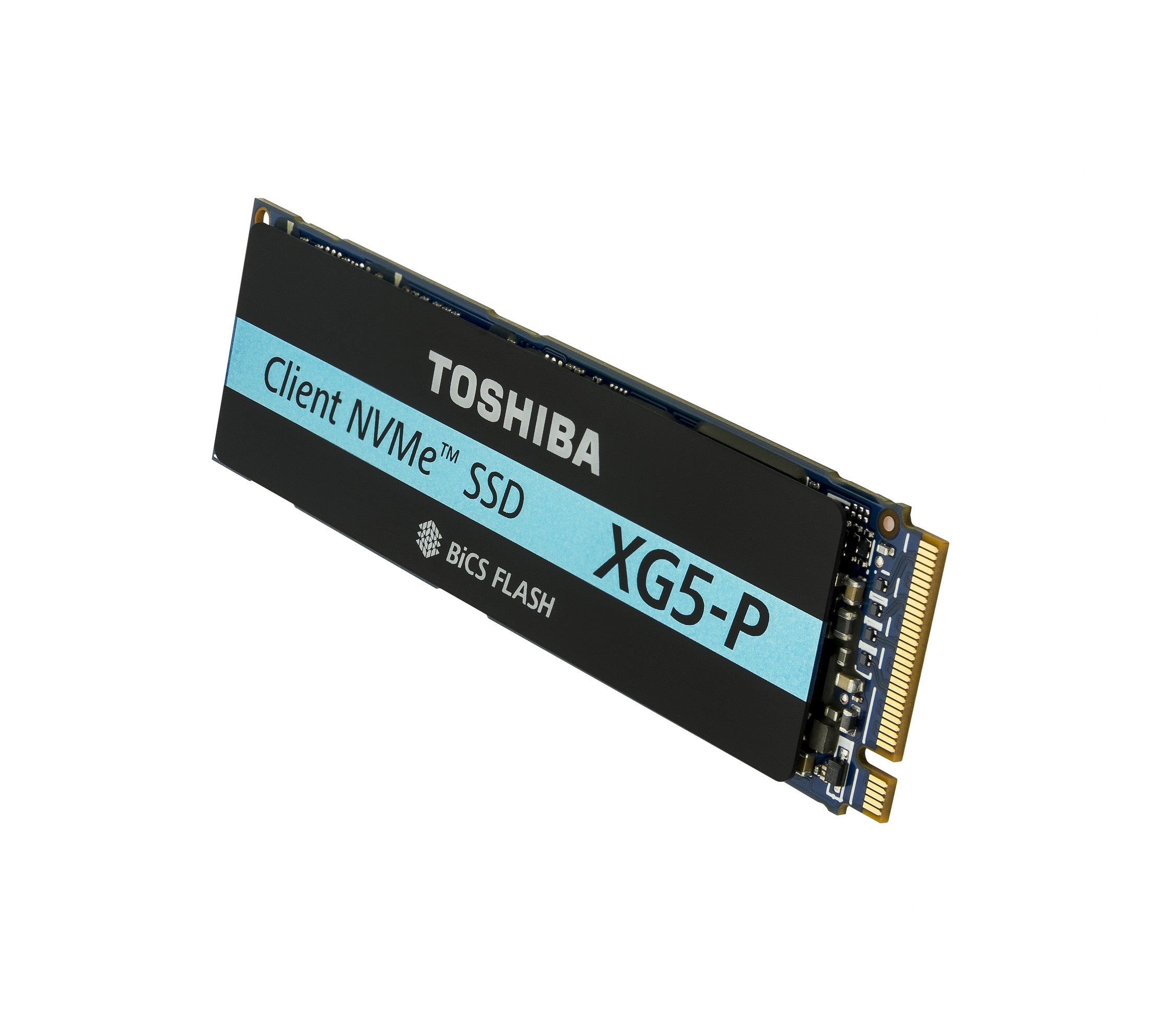
Toshiba unveils 2TB XG5-P NVMe SSD
For computer enthusiasts, we are living in a very exciting time. Hardware is faster than ever, while prices for parts are quite reasonable. You can build a very capable PC without breaking the bank.
One of my favorite components is the solid state drive. Not only are they much faster than traditional mechanical hard disk drives, but they can reduce power usage too -- a big win for battery life on laptops and tablets. Today, Toshiba unveils its latest such drive and it looks amazing. The 2TB XG5-P is NVMe based, meaning it will be blazing fast.

The crypto rally is over as market enters correction
Fueled by Bitcoin, Ethereum, Bitcoin Cash and other major players, the crypto market hit a new all-time-high yesterday, reaching a valuation of over $345 billion. But, as the saying goes, what goes up must come down. So, as the incredible rally finally came to an end, the market started to crash, big time.
This is not uncommon for the crypto scene. This year we have seen three similar crashes happening. All coincided with Bitcoin setting a new price record. This one is no different, as the market entered a correction right after the most-valuable cryptocurrency broke $11,500, sending it back into the low-$9,000s.

Ivanti inventories and protects enterprise endpoints
Endpoint systems continue to be the weakest point for most organizations, allowing a potential route for hackers to penetrate networks and steal data.
IT and security operations specialist Ivanti is launching a new version of its Endpoint Manager and Endpoint Security aimed at simplifying endpoint management and security with an integrated console and workflows.
Google faces class action lawsuit for gathering personal data from millions of iPhone users
A group going by the name Google You Owe Us is taking Google to court in the UK, complaining that the company harvested personal data from 5.4 million iPhone users.
The group is led by Richard Lloyd, director of consumer group Which?, and it alleges that Google bypassed privacy settings on iPhones between June 2011 and February 2012. The lawsuit seeks compensation for those affected by what is described as a "violation of trust."
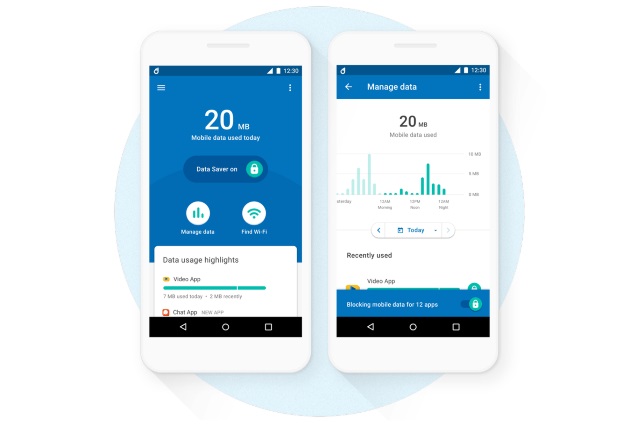
Google launches Datally for Android, a tool to monitor and control mobile data usage
For many people -- particularly in certain parts of the world -- mobile data is an expensive commodity. If you're someone who likes to keep an eye on exactly what's using up all of your allowance -- and take control of it -- Google's new Android app, Datally, can help.
Datally has been designed to not only reveal which apps are using up data, but to provide a way to rein it in. Formerly known as Triangle whilst in beta, the app lets you block background data usage on a per-app basis, and makes it much easier to access data-related settings.

Apple expeditiously patches embarrassing macOS High Sierra security bug, thereby regaining my trust
I am not a rich man. With that said, when I bought my first-ever Mac computer last year -- a 2016 MacBook Pro with Touch Bar -- parting with that much cash was a very big deal for me. I spent more on this laptop than my first car! Why did I buy it? After being impressed by iOS and liking the way the two operating systems worked together, I decided to use Mac OS X (now macOS) in addition to my favorite Linux distributions. To be honest, I feel more safe on Apple's desktop operating system than on Windows 10. I also like how Tim Cook and company stand up for privacy. In other words, I trusted Apple.
And then yesterday happened. It was revealed that macOS High Sierra had one of the worst security bugs ever. By entering "root" as the username, followed by a blank password, anybody could access any Mac running macOS 10.13.1. As soon as I read about this embarrassing vulnerability, my heart sank. I gave Apple thousands of my hard earned dollars because I valued security and privacy, and I was rewarded with incompetence. Well, I am happy to say that my head is much cooler today, and Apple has regained my trust. Why? Because the company has already patched the bug.

Windows 10 is now on 600 million active devices
At 2015’s Build developer conference, Microsoft announced that it anticipated over 1 billion Windows 10 devices to be in consumers hands within 2 years, but thanks to the failure -- and ultimate death -- of Windows 10 Mobile, that was clearly never going to happen, and Microsoft was forced to admit as much a year ago.
When the OS was offered as a free download, initial growth was strong, with Windows 10 finding its way on to 350 million devices in the first year. But growth slowed significantly once the free period ended.