
Where have all the fanboys gone? Is brand loyalty dead and buried?
This is a personal account of the way I have noticed the technology markets changing over the years. It is not gospel, and you are welcome (encouraged, if you like) to disagree… It's not all that long ago that brand loyalty was a given; it was almost the default setting for many people. If you got into computing -- and it was something you "got into" rather than just having as part of your life -- you stuck loyally to whatever brand you chose at the start. We could go back to the 70s and look at the birth of personal computing, but as this is my personal account, we'll have to start in the 80s.
I did just manage to sneak into the 70s -- being born in 1979 puts me in the difficult-to-comprehend position of being 34 years old but having seen five decades -- but an interest in computing didn't emerge until some time in the late 80s. I remember there being several computing camps: BBC, Amstrad, Spectrum, Vic and Commodore to name a few. My decision was made for me at an early age when my dad decided to invest in a Commodore 16 Plus 4 (the Plus 4 referring to the fact that the OS featured four built-in applications including a spreadsheet tool, the absurd simplicity of which was not lost on me even at a young age).
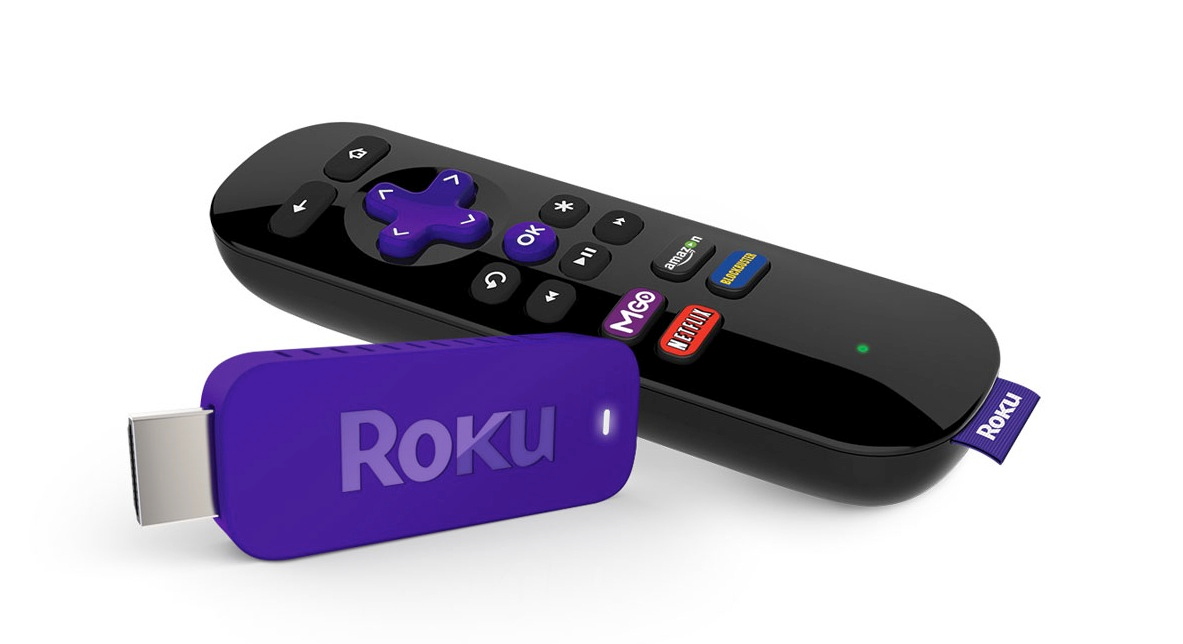
Roku unleashes Stream Stick, takes aim at Chromecast
The Google Chromecast, which was announced in conjunction with the Nexus 7 last June, has been receiving a lot of attention as of late. This is mostly due to new functionality rolling out, along with the promise of more to come. But set-top box maker Roku wants a bit of that action and is now releasing it's own competitor to the Google product.
The Roku Stream Stick was unveiled today, bringing much of the same functionality. "This new tiny player plugs discreetly into an HDMI port – perfect for those beautiful wall-mounted TVs – and packs the complete Roku streaming experience", states Roku's SVP of product management, Jim Funk.

Zombies, Run! Season 3 out next month
I went for a 5k run before starting work this morning, and as always Zombies, Run! provided me with the motivation required to not come to a stop, bored, after ten minutes. I’ve covered the immersive app several times in the past, but if you’re not familiar with it, Zombies, Run! basically turns a real-world jog into a journey through the zombie apocalypse. Episodic stories unfold in between tracks from your playlist as you run.
There are plenty of episodes on offer for regular runners, and a radio mode will give you something to listen to once you’ve finished with the main story and side quests. However, sooner or later you’ll have listened to everything and be ready for new tales, and the good news is they’re on their way.

GroupFlix a-la-carte TV beta opens for sign-up
I know I’ve talked a lot about home media and cord-cutting these days, but it is becoming an increasingly busy subject. Now a brand new service is aiming to move into the market, and it brings some intriguing promise with it.
GroupFlix may not be a name you are familiar with, but that certainly could change in 2014. The company is partnering up with studios to build a library of content that could be the answer to tearing customers away from the cable and satellite providers.

$1.7 trillion a year, the cost of dealing with business email
Email has become a staple of business communication and although it's essentially free it has a hidden cost in terms the time spent dealing with it.
Collaborative email service Contatta has released an infographic which quantifies how time consuming and costly business email has become.

Skype for Outlook.com finally available to all, gains HD video calling
Ten months ago, Microsoft announced it would be rolling out a preview version of Skype for Outlook.com in the United Kingdom that would allow users to make audio and video calls directly from their inboxes.
Three months later, the devices and services giant expanded the preview’s availability to five additional countries -- United States, Canada, Germany, France and Brazil -- and stated it would be rolling out the feature to the rest of the world "in the coming weeks". A mere seven months later and finally, today, Microsoft makes good on that promise, announcing that Skype for Outlook.com is now available to all. The service also gains support for HD video calls.

Automatically back up your flash drives with USBFlashCopy
Backing up the contents of a USB key is simple enough: plug it in, open Explorer, select any important files and copy them wherever you like.
The process can become a little tedious, especially if you’re doing it all the time. But there could be a very easy solution. Just get the free-for-personal-use USBFlashCopy to automatically run any backups for you.
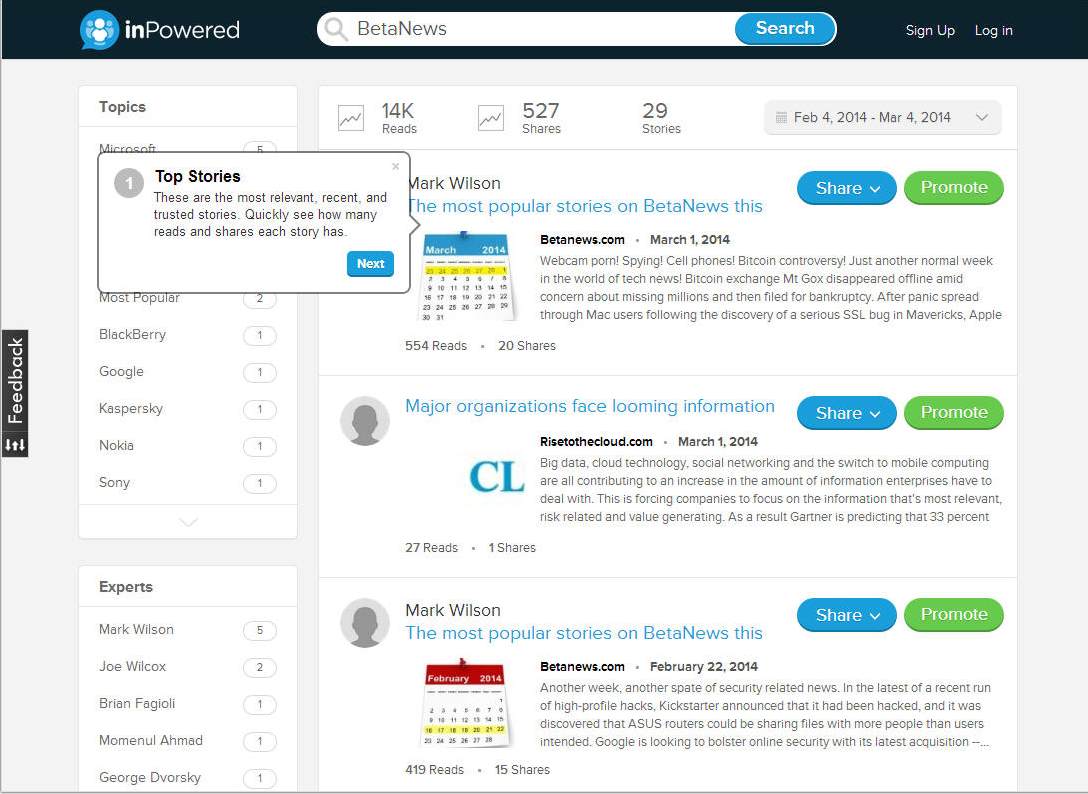
Free content marketing for all from inPowered
San Francisco-based content discovery specialist inPowered is making its discovery and amplification platform free for all organizations.
The software aims to help companies uncover trusted content, such as third-party reviews and articles, and use it to inform and engage their audience.
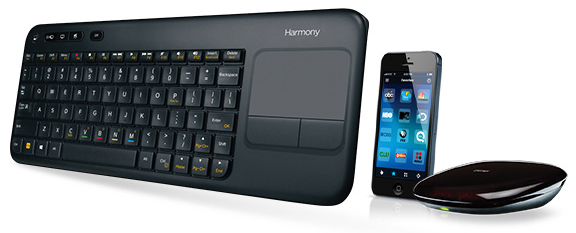
Logitech brings its Harmony brand to the keyboard, wants to control your home theater
Logitech’s Harmony line has been getting a recent refresh, with new remote controls being released. The universal remotes are highly useful for home theater enthusiasts, as they offer easy programming and excellent functionality.
Now the expansion continues, but this time it jumps to the keyboard. You don’t even need to have an HTPC to take advantage of this new keyboard in your living room, thanks to a unique design idea.
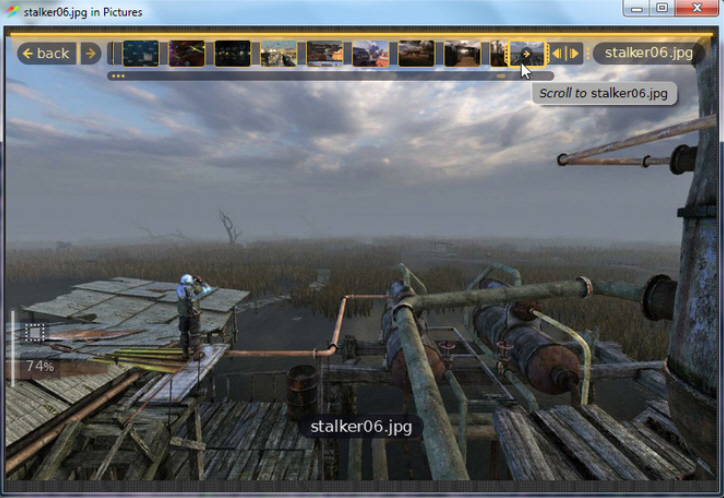
Fragment is an ultra-lightweight, cross-platform image viewer
The image viewer market is a tough and competitive place, and it’s extremely difficult for newcomers to stand out from the crowd. You might try to pack in the features, for instance -- but it probably won’t make any difference. A big-name contender like IrfanView has been around for almost 18 years, and creating something even a fraction as powerful would take a very long time.
Fortunately, Fragment Image Viewer took another route. It’s not crammed with functions, there are no editing or batch processing tools: compared to many viewers, it’s really quite basic. But the program does have a few interesting and unusual tricks, which might, perhaps, persuade you to give it a try.

Yahoo and BlackBerry worm further into your life with mobile ads
There are few people who like ads. Sure, they can be works of art -- certainly there are some advertisements that are infinitely better than a lot of the dirge pumped out by television networks -- but while advertisements on television can be fairly easily avoided (thank you TiVo -- other PVRs are available!) it is a different matter on a computer or mobile device. "Opting" to watch a mindblowing ad for Apple, Guinness or Honda is one thing, but to have unavoidable -- and usually crappy -- advertisements forced upon you whilst browsing the web or using an application is an entirely different matter.
There are groups of people who are happy to endure these adverts because they fund apps, and make it possible for developers to provide their hard work free of charge -- you may fall into this group and have perhaps been able to configure an automatic ad filter for your eyes. But there are larger legions for whom ads are just plain, damned irritating. In some instances it is possible to pay to avoid them, but this is not always the case. If BlackBerry and Yahoo get their way, advertisements are going to become rather more noticeable.

Directory Opus revamps interface, adds new scripting powers
GPSoftware has announced the release of Directory Opus 11, the latest edition of its powerful Windows file manager. And perhaps unsurprisingly, with a three year gap since version 10, it’s absolutely packed with new features.
The interface has been revamped in many ways. There are thumbnails in the Details and Power modes; the breadcrumb path has a clickable "ghost" of your previous path; the folder tree is easier to navigate, and remembers which branches are expanded; and a new Jobs Bar helps you see and manage all your current file operations.
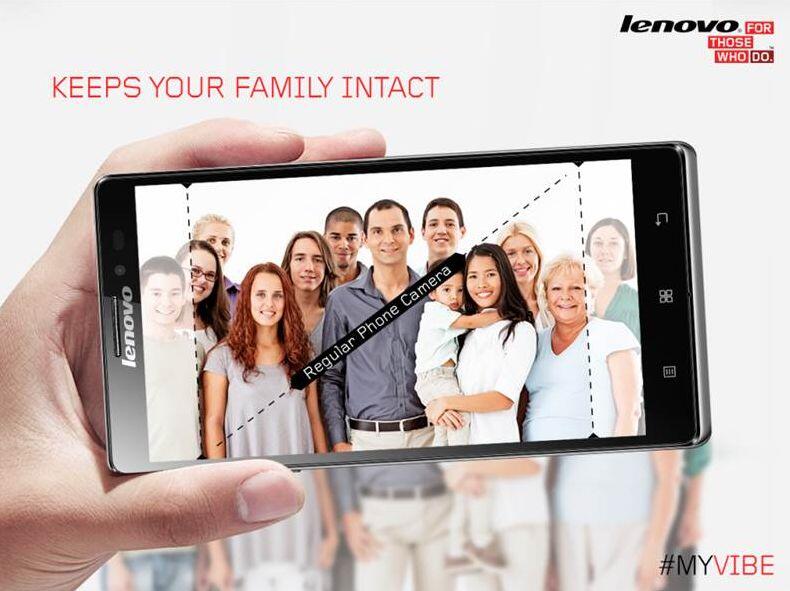
Lenovo, LG have a 'me too' moment, also tell Ellen they have better smartphone cameras than Samsung
Ellen DeGeneres' Samsung Galaxy Note 3 made waves at the Academy Awards after being used to snap an on-stage selfie and a group shot. Both quickly became hugely popular photos taken at the event, and target practice for the South Korean maker's rivals.
Nokia was first to take a stab at Samsung for the terrible quality of DeGeneres' selfie, implying she should have used one of its smartphones instead. The photo posted by the star even had the #blurry hashtag added on Twitter to make up for what was basically a missed shot. Not to miss this opportunity (to be unoriginal), Lenovo and LG also took to Twitter to convince us that their smartphones would have fared better than Samsung's phablet.

Opera 20 released, beefs up bookmarks bar, Speed Dial
Opera Software has released Opera 20 FINAL for Windows and Mac. It’s the sixth major update since the browser was rebooted with the Chromium browser engine, and follows previous releases in offering evolutionary changes rather than revolutionary ones.
Many of the new features in version 20 build on features added in January when Opera 19 was released, with improvements to the bookmarks bar and advanced Hardcore mode in addition to a handful of other tweaks.
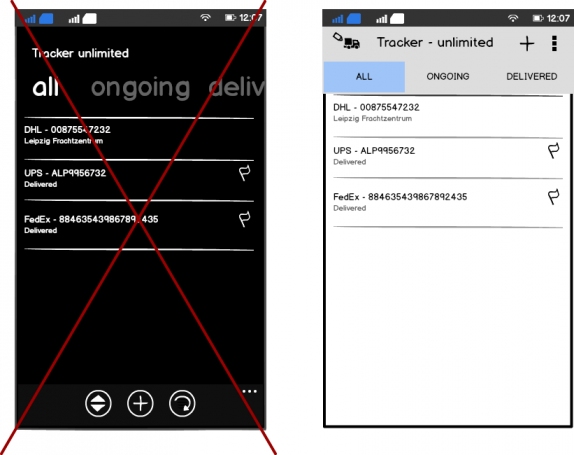
Nokia wants apps for its X lineup to have an Android look and feel
When Nokia officially unveiled its X smartphones it was clear the Finnish company intended its new Android lineup to look similar to Lumia Windows Phones. The internals may be on the low-end side, but the hardware design looks just as premium, undoubtedly aided by the funky colors, and the software... well, the homescreen interface resembles the Windows Phone tiles, which is the dead giveaway as far as this writer can tell.
Some may rightfully point out that X smartphones are superior to Lumias in one major area -- apps. Courtesy of the mature Android ecosystem, Nokia's droids are compatible with hundreds of thousands of offerings, which is more than Windows Phone can tout. It would make sense for Nokia to encourage developers to make their apps more like those on Windows Phone to warm repeat customers to the idea of upgrading to one of its higher-end smartphones, which run Microsoft's tiled operating system. But, Nokia has other plans.