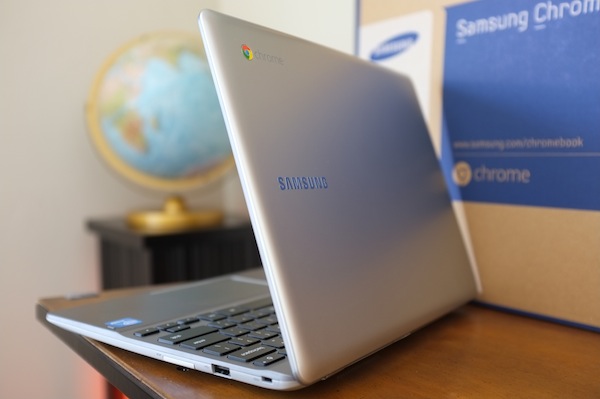
Walmart to sell Chromebooks next to motor oil and pregnancy tests
Today, Google announces that it has partnered with additional brick-and-mortar retailers to sell its Chromebooks. Walmart and Staples are being announced as immediate new partners, while select Office Depot, OfficeMax, Fry’s and TigerDirect stores will be coming later. Walmart is only carrying the Acer C7, while the other retailers will sport a mix of brands, including Acer, HP and Samsung. This is a good move for Google as it is sure to increase awareness of the company's ChromeOS and Chromebook line of computers. Currently, in the USA, Best Buy is the only physical retailer selling Chromebooks.
Google has also added new retail partners outside of the USA -- Tesco in the UK, Mediamarket and Saturn in the Netherlands, FNAC in France, Elgiganten stores in Sweden and JB Hi-Fi and Harvey Norman in Australia.

Adobe Creative Cloud launches Windows 8 apps
Adobe caused a fair amount of controversy over forcing users into subscription services, while Microsoft Office continues to provide an option to its customers. Now Adobe rolls out its latest Creative Cloud model, in the form of Windows 8 apps -- yes, you still need to pay a subscription fee.
The new rollout comes with several options, including the flagship Premiere Pro CC, which packs in new features for video editors, such as enhanced GPU support, redesigned timeline with new shortcuts and new selective paste attributes, new closed captioning capabilities and additional codec options.

Skype video messaging emerges from beta
A big reason that video phones never took off was that many people didn't want the person calling to see them. It's understandable really -- no one wants to take a call from their boss while wearing nothing but their underwear.
Skype somewhat solves this problem with the ability to schedule a call for when you are looking your best, and now the Microsoft-owned communications app allows users to send video messages for those times when it isn't convenient to chat face to face.
Caesium can batch compress JPEGS by up to 90%
When you save a JPEG it’s easy to just accept your default image options, click File > Save and get on with your next task. But that probably means you’ll always be using the same JPEG compression level, and unless you’ve tuned this to an optimum figure, your final images could be anything up to ten times larger than they need to be.
Could this be a problem for you? The open source Caesium provides an easy way to find out. Point the program at a selection of images (PNG, BMP and WMF are supported, as well as JPG) or an entire folder, and it can quickly recompress them all with a lower quality setting, before reporting on any savings it’s achieved.
Microsoft beefs up Windows Phone speech recognition -- twice as fast, more accurate
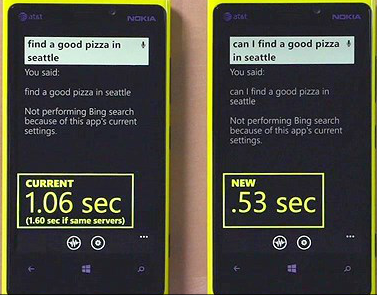
Despite its limitations, the Windows Phone voice assistant has at least one good thing going for it. The speech recognition service quickly understands words, sentences and commands, with answers to questions like "What is the weather in New York" popping up in a matter of seconds.
Microsoft still hasn't tackled the feature set but, today, the software giant announced that the Windows Phone voice assistant is now even "more accurate and twice as fast". According to the Bing Speech Team, DNNs (Deep Neural Networks) fuel the under-the-hood improvements, which have quietly rolled out over the past couple of weeks.

WYSIWYG Web Builder 9 adds ribbon interface, Google Web Fonts support
Pablo Software Solutions has released WYSIWYG Web Builder 9, a major new version of its DTP-style web building tool for Windows users. Version 9 debuts a completely redesigned user interface based on the ribbon found in Microsoft Office and other products. It also adds support for Google Web Fonts, bundles new and improved navigation objects, animations and transitions and supports CMS plug-ins for the first time.
The tool, which costs $45, aims to make web design easier by providing a desktop-publishing style approach to building web pages. In all, over 150 new features have been added to this release.
Find out how safe your PC is with OPSWAT Security Score
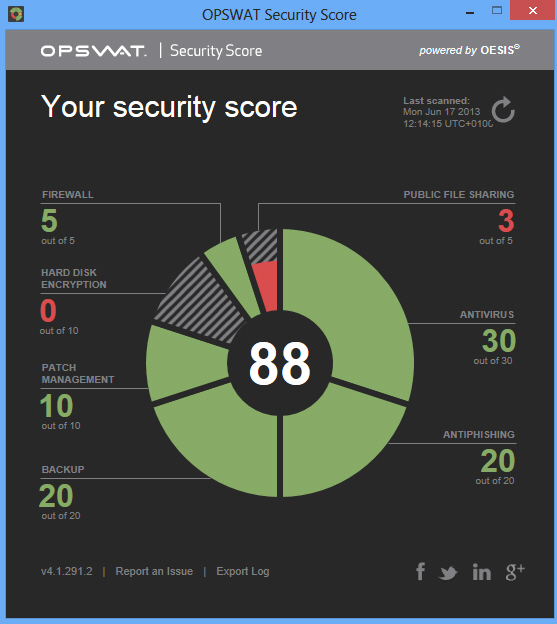
OPSWAT has released the final version of its free Security Score product, a simple tool which scans your PC, reports on any security issues it finds, and provides basic advice on how to resolve them.
The program is exceptionally easy to use. There’s no complex interface to figure out, no settings to consider, almost nothing to do at all: just launch Security Score, it scans your PC, and returns with the details in just a few seconds.
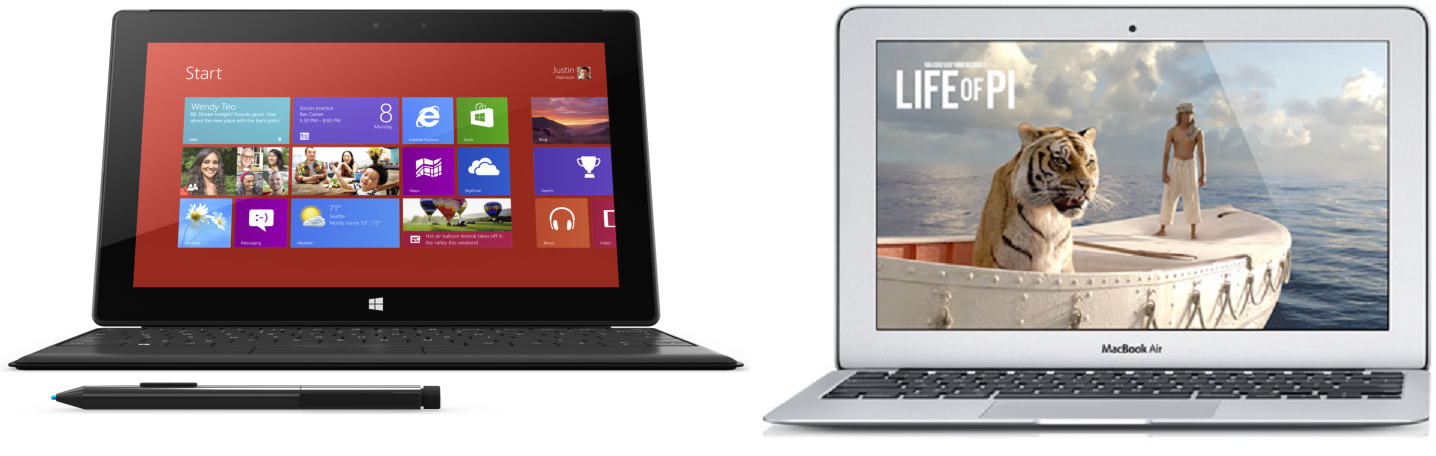
Microsoft Surface Pro gets even stiffer competition from new 11.6-inch Apple MacBook Air -- which one would you buy?
To the untrained eye, this comparison appears to be moot. After all, the Surface Pro is a tablet and the 11.6-inch MacBook Air is, indeed, an ultrabook. Traditionally, the two types of devices rarely have anything in common. Tablets offer touchscreens, portability and great battery life while ultrabooks usually fail to deliver the same level of versatility. So how can one pit the Surface Pro against the smaller MacBook Air?
As my colleague Joe Wilcox explained almost seven months ago, the two devices actually have a great deal in common. The Microsoft-branded tablet kicks off at $899, can be coupled with a dedicated keyboard, has expansion ports, runs a fully-fledged operating system and, to its disadvantage, delivers pretty appalling battery life. The Apple-branded ultrabook packs similar hardware specifications, starts at $999 but offers a built-in keyboard from the get-go. And, in the meantime, the fruit company upgraded its device to Intel "Haswell" Core processors which provide a tremendous bump in battery life. Now, more than ever, choosing between the two is a very tough call.
Lock out autorun viruses with NTFS Drive Protection
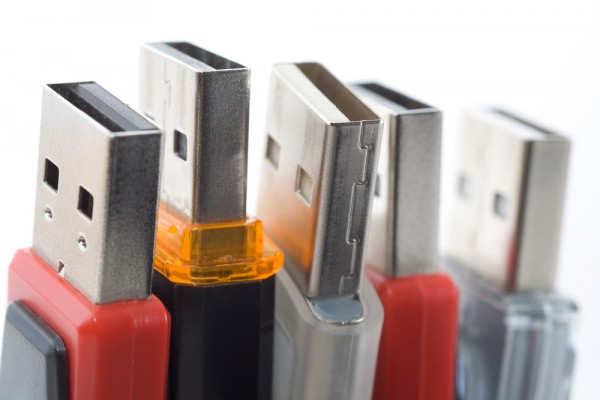
USB keys are a cheap and convenient way to carry important files around. Unfortunately they’re also common carriers of autorun viruses, which write themselves to the drive in an attempt to infect other systems. The risk can be reduced by turning off autorun, if it’s not disabled already (and it will be on most modern PCs), but for extra security you might prefer NTFS Drive Protection, which prevents anyone writing to the drive at all.
The program is compact (a 642K download), portable and easy to use. Launch Ntfs Drive Protection, select your USB drive in the "Target Drive" box, click "Start Protection" -- and that’s it. In just a few seconds the program will change your file and folder permissions, and no-one (not even you) will be able to add new files to the drive, or edit what’s already there.
Will you be installing Windows 8.1? [Poll]
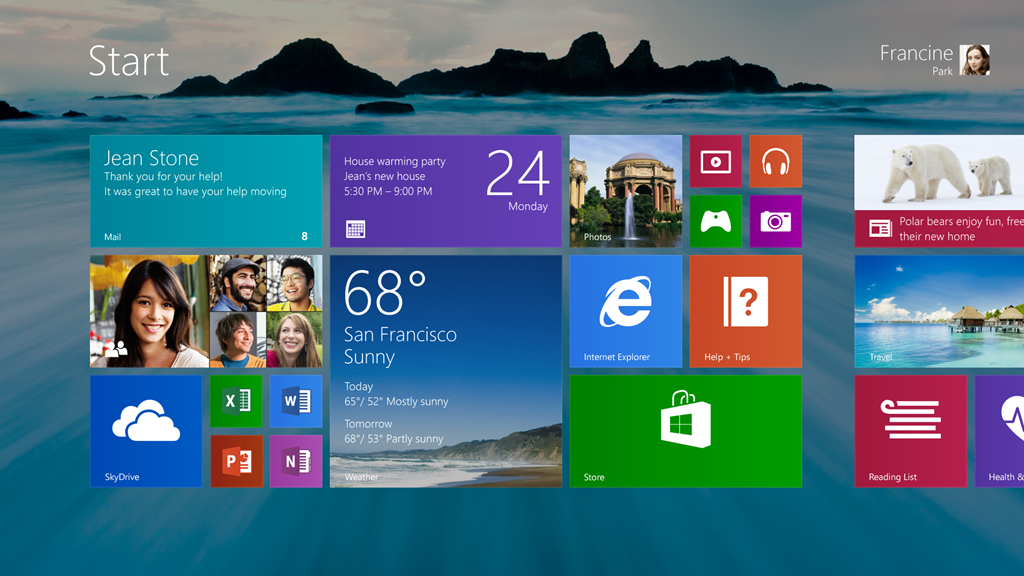
On June 26 Microsoft will release a preview of Windows 8.1. The OS refresh is designed to make the operating system easier to use, address some of the concerns that users have, and persuade doubters to finally make the switch.
Windows 8.1 fixes issues and introduces some welcome new features, including the return of the Start button, boot to desktop, the option to have multiple apps on screen at once, Internet Explorer 11, the ability to turn the lockscreen into a photoframe, as well as various Bring Your Own Device (BYOD) and security enhancements.

z33k lets you search for, listen to, download and convert music with ease
Software developers face many challenges, but perhaps the greatest of all is figuring out how to make their program stand out from the crowd.
You could focus on a single key function, for instance, and make that just as good as it can be. But if that’s a problem, then you can always follow the example of do-everything MP3 tool z33k, and cram it with as many features as you can think of (and then a few more, for good measure).

Tech companies reveal details of NSA data requests
In the light of last week’s PRISM revelations the major tech companies have all been quick to deny that they allow the NSA direct access to their servers. But they have also said that they respond to lawful requests for data and have been revealing the numbers involved.
Apple says it received between 4,000 and 5,000 requests from US federal, state and local law enforcement agencies for customer data between December 1, 2012 and May 31, 2013. In its press release Apple says, "Regardless of the circumstances, our Legal team conducts an evaluation of each request and, only if appropriate, we retrieve and deliver the narrowest possible set of information to the authorities. In fact, from time to time when we see inconsistencies or inaccuracies in a request, we will refuse to fulfill it". Apple also says that certain types of data such as iMessage and FaceTime conversations along with Map searches and Siri requests are not retained in an identifiable form.
HotShots is not just another screen grab tool
One small but welcome addition to Windows 8 is its new extended screen capture feature. Press Win+PrtSc and you’ll both grab the current screen, and save it directly to disk, which means there’s no longer any need to do the Alt+Tab, Edit > Paste, File > Save shuffle for every single image.
This is only a very small step forward, of course: the chances are you’ll still need to spend plenty of time editing your grabs before they’re ready for use. And so a better approach might be to install a tool like the free HotShots, which not only captures screens for you, but also provides some excellent editing tools to help you get them ready for prime time.

All mobile apps should require a subscription like Microsoft Office for iPhone
A couple of days ago, Microsoft quietly launched Office for iPhone. To the ire of many, it requires an Office 365 subscription. The internet is abuzz with chatter that this is simply a way to gain 365 subscriptions. While I do agree this is a way to increase subscriber numbers, it is not the full picture -- it is also the best way to fight piracy. This is the future of mobile app purchasing.
I applaud Microsoft for taking this approach. On iOS, piracy is far too convenient on a jailbroken device, thanks to apps that help the user download them. On Android, a phone does not even need root to install pirated .apk files. And so, how could Microsoft release its flagship software potentially for free for jailbroken iOS users and all Android users? Microsoft Office is too important to show up as an .apk for free in a Google (or Bing) search.
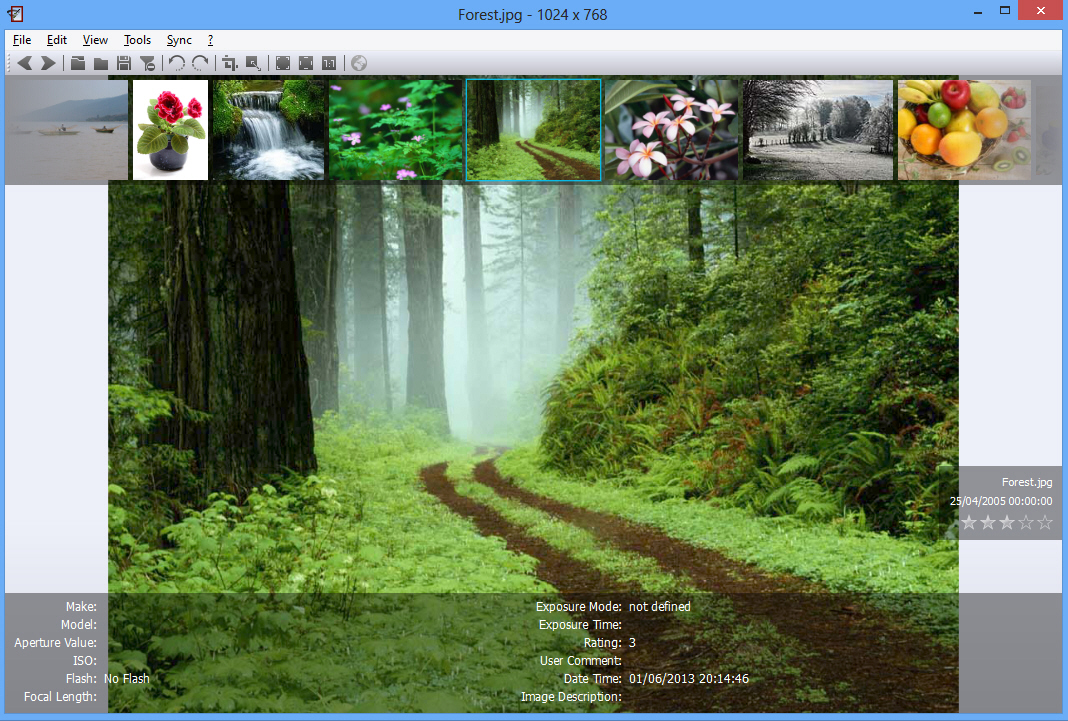
nomacs is a free image viewer with some unusual extras
Does the world really need another image viewer? It’s tempting to say no, as even Windows Explorer does a reasonable job of helping you browse your pictures, but nomacs is a cross-platform viewer which is aiming to change your mind. And it just might be good enough to succeed.
The program opens much like any other image viewer. You can display individual files or complete folders, for instance (there’s support for viewing all the main formats, including many RAW file types). A thumbnail browser helps you manually navigate to the images you need, or you can use the Player to create an automatic slideshow.