Want to learn Android programming? The Linux Foundation can help
Android, the popular mobile operating system, is based on Linux and there are a number of good reasons to learn how to program for it. Number one is the vast audience that will be at your disposal if you can make it into the Google Play store or Amazon's Appstore for Android.
The Linux Foundation has launched a new initiative to help interested parties learn basic Android programming. So far, Juliet Kemp has only posted part one of Android Programming for Beginners and it just covers the basics to get you started, but more advanced tutorials are promised in the future. The two-part intro to Android coding will show you how to get a basic timer app up and running, and teach you about the Android API. It assumes some basic familiarity with Java, XML, and programming concepts, but is easy enough to follow.
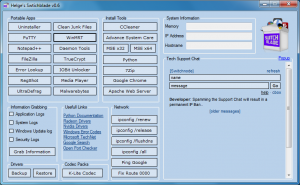
Troubleshoot PC problems with Switchblade, a free portable toolkit
If you regularly find yourself helping to fix other people’s PC problems then you’ve probably already thought about creating a portable troubleshooting toolkit. And this needn’t take very long. Just copy something like the Sysinternals Suite to a USB stick, for instance, and you’ll be more than equipped to diagnose and resolve all kinds of issues.
And if you find you need to extend your troubleshooting capabilities even further, then you can always add another free toolkit or two. Switchblade is an excellent free example: just download the latest version, unzip it to your USB key and you’ll gain all kinds of useful features and functionality.

UC4: Web outages, like Amazon’s recent issues, can be predicted and avoided [Q&A]
Problems at Amazon Web Services (AWS) caused a major Netflix service failure on Christmas Eve that affected a large portion of US and Canadian subscribers. "Terrible timing" Netflix tweeted as the scale of the problem became apparent. The outage in this case, Amazon said afterwards, was caused by human error -- a developer accidentally deleted some Elastic Load Balancer (ELB) data.
This wasn’t the first high-profile web outage, and it certainly won’t be the last either, but as Randy Clark, UC4 Chief Marketing Officer explains, solutions like DevOps, WebOps and ITPA can all help to limit the problem.

Hollywood can’t help but take advantage of tech companies
Second in a series. A friend of mine who is a securities lawyer in New York worked on the 1985 sale of 20th Century Fox by Marvin Davis to Rupert Murdoch. He led a group of New York attorneys to Los Angeles where they spent weeks going over contracts for many Fox films. What they found was that with few exceptions there were no contracts. There were signed letters of intent (agreements to agree) for pictures budgeted at $20-$50 million but almost no actual contracts. Effectively business was being done, movies were being made, and huge sums of money were being transferred on a handshake. That’s how Hollywood tends to do business and it doesn’t go down very well with outsiders, so they for the most part remain outside.
Jump to this week’s evolving story about Intel supposedly entering with a bang the TV set-top box business replete with previously unlicensed cable content -- an Over-The-Top virtual cable system. This was expected to be announced, I’m told, at next week’s Consumer Electronics Show in Las Vegas.
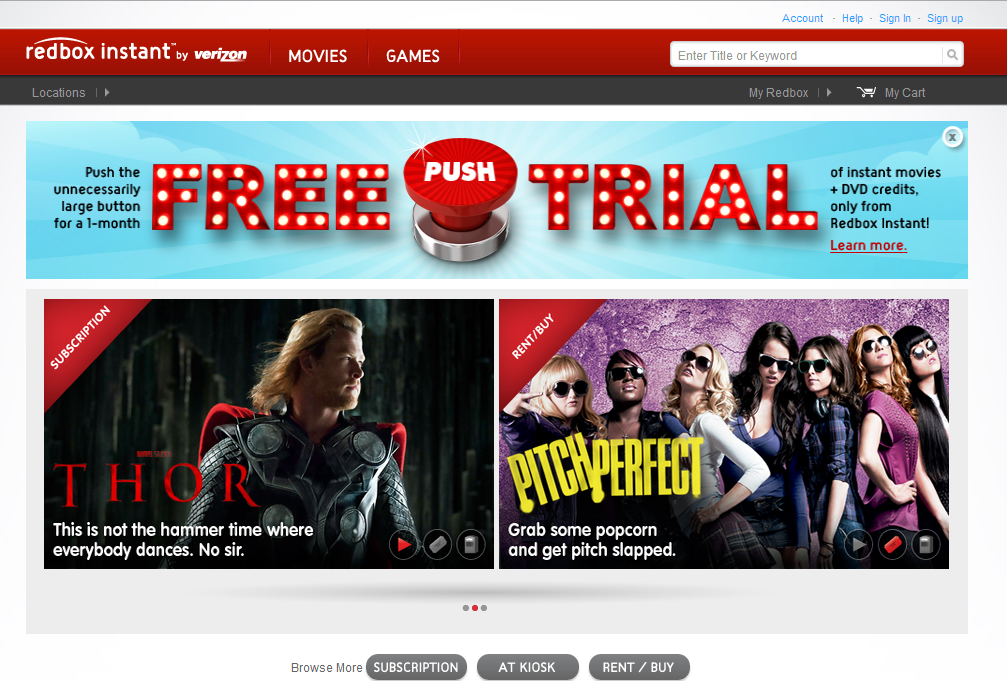
First look: Redbox Instant by Verizon
Are you looking for competition to Netflix and Amazon Prime? By now you have likely heard that Redbox has teamed with Verizon to provide just that. The kiosks, which can be found almost everywhere these days, are quite popular with a number of people, but running out to a store, especially in bad weather, is not overly user-friendly. When the snow is flying, it is so much nicer to get the movie you want without leaving your couch.
Redbox has been testing its new Instant service in private beta for a couple of months now. If you want to try and get into the program then head over to Redbox Instant and request a code, but be aware that the wait can be long. In fact, with the service expected in early 2013 you may just be better holding off.

AstroGrep is a Windows search tool that should appeal to just about everyone
Are you tired of the standard Windows search tool? You’re not alone. Its indexing component is difficult to control, and uses too many resources; we’ve found the index can become corrupted for no apparent reason; and filtering the results just isn’t as easy as it needs to be.
Fortunately there are plenty of interesting alternatives around, and AstroGrep is one of the best: compact, powerful yet also simple to use, it’s a search tool which should appeal to just about everyone.

What are the terms of Google's FTC settlement?
Earlier today, the US Federal Trade Commission announced closing its search bias antitrust investigation into Google. Chairman Jon Leibowitz says the nearly 20-month investigation "does not support a claim" and that commissioners reached a unanimous decision. However, they did find that Google caused consumer harm by pursuing patent litigation started by its Motorola Mobility subsidiary, and the search giant voluntarily made business practice changes affecting its core business.
Many competitors will find the FTC's decision to close the core antitrust investigation as little more than a slap on the wrist. However, Leibowitz contends that the agreement protects consumers and that commissioners found no overt search bias. In fact, the agency found the the most disturbing alleged practices are commonplace among other search providers, mitigating any potential consumer harm.

Microsoft's Office 365 cloud rises over the Windy City
Despite recent stories of Google's big plans to take Microsoft's IT business away, the race is far from over. Today Microsoft announced a fairly big win for Office 365 and, no doubt, privately high-fived over this perceived slap in its rival's face. While Google Apps continues to progress, the city of Chicago prefers to stick with the old guard and its new cloud solution.
Michael Donlan, the Vice President of U.S. State and Local Government at Microsoft, announced today, along with Chicago mayor Rahm Emanuel, that the two sides have reached an agreement that will allow the city to "consolidate its three disparate email systems into one Microsoft Office 365 environment in an effort to improve collaboration, enhance security, and provide both mobile and desktop access for anytime, anywhere productivity".

Google settles with the FTC
During a press conference early this afternoon, the Federal Trade Commission announced a sweeping settlement with Google that ends an ongoing antitrust investigation. But Google's legal woes aren't over. The European Union has set an imminent deadline for settlement there that otherwise will lead to sanctions. Still, on these shores, the search and information giant got a big pass today that is sure to send competitors howling (as some, Microsoft among them, did before today's agreement).
FTC Chairman Jon Leibowitz announced the settlement from the agency's Washington, D.C. headquarters. He describes the nearly 20-month investigation as "exhaustive", collecting "nine million pages of documents". The big claim against Google: That the company favors its own services over others -- so called "search bias". Leibowitz says the investigation "does not support a claim" and commissioners voted unanimously to close it. That said, Google agreed to stop scraping content from partners, such as Yelp, and to end contractual obligations that impede small businesses.
Microsoft counts down to what?
Perhaps you're thinking about Consumer Electronics Show 2013 and all the goody gadgets set there to debut. Microsoft isn't, having pulled out of the event (and that includes the big kick-off keynote). The company instead looks ahead to E3 in, ah, June, with Major Nelson (aka Larry Hryb) posting a countdown clock. Easy speculation is to the next Xbox, but don't choke up with excitement just yet.
CES keynote is exactly where Microsoft chief exec Steve Ballmer would unveil Xbox 720 (one of the rumored names), only to make everyone wait until November to get it. E3 debut simply means later announcement and likely holiday shipping, which is consistent timetable for Microsoft consumer products. When could you get Windows Phone, Xbox Kinect or Zune? Early November, baby. So consider that countdown clock just a wicked teaser -- like Lucy yanking the football out from Charlie Brown or Wile E. Coyote chasing the Road Runner off a cliff. Xbox 720, or whatever Microsoft calls it, won't be there in 158 days.
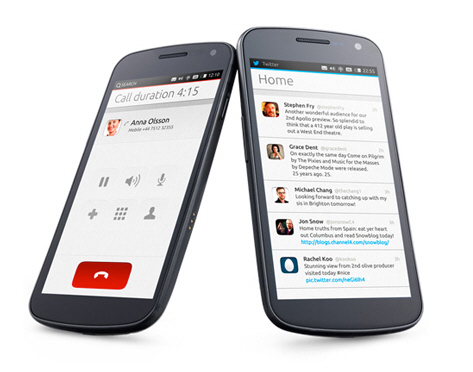
Ubuntu phone OS isn’t destined for greatness -- but that doesn’t matter
When all the hype about the new Ubuntu for phones OS dies down, we’ll be left with a void. Canonical admits it doesn’t currently have a manufacturer or an operator signed up, and it’ll be next year before the first device running the OS natively hits the market. And that’s a long time to wait.
By then, we’ll have seen new versions of Android and iOS, and Windows Phone 8 will likely be firmly entrenched in third place. If the market seems tough for Canonical to break into now, it’ll be far harder in 2014. But that doesn’t mean Ubuntu for phones can’t succeed. It will never make number one, but it doesn’t need to. It can carve out a pretty desirable niche in fourth or even fifth place, appealing to the Linux/Open Source crowd, and the users who don’t want the same phones as their parents and sheep-like peers.

Windows 8 is good enough for the US Department of Defense
What's the first thing that springs to mind when you think of Windows 8? "Confusing", "difficult to use", "efficient", "tiles" or "US Department of Defense" might be among the possible answers. Whoa, what? Yes, the Department of Defense (DOD) has announced that, as part of a $617 million licensing deal, it will begin using the newest versions of Microsoft products, including the controversial operating system. Now think of all the possible jokes...
The announcement does not disclose the entire number of products that will be used, and only mentions Office 2013 (which the DOD says offers "enhanced security and content management tools"), SharePoint 2013, and Windows 8. The Department of Defense says that the beneficiaries of the deal will be the US Air Force, Army and DISA (Defence Information Systems Agency), and that the purchased package is already customized to meet its specific needs, with an ongoing focus towards mobile computing.

Rip DVDs and Blu-rays to MKV format quickly and easily with MakeMKV Beta
Everyone’s looking for that magic one-click solution to digitizing their personal video and movies collection. Often you find yourself having to jump through a number of hoops before you can get the movies in a format you like, but if you’re looking for a perfect 1:1 rip in MKV format, then MakeMKV 1.7.10 Beta is the tool for you.
MakeMKV 1.7.10 runs on Windows and Mac, and lets you simply select your DVD or Blu-ray disc, pick an output folder and click a button to rip it. Better still, it produces a 1:1 copy in much less time than other tools, and is completely free to use while in beta.
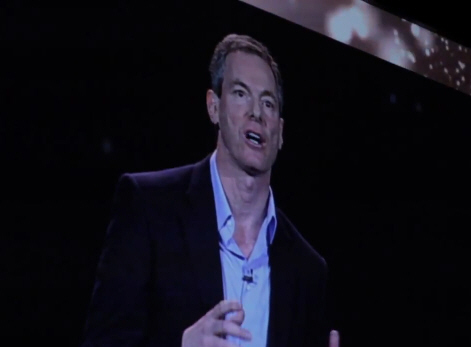
Qualcomm makes absent Microsoft look irrelevant at CES 2013
Pulling out of trade shows worked just fine for Apple, but Microsoft’s decision to follow suit and drop out of the Consumer Electronics Show in 2013, and beyond, could have catastrophic consequences for the Redmond, Wash.-based company.
For years we have become accustomed to Bill Gates and, later, Steve Ballmer opening the show with THE keynote address. Now a company once considered by many as the most important in the industry has reduced itself to an afterthought.

Resonic is a versatile music player
The PC market for audio players is a little on the crowded side, with free tools to do just about anything you want, so it’s not exactly easy for new programs to make an impression. There are still companies queuing up to try their luck, though, and the latest contender is Resonic, an interesting tool now available in its first public alpha release.
Why should you care? Developers Liqube clearly understand they have to get the fundamentals right first, and the program duly offers support for a host of audio formats. The current list is MP3, MP2, MP1, OGG, M4A, MP4, AAC, MPC, MP+, OPUS, SPX; WMA, WMA Pro, WMA Lossless; WAV, AIFF, FLAC, APE, ALAC, WV, TTA; IT, XM, S3M, MTM and MOD: sounds good to us.