


The overkill response to Google Buzz
In today's viral, social media-driven world, it never seems to take long for things to get ugly. This is especially true for Google Buzz, which became a lightning rod for privacy-related criticisms almost as soon as it went live last week.
My advice to the critics: Don't get your panties in a knot.
This is not a PC: Microsoft debuts Windows Phone 7 Series
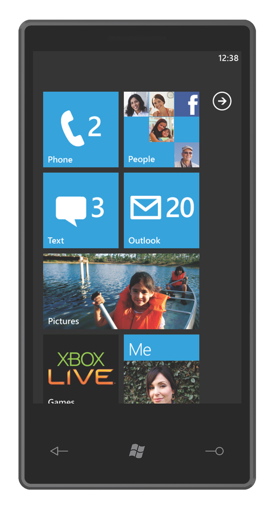
Without a doubt the biggest news from Mobile World Congress thus far, Microsoft unveiled Windows Phone 7 Series today. This is the big update to Microsoft's mobile environment which presents a more social, touchable, consumer-friendly user interface with new ways to interact with mobile data.
In short, the experience in Windows Phone 7 Series is almost nothing like the Windows Mobile experience, which was designed as a complement to the desktop PC.

Proof that online telemetry improves systems, from of all places, Chevrolet
Eventually we will all be able to keep track of everything we do, like Nicholas Felton, the man who relentlessly chronicles the minutiae of his own behavior.
We're not even that far off right now. Today, it's downright easy to keep a comprehensive record of our spending with online banking, our complete phone and Internet records, and our exposure on the Web in general, so we can check our behavior. It's the sort of thing almost inherent in being a geek...checking logs, watching records, and tweaking for optimum performance.
![A snippet from the activities list that appears beside a contact or a contact's e-mail message, in Outlook 2010 with Social Connector attached. [Courtesy Microsoft]](https://betanews.com/wp-content/uploads/media/45/4525.jpg)
Google Buzz and Outlook 2010 Social Connector: Competitors or partners?
Since the launch of Google Buzz last Tuesday, we've been hearing more analyses from professionals and bloggers warning of a possible showdown of sorts between Google and Microsoft in the social space. Buzz is Google's social connection with its Gmail; but Microsoft already announced last year its own social connection with its mail platform: the forthcoming Social Connector plug-in for Outlook 2010, due for release with the rest of Microsoft Office 2010 this June. The latest release candidate for Office 2010 was distributed to private testers earlier this month.
Social Connector promises to transform Outlook 2010 into a live network teeming with contacts who share not just e-mail, but chats and texts through Windows Live and documents through SharePoint. Messages received from a "live" contact will be adorned with that person's availability, location, and a record of recent activities. Though LinkedIn has already signed on as Microsoft's first third-party partner, connectivity with Facebook -- probably distributed by Facebook, not Microsoft -- appears likely. So much of the same kind of functionality folks are seeing with Buzz, will likely appear in Outlook as well, although slanted more toward professional tasks rather than personal friends and acquaintances.
![Microsoft's screenshot of an early build of Office 2011 for Mac, now featuring the ribbon. [Courtesy Microsoft.]](https://betanews.com/wp-content/uploads/media/45/4522.jpg)
Will the ribbon work in Mac? Design clues from the Office 2011 screenshot
Microsoft was under no obligation to build a ribbon component, similar to the one premiered in Office for Windows, for the Mac. That's especially true given the fact that the menu bar is such a prominent element of the Mac user experience. Ever since System 7, the menu bar -- which remains fixed to the top of the screen -- indicates which application is active. In Windows, applications have their own menu bars, if they have them at all; and starting with Office 2007, the ribbon replaced the menu bar.
In Windows, the replacement of the menu bar for Office apps was one of its design goals: a way to reduce screen clutter and minimize the steps or clicks required for a user to find a function. At least that's how Microsoft presented the original idea back at PDC in September 2005. In MacOS, you can't replace the menu bar, so a ribbon would have to find some way of complementing it, sharing the workload with it, in a way that makes sense to the user.
Samsung's first Bada phone to be shown next week?
In November, Samsung launched its own open smartphone platform called Bada, which the company positioned as a replacement for Symbian, and eventually the rest of Samsung's proprietary non-smartphone operating systems.
Since that time, Bada has been keeping a pretty low profile. Samsung showed off screenshots of its UI and some quick videos of software (and Flash) running on the platform at a London event last December. The company also said the first Bada phone would be available in the first half of 2010.
Windows Phone rumors ramp up in advance of Mobile World Congress
The Mobile World Congress in Barcelona next week looks like it will play host to the usual range of exciting announcements in the mobile devices and software field. Based on the continued appearance of enticing rumors, Microsoft's Windows Phone platform looks like it will be one of the main attractions this year.
At 9:00 A.M. Eastern Standard Time, CEO Steve Ballmer is expected host a press conference unveiling the latest Windows Mobile developments, which could be anything from the official announcement of Windows Mobile 6.5.3 to the launch of Xbox Live-enabled games on Windows Mobile to a so-called "Zune Phone."
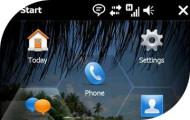
10 ways Microsoft can save Windows Mobile -- starting NEXT WEEK!
What will Microsoft CEO Steve Ballmer announce during Monday's Mobile World Congress press event in Barcelona, Spain? There's what he will announce and what he should. I'm skipping the speculation about what and going right to should. Microsoft's mobile strategy is a mess. Apple and Google have routed Microsoft in mobile operating systems. Android and iPhone OS make Windows Mobile look about as fresh as Windows 95. Meanwhile, Microsoft has chased Research in Motion's BlackBerry in the enterprise for years, never making any real gains.
It's long past time for the Big Ballmer to step up and offer something substantial -- not promises of future technology coming but goodies available immediately or nearly so. I've condensed what easily was a list of 15 or so items down to 10 things Microsoft must do immediately to save Windows Mobile from extinction. Microsoft has no more time. It's do or die, and even doing now may be too late. With that introduction, Microsoft should:

Google adjusts Buzz setup for privacy, makes 'public' choice more obvious
Already sensing that too many potential users were attributing the "evil" moniker to Google (in the absence of actual evil in the world), the company yesterday made adjustments to its Google Buzz sign-up procedure. In Betanews tests, we found Google's altered dialog box is much more descriptive about the repercussions of setting up a public profile. It uncovers a critical choice about what you share with others publicly, that had been buried beneath an Edit link, by copying it up front where everyone can see it.
The danger involved with a new user setting up Buzz without being mindful of its default consequences, is that her public profile can be automatically filled with the names and profile links of Gmail contacts she communicates with most. Betanews tests this morning indicate that changes Google has made to Buzz setup appear to reduce that danger somewhat:
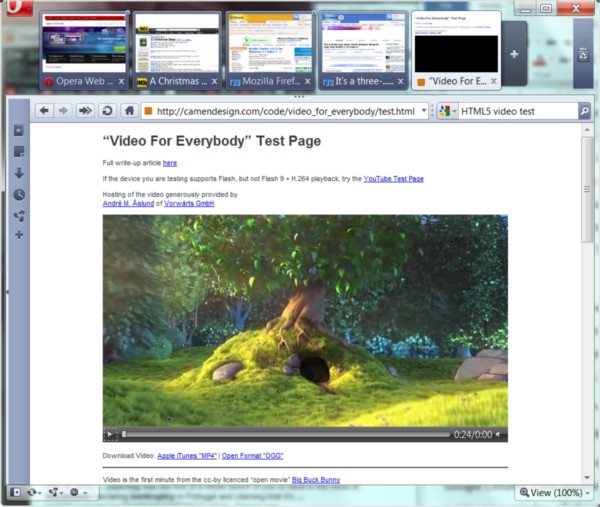
Opera 10.5 leaps to beta, holds on to unexpected performance lead
Download Opera 10.5 Beta 1 for Windows from Fileforum now.
Just yesterday, we saw yet another daily build of what Opera Software was calling its "pre-alpha" of the Opera 10.5 Web browser, a product that the company certainly wanted folks to test, even though they were warned it wasn't even ready for daily use. With various software publishers' development schedules being organized so differently from one another, it's difficult enough distinguishing "previews" from "alpha previews" from "preview alphas" -- just yesterday, for example, Mozilla finalized a public "developer preview" of Firefox 3.7 Alpha 1, closing off its "Alpha 1 preview" track before starting, on the same day, its "Alpha 2 preview" track.

Marvell launches the next 1 GHz smartphone processor
At CES 2010, chipmaker Marvell showed off its ARMADA 610 applications processor for tablets, mobile internet devices (MIDs), media players, and other portable connected devices. The impressive ARM v7-based chip runs at 1 GHz and is capable of encoding and decoding full 1080p HD at 30 fps, and 3D rendering up to 45 million triangles per second. At its CES booth, Marvell showed a single reference model tablet rendering 3D graphics while playing full HD video smoothly through HDMI on a 30" television. Marvell said the chip's display controller is actually capable of playing video on four simultaneous displays with 2k x 2k resolution.
Today, just ahead of Mobile World Congress, Marvell announced it will be showing off the next chip in the 600 series, called the ARMADA 618, which is a close relative of the 610 especially suited for smartphones.

Why is Google suddenly so evil?
Google is the great Internet God of goodness, or so claims No. 6 of the company's "10 Things" corporate philosophy list: "You can make money without doing evil." But this week, Google has suddenly put its doing no evil claims in doubt.
Yesterday, Google launched social networking service Buzz with opt-out privacy settings, meaning that a user's list of followers and followees are fully viewable in Google Profile, by default. Unrelated, but by Twitter -- ah, buzz -- standards even more evil: Google deleted six popular music blogs hosted at its Blogger service.

Google Buzz's first victim: Facebook
For all its success in turning mostly free Web-based services into lucrative rivers of cash, Google's been a miserable failure in the social networking space. While Facebook marched from a Harvard dorm room to a global army of 400 million users and Twitter became the short-form darling of politicians and celeb-utantes alike, Google threw one project after another at the wall (Orkut and Wave, anyone?) and hoped at least one of them would stick long enough to gain traction.
They never did. Orkut may be huge in Brazil and India, but it's virtually invisible everywhere else. Wave disappeared into the ether after its much-hyped public launch last September. Less ambitious steps toward creating a more social online experience (like baking Google Talk into the Gmail interface) similarly vanished from the tech culture radar almost as soon as they appeared.

TiVo teases something new with private event invites
Who says Apple is the only company that puts out enticing invitations? Today, TiVo sent out invites to a private March 2 event in New York City that simply reads, "Inventing the DVR was just a warmup," with no other hints as to what the event is for.
For a single statement, it's a pretty big one, considering TiVo popularized the viewing model that made linear broadcasting more or less obsolete.
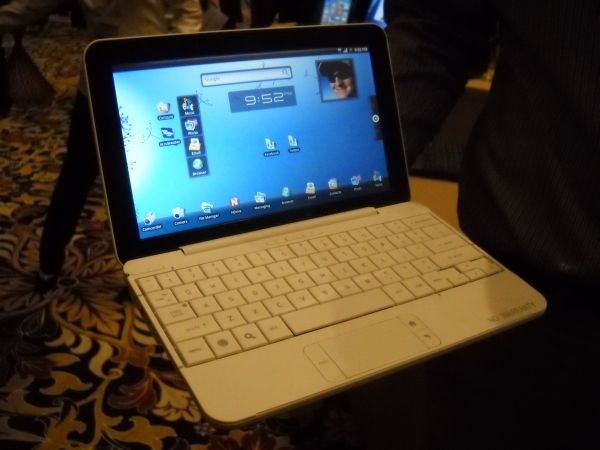
Mobile World Congress preview: Netbooks to soar, femtocell gadgets may flop
Netbook sales are starting to inch closer to those of smartphones and laptops, while Google Voice is set to pose a serious challenge to Skype, according to an analyst report to be presented at next week's Mobile World Congress in Barcelona, Spain.
In other findings, femtocell boxes -- already available in the US through Sprint, for example -- will not sell as well as first anticipated, because "the added value a femtocell will bring is too low in the eyes of end users," says the upcoming report from analyst firm IDATE.