



Nvidia debuts new dynamically-switched graphics card technology
The idea behind notebooks with switchable graphics processors is that the most common tasks are handled by the lower power integrated GPU; but should the user need more complex graphics, a discrete graphics processor will be able to kick in to take care of the hard work.
It's been an option in certain notebooks for more than three years, and it has certainly grown more common as the technology has aged. But it has never quite been a perfect, on-demand solution. In the earliest switchable setups, the computer had to be rebooted for the swap to take place, and in later iterations, it required a physical switch to be thrown or sessions to be reset. and still others could turn on the discrete GPU, but not switch back to integrated once the change was made.
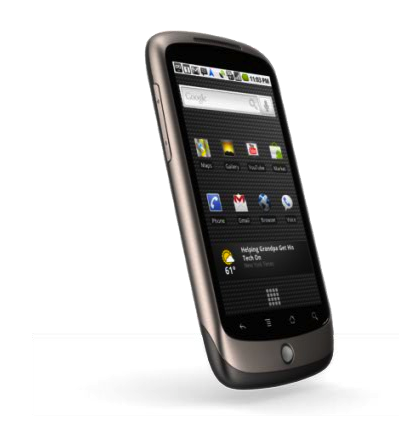
Success: Google's Nexus One shipping support line takes tech support questions
11:35 am EST Tuesday, February 9, 2010 · In a test of Google's willingness to take customer concerns this morning, Betanews Editor-in-Chief Nathan Mook -- a new Nexus One owner himself who has not experienced either the 3G connectivity problem or the touchscreen tracking problem -- contacted the Nexus One shipping support line with a technical concern. After getting off the phone with a live Google support staffer in San Francisco, Nate reported very positive results.
The problem Nate was having, he says, is minor: The phone's automatic brightness isn't working well, remaining too dark when auto-brightness is turned on. Plus, the phone's touch-sensitive panel buttons at the bottom appear non-sensitive if you touch too close to the bottom.
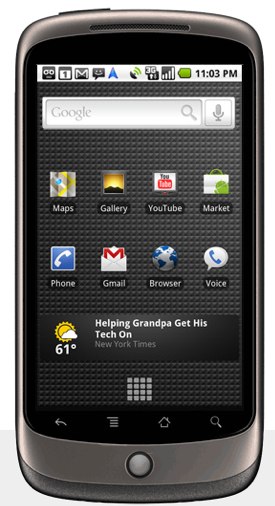
Google lowers 'unusually high' early termination fee on Nexus One
At the end of January, the Federal Communications Commission's Consumer Task Force launched an inquiry into the Early Termination Fees (ETFs) of the major wireless providers with a special focus on the Google Nexus One handset.
The Nexus One is unlike other smartphones in that it is sold only by Google and available on multiple carriers. As such, if a customer terminated his contract, he faced early termination fees from both Google and his wireless provider.
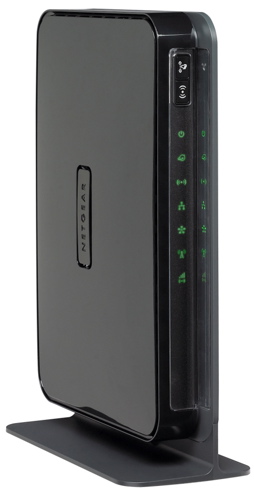
Netgear and Ericsson introduce a mobile broadband hotspot with a twist
We have seen a couple of mobile broadband hotspots come to market in the last year, the Novatel MiFi on Sprint and Verizon, and the recent Sprint Overdrive from Sierra Wireless. They're pocket-sized, battery-powered devices with a 3G connection that can connect a handful of devices to the Internet wherever they're plopped down.
Today, Netgear and Ericsson announced that they have created a 3G mobile broadband-connected router like these devices, except that it's not pocketable and battery powered.
![Liftoff of Space Shuttle STS-130, perhaps the final nighttime liftoff in the shuttle program's history. [Courtesy: NASA]](https://betanews.com/wp-content/uploads/media/45/4506.jpg)
Goodnight, moon: What I learned from a space shuttle
Like many nighthawks across the continent, I found myself glued to more than one screen...all right, three. Plus my BlackBerry...as I watched this morning's launch of the Space Shuttle Endeavour. I observed the spectacle with a curious mixture of excitement and sadness because after the current STS-130 mission, the shuttle program has only four more scheduled flights before it's grounded for good.
It's not the retirement that gets me. Every technology has its day, and it's fair to conclude that a system largely designed in the early 1970s has now served its purpose and should logically be replaced. It's also fair to conclude that this same system was and is too complex to ever be fiscally feasible. Despite the orbiters' reusability, which was supposed to drive down the cost of spaceflight, extensive maintenance in-between missions made the program even more expensive to fly than conventional expendable rockets. The shuttle's inherent design flaws (you'll never see humans riding below any other part of a space vehicle again) pretty much sealed its fate.

Netflix to FCC: NBCU + Comcast could bypass net neutrality
In a world where Federal Communications Commission Chairman Julius Genachowski's six principles for net neutrality are enforced, everyone who makes a living on the Internet could conceivably be "unburdened by the unnecessary intervention of network operators or government regulators." The exception would be when a pipeline provider such as Comcast merges with a content provider such as NBC Universal, to make certain classes of content viewable online only when it designates. That's the opinion of attorneys for video rental service Netflix, in a filing last month with the FCC and recently made public.
"Netflix believes that the codification of the existing network neutrality principles, together with the addition of nondiscrimination and transparency, create an effective framework for preserving an open Internet," begins Netflix' filing, written last January 14 (PDF available here). "These rules will allow all parts of the industry -- network operators, consumer electronics manufacturers, and edge providers of content, applications, and services -- to continue to innovate at a rapid pace, unburdened by the unnecessary intervention of network operators or government regulators."

Report: Streaming video drove 72% global increase in mobile data consumption
A new study from subscriber management company Allot Communications today says that worldwide mobile broadband consumption increased approximately 72% in just the second half of 2009.
Though the Federal Communications Commission is worried that there won't be enough bandwidth in the United States to support the growth in mobile broadband use, the Americas are actually being outpaced by both the Asia Pacific region (APAC) and the Europe/Middle East/Africa region (EMEA) in terms of growth rate. APAC experienced an 86% growth in mobile broadband consumption, and EMEA experienced 70% growth, while use in the Americas grew by 59%.

Stymied by continuing Nexus One 3G issues, Google blames the environment
For the most part, last week's over-the-air software update to Google Nexus One phones, which was intended to address the 3G connectivity issues with certain versions of the phone's firmware (with a gift of added multitouch), appears unsuccessful for many commenters to Google's support forums. Very few customers reported improvement, and some who did in the early going are now saying their flip-flop problems between 3G and EDGE have returned.
Meanwhile, although Nexus One manufacturer HTC has typically referred phone issues to Google -- the self-proclaimed "vendor of record" when the device premiered -- as of now, it has declared the issue resolved, suggesting that customers still experiencing problems "restart their Nexus One device to restore their T-Mobile data connection."

Microsoft Confessions: 'There were a ton of bozos'
Do middling, middle managers run Microsoft? That's the consensus among the former Microsofties who shared their work stories with me over the last couple months. The new work week starts with another Microsoft Confessional -- the fourth in four days -- from 13-year company veteran Boris, which isn't his real name, of course. Boris was smart enough to see the end coming, and he made preparations in the days before his May 2009 layoff. He learned to read middle managers the way a genuine fortune teller might read tea leaves.
People being asked to leave are one view of Microsoft. But those leaving voluntarily are another perspective. In looking at Microsoft, I'm hugely concerned about the departures of two important and long-time Microsoft executives: Mike Nash and Bill Veghte, revealed on February 4 and January 14, respectively. Both men are 19-plus years veterans working for the Windows and Windows Live groups. Nash is headed to Amazon, and Veghte departs following last year's executive shuffle that put Steven Sinfosky in charge of the group (as one of five Microsoft presidents).

Microsoft Confessions: 'Poor worker bees'
Today's Microsoft Confession comes from a woman let go during the first round of layoffs, in January 2009. I'll call her Amanda, which, of course, isn't her real name. Amanda shared key elements of her story on deep background, but she also provided a reflective portion that she hopes will give deeper insight to anyone looking to work for Microsoft or to HR departments looking to hire former employees.
By telling this story, Amanda wants to give some meaning to her layoff, or so I detected from what she shared for private and public consumption. Amanda's story is consistent with every other I received. She sharply criticizes Microsoft's culture of reorganization, but also emphasizes the heavy workload. I detect deep frustration in her story about Microsoft management problems that won't easily be fixed.
Microsoft Confessions: 'Deeply dysfunctional family'
The next former Microsoft employee story comes from someone I'll call Fred, which, of course, is not his real name. Fred took a job right out of college and might still work at Microsoft today, if not for the elimination of his group during layoffs last year. Like the former Microsoftie from the first post in this former employee "confession" series, Fred helplessly watched as the exciting and flexible workplace he joined bogged down in increasing layers of middle management.
When Microsoft hired Fred nine years ago, the company employed a little more than 47,000 people. When he was laid off in May 2009, the number was around 93,000. That number is for full-time employees and doesn't include contractors. According to Microsoft's fiscal 2010 10-K, the breakdown on June 30, 2009: "56,000 in the United States and 37,000 internationally. Of the total, 36,000 were in product research and development, 26,000 in sales and marketing, 17,000 in product support and consulting services, 5,000 in manufacturing and distribution, and 9,000 in general and administration."
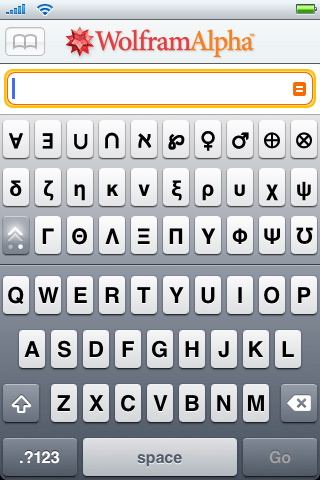
Wolfram|Alpha makes a strong argument for virtual keyboards
I don't keep my personal preference for mobile devices with physical keyboards a secret; the sensation of hitting real keys is an indivisible part of the text entry experience for me, and it's not likely to change any time soon.
But there is one area where physical keyboards are woefully inferior to virtual ones: adaptability. A virtual keyboard can represent any alphabet or be arranged in any configuration the user or software needs, and a physical keyboard simply can't keep up with that.

DOJ: Google can't leverage class action to settle with future authors
Last September, the US Justice Dept. objected to the proposed terms of a settlement between Google and the Authors' Guild, which would have enabled Google to publish out-of-print titles in its Google Books catalog. The theory of the settlement at the time was, if authors or rights holders are given enough time to respond to a request to stand up for their rights -- say, at least several months -- and they don't do so, then that's as good as acquiescence.
Since that time, on orders of US District Judge Denny Chin, the two disputing groups have worked on a revised settlement. But yesterday, the Justice Dept. -- representing the United States' interests in the matter -- filed a second objection to the settlement. Although Google and the Authors' Guild made progress, US attorneys say, Google still appears to take the position not only that it can strike bargains on behalf of copyright holders, but that only Google can do so -- a position which they say the law does not allow them to take.
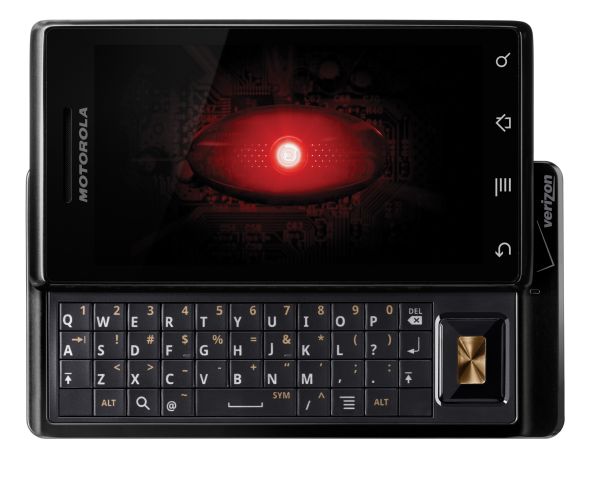
Motorola Droid gets its first official multi-touch gesture
The Droid has gotten pinch-to-zoom in Google Maps.
Immediately after Google introduced the multitouch gesture on the HTC Nexus One browser, photo gallery, and maps applications, owners of the popular Motorola Droid began to ask if their devices would receive the same update, since it is widely known to support multi-touch input.

Original Xbox being phased out of Xbox Live online play, but alternatives exist
Microsoft today confirmed the long-running rumor that support for the original Xbox will be terminated on the Xbox Live online game servers. The company announced that April 15, 2010 will be the last day legacy Xboxes will be able to play on Xbox Live.
"This isn't a decision we made lightly, but after careful consideration, it is clear this will provide the greatest benefit to the Xbox Live ommunity," Marc Whitten, General Manager of Xbox Live announced today. Whitten noted that Halo 2, a version of the popular first person shooter for the original Xbox still retains a dedicated community of players.



