
Google+ Connected Classrooms -- children are denied proper field trips
When I was a young man, I hated school. While sitting in the dreary classroom, I would often stare out the window and daydream about the huge world out there. However, there were times when I loved school -- on field trip days. On these days, we would board a big yellow school bus and travel to a magical place such as the Zoo or a Broadway show.
While the destination was important, the trip itself was too. You see, the entire thing was an experience; one that cannot be matched by a video or photograph. Sure, kids can watch a DVD about giraffes, but to see the animals in person and potentially feed them is something different entirely. Today, Google announces Google+ Connected Classrooms -- a way for children to go on virtual field trips with Google+. While this sounds like a great way to leverage technology, it can be argued that it is the beginning of the end for real field trips.

The Google File System makes NSA’s hack blatantly illegal and it knows it
The latest Edward Snowden bombshell that the National Security Agency has been hacking foreign Google and Yahoo data centers is particularly disturbing. Plenty has been written about it so I normally wouldn’t comment except that the general press has, I think, too shallow an understanding of the technology involved. The hack is even more insidious than they know.
The superficial story is in the NSA slide (above) that you’ve probably seen already. The major point being that somehow the NSA -- probably through the GCHQ in Britain -- is grabbing virtually all Google non-spider web traffic from the Google Front End Servers, because that’s where the SSL encryption is decoded.
Jelly Bean surges past 50 percent Android market share
Android has long been blamed for its fragmentation issues, with many pundits pointing out to the low adoption levels of the latest distributions as the main culprit. While this problem has yet to be resolved due to the nature of the operating system, it is much improved today as the Jelly Bean branch is now powering most Android smartphones and tablets.
Based on the number of devices accessing Google Play in the seven days ending November 1, Jelly Bean's market share in the Android realm is now at a dominating 52.1 percent. Combined, its three iterations have a higher distribution level than Ice Cream Sandwich and Gingerbread put together, which is a first for the green droid landscape.

The most popular stories on BetaNews this past week -- October 27-November 2
This week Google put an end to all the speculation and finally launched not only the Nexus 5 but also the new version of Android -- KitKat. There were no great surprises as there had been so many leaks prior to launch that we knew pretty much everything there was to know, but it was good have the rumors confirmed. Expect a full review in the very near future. The Nexus 5 comes with KitKat preinstalled, but it will also be available as an upgrade for a number of other handsets. As it this wasn't quite enough for Google, the company also donated 17,000 Nexus 7s to communities affected by Hurricane Sandy.
After the recent announcement, the iPad Air went on sale, and Logitech was ready with a series of cases.

RIP iGoogle -- 2005-2013
It may no longer be All Hallows Eve, but the Day of the Dead is still firmly on our calendars and, perhaps in some twisted way, Google purposely chose this time to off one more service. Today iGoogle, the once popular homepage service, walks the Green Mile to meet its end on this most fitting of holidays.
The service will pass to the afterworld, joining a number of siblings already residing within the Google graveyard. The personalized homepage debuted back in 2005, but has since faded to an obsolescent technology thanks to the web moving forward and operating systems becoming better equipped to handle the same tasks.
Android 4.4 alert! Google takes the wrapper off KitKat
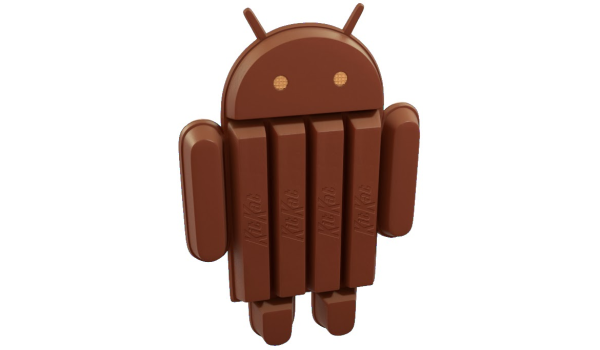
Just in time for Hallowe'en, Google takes us all out of our misery and officially launches Android 4.4 -- or KitKat as it is rather sweetly known. As with the Nexus 5, we have known pretty much what to expect from KitKat for a little while now. Google's blog post heralding the arrival of the latest version of the OS is a little understated and doesn't give much away.
One thing is particularly interesting. Rather than blowing its own trumpet and boasting about rafts of new features -- although this will probably follow -- Google has chosen to highlight the fact that Android 4.4 can run comfortably on devices with as little as 512MB RAM. The blog post points out that it is not just the operating system that has been put on a diet (ironic when you consider the origins of the name) but all Google services such as YouTube and Chrome.
Google officially announces the Nexus 5 -- launch date: now!
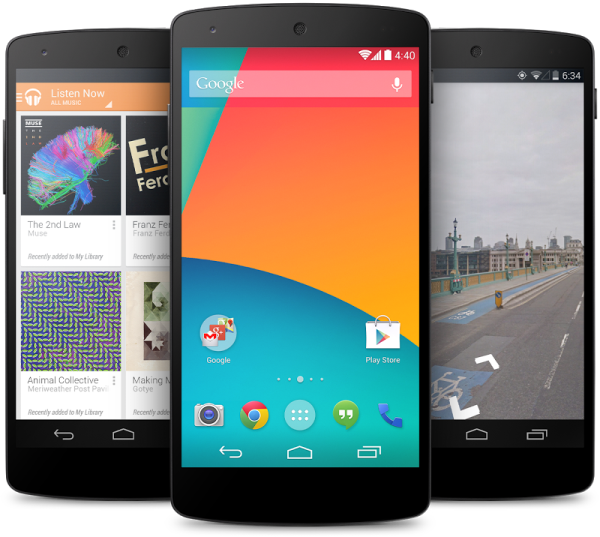
Ending months of rumors and speculation, Google puts all of our minds at rest and announces that the Nexus 5 not only exists (as if we didn’t already know following all of the leaked images!) but is launching now.
It does seem like an age since we first (apparently) caught a glimpse of this phone in a Nexus 7 video, but now we know it to be true. The Nexus 5 is here, and it looks like it's everything we could have hoped it would be.

Pandora adds Chromecast support
It has been less than 24 hours since music streaming service Pandora took the wraps off version 5.0 of its mobile app for Android, giving users a new tablet-friendly look and improved features. Now the company adds yet another update to the list, this time in the form of support for Google Chromecast.
"Today, we’re excited to share that Pandora is now available on Chromecast, Google’s new TV-connected device that wirelessly delivers online audio and video entertainment to the biggest screen in the home", announces Pandora's Tom Conrad.

How to get to the cloud: 5 easy steps
Earlier this month, I delivered a keynote at Gartner's annual symposium and published a blog post about the rapidly evolving landscape of business technology. The rise of cloud computing and ubiquitous, powerful mobile devices means that organizations can reduce their IT bills significantly while boosting employees' productivity and collaboration. Moving to the cloud is no longer a questionable proposition -- it's inevitable.
This led some of the organizations I work with to ask: "That all makes sense, but how do we actually get started?"
Google+ custom URLs rolling out to all users
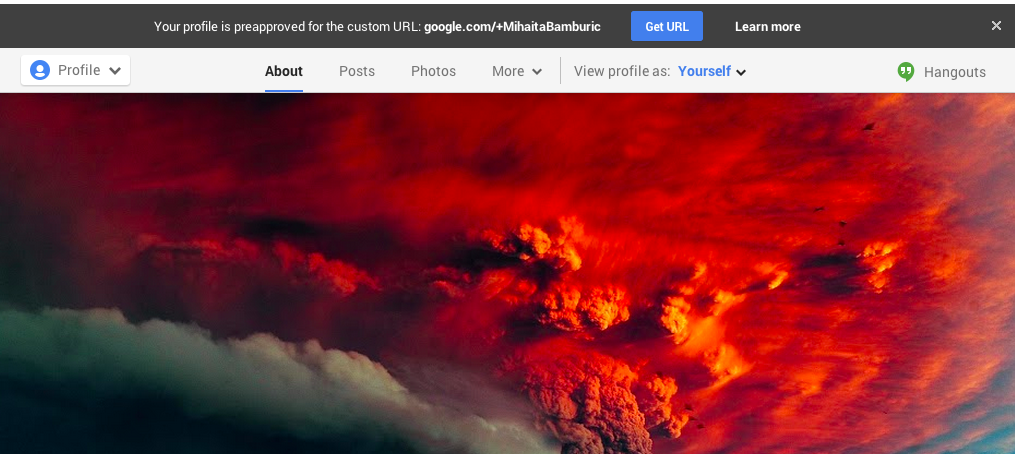
In mid-August 2012 Google decided to give a select number of users custom URLs for their Google+ profiles. My colleague Joe Wilcox is one of the lucky few who received one. The change would make profiles easier to link to and share as the address is simpler to remember, read and write, with the Plusser's name replacing the string of numbers usually associated with it.
Late-yesterday, Google announced that all Google+ users will be able to take advantage of custom URLs for their profiles. The option is rolling out "throughout the week", to those who meet the search giant's permissive eligibility criteria.

Google donates 17,000 Nexus 7s to Hurricane Sandy communities
It may be a year since Sandy struck, but the effects of the storms are still being felt. To mark the anniversary, Google is donating 17,000 Nexus 7 tablets to communities still feeling the impact of the hurricane. The devices, worth a total of $2.7 million, have been donated to community centers, libraries and other centers in the affected areas in New York.
The tablets were donated to the non-for-profit service the New York State Community Action Association who worked with the Port Authority of New York and New Jersey to store and distribute the devices. The Nexus 7s will be used in a number of ways including being loaned out as e-readers in areas where libraries are yet to re-open.

Google+ Hangouts and Photos gain a raft of new options
Google is in the process of rolling out a series of new features to Google+ Hangouts and Photos, many of which have been designed to save users time. Hangouts gains a new option that enables broadcasters to schedule Hangouts On Air, while a management page in the form of the Control Room can be used by moderators to eject unruly participants should the need arise.
Video call quality sees improvements not only to quality, but also to automatic lighting adjustment. It doesn’t end there for Hangouts. The chat tool also gains the ability to send and receive SMS as well as location sharing. But it is Photos that sees the largest number of changes and additions. Something that will please mobile users who have enabled the autobackup feature is the introduction of full sized backups (rather than scaled) and background syncrhonization.

What to expect from the Gigabit Explorer Challenge
Gigabit Internet has arrived, and it's time to figure out just what we should do with it. A gigabit is a billion bits per second. Average Internet speeds today range around 5 million bits per second. It's a bit of a speed mismatch, the cheetah vs. the caterpillar -- and the cheetah gets a head start. At these speeds, the "what" and "how" to use it far outreach the way we use the Internet today.
Forget the speed, for a moment. Not to downplay the value of instantaneously downloading a season of The Wire but ultrafast Internet is about more than speed. Innovation grew in the space where 50 kbps Internet was once seen as lightning fast -- a space with email, file transfers and remote logins. What modernization will emerge from this new space?
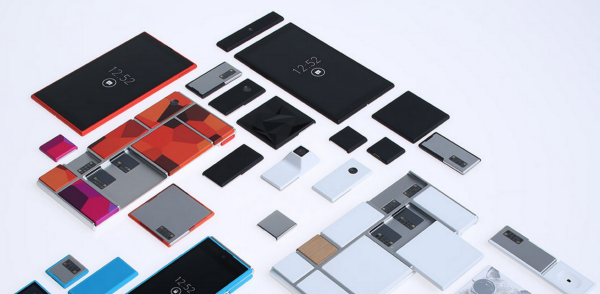
Motorola announces Project Ara -- a build-it-yourself, modular smartphone
It looks as though Motorola may be making it a little easier to buy the perfect smartphone. The Google company is taking mobile devices in something of a new direction, and all is revealed in a post on the Motorola blog. The company plans to do something new by developing "a free, open hardware platform for creating highly modular smartphones" -- a click together phone, if you will.
So what's the idea? You know how you find the perfect phone but it has a camera that you just know you'll never use? You feel like you're paying for something unnecessary right? Or you find a phone you like but the battery doesn’t last quite long enough? Problems like this could become a thing of the past with Project Ara.

How to easily migrate to SkyDrive from Google Drive, including your Google Docs
Google Docs and Google Drive were all I knew when it came to personal cloud document storage until this summer. I never got on the Dropbox bandwagon, and was so entrenched in the Google ecosystem that SkyDrive didn't interest me at first when it came out. While I have nothing personally against Google Drive, as it has served my company and myself quite well, I had to take a deep dive into SkyDrive territory to prepare for an Office 2013 class I taught this past summer. I was pleasantly surprised with the service, so much so that I began using it side by side next to Google Drive for my personal needs.
Fast forward to when Windows 8.1 went RTM, and I subsequently moved my primary Thinkpad X230 Tablet over to the new OS. One of the least publicized aspects of 8.1 has to be hands-down the tight integration between the OS and SkyDrive, meaning you didn't need a standalone app anymore to save/open files on the service. Some have called it Microsoft going too far, but I completely disagree. The service is 100 percent optional (you can still save locally as you would expect) and if you are using a local account instead of a MS account for your computer login on 8.1, the service is a moot point at best.