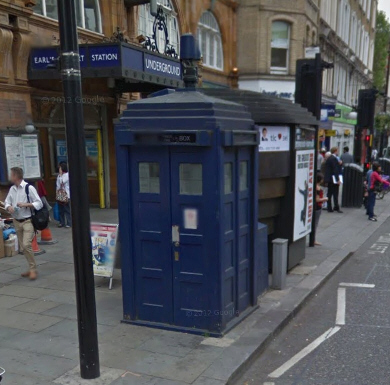
Google Street View lets would-be companions step inside Doctor Who's TARDIS
Like many British people, I grew up with Doctor Who. Looking back, some of the episodes of my youth that had me hiding behind the settee in fear were laughable rather than scary, but back then we didn’t know any better. Doctor Who these days though is a much more polished affair, with better effects, more convincing aliens and improved storytelling.
If you’re a fan of the Doctor and have always dreamed of going on adventures in his TARDIS but have never been lucky enough to have the iconic blue police box materialise in front of you, now is your chance thanks to Google and a hidden Street View Easter egg.
CheapCast transforms an Android device into a Chromecast device for free
Google's Chromecast streamer may not yet have set the world on fire but it is earning itself quite a following. Part of the device's appeal is its low price -- just $35 for a fairly capable plugin streaming unit -- but there are times when only free will do. CheapCast is a free app that turns virtually any Android phone or tablet (running Android 2.2 or above is the only requirement) into a Chromecast.
The app is a fairly early beta, but in terms of replicating what Chromecast has to offer, it does a reasonably good job. CheapCast does nothing, yet, to address many of the complaints about Chromecast -- such as the inability to easily stream local content -- but it does mimic the Google device's casting capabilities for the likes of YouTube and Google Play.
10 things a Windows Phone 8 user misses about Android
Adopting Windows Phone 8, and ditching Android, was one of the most daring decisions that I have ever made in my entire tech life. I am the sort of person who does not warm up to major changes (not my strong suit), especially ones that involve transitioning between two polarizing mobile platforms. But, surprisingly, I gave up the flexibility and versatility of the green droid operating system for the glanceable information and simplicity of Windows Phone. Admittedly, it was not smooth sailing from day one.
The problem is that, in order to fully adjust to the change, something has got to give, namely features that I consider to be essential for a modern-day smartphone operating system. For some they may not matter as much, but others -- like me, and maybe you -- are likely to be left wanting for more. And, no, I am not talking about widgets, themes, root or Instagram (it, however, seems to be the tech media's favorite blaming toy even though there are good third-party alternatives), but rather more down-to-earth, mundane ones.

Microsoft is at it again -- launches new Scroogled video
Microsoft's Scroogled campaign, an attack on rival Google, is still in full-swing, despite taking turns between entertaining and ridiculous. My colleague Wayne Williams described it as "sad and embarrassing", but I am not so sure I would go quite that far, though neither will I defend the software maker in this battle.
Now Microsoft launches its latest attack -- again going after Gmail. This time around, the company goes after the new tabbed design in Gmail, though it focuses on treating the email service on the whole as a trojan horse for advertising -- not a new claim, only a new video for an old accusation. The video, of course, ends with the plea to use Outlook.com.
Got yourself a new Nexus 7? Now you can download factory images and binaries
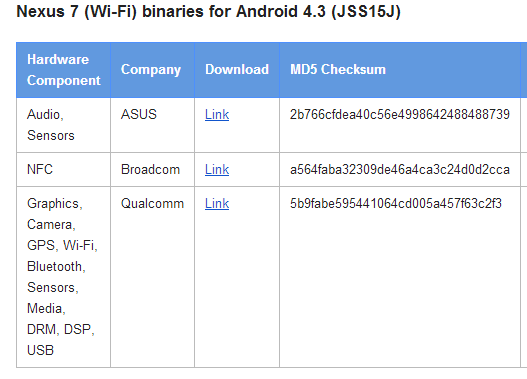
For anyone looking to tinker with their Android, access to factory images is essential. After something of a delay, Google is making available factory images and binaries for the recently released Nexus 7. Listed under the product name Razor, the images and binaries are freely available for all to download.
Anyone who is a fan of trying out custom ROMs needs access to an image so things can be restored to their factory fresh state should something go wrong. The image download is based on build JSS15J and weighs in at 360MB.
Quick! Grab your Google Latitude data before it's too late!
The latest horse to be sent out to pasture from Google's stables is Latitude. Little notice was given when the service's retirement was revealed -- albeit quite quietly -- back in July. In a blog post about the latest version of Maps, Google mentioned in passing that "Latitude and check-ins will be retired. These features will no longer be a part of the new Google Maps app, and will stop functioning in older versions by August 9".
Pay a visit to the About Latitude page and you will indeed see confirmation that Google will close "Google Latitude, Latitude for iPhone, the Latitude API, the public badge, the iGoogle Gadget, and the Latitude website on August 9". Well the date is now upon us. The end is nigh.
Mobile ads find their way to Google Maps for iOS and Android
Ads are prevalent and all but unavoidable online these days, and in a bid to keep software free and fund development, in-app advertisements are increasingly common.
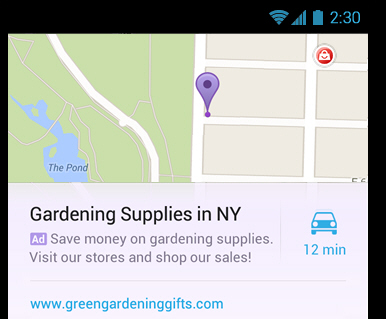
The latest kid to the party is Google Maps for iOS and Android. Perform a search for a restaurant, coffee shop, or other establishment, and you may well find that the bottom of your mobile is adorned with an ad for a related business.
Google Play store flooded with scam apps
The Google Play store is being bombarded with apps designed to scam unsuspecting users, according to consumer advice platform Scambook.
The scammers aren't even bothering to write malicious code, instead relying on simple human error to install their fraudulent apps. One app in particular has no purpose other than to launch a link to an adult video website. When the user is then asked to register, an email form is generated linking to another service on another website. Users are then asked to pay a $3,200.00 yearly fee within days of receipt.
Android Device Manager tracks down your lost phone
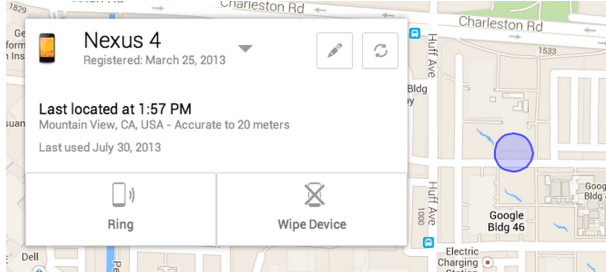
We've all done it -- put our hands to our pocket only to discover that the phone we thought was pressed close to our body is in fact missing. But where? That's the question. Android Device Manager is Google's latest solution to help you hunt out your hidden handset.
You could get a friend to call your phone -- that would seem like the obvious thing to do. But it's no help if you have put your phone into silent mode. Android Device Manager is able to call your phone and make it sound, even if the volume is turned down, so you can quickly determine if your Droid is nestling down in the back of the sofa or in the back of your car.
Google once again extends Windows Phone support for new Exchange ActiveSync connections to Gmail
In late-January, Google revealed that, after July 31, Windows Phone handsets will be unable to establish new Exchange ActiveSync connections to Gmail. The controversial move would leave said devices without the ability to sync calendar and contacts entries with the search giant's consumer-oriented email service, after the passing of the deadline. However, that is no longer the case, as Google just gave Windows Phone users another reprieve.
"We've reached an agreement to extend support for new Windows Phone connections to the Google Sync service through December 31, 2013", says Google in a statement that was issued to me earlier today. The agreement, as you can probably tell, was made with Microsoft, likely to give the software giant and its partners more time to deploy CalDAV and CardDAV support, which is needed for Gmail calendar and contacts sync, in Windows Phone.
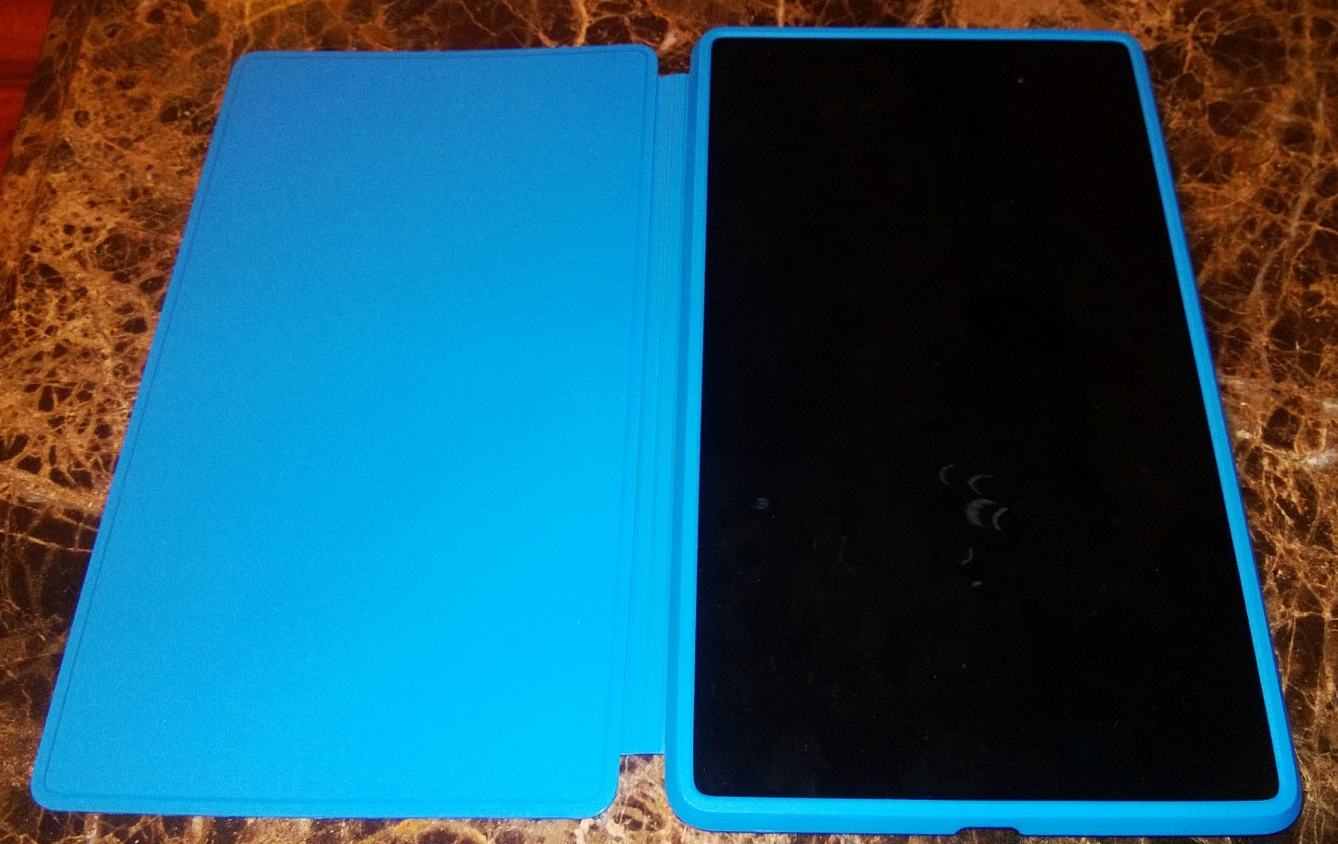
Nexus 7 (2013) Travel Cover by Asus [Review]
Smartphones and tablets are no longer just electronic devices -- they are fashion statements. It is becoming increasingly rare to find someone using one naked (without a case or cover). At some point, our iPhone-culture started to demand that our devices remain in flawless condition; this birthed an entire industry of fashion-based device protection. Yes, there were leather pouches and cases for old Palm Pilots and flip-phones, but a scuff or scratch on those devices was inconsequential.
When I received my second-generation Nexus 7, there were no cases available locally. I found that I had anxiety when using the tablet naked -- I was fearful of breaking or scuffing it. Luckily, I have an Amazon Prime account so the official Asus-made travel cover was only a day away (with $3.99 one-day shipping). I am happy to announce that the cover has arrived to my house so I can share my thoughts of it with you. So, is this cover good?
Samsung explains why some Galaxy S4 benchmarks appear 'optimized'
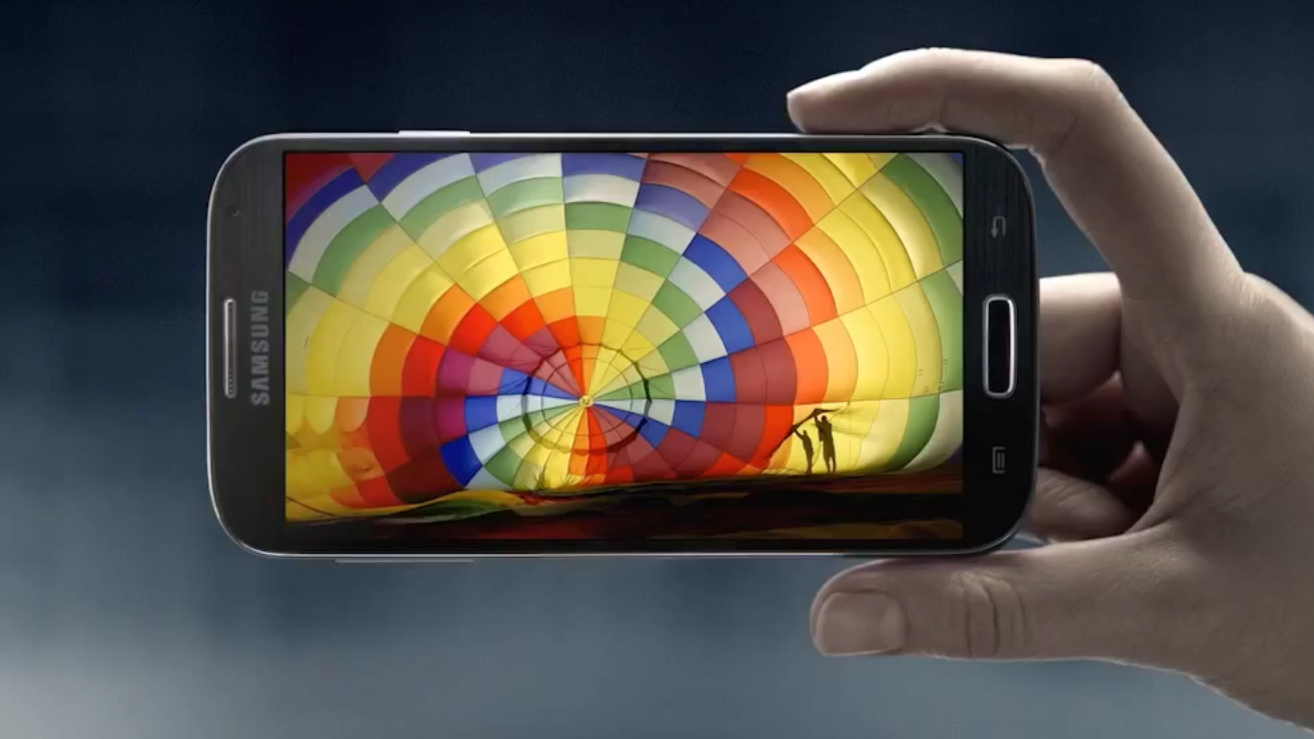
On Tuesday AnandTech published a report that suggested some sort of "trickery" was being used by Samsung to boost device performance when benchmarks are run. The Korean electronics manufacturer responded to the claims today, and while it does not deny that performance is adjusted when benchmarking tools are running, it refutes the suggestion that changes to the frequency of the Galaxy S4's GPU during benchmarking are "intended to improve [these] results".
Investigations started after a post on the Beyond3D forum claimed that the GPU speed was usually limited to 480MHz but increased to 532MHz when certain whitelisted apps were running. Benchmarks using older testing apps gave worse performance results than newer ones for user frogblast.
Most Windows Phone 8 users should say good-bye to Gmail calendar and contacts sync
Starting tomorrow, most Windows Phone 8 devices will be unable to sync Gmail calendar and contacts entries though new connections, as Google officially drops support for Exchange ActiveSync in its consumer-oriented email service. The search giant initially revealed that EAS would be ditched after January 30, but decided to give Microsoft a six-month reprieve, which ends today, to give the company time to implement CalDAV and CardDAV (the two protocols required for calendar and contacts sync, respectively) support in its tiled smartphone operating system, before finally pulling the plug.
New handsets, like the Nokia Lumia 925 and Lumia 1020, already ship with the Windows Phone 8 version (known as GDR2) which adds CalDAV and CardDAV support. However, the necessary update has yet to be rolled-out to the majority of older smartphones, like my Lumia 920 for instance (according to user reports, it is available on the unbranded HTC Windows Phone 8X), a delay which potentially affects most Windows Phone 8 users, if device market share is of any indication.
Google Drive makes setup easier for new users, adds new shortcuts
Google has released Google Drive 1.11 for Windows and Mac, a minor update to its desktop tool for accessing and synchronizing data with the online Google Drive service. The new build adds shortcuts for conveniently creating new documents, plus allows new users to choose an arbitrary name for their sync directory.
The update also comes with a number of bug fixes, including two particular issues that have plagued Mac users.
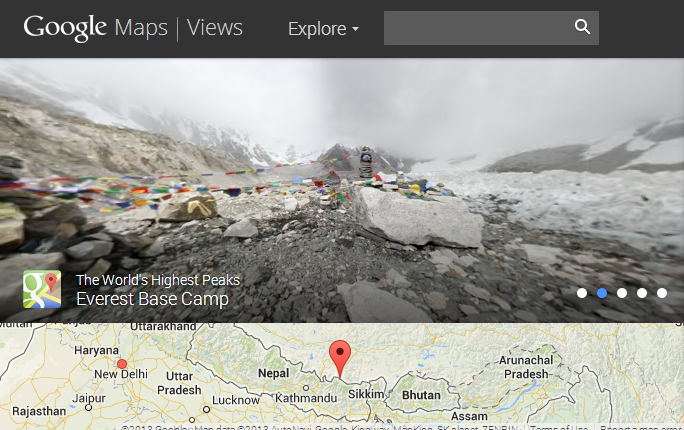
Google puts us in a spin with 360-degree Views
Google is touting its new Views community as the latest way to add Photo Spheres to Google Maps. These 360-degree photos can be captured with Android 4.2 devices and help to give an immersive online experience of a location -- think Street View but with a personal twist.
Views gives users a new way to share their photos so they are not just left forgotten on an SD card. The site can be used to work with any panoramic shots you've taken, or you can import them from your Google+ account.