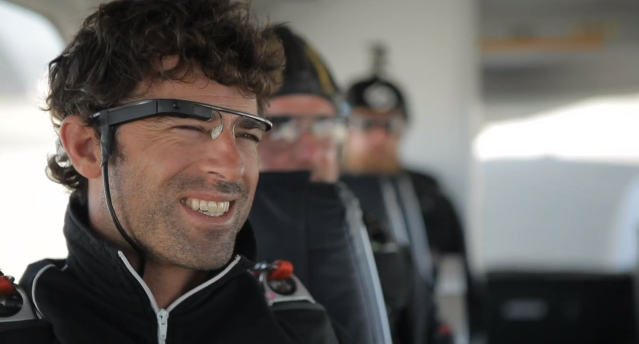
Google reveals Glass specs and releases companion app
Google has changed many aspects of our mundane digital lives including how we search online, use an email service, communicate with folks around the world, and interact with our mobile devices. Now the company even wants to change how we talk about glasses.
Who could have imagined that in 2013 we would be discussing the hardware specifications of a pair of spectacles? Before Google Glass this was unimaginable, but as the search giant has just released the specs of its specs, things just got real. So what is the search giant's forthcoming device packing?
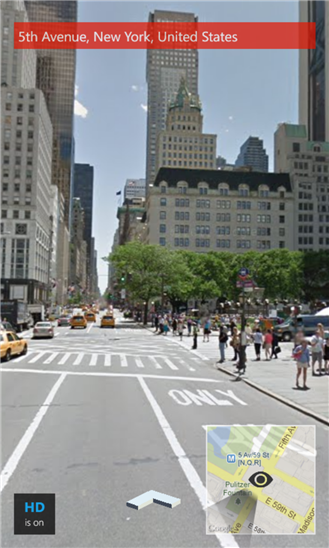
gMaps for Windows Phone features updates to Driver Mode, Latitude and Street View
Even though Google has yet to release an official Google Maps app for Windows Phone, third party developers already offer a number of competent alternatives. One of the most popular ones, and my personal favorite, is gMaps which comes with a comprehensive feature set and, bar its name, could even pass as the real deal.
Today, DreamTeam Mobile, the team of developers behind gMaps, announced a new update to the popular Google Maps client. The app now touts further improvements for Driver Mode, Latitude and Street View. Let's go through each, one by one, and see what changed.

YouTube adds a VHS simulator to select videos
The VHS is about to celebrate its 57th birthday, and in honor of that milestone, Google has added a new tape mode to some of the videos on YouTube.
Although it’s not widely available at the moment, a few clips have a tape icon under them which, when clicked, makes the videos look as if they are playing on a VHS recorder.
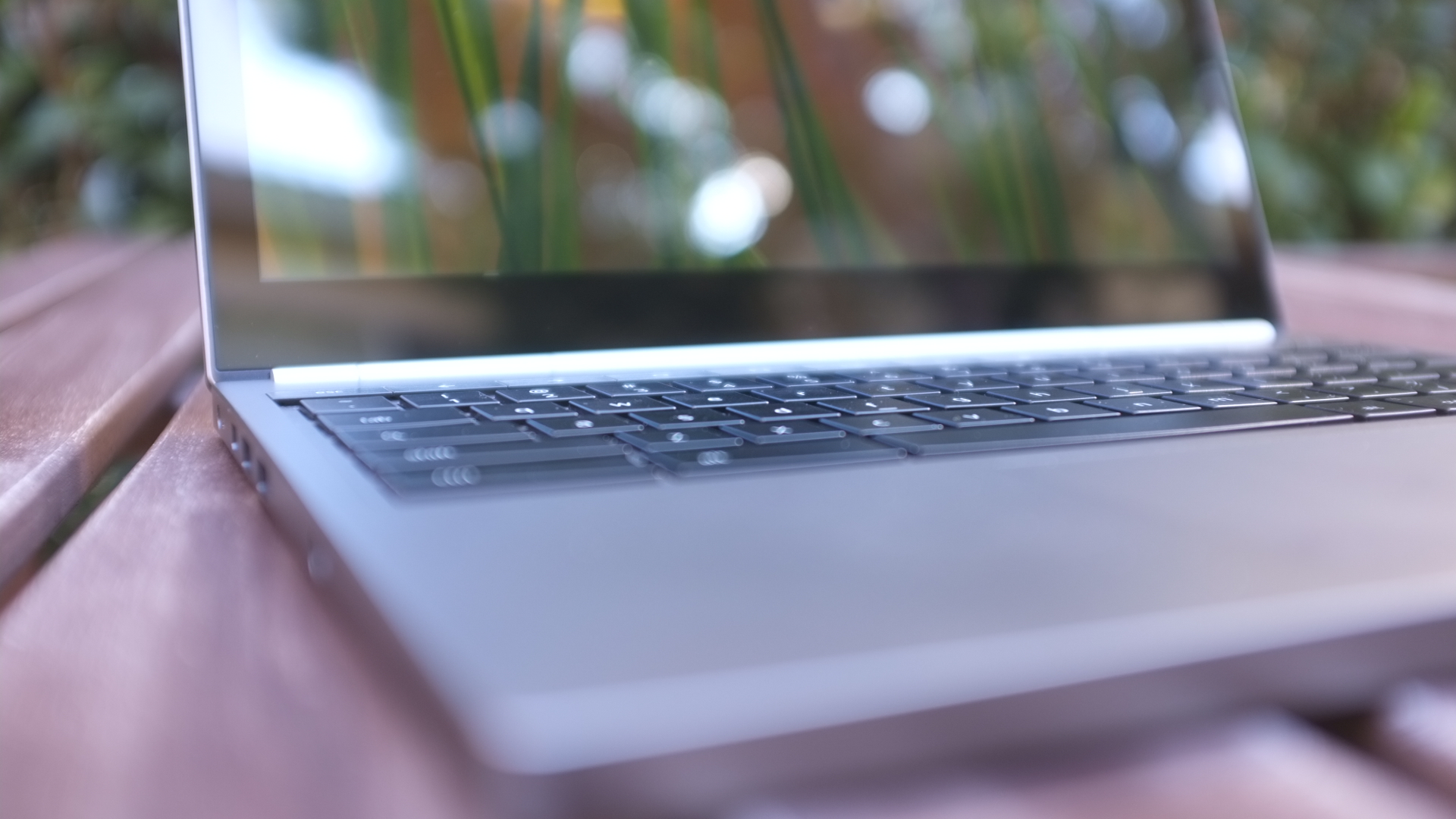
Chromebook Pixel LTE arrives today
Yesterday, Google posted a public notice that "folks who ordered the Chromebook Pixel LTE from Google Play will start receiving them as early as Friday, April 12th". If that's you, I'd like to hear about it.
Jay Munsterman got his LTE model a day early and "it is sweet! For anyone else that prefers a Dvorak or non-qwerty keyboard: the keys pry off and reattach easily. And if you have both an ARM Chromebook and a Pixel you do end up with 1.1TB of Drive space". So much for today then. The Pixel comes with 1TB free Google Drive storage for three years.

Bing searches throw up more malware sites than Google
We all know that search engine results can sometimes serve up malware, but if you’re using Bing you’re five times more likely to get malicious links than if you’re using Google.
In an 18-month study, independent German lab AV-Test discovered that all search engines sometimes serve up Trojans and other malware amongst their results despite the search providers' best efforts to prevent it.

Digg survey: Two in 10 'check Google Reader many times a day'
The furor over Google Reader's eminent demise, while quieter, is by no means over. Today, Digg pours gasoline on the fire, by publishing results from a survey about subscription habits. Late last month, the social news site announced intentions to build its own RSS solution. The company made the task the number one priority and immediately began asking for feedback. Among the 17,000 people who signed up to help shape the product, 8,000 returned surveys.
Keep in mind this is a self-selected group of people most likely to use RSS and doesn't really represent the habits of most Internet users. Results show that "80 percent of respondents check Google Reader many times a day, and 40 percent follow more than 100 feeds". In addition, more than 75 percent of the respondents say they use Google Reader for both work and play and the the most popular response to question "If there’s one thing you could remove from Google Reader what would it be"? is "nothing".

Google actively plans for your demise
They say nothing is certain but death and taxes. Google has experience avoiding the latter and wants you to plan for the former. While I can only assume that Google would prefer you stick around and use its services and click on the ads for as long as possible, the company has a Plan B. Despite the incredible attempts being made by both medical science and Ray Kurzweil, the search giant goes in another direction. Instead of memorializing you online as some sites allow you to plan for, Google prefers you simply plan what happens to your account when the Grim Reaper comes calling.
The company has released a new settings page so you choose what happens when your account becomes inactive. While Google will not actually come out and use the word "death", it certainly does an excellent job implying that this is what is meant -- perhaps the company did not consult with Mr. Kurzweil, its director of engineering and author of the book The Singularity Is Near: A True Story About the Future.
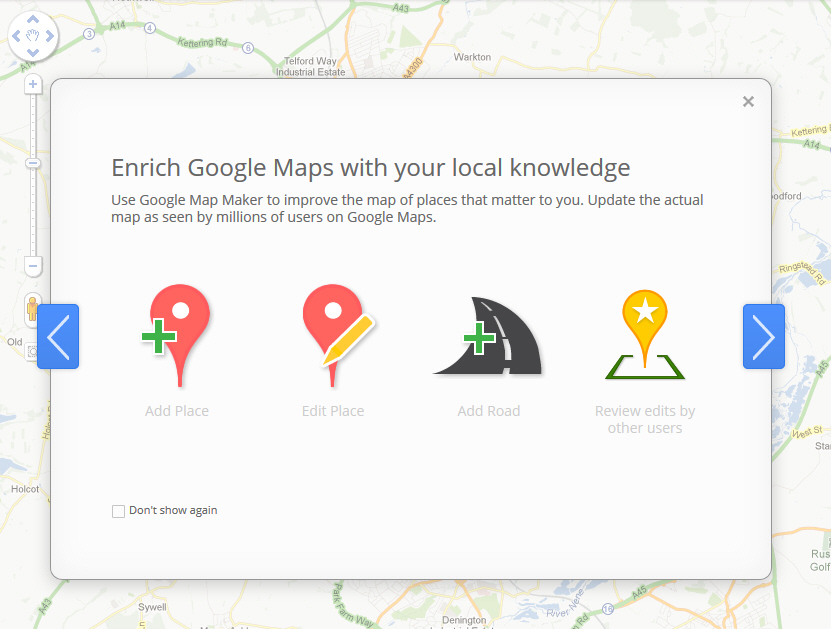
Google finally brings its Map Maker tools to the UK
Google’s digital maps are some of the very best in the world, and getting better all the time thanks to contributions and improvements from an army of users who submit additional details such as roads, rivers, railways and building outlines using Google Map Maker.
Map Maker was initially only available to users in more poorly mapped countries (such as Vietnam, Jamaica, Iceland, Cyprus, and Pakistan), but after successfully introducing it into territories like the US, Australia, New Zealand, Canada, and France, Google has finally made the tools available to residents in the UK.
Set up two-factor authentication for your Google account on Windows Phone
Enabling two-factor authentication for a Google account is an effective security measure against unauthorized access. It adds an extra layer of protection by requiring users to enter an application-specific password or security code in order to gain access to various Google services. For this second part the company says users will need an Android, BlackBerry or iOS handset. But what about generating security codes on Windows Phone? Surely, there has to be a way.
And there is. Microsoft has released an app called Authenticator which allows Windows Phone users to generate security codes for two-factor authentication. And, because it "implements industry-standard security code generation", the app supports Microsoft as well as Google accounts. The only question is: How to set it up for the latter?
Malaysia deploys Google Apps and Chromebooks to as many as 10,000 schools
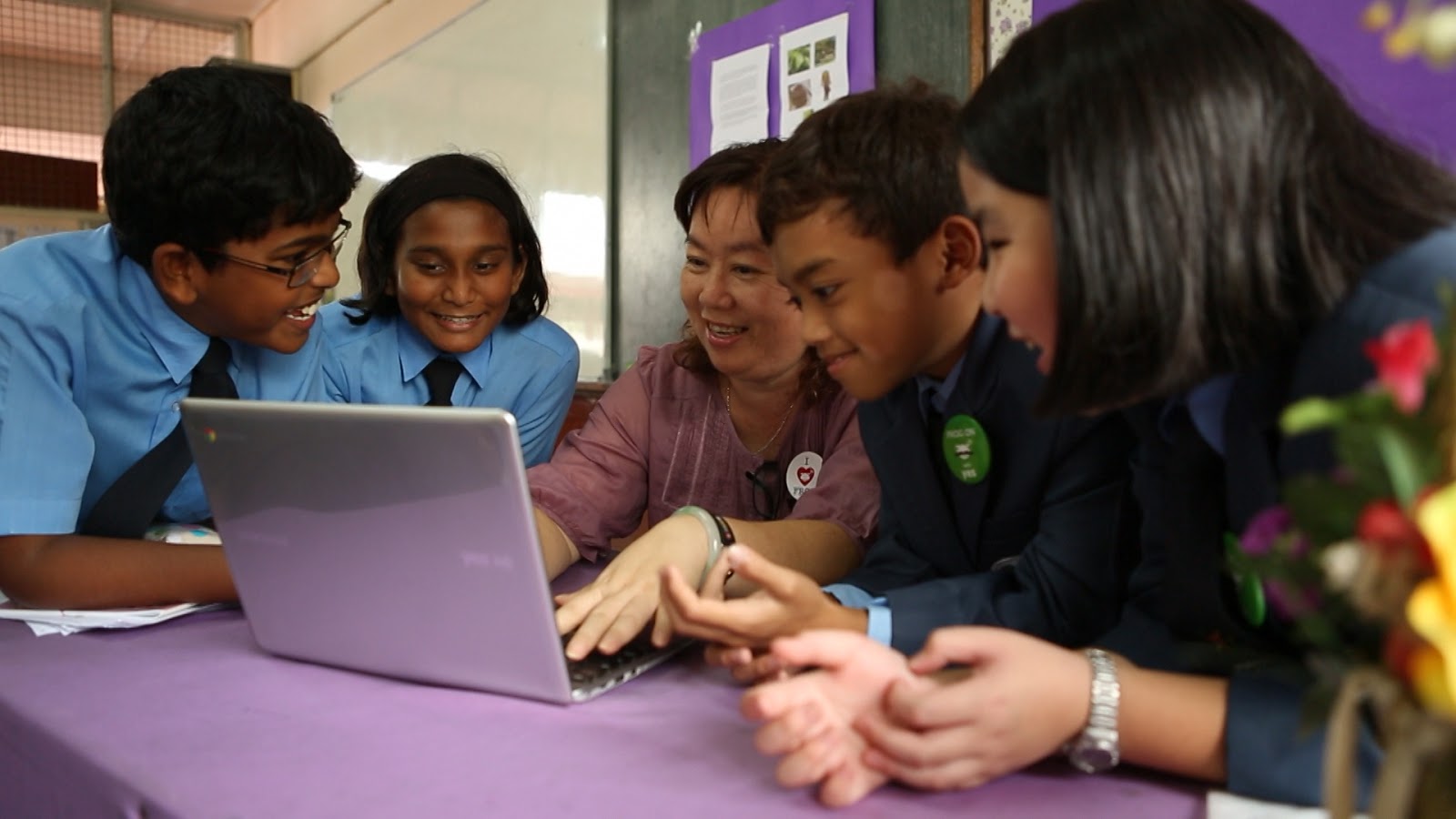
Many American schools may be gaga for iPads, but elsewhere Google Apps and Chromebooks' affordability are winning educators. Today, the search and information giant reveals that Malaysia will roll out Apps to "10 million students, teachers and parents", Felix Lin, director of product management, explains. "As part of this initiative they are also deploying Chromebooks to primary and secondary schools nationwide".
In the Malaysian Ministry of Education report, I don't see this number but reference to 10,000 schools and separate ones identifying "2.9 million students enrolled in primary school" and "2.3 million students enrolled in lower and upper secondary school". The current, official student tally from the Ministry's website is 5.23 million students. Including teachers and parents likely explains the larger number.

Microsoft continues its childish attacks on Google
Microsoft’s Scroogled campaign, in which the technology giant attacks Google for various perceived transgressions, has now turned its sights to Android, or more specifically the Google Play store.
Past Scroogled "attacks" (aka petty whining) have taken Google to task for using a pay-to-rank practice in Google Shopping, and reading emails in Gmail. The newest complaint is that Google shares your personal info with app makers.
Google Play 4 app rolls out
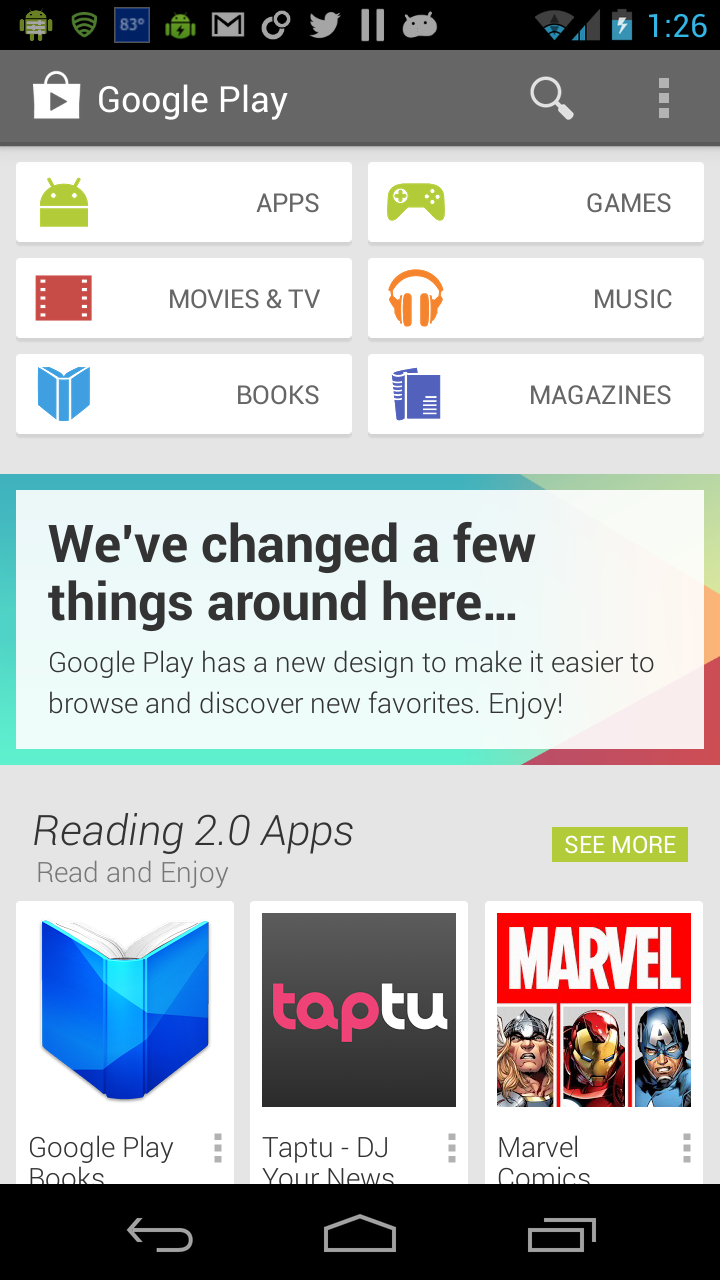
Late last week rumors surfaced that Google Play store would update, which according to the APK file is officially version 4.0.25, and sporting a whole new look. Today that news becomes official as Google confirmes that the latest version is beginning its slow, but steady, march to Android smartphones and tablets.
Michael Siliski, group product manager for Google Play, announces that "today we’ve started rolling out a redesigned Google Play store on Android phones and tablets that is simple, clean and, most importantly, helps you find great entertainment, fast".

FairSearch files complaint against 'Google's anti-competitive' mobile strategy, in the EU
FairSearch, a coalition comprised of 17 global businesses including Expedia, Kayak, Microsoft, Oracle, Nokia and TripAdvisor, has announced that it has filed a complaint with the European Commission (EC) against Google, citing an "anti-competitive strategy" and consolidating "control over consumer Internet data for online advertising" in the mobile space.
FairSearch uses two reports from Strategy Analytics (SA) and eMarketer to base its claims. According to the coalition, Google exerts its dominance in the mobile operating system space with Android, which held a 68.4 percent market share in 2012 per SA, and in mobile search advertising, which eMarketer says Google dominates with a 96 percent market share.

The Apple-Google duopoly so dominates app downloads there is little room for BlackBerry and Windows Phone
Mobile app store downloads from the four major stores -- Apple, BlackBerry, Google and Microsoft -- reached 13.4 billion in first quarter, generating $2.2 billion revenue, according to Canalys. Combined, revenue from new sales, in-app purchases and subscriptions grew 9 percent from fourth quarter, while number of downloads climbed by 11 percent.
There are a half-dozen measures that mark successful platforms, with money being the most important. Developers typically go where they earn more. That's preface to a fascinating juxtaposition partly explaining developer preference for iOS, even though more Android devices ship and cumulative sales (750 million to 500 million) are larger. Google Play accounted for 51 percent of downloads during Q1. But Apple's App Store generated 74 percent of the revenue. Ponder those numbers for a moment.
'Slightly closed Android ecosystem could be reality by the end of 2015'
That's the prediction Aapo Markkanen, ABI senior analyst, makes today. It's the right call, as Larry Page starts his third year returning as Google CEO. Page resumed duties on April 4, 2011, and the company's direction took a hard turn. Business is more aggressive, altruistic goals less and so-called openness a waning thing. As I asserted a year ago, "Google has lost control of Android". That Page and Company would try to wrestle back control is no surprise.
Facebook Home is good reason. The user interface debuting April 12 takes over the more app-centric Android homescreen, putting the social network first before anything else, including Google+. Facebook's OEM program could put Home on many more devices. HTC already is on board with the First smartphone. Then there is Samsung, which during fourth quarter accounted for 42.5 percent of all Android handset sales, according to Gartner. TouchWiz, which gets a big update with forthcoming Galaxy S4, is the user experience -- not that determined by stock Android. These are but two examples of many.