
Tim Berners-Lee launches open source project Solid to decentralize the web and place users in control of data
Tim Berners-Lee is famous for inventing the world wide web, and now he's ready to take things to the next level with an ambitious open source project called Solid. Noting that the web has become "an engine of inequity and division", Berners-Lee wants to restore the power and agency of individuals online and move the balance of power away from "powerful forces who use it for their own agendas".
Solid is not a completely new venture. Berners-Lee has been working on it for some time, and it is built on the existing web as we know it. Where it differs is that "it gives every user a choice about where data is stored, which specific people and groups can access select elements, and which apps you use". This is about decentralizing the web.

Mozilla teams up with Have I Been Pwned to create data breach notification tool, Firefox Monitor
Mozilla has partnered with Troy Hunt -- the brain behind data compromise checking service Have I Been Pwned -- to create its own data breach notification service. Called Firefox Monitor, the free service lets users check if any of their email accounts or personal data have been involved in data breaches.
More than this, Firefox Monitor can also keep an eye out for future data breaches and notify those who have signed up whether their data has been affected.

After complaints, Google is going to give users more privacy controls in Chrome 70
With the release of Chrome 70, Google is set to address two recent privacy concerns with its browser. Users have been unhappy with Chrome 69 forcibly signing them into the browser when they sign into a Google website, and there have also been concerns about the handling of cookies.
Due for release in the middle of October, the next version of the web browser will enable users to disable the controversial sign-in feature, as well as changing the way Chrome handles the clearing of auth cookies.

Zoho taken offline by domain registrar for phishing violations
CRM service Zoho disappeared from the internet after its domain registrar suspended it for failing to deal with phishing appropriately.
TierraNet blacklisted Zoho.com after receiving complaints about phishing emails sent from Zoho-hosted accounts. This meant that many businesses were unable to access their documents, address books and emails, causing chaos for many. Zoho has said that in order to ensure such an occurrence is never repeated, it will become a domain registrar itself.

Users balk as Chrome 69 forcibly signs them into the browser
Chrome users have reacted angrily after the discovery of a new forced sign-in for the web browser. In short, the change means that when you sign into a Google service -- such as Gmail -- you are also automatically signed into this account within Chrome itself.
While a handful of people have welcomed the new sign-in activity, there is a very vocal number who are extremely unhappy. In addition to the perceived privacy concerns, what has particularly upset people is the fact that they are being signed into Chrome without being told about it.

PayPal bans Infowars for spreading hate speech
Alex Jones' Infowars has found itself cut off from yet another platform. Having been booted from social media sites including Twitter and Facebook, as well as YouTube and the App Store, PayPal has now given it the elbow.
The online payment service has taken exception to Infowars' promotion of "hate" and "discriminatory intolerance" and has hit Jones' cash cow where it hurts -- in the wallet. He has been given ten days to find a new payment processing service.

Half of adults look for online recommendations rather than ask their partners
More than half of adults worldwide are more likely to consult digital resources than their significant other (SO) for recommendations for products and services according to a new report by cloud database company DataStax.
In the US, 64 percent of adults choose digital resources over their SO, in the UK it's 61 percent, and Germany, 52 percent. The French, however, are still inclined to the offline approach with only 45 percent of adults choosing digital resources over their SO.

Amazon investigates allegations that workers accept bribes to leak data and delete bad reviews
Amazon has been hit with allegations of staff bribery which the company says it is investigating.
A report in the Wall Street Journal this weekend claims that employees have been accepting bribes in return for leaks of sales data. It is also alleged that staff help out independent sellers by deleting negative reviews in exchange for payment, and restore accounts that have been banned.
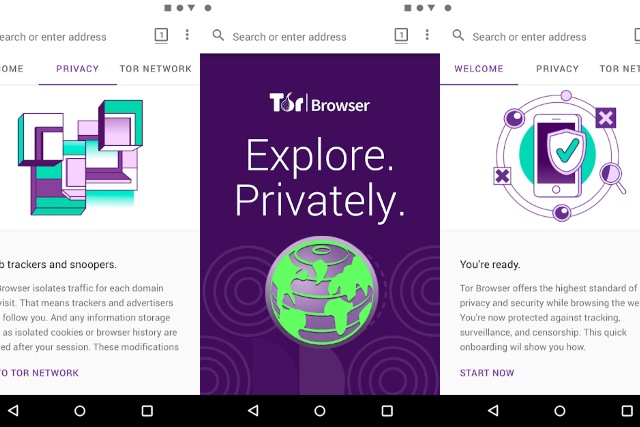
Tor for Android brings secure, anonymous internet browsing to your mobile phone
It seems like mere moments since an updated version of Tor for the desktop was released, and now there's great news for owners of Android smartphones. The Tor Project has released an Android version of the Tor browser, and it's available to download either directly from its website, or from Google Play.
Currently in alpha -- so expect there to be a few issues -- this is the only mobile Tor browser that's supported by the Tor Project, and the developers promise that it will block trackers, protect against surveillance and ensure privacy.

Over 12 million Brits have fallen victim to online fraud
Almost one in four Brits (23 percent) have been victims of fraud when shopping online -- with eight percent duped more than once, according to a new study
The inaugural Fraud Tracker report from online payment service Shieldpay shows that the average victim loses £608, yet receives only £55 back from their bank.

TiVo discontinuing dial-up service
For many consumers, dial-up internet is a distant memory. Broadband has long replaced the slow and unreliable telephone-based internet connection. Believe it or not, some people in rural areas still utilize it -- ugh, those unfortunate people.
Surprisingly, TiVo still offers dial-up access to some of its users, allowing them to download program guide information. Yes, really. Sadly, today, the company began alerting those users that it will be discontinuing dial-up connectivity later this month -- the end of an era.

Google's new Content Safety API will fight child abuse images with AI
Google has announced the release of a new Content Safety API with the aim of helping to combat child sexual abuse material (CSAM) online.
The announcement comes as UK home secretary Sajid Javid called on technology companies to do more to tackle the problem of child abuse imagery on the internet, and the API has two main aims. The first is to make it quicker and easier to detect and remove CSAM, while the second is to do so without having to expose human content-checkers to so much abuse content.

Mozilla to boost Firefox privacy by automatically blocking all tracking
Mozilla has announced some of its plans for Firefox, and there's a strong focus on privacy. At an as-yet unspecified point in the "near future" the browser will block all tracking by default, although it is being trialed this month.
In addition to this -- which is a change from the current Do Not Track option -- Firefox will include a new set of options which Mozilla says will give users greater control over the information they share with websites. As well as helping to improve privacy, Mozilla is also hoping to improve the performance of its web browser with a new set of controls that it says will empower users and give them a voice.

YouTube alternative Facebook Watch rolls out globally
Following a successful launch in the US a year ago, Facebook is launching its Watch service globally. Competing directly with the likes of YouTube, Facebook Watch is the social network's platform for original video content, including Major League Baseball games and entertainment news.
Just 12 months after launching in the US, the service enjoys 50 million monthly viewers and Facebook will be hoping to continue this success in other parts of the world. The company is pushing the social aspect of Facebook Watch as a major draw.

Privacy: Yahoo still scans your emails... and wants to sell data to advertisers
Oath -- the owner of Yahoo -- is in talks with advertisers, promoting a service that scans the content of emails and provides a wealth of information about users.
The service would give advertisers access to data contained in over 200 million Yahoo Mail inboxes. Email scanning would also apply to AOL Mail inboxes, also owned by Oath. As noted by the Wall Street Journal, Oath is now the only major US email provider than scans emails in this way -- and the way to opt out is well-hidden.