
Mozilla's 2018 roadmap shows ad blocking (of sorts) is coming to Firefox
Ads may be central to the running of the web, but that doesn't mean people want to see them. Ad blocking is more popular than ever, and it's something that's been noted by Mozilla.
Revealing its 2018 roadmap for Firefox, the company says that an ad blocker is being added to the web browser -- albeit a limited one. On top of this, additional privacy controls are on the cards, as is a tool to block auto playing videos, and a breach alert system.

YouTube steps further into the political arena by introducing further restrictions on firearms videos
YouTube has stepped further into the debate surrounding gun control by introducing new restrictions on weapon-related videos on its platform.
The move sees Google nailing its political colors to the mast, and it's a move that's likely to anger Republicans and the NRA, and lead to further allegations of a liberal bias. Under the new policies, videos that promote or link to sites selling firearms and accessories are banned, as well as those that show how to make weapons at home.

Vivaldi collaborates with DuckDuckGo to improve browser privacy
Vivaldi Technology has announced a new collaboration with the privacy-centric search engine DuckDuckGo. In coming together, DuckDuckGo will be made the default search engine in a Private Window.
The aim is to further increase the privacy offered by the Vivaldi web browser, helping to ensure that searches that are conducted in a Private Window really are private.

Mark Zuckerberg's failure to apologize about the Cambridge Analytica privacy breach is despicable
After five days of complete silence, Mark Zuckerberg finally decided to face the music and talk about the Cambridge Analytica debacle which has seen the private information of more than 50 million Facebook users harvested by the data analytics company
Yesterday, the Facebook founder condescended to issue a statement about the privacy breach, and also appeared in a CNN interview. He was, of course, quick to point out that his company has already cleaned up its act and would be doing a lot more, including auditing apps and developers. So far, so face-saving. One thing he rather forgot about, however, was saying sorry to the hordes of people affected by the matter.

The Google News Initiative is yet another attempt to combat fake news
The seemingly throwaway tag of "fake news" has developed into an absolute phenomenon over the last year or so. Previously unheard of, it's now not only part of the technological zeitgeist, but also something that Twitter, Google, Facebook et al are on a mission to fight.
Today, Google announces its latest weapon -- the Google News Initiative. It sees Google trying to increase the output and promotion of quality journalism as it tries to "build a stronger future for news" and fight the spread of inaccurate information.

Play your favorite retro handheld games with the Internet Archive emulators
The Internet Archive is a staggering piece of work, saving for posterity books, movies, music, and entire websites. For a number of years, the site has also offered in-browser emulation, giving everyone the chance to get teary-eyed with nostalgia and play a range of console games online.
Now the emulation collection has been expanded to cover a wide range of handheld games including the likes of Mortal Kombat, Double Dragon and Q*Bert. The new Handheld History Collection builds on the work the Internet Archive has already done with the MAME development team.
Picture-in-picture mode is coming to YouTube on the desktop
YouTube has been embroiled in more than its fair share of controversy recently -- relating to conspiracy videos in particular -- but this is not standing in the way of Google forging ahead with new features.
Next on the horizon is a picture-in-picture mode; something that will be familiar to users of the YouTube mobile apps. Now the same feature is coming to desktop version of the site, giving you the ability to continue browsing through videos while another one plays.

Facebook is introducing a way for creators to make money from their content
YouTube has become a huge money-making platform, not only for Google, but also for the creators who upload content. Now Facebook wants a piece of the action and is in the process of testing a couple of ways in which creators can monetize their content.
The idea sees Facebook giving creators the chance to offer subscription services to their fans. For $4.99 per month, subscribers can be granted access to exclusive content -- and Facebook won’t be taking a cut of the money.

YouTube Kids app is serving up conspiracy videos from the likes of David Icke
The very idea of YouTube Kids is to ensure that children are not exposed to content that parents would consider inappropriate for them. This means filtering out videos with an adult theme, with Google -- supposedly -- curating content suitable for younger eyes.
This week, the main YouTube site has been in the news because of its plans to counter conspiracy videos with "information cues" rom Wikipedia. But it seems that YouTube Kids has a similar problem, with children being exposed to conspiracy theory videos from the likes of reptilian-obsessed, Illuminati-loving conspiracist David Icke.

Facebook algorithms went mad and threw up some weird -- and sexual -- search suggestions
Facebook has issued an apology after its search algorithms apparently went haywire and started to suggest a range of strange, and often NSFW, videos to users.
Throughout Thursday night into Friday morning, a range of bizarre search suggestions were displayed to anyone who started typing "video of". Some of the suggestions were offensive, and it didn't take long for screenshots to be shared on Twitter.

Privacy: Hotspot Shield, PureVPN, and ZenMate found to leak sensitive data
VPN tools have been in the headlines recently. Firstly, Facebook's Onavo VPN was found to be gathering user data, and then McAfee snapped up VPN firm TunnelBear. Now for users of Hotspot Shield, PureVPN and ZenMate, there's a warning: sensitive data such as your real IP address may be leaked.
A VPN company with a strong interest in privacy, vpnMentor, commissioned research into the three well-known tools, and problems were found in all of them. The developers were notified, but only HotSpot Shield has addressed the problems that were found.

Warning for RSS fans -- Digg Reader is closing in under two weeks
For some people RSS is already a dead technology, and over the last few years numerous RSS readers -- including Google Reader -- shut up shop. But for others, accessing newsfeeds is an essential way to keep up to date with what's going on.
Following the closure of Google Reader, RSS fans flocked to the likes of Feedly, The Old Reader, Digg Reader and Inoreader. Now Digg Reader has announced that it is to close, and users are being advised to export their feeds so they can be imported into an alternative service.

Facebook bans far-right group Britain First and its leaders for hate speech
In the latest part of its clean-up exercise, Facebook has removed pages of the far-right, anti-Islamic group Britain First. The social network has also closed down the pages of the leaders of the group -- well-known in the UK, and also brought to US attention after Donald Trump shared its tweets.
The ban is such that Britain First will not be able to create any pages in the future. Facebook says that the group has repeatedly violated rules against hate speech, and denies that the bans are an infringement of free speech.
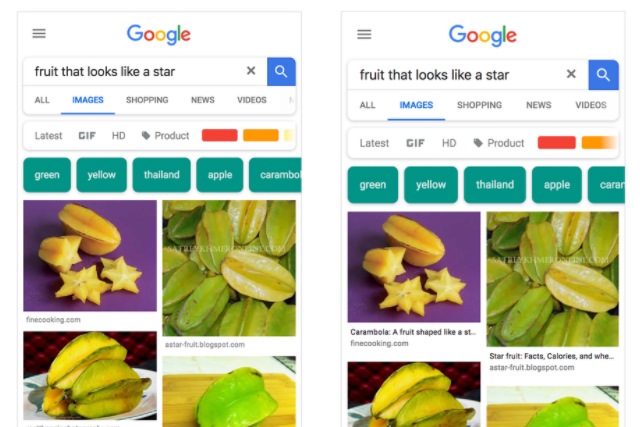
Google Images gains captions to make search results much more useful
By its very nature, searches on Google Images are very visual things -- but that's not to say they couldn't be enhanced with some non-pictorial content. And that's exactly what Google has done, adding captions to image search results to make them more useful.
The aim is to provide greater context about results, giving users the chance to judge the quality of the image, and to perhaps determine whether the host site will have other useful images.

Tim Berners-Lee: social media is too powerful and the web needs regulation to avoid weaponization
Today marks the 29th anniversary of the world wide web, and as has become traditional, its inventor has penned a letter for the occasion. In it, Sir Tim Berners-Lee calls for regulation of the web to prevent it from being "weaponized".
His letter suggests that "the web is under threat," and highlights a number of problems that exist, including the digital divide, privacy, fake news and the dominance of social media. He suggests that a regulatory framework could be needed to prevent a handful of companies from "weapon[zing] the web at scale."