
Twitter suspends multiple 'tweetdecking' accounts for stealing tweets and spamming content into forced virality
In the latest attempts to clean up its platform, Twitter has suspended a number of accounts for trying to game the system. A number of well-known accounts were hit for stealing tweets without giving credit, and mass retweeting each other's content to force virality -- a practice sometimes known as tweetdecking.
As is customary, Twitter is not willing to comment on individual cases, but it is thought that the company was unhappy with repeated violations of its policies against spam.

Judge: Trump should mute rather than block critics on Twitter
Donald Trump's use of Twitter is well known, and it's also been the source of some controversy for one reason or another. As well as his seemingly ill-thought out ramblings causing delight, amazement, disbelief and horror in just about equal measure, it has been suggested that the president's decision to block people who criticize him is unconstitutional.
Now a district judge may have come up with a solution, avoiding concerns about potential violation of the First Amendment. She suggests that rather than blocking people, Trump should just mute their accounts.

Want to get verified on Twitter? Jack Dorsey wants that for you too
For a large number of Twitter users, there is one question that crops up time and time again -- "How do I get verified on Twitter?". Once dominated by celebrities and politicians, Twitter eventually allowed anyone to ask for a coveted tick -- but then closed down open applications after problems with white supremacists.
A lot of users were stripped of their verified status, but gaining the tick still remains a goal for many. Now Twitter CEO Jack Dorsey has some good news. The plan is to open up verification to everyone -- and Twitter will not be acting as judge and jury.

123 Reg backup cockup wipes out users' websites since August last year
Web host 123 Reg has suffered something of an issue causing it to replace some users' websites with backups dating back to August 2017. Other website owners complained that their sites had been taken offline completely.
For anyone who has not made their own backup of their website, it's not looking as though 123 Reg will be able to help. Changes made since August last year appear to have been lost forever. Unsurprisingly, customers are more than a little irked.
Have I Been Pwned is now used by governments to check for data breaches
Over the last few years, the website Have I Been Pwned (HIBP) has given people the chance to check whether their personal data was compromised in any data breaches. Now the site reveals that the UK and Australian governments are using its services to monitor official domains.
That governments should check the site's database for the presence of their own email addresses is perhaps not surprising -- it's used by just about every type of body imaginable. But now the mechanics have been opened up for these two governments.

Twitter introduces Bookmarks and new sharing options
Several years in the making, Twitter has finally gained a Bookmarks option. While it has long been possible to like/heart a tweet to make it easier to access in the future, this method essentially advertised your activity to everyone -- and it might well be that you didn't "like" the tweet in question anyway. Privacy FTW!
On top of this, Twitter has also introduced sharing options which can be accessed through a new icon.

YouTube pulls InfoWars video from the Alex Jones Channel over Parkland shooting allegations
Alex Jones' conspiracy-theory-heavy InfoWars has been censured by YouTube for violating its policies. A video entitled "David Hogg Can't Remember His Lines In TV Interview" -- in which it was alleged that students appearing on TV talking about the Parkland, Florida shooting were "crisis actors" -- was removed from the Alex Jones Channel for breaching YouTube's rules about harassment.
Unsurprisingly, InfoWars is describing YouTube's actions as censorship, but there's a more pressing concern for The Alex Jones Channel and other InfoWars channels -- they run the risk of being closed down entirely.

Top US banks have multiple online security flaws
Analysis of the internet presence of 25 out of 50 top US banks reveals a worrying number of online security flaws.
Threat management company RiskIQ used its Digital Footprint product, which provides a real-time inventory of all internet-facing assets, including the components running on assets that may expose the organization to vulnerability risk. It also correlates newly discovered vulnerabilities with internet-exposed components and assets, highlighting those at risk to inform patching and remediation planning.
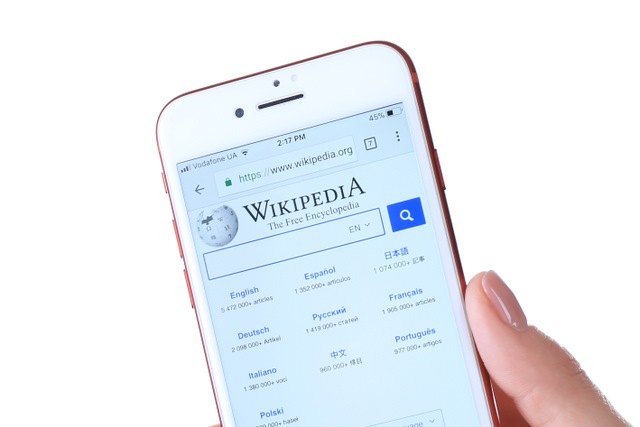
Freely accessible Wikipedia Zero is no more
The Wikimedia Foundation is to kill off Wikipedia Zero this year. The zero-rated version of the online encyclopaedia was launched six years ago with the aim of providing free access to mobile users in numerous countries, but there has been a significant drop in demand.
The foundation has partnered with dozens of mobile operators around the world to provide free access to Wikipedia. Among the reasons for shutting down the program is "low awareness of Wikipedia outside of North America and Europe."

Why Google is building its own ad blocker
As one of the major players in online advertising it might seem surprising that Google is introducing its own ad filtering feature to Chrome.
Partly though this is a fight back against the increasing use of ad blockers that block Google’s own ads and is aimed at the most annoying ad types like pop ups and autoplay videos. Internet marketing company TechWyse has put together an infographic explaining the thinking behind Google’s decision.

Google explains how Chrome's new ad filtering feature works -- and why it's not your new ad blocker
Despite the fact that Google has a vested interest in online advertising, the company is about to enable its own built-in ad blocker (of sorts) in Chrome. Starting tomorrow, 15 February, the Chrome browser across all platforms will feature ad filtering to cut out those advertisements that fail to comply with the Better Ads Standards.
This is something that Google has talked about before, but ahead of the ribbon-cutting, the company has revealed how the feature works and what it means for Chrome users. The first thing to note is that it does not mean you should ditch your current ad blocker.

The UK government reveals AI software that automatically blocks extremist content online
Continuing its drive to take control of the internet, the UK government has unveiled a new tool that it says can block extremist content "on any platform" with astonishing accuracy. The system -- as yet unnamed -- was unveiled by Home Secretary Amber Rudd and cost £600,000, paid for with public funds, and has been designed to detect jihadist content.
The government says that the algorithms can automatically detect "94 percent of Daesh propaganda with 99.995 percent accuracy." Speaking to reporters in London, Rudd said that "we're not going to rule out taking legislative action if we need to do it," opening up the possibility that the likes of Facebook, Twitter and Google could be forced to use the system.

German court says Facebook's privacy settings and use of personal data are illegal
Facebook is no stranger to privacy-related controversy, and now a German court has ruled that the social networks' use of personal data is illegal. The court in Berlin also said that Facebook's default privacy settings violate German consumer law.
The case was brought by the federation of German consumer organisations (VZBV) which said Facebook failed to provide its users with sufficient information, and also that people were automatically opted into features.

India hits Google with $21 million fine for search bias
Google is certainly no stranger to accusations of abusing its position to its own advantage, and the company has now been fined 1.36 billion rupees ($21.17 million) by India's antitrust watchdog.
The Competition Commission of India (CCI) said Google was guilty of "search bias" and had been abusing its dominance in online web search and online search advertising. Particular criticism was leveled at Google's promotion of its own flight search page.

Cloud will account for 95 percent of total data center traffic by 2021
Cloud services are increasingly dominating the internet and could account for 95 percent of data center traffic in three years time.
This is among the findings of the latest Global Cloud Index report from networking company Cisco, which finds both consumer and business applications are contributing to the growth in demand.