
65 percent of cybersecurity analysts say they've considered quitting
Working in a security operations center is stressful, so much so that 65 percent of analysts report having considered changing careers or quitting their jobs.
This is among the findings of a new study carried out by the Ponemon Institute for data analytics platform Devo Technology, which also finds that 49 percent say their SOC is not fully aligned with business needs.
Microsoft's web-based Outlook 365 is leaking users' IP addresses in emails
Anyone using Office 365's webmail component to send emails is unwittingly sharing their IP address with the people they communicate with.
The web-based Outlook 365 inserts the sender's IP address into the header of an email, which makes it stand apart from other webmail services such as Gmail -- and even Microsoft's own Outlook.com. While the injected IP address serves something of a purpose, it's also a privacy and security risk that many users may not be aware of.

66 percent of SMBs don't believe they’re vulnerable to a cyberattack
Most small and medium businesses are seriously underestimating their vulnerability to cyberattacks according to a new study.
The report from password manager company Keeper Security shows that 66 percent don't think they will fall victim to an attack. But this confidence is contradicted by a study last year that showed 67 percent of SMBs had been attacked in the past year.

Banking malware grows as cryptominers decline
The latest mid-year Cyber Attack Trends Report from Check Point shows mobile banking malware attacks are up 50 percent compared to the first half of 2018, while the number of organizations hit by cryptominers is down to 26 percent, from 41 percent last year.
Among the top banking malware variants are Ramnit (28 percent), a Trojan that steals banking credentials, FTP passwords, session cookies and personal data; Trickbot (21 percent), which first emerged in October 2016; and Ursnif (10 percent) a Trojan that targets the Windows platform.

IT professionals under pressure from email attacks
Email attacks are causing major problems for IT professionals, with over a third (38 percent) blaming them for increased stress at work.
A survey of 660 IT professionals by Barracuda Networks reveals that 38 percent also admit to worrying about email attacks outside of work hours and 16 percent have canceled personal plans due to email attacks.

Alleged critical VLC flaw is nothing to worry about -- and is nothing to do with VLC
There has been a degree of confusion over the last few days after news spread of a supposed vulnerability in the media player VLC. Despite being labelled by security experts as "critical", VLC's developers, VideoLAN, denied there was a problem at all.
And they were right. While there is a vulnerability, it was in a third-party library, not VLC itself. On top of this, it is nowhere near as severe as first suggested. Oh -- and it was fixed over a year ago. An older version of Ubuntu Linux was to blame for the confusion.
'Critical' vulnerability discovered in VLC on Linux and Windows -- but VideoLAN says it is not reproducible
Reports have emerged of a security bug in the Windows and Linux versions of VLC, making it vulnerable to remote-code execution via malicious videos. But although German and American security experts have branded the flaw as "critical", VLC-maker VideoLAN is downplaying things.
In fact, more than downplaying the vulnerability, VideoLAN is flat-out denying that it exists, with the software developer dismissing it as "fake news". [UPDATE: the vulnerability has now been pretty much debunked]

22 percent of businesses hit by phishing attacks in the last quarter
In the past three months 22 percent of businesses have suffered a data breach as a result of an email attack according to a new report.
The study released by email security platform GreatHorn spoke to more than 1,000 professionals to get a better understanding of the current state of enterprise email security.

Password stealing malware on the rise as 60 percent more users are targeted
Password stealing malware is a key weapon in the cybercriminals' armoury, seeking to grab data directly from users' web browsers using a range of methods.
According to new data from Kaspersky, the number of users, targeted by password stealers, has peaked from less than 600,000 in the first half of 2018 to over 940,000 during the same period in 2019.

New developer program helps strengthen IoT security
Securing Internet of Things devices is an ongoing problem for businesses, developers often have to sift through a raft of unorganized and disparate information to find the IoT security solution that works best for them.
Identity and security specialist GlobalSign is launching an IoT developer program designed specifically to assist developers with device identity integrations that strengthen security operations for IoT and industrial IoT (IIoT) ecosystems.

Wizz Air sends out password reset emails to millions of customers following 'technical irregularity'
Hungarian airline Wizz Air has emailed millions of customers informing them that their passwords have been reset.
While the company is at pains to stress that it has not been the victim of hacking, nor is any personal information at risk, the email took many customers by surprise and raised concerns about a possible data breach.

Scotland Yard Twitter account and website hacked
The Twitter account of Scotland Yard has been hit by hackers, resulting in a series of strange and offensive tweets being sent to hundreds of thousands of followers. The website for the Metropolitan Police was also hacked.
Tweets sent by the hackers made references to Keemstar as well as drill artist Digga D, calling for the rapper to be freed from prison. The attack by hackers also resulted in a series of emails being sent out to journalists via the Metropolitan Police's official email address.
Google boosts Chrome bug bounties
Bug bounty programs have become a popular way for companies to unearth security issues in software and address them quickly. Google is no stranger to such programs, and it has just announced massive increases to the payouts made for finding vulnerabilities in Chrome.
Some rewards have doubled while others have tripled, taking the maximum compensation for reporting a security flaw in Google's web browser -- and other Chromium-based browsers -- to an impressive $30,000.

Slack resets hundreds of thousands of passwords following data breach
Slack has just been made aware of additional information about a security breach that took place back in 2015, forcing the company to reset the passwords of around 1 percent of its users.
The company announced earlier this year that it has a daily userbase of over 10 million people, so this means that a huge number of users are affected by the incident no matter how much Slack tries to downplay it.
Microsoft warns thousands that they are victims of state-sponsored hacking
Microsoft has revealed that it has issued warnings to nearly 10,000 people that they are the targets or victims of state-sponsored hacking.
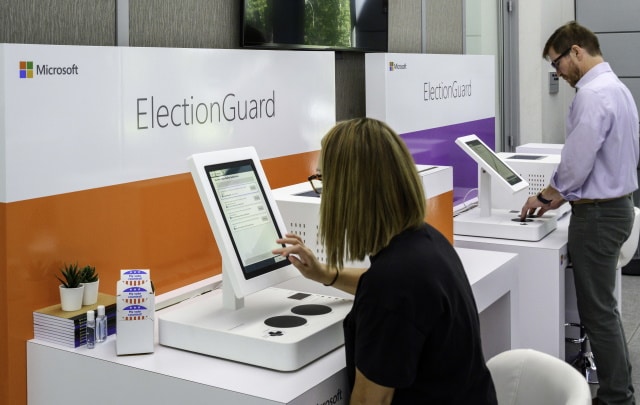
The announcement comes as Microsoft showcases election systems running Microsoft ElectionGuard which not only helps to increase security, but also makes voting more accessible. Microsoft reveals that the vast majority of the state-sponsored attacks targeted enterprise customers, but there were still a significant number of regular consumers affected.