
Happy 20th birthday PlayStation
20 years ago today, Sony’s beloved PlayStation console was released in Japan. Launched into a gaming world utterly dominated by Sega and Nintendo, the PlayStation quickly became the must-have console. I got my initial first-hand experience of it at E3, and remember it being pretty much the only thing people there were talking about. I was (and still am) a dedicated PC gamer, and the PlayStation was the first games console I ever bought.
Sony’s PlayStation was an essential purchase for gaming fans -- especially those into driving and fighting games, which the console excelled at -- and it’s fair to say the PlayStation quickly had a massive impact on the gaming world, leaving a legacy that is still very much in evidence today.

Opera 26 gains bookmark sharing and import, Print Preview
Norwegian browser developer Opera has released Opera FINAL 26 for Windows, Mac and Linux. Having finally introduced support for bookmarks in the previous update, Opera 26 allows users to both share bookmarks and migrate them across from other browsers.
Version 26 is also a landmark release for Linux users as it marks the first stable release of the new Opera browser on that platform -- note it only works with 64-bit builds.

Android 5.0.1 Lollipop now available, here's how you can install it
Just like any other first iteration of a major operating system release, Android 5.0 Lollipop is not without its fair share of problems. The main issues that users are reporting are related to battery life, responsiveness and Wi-Fi. Like other 2013 Nexus 7 users, I also have problems every so often with video playback on YouTube, something which did not crop up back in the Android 4.4 KitKat days.
Naturally, most issues will go away with the first or second update. Google is actively working on squashing the reported bugs, proof being that the company just pushed Android 5.0.1 Lollipop to AOSP (Android Open Source Project) and released the accompanying factory images for a number of its devices.
Apple loses appeal against Australian 'app store' trademark ban
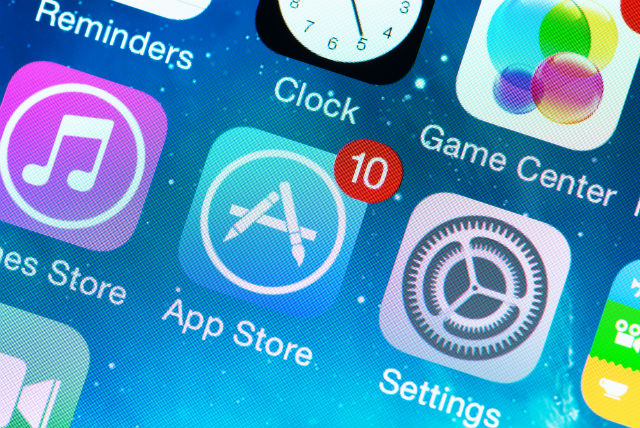
The two words "app store" might seem like a fairly generic reference to some kind of outlet at which one might expect to purchase apps, but it is a term that is most associated with Apple. Back in March of last year, Apple attempted to trademark the term in Australia, but the Registrar of Trade Marks refused the application.
Never one to give up without a fight, the company lodged an appeal with the Federal Court. Rather than rethinking the original decision, the court threw out the appeal so other companies are free to use the term without fear of legal repercussions.

HP launches new infrastructure technology for enterprises
The IT needs of businesses are constantly evolving and technology giant HP has announced a raft of new products aimed at optimizing today's workloads whilst preparing for the future.
Offerings include new servers, faster storage, converged systems and an expanded range of services including combining HP Enterprise Services with Microsoft Office 365.

VMware Workstation 11 gains Haswell speed boost
VMware Inc has released VMware Workstation 11, a major update for the powerful hypervisor, along with its companion tool VMware Player 7 Pro.
The company claims new support for Haswell CPU extensions delivers up to a 45 percent speed increase for CPU-intensive applications.
PuzzlePhone: The modular smartphone taking on Google's Project Ara
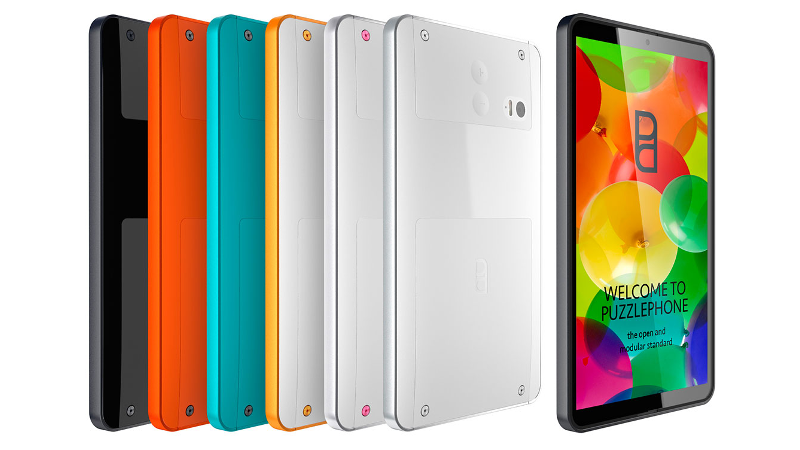
Google is unlikely to have a monopoly on the module smartphone market after it was announced that a Finnish company is lining up a rival to the firm’s Project Ara device.
PuzzlePhone, manufactured by Circular Devices, will grant the owner a series of customization options, but will focus on simplicity, having only three pieces.

Mozilla to eat a poisoned Apple -- bringing Firefox to iPhone and iPad
Apple makes some really great products. Quite frankly, you really can't go wrong with anything it makes. Sure, I prefer Windows and Linux distributions on the desktop, but OS X is a fine operating system too. The true bread and butter for the fruit-logo company, however, is not its desktop operating system, but mobile -- iOS. I own an iPad and enjoy it for what it is, but I find iOS to be a spectacularly terrible operating system, as it is too restrictive and dumb-downed. For some, the designed simplicity is a benefit, but for advanced users like myself, lack of a user-accessible file system is a non-starter.
The truly terrible crime, however, is that Apple does not allow browser engines other than its own. Google chose to offer a neutered version of Chrome for iOS, but Mozilla famously did not bring Firefox. I was rather proud of Mozilla for sticking to its beliefs and refusing to give in to Apple's policies. Yes, it sucks not having Firefox on iOS, but I supported the decision. Today, however, Mozilla concedes as it is bowing down to Apple in an effort to target more users. In other words, Mozilla is biting into a shiny red apple, but I fear that it is poisoned!

Facebook tells advertisers how to (very) closely target users this holiday season
Ads are hard to avoid at the best of times, but it has a tendency to get a little worse in the run-up to Christmas. Advertising has become increasingly prolific on social networks, and this is certainly true of Facebook. As we enter the holiday season, Facebook is providing advertisers with advice that will enable them to deliver finely-tuned ads at highly specific sets of users.
If you picked yourself up a new tablet in the Black Friday or Cyber Monday sales, Facebook makes it possible for advertisers to pick you out of the masses. The social network is not only rolling out a couple of new features to help with targeted advertising, but also providing tips for more successful campaigns.
Dropbox for Business API set to woo corporate customers with secure cloud apps
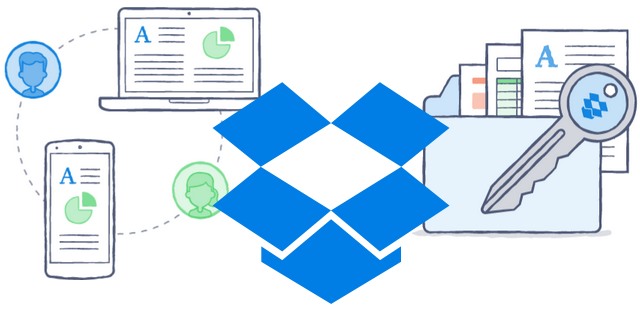
While Dropbox for Business is nothing new, there's no getting away from the fact that Dropbox is seen essentially as a consumer level tool. Part of the reason for this -- apart from the occasional security slip-up -- is the fact that it has not been possible to use Dropbox in conjunction with third party tools at an enterprise level. Now this changes thanks to the arrival of the Dropbox For Business API.
The API is yet to be officially announced -- although rumors have been circulating for a little while -- but internal documentation obtained by TechCrunch shows that the launch is imminent, possibly as early as tomorrow (Wednesday December 3rd). Once launched, developers will be able to use the API to produce their own secure Dropbox-based apps and services.

Twitter improves harassment reporting and blocking to boost safety
Over the years Twitter has come in for a lot of flak for the level of abuse that runs rife on the social network. Now the site is taking action by making improvements to the existing blocking features as well as refining the harassment-reporting facility. With the likes of #gamergate and various other high profile cases, Twitter users have found themselves on the receiving end of vitriol, hatred and abuse.
Today's updates aim to clamp down on these activities, making it easier for users to report problematic tweets and easier for Twitter to respond quickly to problems. There is a particular focus on making life easier to users of mobile versions of Twitter, and the blocking feature is now more prominent in apps.
US streaming devices market continues to grow, Roku leads the way
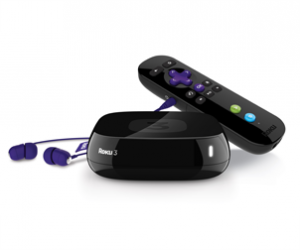
On the heals of Amazon shipping its Fire Stick, a new HDMI dongle that provides similar capabilities to the previously released Fire TV, the market for streaming devices has continued to grow. And it's also getting more competitive, as each company improves its offerings.
A new study published by Parks Associates shows that a record ten percent of US households now own a streaming device. That still seems a small number, but perspective is needed. First, it's growing, and second, some people just aren't going to buy in to this technology -- my parents wouldn't know what a Roku was, nor what to do with it.

Global Airport Action initiative targets credit card fraudsters
Global law enforcement agencies and the airline, travel and credit card industries have joined forces in a major concerted action to combat online fraud.
The operation, organized via three coordination centers at Europol, in The Hague, Interpol in Singapore and Ameripol in Bogota, and involving over 60 airlines and 45 countries at more than 80 airports across the world, saw 281 suspicious transactions reported and 118 individuals arrested.

Why Virtual Desktop Infrastructure is not the future
One of the current challenges for a business IT team is supporting a variety of desktops, laptops, tablets and mobile end user devices for employees. This task can be a considerable overhead in terms of time, resource and cost. Physical desktops are not only expensive, insecure, and maintenance heavy, they are also not necessarily a good fit for an increasingly mobile and demanding workforce. The groundswell of Windows 7 migration plans, an expanding virtual workforce, the growing popularity of mobile devices, and tighter IT budgets each point to the need to re-evaluate desktop strategies.
While virtual desktop infrastructure (VDI) seems like a promising alternative to managing physical desktops and mobiles, in reality, it’s too costly and complex for most companies to implement successfully. Cloud services, however, are helping to mitigate many of the challenges of traditional VDI implementations. Cloud based virtual desktops deliver benefits around centralized management and simplified deployment without the high costs, limitations, or difficulties of VDI.
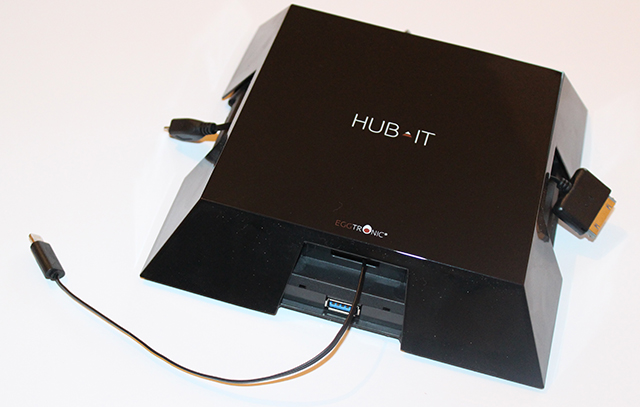
Hub It: An essential, fully customizable sync and charging station for all your devices [Review]
Many of us own multiple devices that charge or are powered via USB. Even though many PCs come with at least two or four USB ports these days, and USB charging adapters that plug into wall sockets are commonplace, that may not be enough. In other words, you may occasionally find yourself needing to charge something, without a spare USB port, or a cable for the task -- especially if you live in a house with teenagers. If all devices used Micro USB life would be simpler, but sadly, they do not.
This is where Hub It comes in. It's a powered sync and charging station that can power/charge up to seven items simultaneously, and includes connectors for all of your devices, including smartphones, tablets, iPhones and iPads, and digital cameras.