Micron swoops in to save Elpida, becomes top-tier supplier
Micron set itself up to be the world's top tablet and mobile memory supplier after announcing its intent to purchase Elpida on Monday. Apple is one of Elpida's biggest customers, and its chips are found in devices and Macs throughout its product line.
Micron will pay Elpida creditors $2.5 billion to settle any claims, and will pay Elpida $750 million to purchase its assets. Another $1.75 billion is to be paid through 2019 in installment payments for foundry services to be provided by Elpida to Micron, which will now operate as a Micron subsidiary.
If this were 2016, you'd be reading this story on a tablet
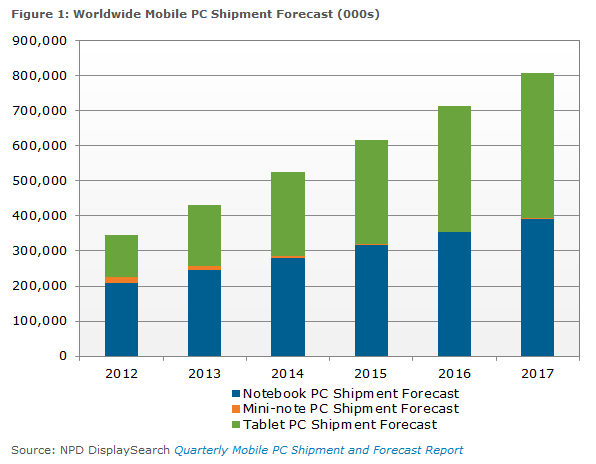
Tablets are the hottest computing devices right now, and thanks to the likes of Google Nexus 7 and Microsoft Surface, they’re only going to gain in popularity. In fact, the latest NPD DisplaySearch Quarterly Mobile PC Shipment and Forecast Report has them on target to surpass notebook shipments by 2016. Not too shabby for a platform that didn’t even really exist before the original iPad launched in April 2010.
The total number of mobile PC shipments for 2012 is estimated at 347 million units, with tablets accounting for around 121 million of those. Notebooks are forecast at 208 million units, with mini-note PCs (netbooks) making up the remaining 18 million shipments.
Android phones automatically connect to Wi-Fi hotspsots with new platform
Last week, the Wi-Fi Alliance announced a certification program that assures devices will be able to seamlessly hand off their mobile data connection to a Wi-Fi connection and vice-versa. This program is called Wi-Fi certified Passpoint, and it was defined by service providers who desperately need a way to ease traffic on their congested mobile broadband networks. With devices that can automatically pair and connect over Wi-Fi, mobile networks can spare themselves some traffic.
The first devices certified in the the Passpoint test bed included: Access points from BelAir, Broadcom, Cisco, Ruckus Wireless, XSpan, and Qualcomm, as well as chips from Intel and Marvell. Included in the announcement last week was MediaTek's Hotspot 2.0 Client V1, which today the company said is the first (and only) smartphone system-on-a-chip to be involved in the project, and it's for mid- and entry-level dual-SIM Android devices.
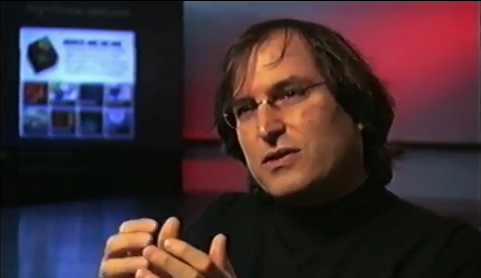
Apple doesn't want you to know my film, 'Steve Jobs -- The Lost Interview', is on iTunes
My little film about Steve Jobs has finally made it to iTunes (YouTube as well!) as a $3.99 rental, but you wouldn’t know it. Deeming the film “too controversial,” Apple has it on the site but they aren’t promoting it and won’t. The topic is “too sensitive” you see. It isn’t even listed in the iTunes new releases. You have to search for it. But it’s there.
Maybe I’m not even supposed to tell you.

Does your PC have touchscreen display? You need Microsoft Touch Pack for Windows 7
Windows 8 may be the time when touchscreen technology finally comes of age in relation to laptops and desktops, but much of the groundwork is already present in the current version of Windows. Purchase a touchscreen display now and you’ll find Windows 7 is more than capable of letting you control it via your fingertips.
Microsoft didn’t do an awful lot to push touchscreens in Windows 7, however. One thing it has provided, though, is a collection of tools and games that showcases the touch interface. If you have a touchscreen display and you’re running Windows 7, you need the aptly titled Microsoft Touch Pack for Windows 7.
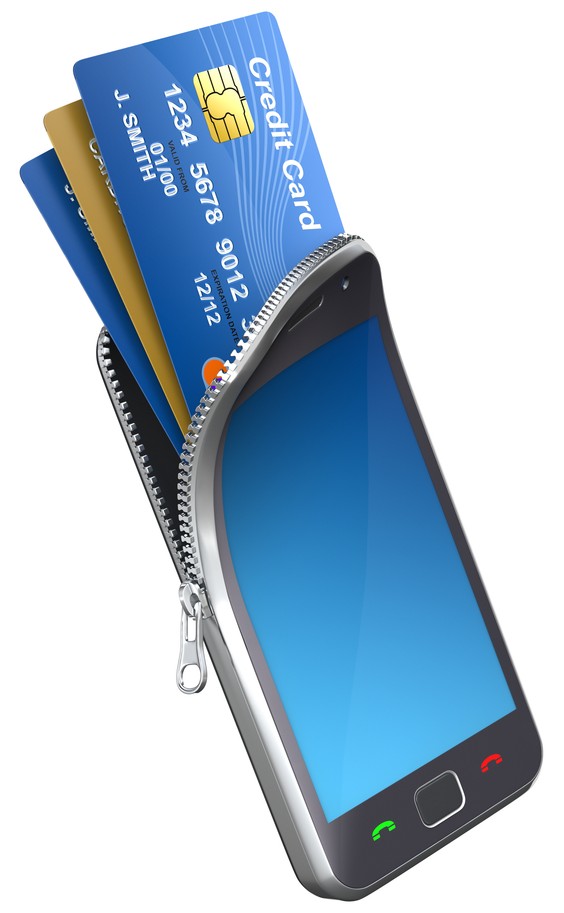
Mobile payments are coming to Europe
Credit and debit cards haven’t evolved much since their introduction. The principle behind any payment card is the same now as it was 50 years ago. You pay with a plastic card, which is the opposite of technology evolution. It’s something that’s a given in our lives: we can’t live without one. But can we?
The residents of the old Continent, Europe, are still reluctant to let go of cash, as 57 percent of all purchases are still paid the old fashioned way. Credit cards can’t change that, and it looks like nothing can that’s already on the market. The solution to this problem? An entirely new technology, near field communications.

ShareMeNot protects your privacy from prying social networks
Most people who have used the Internet for any length of time are only too aware that websites are able to track their online activities by using cookies. This information is incredibly useful to advertisers, but there are steps you can take to help protect yourself. With the ever increasing popularity of social networks there is a new breed of tracking in the form of Like buttons -- and this is something that ShareMeNot can tackle.
There are very few Internet users who do not have a Facebook account, but there are numerous other social networks such as Google+, LinkedIn and many more. Many of these have their own site integration buttons that you have no doubt seen adorning the pages of many sites you visit -- they will give visitors the options of "Liking the current page on Facebook, or sharing it via some other means.
Is $40 too much to pay for Windows 8?
I've wondered for months exactly how much Microsoft would charge consumers to upgrade to its newest operating system. Starting with Snow Leopard, Apple slashed 100 bucks off the price of OS X, and the next version -- soon-to-release Mountain Lion costs even less: $19.99. With Apple so lowering the price-to-value proposition, could Microsoft continue to charge so much?
Yesterday, the software giant answered by offering, for a limited time, a seemingly attractive upgrade price for Windows 8 Professional: $39.99. The pricing, available only through January 31 from when Windows 8 is available, applies to all versions back to XP -- and it's a big discount: Windows 7 Home Edition upgrade lists for $119.99 and Pro for $199.99, although street prices tend to be $30 and $50 less, respectively. Still, Apple has set a major operating's value much lower and the benefit to customers much higher.
Do you miss the C Prompt? Try Take Command 14
JP Software has released Take Command 14, a powerful alternative to the regular Windows command prompt. And now it’s more powerful still, courtesy of some useful additions to the program’s scripting language.
The new TPIPE command, for instance, allows you to filter, convert and process text in a variety of ways. You can convert files to and from Unicode, for instance; convert the end-of-line type; use Grep-type line-based filters, and run a search and replace filter on a file.
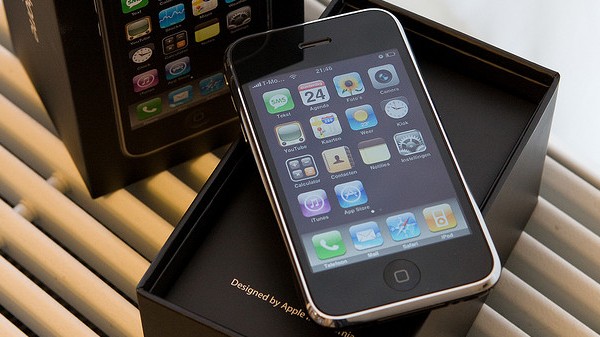
My first great smartphone: Jailbroken iPhone 3G
Fifth in a series. To commemorate iPhone's fifth-anniversary, we present several stories looking at its debut and colorful history -- so far.
I remember my first smartphone -- Sony Ericsson W950i. It had no camera, but a touchscreen (you probably don't know how horrible touchscreens were before the iPhone) and ran Symbian 9.1. I got all this and a 2.6-inch display. It sounded great at the time, but wasn't enough. Before iPhone, I didn't think much of smartphones. They didn't feel special, with the OS being a big reason why. I didn't much like Symbian, and Windows Mobile was a miniaturized Windows, which didn't do it any favors.

Microsoft ad and search biz is a $6.2B failure
Worthless. That's the description that best describes Microsoft's ambitious aQuantive acquisition, announced in May 2007. Today, after the market closed, the software giant announced a "non-tax-deductible income statement charge" of $6.2 billion booked last year. Fiscal 2012 closed June 30, so the timing has a deliberateness.
Microsoft probably should have told everyone before the quarter's close. Doing so today, during a big holiday week (Fourth of the July), mitigates the negative news. Lots of people are on vacation.
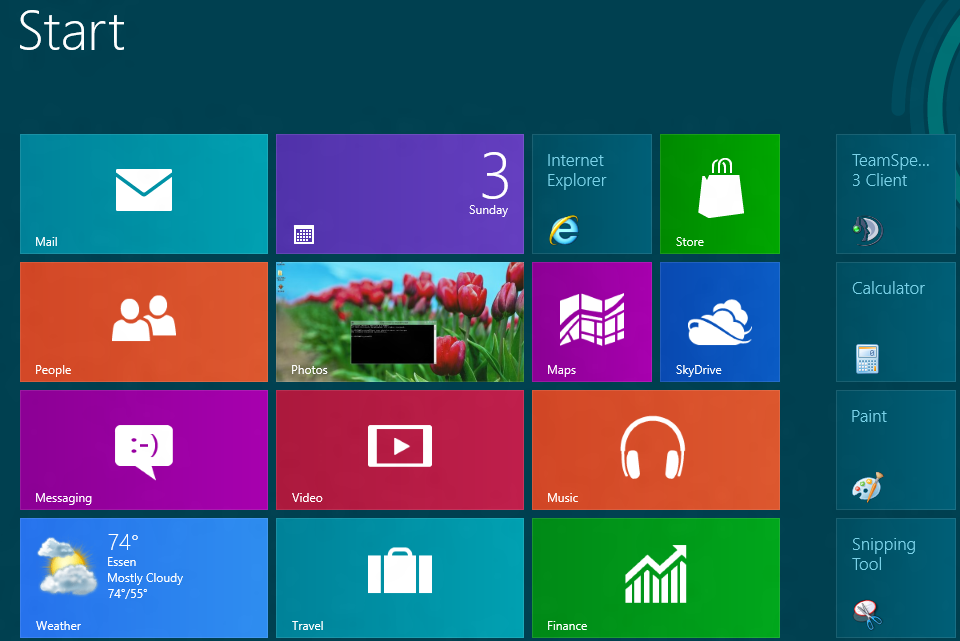
All Windows versions from XP to 7 eligible for $40 Win 8 Pro upgrade
Microsoft on Monday announced PCs running Windows XP, Windows Vista, or Windows 7 are eligible for a downloadable upgrade to Windows 8 Pro for just $39.99 in 131 global markets and in 37 languages.
At Apple's World Wide Developer Conference in June, Apple announced its next version of OS X, Mountain Lion, would be available as a $20 download in the Mac App store in July. This upgrade is available to Mac users currently running Lion or Snow Leopard, meaning it applies to Macs around three years in age.
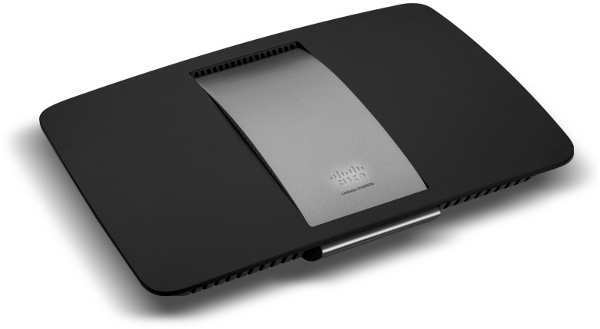
Cisco's Connect Cloud rollout stymied by privacy-bending terms of service
Cisco's new Connect Cloud service is supposed to provide browser-based and remote network management features to users of some of its "Smart Wi-Fi" consumer routers. It's a pretty promising free set of features, and should impress anyone who likes to keep a close eye on their home wireless network with products like Spiceworks or Nmap. It includes such features as parental controls, media prioritization, and device management, and users can access it while at home or remotely via their mobile device.
Unfortunately it's had a pretty rough beginning.
Does Chrome have a future on iOS?
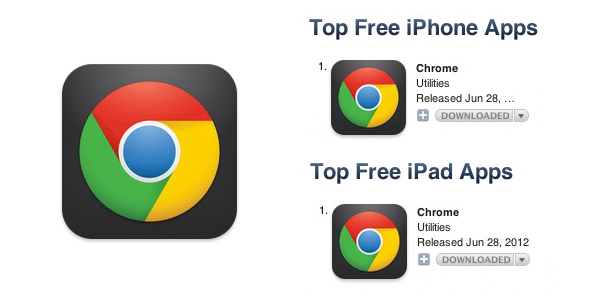
There's a certain, sweet justice: While Apple stomps all over Android licensees in the courts after falling out with Google, Chrome tops both iPad and iPhone App Stores. Last week, Google's browser invaded iOS -- eh, was granted admittance to the App Store -- and is ready to put Safari out to pasture.
On the other hand, the competition isn't exactly stellar. Chrome beats out Pinger, CSR Racing and Talking Ted on iPhone. (What? No cat video app?) But there is now a choice among browsers. On the desktop, Chrome retained its No. 1 usage share position in June, according to StatCounter. The question now: How long before Chrome deeply encroaches on Safari on iOS?

YouTube isn't the future of TV
In a few weeks I’ll launch a YouTube channel where you’ll be able to see lots of shows readers have asked about, including Startup America and even that lost second season of NerdTV. YouTube, as the largest video streaming service anywhere, is the absolute best place for me. But YouTube isn’t the future of TV.
I know this because TV is a business and this channel I’m launching is a business and I’ve spent the last several weeks talking to investors and running the numbers every which way. I’ve spent many hours with my friend Bob Peck looking at the economics of YouTube and my unequivocal conclusion is that while YouTube is great, it isn’t TV.