One password to bring them all and on Windows 8 bind them
Microsoft has long looked lovingly at identity, and providing the "one" that binds consumers and businesses to Windows. Users benefit by being freed from managing multiple identities and passwords across the web and, presumably, by improved privacy and security as a result. Microsoft gains by controlling a master identity system that keeps some of its core technologies relevant.
But Microsoft couldn't bring a single-identity system to market during the last decade. Privacy groups filed complaints about Passport, leading to a Federal Trade Commission investigation and later a settlement. Soon after, Microsoft settled its US antitrust case, agreeing to five years government oversight that instead went on for nearly 10. But Federal and state watchdogs left in September, and as I explained then Microsoft is freer to integrate stuff into Windows. Today, Dustin Ingalls, Windows Security & Identity, explains exactly how Windows 8 will tackle the identity problem.
Verizon 4G LTE reaches 200 million Americans
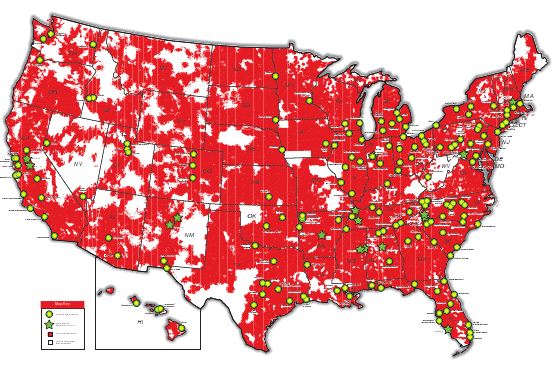
Verizon Wireless says that network expansion planned for tomorrow will bring 4G LTE to 200 million Americans. That's not the news we were waiting for. Google-branded, Samsung-manufactured Galaxy Nexus, a LTE phone, is rumored to be launching tomorrow. How about a peep or two about that, Verizon? Wassup with these delays?
On December 15, Verizon will flip the LTE switch in Dover, Del.; Lafayette, Ind.; Fitchburg/Leominster, Mass.; Duluth, Rochester area and St. Cloud, Minn.; Manchester/Nashua, NH; Poughkeepsie, NY; Findlay/Tiffin and Youngstown/Warren, Ohio; and Indiana, Pa. Coverage will expand here on the West Coast in San Diego and San Francisco and Eastward in Savannah, Ga.; Chicagoland, Ill.; Baltimore and Hagerstown, Md.; and Washington, DC.
Samsung snark sours iPhone perceptions
The shoe is on the other foot. I hope Apple wears it well, because I expect it's a tight fit.
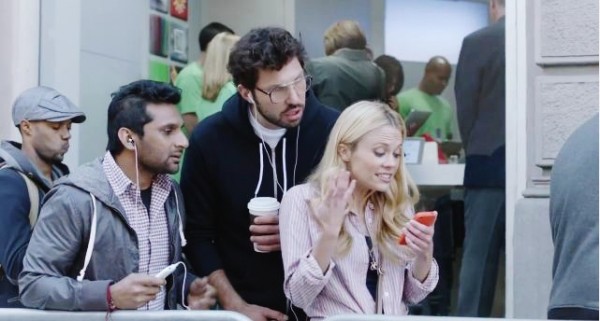
Samsung is doing to Apple what the "Get a Mac" marketing campaign did to Windows a half-decade ago: Change perceptions, for the negative. Apple's ad campaign is one of the best conceived for tech products, using two actors to represent a Mac and Windows PC and convey simply complex concepts about why one is better than the other. That campaign crushed the Windows brand at a time when Microsoft delayed Windows XP's successor, which thumped on the market in late 2006 like someone flying fast and far from a trampoline. Samsung's "The Next Big Thing is Here" campaign -- squarely slamming iPhone and its idolaters -- similarly succeeds.

Happy Holidays! Ashampoo WinOptimizer 8 is our gift to you
How’s this for a Christmas present? On Monday, December 19, you can get hold of a full version of Ashampoo WinOptimizer 8, which normally retails for $49.99, completely for free, courtesy of BetaNews’s Downloadcrew. For a period of 24 hours only (from 00.00 to 23.59, Central European Time, on Dec. 19, 2011), you’ll be able to download, install and register the software, completely free.
Ashampoo WinOptimizer 8 is the first of a number of full commercial applications we have lined up for you over the next few months. Downloadcrew is launching a brand new giveaway website, which will also host exclusive discounted software that you will not find elsewhere.
Easily save text from Windows control boxes and folder trees
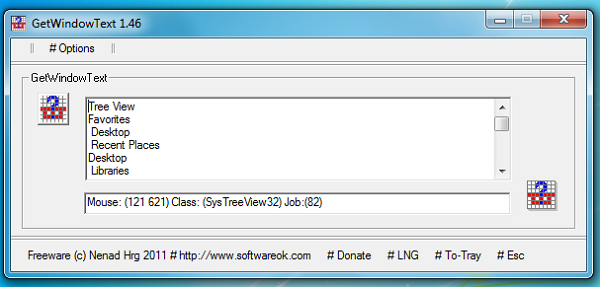
It’s often useful to be able to grab some of the information contained in an application window. If you need to share a complex error message with someone else, say, then being able to copy it immediately to the clipboard will save time and avoid the potential confusion that might arise if you make a typo or two while manually reentering it somewhere else.
But there’s a problem: in many cases text is presented in a way that makes it very hard to extract and use elsewhere. If you want to make a note of all 100 languages supported by a program, say, there’s no standard right-click option that will extract it from a listbox and copy raw text to the clipboard. And so under normal circumstances you’ll have to manually read and retype the information yourself.
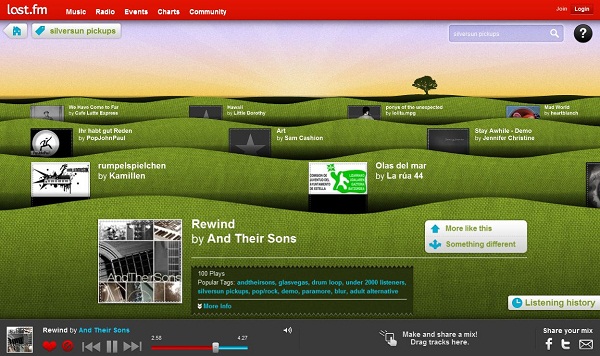
Find independent music with Last.fm Discover
I must make an embarrassing confession. This morning I logged into my Last.fm account for the first time since June 2008. Has it been that long? Gads! I've really got to start using the service again. Is it a question of Last.fm irrelevance? Nah. Blame iTunes, which I gave up using a few months ago, and hassles with tagging songs. When I last used Last.fm Scrobbler for the Mac -- granted years ago -- there were, ah, issues. I'm on Windows now, where Last.fm and Microsoft are hug-a-beasts.
Last.fm emailed me today about a new service, which is what got me looking around again after being so long absent. Last.fm Discover is supposed to help you better discover independent music. Hey, I'm all for that. I was a deejay in my youth, back before the Federal Communications Commission deregulated radio and jocks had to pass a test to get one of three "Class" licenses.

Make Windows Clock keep time your way
The standard Windows desktop clock doesn’t exactly come with many configuration options: you can set the date and time, and add a couple of extra clocks for other time zones, but that’s about it. If you need a little more versatility, then, you’ll have to look for some third-party help. And there are few options quite as configurable as DS Clock.
Initially, for instance, the program will display both the date and time in the top right-hand corner of your desktop, but you can configure this to show whatever you like. You can choose from multiple date and time formats; add the time in selected time zones; select custom separators and more, creating a format string that defines exactly what you’d like to see.
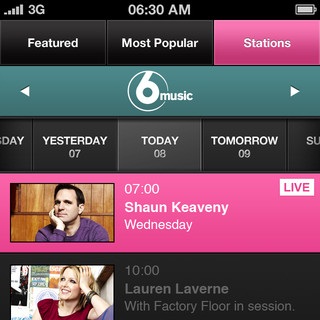
BBC iPlayer now truly available for iPhone
While the BBC’s iPlayer has been available to iPhone users for some time, until now it has only been through a web browser. The latest update to the iOS iPlayer app means that there is now an app that can be used to watch the programs you have missed from the BBC’s channels -- this brings the same option that has been available to iPad users who have been able to take advantage of a dedicate app for a number of months.
While most people will be happy to be able to watch programs at home using a wireless Internet connection, the new iPhone app also allows for broadcasts to be streamed over a 3G connection. Adaptive bitrates are used to ensure the best possible quality for your connection speed but the option of using a 3G connection opens up the possibility to incur hefty data charges nonetheless.
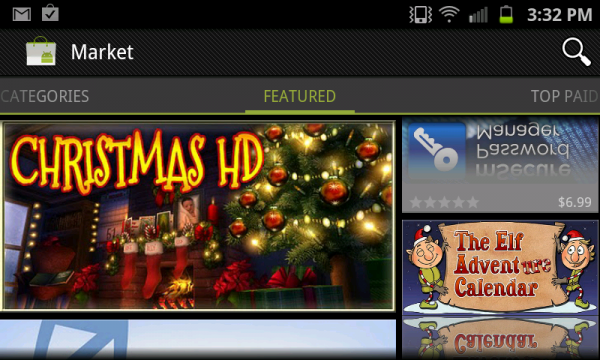
What is Microsoft's problem with Android apps?
Suddenly, Microsoft is a major developer for iOS. The software giant better known for Windows dropped three iOS apps or updates in just two days, and there are rumors of more coming (e.g. Office). But what about Android? "What about Android?" you ask, surprised. "Why should Microsoft give a hoot's fart app about Android? Google and open source are reasons enough why not Android". Yes, but Microsoft makes heaps of money from Android. Nothing from iOS.
Shouldn't Microsoft support the platform that is more personally profitable? The Redmond, Wash.-based company now has convinced most major Android developers to pay licensing fees, presumably because the open-source OS violates Microsoft patents. Perhaps threat of lawsuit is enough. It's serious money, too, $10 or more per device -- if rumors are to be believed. "Patent trolling with Microsoft" I called it in July. Microsoft makes what from iOS? Diddly.

Microsoft releases SkyDrive, Kinectimals for iOS
Microsoft debuted two new apps for Apple's mobile platform. The new apps are iOS versions of popular Kinect game Kinectimals and Windows Live SkyDrive, its online storage service.
SkyDrive is free, although Microsoft is charging $2.99 for Kinectimals. The game is the only app that the company currently charges for. The two apps follow the release of an Xbox Live app earlier this month and OneNote for the iPad, and Lync for the iPhone.
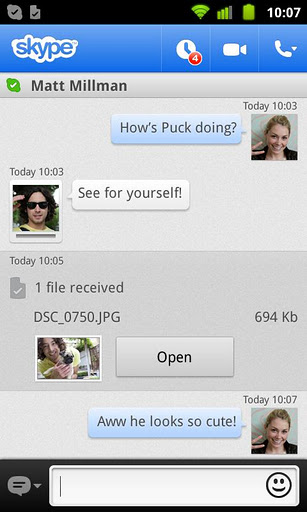
Skype for Android adds photo and video sending
Why keep those special moments to yourself, when you can share them with the people that matter most? There's Facebook, or even Google+, but what good is that when you're Skyping Claire Beauvoir in Brussels and you're in Washington, DC? Today, Skype 2.6 posted to Android Market, and its big new feature is sending photos and videos. Share and share alike. The new capability works over cellular data networks as well as WiFi.
"We've also improved battery life and video quality with Skype 2.6 for Android on devices using Nvidia's Tegra 2 chipset, which include amongst others; the Samsung Galaxy Tab 10.1, Motorola XOOM and Acer Iconia Tablet. Now you can take full advantage of the big screen with better video quality than ever before", says Dan Chastney, Skype senior product manager.
FBI denies FOIA request about its alleged use of Carrier IQ
Carrier IQ is once again making headlines, this time over reports that it is giving information to law enforcement. Complicating matters more, the FBI denied a Freedom of Information Act (FOIA) request last week asking about its own use of Carrier IQ technology, saying the release of such documents "could reasonably be expected to interfere with law enforcement proceedings".
The FBI's admission in the letter that documents do exist raises concerns that Carrier IQ is using its technologies more than just for customer experience purposes, but actual spying as it is being accused of by many pundits. The company is moving quickly to quell this latest round of criticism.
Google releases Chrome 16 -- get it now!
Google has announced the release of Chrome 16.0.912.63 to the Stable Channel for Windows, Mac, Linux and Chrome Frame. And as you may know if you’ve been following beta developments, this release includes one particularly interesting new feature in the ability to create multiple profiles for a single instance of Chrome.
If others use your copy of Chrome, you’ll probably already know just how important this can be. Because right now, sure, Chrome is great at syncing your bookmarks, extensions, history and so on across all your other devices. But if someone adds their own bookmarks or extensions then they’ll be synced as well, which probably isn’t what you want at all.
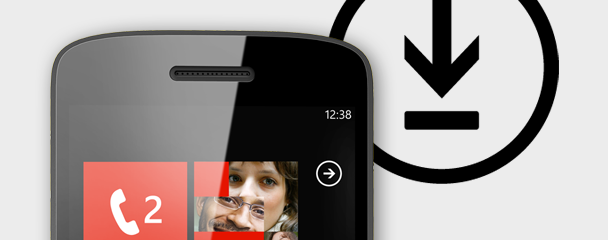
Windows Phone is the best phone you aren't using
I am a new Windows Phone user -- HTC Titan -- and I cannot be more excited about it. As a UX developer it is very apparent that Microsoft has paid some serious attention to detail in ways I have never seen before. In my opinion, Windows Phone really is the best phone people aren’t using.
Every day, hundreds of thousands of consumers make smartphone purchasing decisions and every day most of them choose Android or iPhone? Why? Because they think they're better since most sales technicians at Verizon and AT&T will push Android or iPhone over and above Windows Phone.

Is 2012 year of the cloud?
Forrester analyst Holger Kisker seems to think it is. Today he blogs: "2012 is the year the cloud becomes mature". It's also the year we're all supposed to die, if you believe ancient Mayan predictions. But December is that time when analysts peer (should that be leer?) into their crystal balls and prognosticate about the year ahead.
Kisker offers 10 reasons, but doesn't serve meat and potatoes until No. 6: "The total cloud market (including private, virtual private, and public cloud markets) will reach about $61 billion by the end of 2012. By far, the largest individual cloud market continues to be the public SaaS market, which will hit $33 billion by the end of 2012". Those are big numbers.