




Mono's de Icaza: Novell MonoTouch to forge ahead on iPhone OS despite 3.3.1
An amendment to the terms of Apple's iPhone OS Developers' Agreement, called Section 3.3.1, uncovered last week, would expressly prohibit developers from building apps for iPhone, iPod Touch, or iPad that were not created exclusively for that platform, using Apple's tools, and linking to no other APIs except Apple's. That "clarification" threatens the existence of cross-platform support for the iPhone platform, not only from Adobe Flash (whose apps can be devised to run on iPhone), and Oracle Java (same story), but also from development tools whose apps don't have to be jerry-rigged to run on iPhone.
Those include Unity3D, the 3D gaming platform originally for Mac OS that dropped Java in 2008 for Novell's Mono; and MonoTouch, Novell's extension of its .NET Framework-compatible platform for iPhone OS. In a notice on MonoTouch's home page, the development team expressed optimism that Apple would find MonoTouch to be in compliance with the company's new terms.

Adobe's Creative Suite 5 packs in tons of new features
Adobe today celebrated the global launch of Creative Suite 5 (CS5), the first new version of the company's suite of digital art, design, and development tools in nearly two years.
Creative Suite 5 includes 15 of Adobe's products: Photoshop CS5, Illustrator CS5, InDesign CS5, Acrobat 9 Pro, Flash Catalyst CS5, Flash Professional CS5, Flash Builder 4, Dreamweaver CS5, Fireworks CS5, Contribute CS5, Adobe Premiere Pro CS5, After Effects CS5, Soundbooth CS5, Adobe OnLocation CS5, Adobe Bridge CS5, Adobe Device Central CS5, and Adobe Dynamic Link.
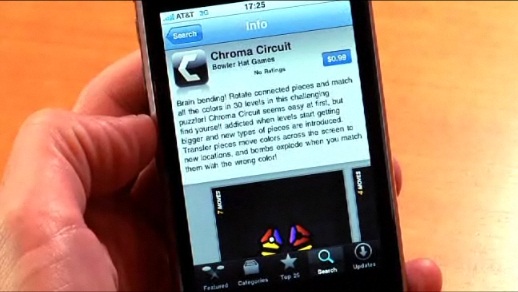
Crossing swords over cross-platform: Apple vs. Adobe Flash, C#, and Mono
It should come as no surprise to anyone that Apple is not a cross-platform tools company, nor a supporter of cross-platform technologies that would threaten to nullify Apple's baked-in advantages -- only during the years Steve Jobs was not in charge had the company even considered opening up its platforms. So the strategy behind the company's reinforcement of its iPhone OS 4.0 licensing terms, first discovered by Daring Fireball blogger John Gruber last Thursday, is both obvious and unchanged: to direct the course of iPhone/iPod Touch/iPad development traffic directly, exclusively, and entirely through Apple's channel.
States the newly added paragraph: "3.3.1 -- Applications may only use Documented APIs in the manner prescribed by Apple and must not use or call any private APIs. Applications must be originally written in Objective-C, C, C++, or JavaScript as executed by the iPhone OS WebKit engine, and only code written in C, C++, and Objective-C may compile and directly link against the Documented APIs (e.g., Applications that link to Documented APIs through an intermediary translation or compatibility layer or tool are prohibited)."
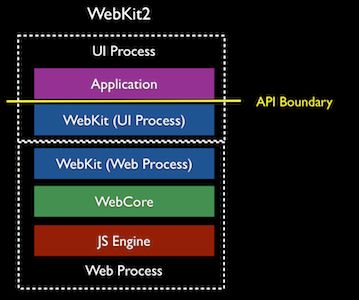
The big change coming to Safari 5: Kernel-level multi-processing
Apple has been challenging Google on many fronts this week -- first with its mobile platform, then with its advertising platform. Earlier today, its developers launched the first volley in the battle's third front, releasing the first public code for the next WebKit rendering and processing kernel that will likely drive the Safari 5 browser.
With Google Chrome using a reworked form of WebKit, the Apple team did something that perhaps any other free and open source developer would be publicly stoned for doing, but which Apple might just have the savvy to get away with: It openly one-upped another developer's open contribution.
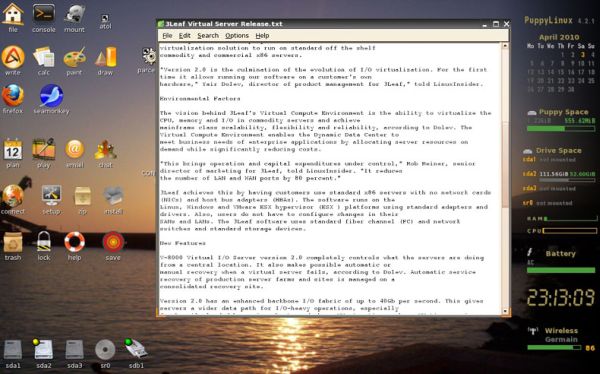
Two Linux-based text editors reveal a market for Notepad work-alikes
Download gedit text editor for Linux from Fileforum now.
Text editors are becoming more essential in today's Web-based computing world. Gone are the days when users need hard-copy versions of their documents. Also gone are the days when documents need to be gussied up with fancy fonts and fanciful page formatting.

Don't tell spammers that you're on vacation
Microsoft has made the right decision to temporarily turn off Hotmail's vacation (e.g., out-of-office) reply feature. Flip the switch off permanently, I say.
"In our fight against spam, we sometimes have to make hard choices, and we had to make one this week. We discovered that spammers were using Hotmail's automatic vacation reply feature to send spam from their Hotmail accounts," Krish Vitaldevara, Windows Live Hotmail lead program manager, blogged late yesterday. I missed the post because of Apple's iPhone OS 4 launch (I blogged "Apple shows developers the money" and "Clash of the titans: Apple, Google battle for the mobile Web"). I spotted the announcement first at LiveSide about an hour ago.

The true cost of iAd
Despite all the buzz this week that the upcoming major update to the iPhone/iPod touch/iPad operating system was all about multitasking and APIs, the real story was iAd. Although multitasking-deprived Apple fans haven't been holding their breath for almost three years waiting for an advertising framework, the new mobile ad network is infinitely more significant to the future of the platform than the ability to run more than one app at a time.
In many respects, iAd is nothing short of a full frontal assault on Google. While Google's model for generating ad revenue from activity-linked behaviors has rewritten the rules of advertising over much of the past decade, the path for the mobile market has not been as linear. Desktops and laptops have more than enough bandwidth and screen real estate to easily accommodate subtle text-based ads (or not-so-subtle dancing-cow banners) without significantly disrupting the end user experience. Indeed, many users can become so engaged in a given service -- search, mail, productivity, mapping, whatever -- that they virtually ignore the presence of ad-containing boxes toward the edge of the screen. Even if they're aware of them, the delivery paradigm on a traditional desktop, evolved in recent years to a ruthless level of efficiency, is largely responsible for Google's meteoric corporate rise.

Unfazed, FCC plods ahead with Broadband Plan, starts a flame war with Verizon
In a pair of blog posts since the DC Circuit Court of Appeals' finding Tuesday that the Federal Communications Commission lacked the statutory authority to tell Comcast how to manage traffic on its broadband network, the FCC demonstrated it had officially joined the Internet era by making the dispute into a flame war.
No, the Court did not revoke the FCC's natural authority to regulate the Internet industry, the Commission stated yesterday. However, it may have removed the FCC's epaulets and badge, along with its right to serve as what General Counsel Austin Schlick called "the cop-on-the-beat for 21st Century communications networks."

Apple shows developers the money
Earlier today, Apple unveiled its iAd advertising platform as part of iPhone OS 4. Over the next couple of days pundits will rail about Apple competing with Google in advertising. As I explain in the previous post, "Clash of the titans: Apple, Google battle for the open Web," there is a more fundamental, worldview war underway. Apple isn't trying to compete with Google so much as make its mobile platform more appealing. The right approach is simple: Make lots of people rich.
Apple is building out a mobile platform around iPhone OS and extended services. There are right ways to make a platform more appealing, and Apple did just that with today's announcement. Successful platforms share five common traits:

Clash of the titans: Apple, Google battle for the mobile Web
Today marks the beginning of the great Apple-Google war. Contrary to what some other people will write, it's not advertising competition but something more fundamental. This clash of the titans is about competing worldviews -- whether the future mobile Web will be about the browser or applications.
There have been skirmishes over these opposing worldviews, but Apple's iAd platform is finally a declaration of war -- not because it could compete with Google's search-based advertising platform but because it provides a better way for mobile applications to make money. Somebody has to pay for all those free mobile apps. Apple will offer developers the advertising platform and give them a 60-percent cut.

Apple's Game Center will catapult iPhone into video gaming big leagues
On Thursday, Apple unveiled a major update to the iPhone OS which is expected to reach iPhone 3G/3G S and second- and third-generation iPod users sometime this summer, and iPad users in the fall. While the banner feature of this release is its multitasking capability, the announcement that Apple will open a Web-based gaming network akin to Xbox Live and PlayStation Network has potential to be the biggest coup.
Game Center lets users invite friends to play games, start multiplayer games through matchmaking, track achievements, and compare their high scores on a Web-based game network. This is a huge addition to the iPhone ecosystem which puts it on par with the two major home consoles, and actually catapults it past both Nintendo's Wii and its DS.

The net neutrality roadblock: Now only Congress can act
Where do the new media of the Internet stop, and the government regulatory bodies created for old media begin? A decision in favor of Comcast on Tuesday by the DC Circuit Court of Appeals does not answer that question; on the contrary, it actually asks the question all over again, this time under closer scrutiny from both the courts and the general public.
Tuesday's overturning of a Federal Communications Commission order that Comcast stop throttling certain applications of its Internet traffic, is a blow to proponents of the net neutrality provisions recently outlined as official principles by FCC Chairman Julius Genachowski. "Official principles" are not laws, and thus cannot be regulated -- that's what the DC Circuit Court of Appeals has ruled.
Apple reinvents multitasking for the iPhone
Multitasking, the feature that has been the absolute top of every iPhone user's want list --which, by proxy became a major marketing point for both Android and webOS -- has made its way to iPhone OS 4.
"We figured out how to implement multitasking for third party apps and avoid those things [battery life and lag]. So that's what took so long," said Apple CEO Steve Jobs this morning.
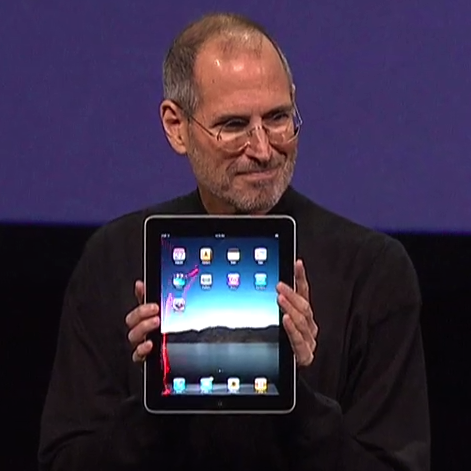
Apple has sold 150,000 iPads since launch day
"The first day we sold 300,000 iPads, and I want to update you -- as of today we've sold about 450,000," said Apple CEO Steve Jobs at today's iPhone 4 OS presentation.
The first day sales numbers were about average for Apple when compared to all of the company's prior mobile device launches, and included all of the units pre-ordered between March 12 and April 3 (22 days). In the 4 days that have followed the device's launch, a further 150,000 iPads have sold.

Microsoft group shift confirms consumer-centric approach to Windows Phone 7
Windows Mobile was never just a consumer product; it was also a significant player in handheld terminals, in-vehicle systems, and ruggedized consoles for business and industry.
But that whole branch of business-oriented Windows Mobile devices used to be overseen by Microsoft's Mobile Communications Business group (MCB), the same group responsible for Windows Mobile-powered consumer devices, despite the fact that they were very different.



