

Apple's problem with Flash is mobile applications competition
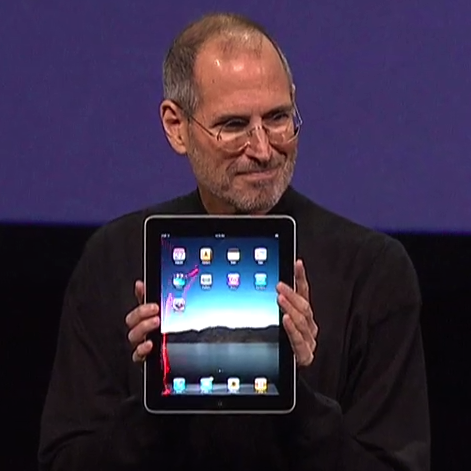
Apple CEO Steve Jobs wants publishers to support iPad, but not with Adobe Flash. Jobs' anti-Flash campaign has grown bolder since the company announced iPad last month and during this week's Mobile World Congress, where Flash 10.1 inched a little close to widespread mobile device availability. What's Apple's problem with Flash? Simply put: Competition.
Apple wants to control the entire mobile applications stack. The App Store/iPhone/iPod touch platform, which will soon include iPad, is a closed stack that Apple tightly controls. For developers, it's Apple's way or no way. But Apple could conceivably lose control of the stack -- most importantly the applications and their user experience -- should Flash run free and unfettered on iPhone OS devices.
PleaseRobMe wants to turn its Foursquare jab into a real security operation
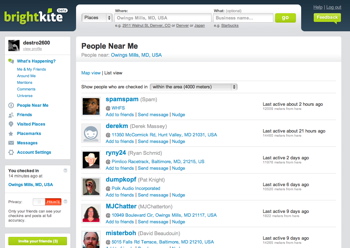
This week, Dutch group Forthehack launched PleaseRobMe, a site meant to expose the danger of location-based social networks such as Foursquare, BrightKite, Gowalla, and Google Buzz. Basically, PleaseRobMe says that every time someone posts his location in a location-based social network, that person is publicly announcing that he is not home, which could be taken to mean, no one is home.
To illustrate the point, PleaseRobMe rephrases public Foursquare posts to say, "@Username left home and checked in X minutes ago..." and then presents that person's current map location in a Twitter alert.

Settlement in benchmark case means FOSS licenses can be enforced
There will be no further legal action in a case whose outcome was already upheld in August 2008 by a US appeals court. As a result, legal precedent has now been made permanent for the right of open source software developers to seek monetary damages for infringement of their copyrights, even if their products were being distributed freely.
Settlement documents in the case of Jacobsen v. Katzer were filed early this morning in US District Court in Northern California, as Linux Foundation attorney Andrew Updegrove informed Betanews just hours later. A pending appeal of the US Court of Appeals for the Federal Circuit ruling last August is now terminated. In the judgment that was being appealed, the Circuit panel ruled that the right to declare software free, could be given monetary value: "There are substantial benefits, including economic benefits, to the creation and distribution of copyrighted works under public licenses that range far beyond traditional license royalties," that court ruled. "For example, program creators may generate market share for their programs by providing certain components free of charge. Similarly, a programmer or company may increase its national or international reputation by incubating open source projects. Improvement to a product can come rapidly and free of charge from an expert not even known to the copyright holder."
Microsoft to begin deploying final EU browser ballot March 1
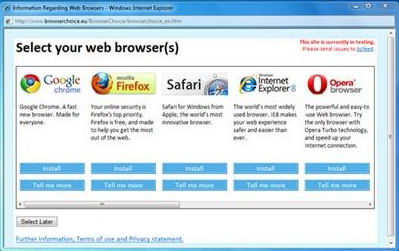
In an early morning blog post Friday, Microsoft Deputy General Counsel Dave Heiner announced that final field testing of the company's Web browser ballot screen for European Windows customers (XP, Vista, and Windows 7) is under way now. The goal is to have a fully operational ballot screen by March 1 -- a week from Monday.
"External testing of the choice screen will begin next week in three countries: the United Kingdom, Belgium and France," Heiner reported. "Anyone in those countries who wishes to test it can download the browser choice screen software update from Windows Update. We plan to begin a phased roll-out of the update across Europe the week of March 1."

Public schools to open doors for after-hours Internet access
One of the "national priorities" in the Federal Communications Commission's National Broadband Plan is to use high-speed connectivity to "provide more educational opportunities and improve outcomes" for those in rural areas and inner cities.
The FCC said today that 97% percent of public elementary and secondary schools do have Internet access, but speeds are insufficient, and services are being wasted.

How long can Unix hang on? What three high-end platform launches tell us
Recent IT industry events have created a field day for those who think the news tend to come in "threes":
During a five-hour-plus long event highlighting the conclusion of its Sun Microsystems deal, Oracle discussed plans for the company's hardware division, and said it would continue investing in Sun's Sparc- and X64-based systems and storage hardware. The company provided a Sparc road map and said it was planning upgrades for systems based on both the Sparc T series (now made by Oracle) and the Sparc64 chips made by Sun partner Fujitsu. However, there was no discussion of the status of UltraSparc-RK "Rock" processors and related "Supernova" systems, which are rumored to have been discontinued.
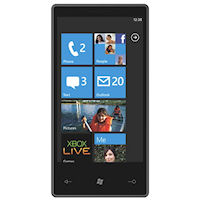
Microsoft's mobile dreams aren't dead yet
I read "Windows Phone 7 Series is a lost cause" with great interest. In it, my Betanews colleague Joe Wilcox lays out the reasoning behind his apocalyptic conclusion that Microsoft has used up its ninth life in trying to extend its desktop OS dominance into the mobile OS space.
He makes a number of rational, indeed valid, points about why Microsoft won't be a top-tier mobile OS vendor now, anytime soon, or ever. Microsoft's Windows Mobile franchise has been in freefall for years, thanks largely to a legacy OS that was completely out of tune with today's market, and a product development roadmap marked by countless delays and occasional lipstick-on-a-pig refreshes of the increasingly creaky product. So since it's hard to argue with the facts, with the numbers, and with history, it's also hard to take exception to his thesis.
Exclusive: Google's latest Buzz privacy changes enable possible new exploit
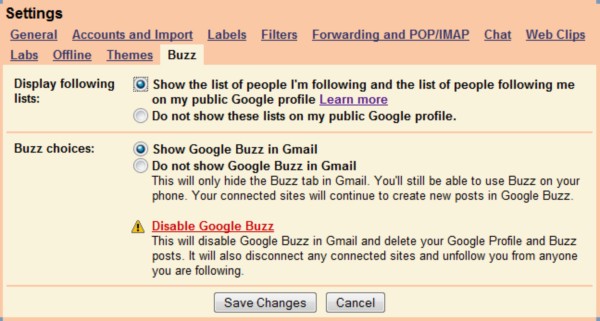
Today, Google Gmail customers are seeing a promised round of software changes whose purpose is to make Google Buzz users more aware of their privacy options, and to give them a more obvious way to back out of Buzz. These changes come a mere nine days after the social networking product's rollout as an element of Gmail, although some have already claimed personal damage, and have already begun legal action.
Before we went to that extreme, Betanews tested the Buzz changes on accounts where Buzz was already set up. There we noticed the promised Buzz tab has been added to Gmail settings, where as we expected, the user is given the option to withdraw the lists of other Buzz users she's following from her public Google profile. This is effectively a copy of the option from Buzz setup that Google only made prominent after its first round of changes at this time last week.
Nintendo smashes DS mod chip in Australia
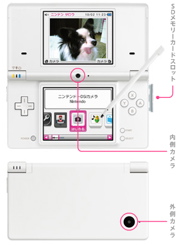
An Australian federal court has ordered game hardware distributor RSJ IT Solutions, parent company of GadgetGear, to immediately stop selling the R4 DS modification chip that allows pirated games to be played on the popular handheld console.
The R4 chip is a microSD reader that fits into the Nintendo DS' Slot-1 port and bypasses all security functions, so the user can play music and movies, read text files, create homebrew software, and, of course, play copied games. It usually retails for around $45.
Amazon launches Kindle for BlackBerry beta
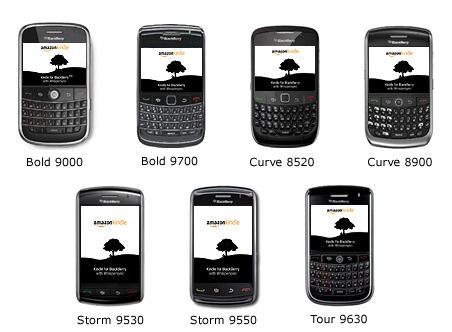
It has been just about one year since Amazon launched its Kindle app for the iPhone and iPod Touch; and today, thanks to popular demand, it has come to BlackBerry.
Like the iPhone app, Kindle for BlackBerry is free, and doesn't require a dedicated Kindle e-reader to use. Within the app, users can browse the Kindle Store and download e-books directly, and if you have already purchased Kindle e-books, you have access to your entire library, synced to the last place you left off in each book.
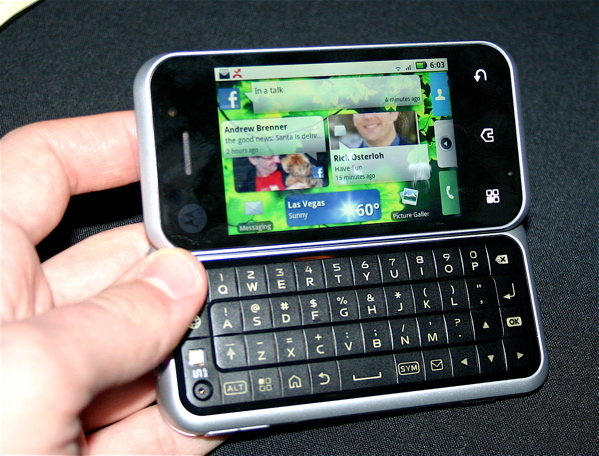
AT&T finally gets its first Android device, will have first Dell smartphone
AT&T announced today that it will start selling Android devices, and the first one will be the unique Motorola Backflip, beginning on March 7.
While T-Mobile began selling Android devices as soon as the first became available in late 2008, the other major carriers have been slower to catch on. Sprint announced its first, the HTC Hero, in September 2009; and Verizon's first, the Motorola Droid, came just one month later.
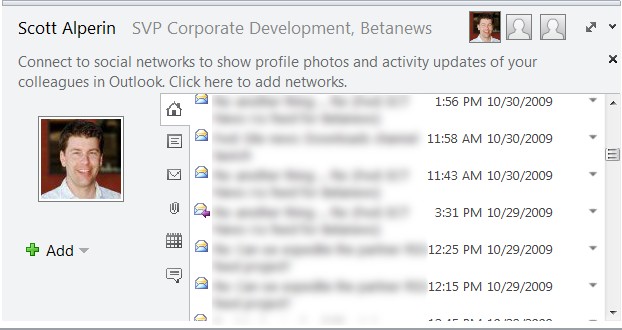
Microsoft's Social Connector adds a bonus upgrade for Outlook 2007
Download Outlook Social Connector 32-bit Beta for Outlook 2007 for Windows from Fileforum now.
It's no surprise that Microsoft has begun distribution of the first beta of Outlook Social Connector, the Office plug-in that adds a list of each contact's social network activity to Outlook. It's also no surprise that business contacts network LinkedIn is Microsoft's first partner -- that fact has been known for some time. What is interesting is that today's beta release also contains a version that supports Outlook 2007, adding to it one key feature that could very well have been a reason to upgrade to Outlook 2010: the People Pane.
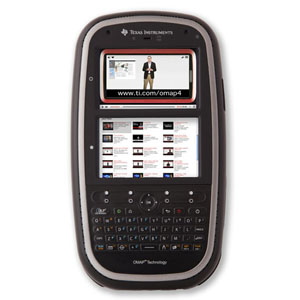
Texas Instruments 'Blaze' OMAP 4 tool is a mobile developer's dream toy
To spur development on the OMAP 4 family of ARM Cortex A9-based systems on a chip, Texas Instruments this week unveiled its Blaze development platform which incorporates nearly everything an OMAP developer/tester could possibly need to into a single tablet-sized device.
Blaze is equipped with two 3.7" capacitive WVGA touchscreens, three multi-megapixel cameras, a pico projector, HDMI out, accelerometer, compass, sensors for light, temperature, barometric pressure, and proximity, Wi-Fi, GPS, Bluetooth, FM transciever, and broad support for digital microphones and stereo speakers.
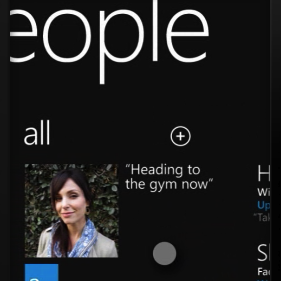
Windows Phone 7 Series is a lost cause
Could Windows Phone 7 Series save Microsoft's mobile platform? Yes. In 2007. In 2010, it's a non-starter. That's not easy for me to write, because with Windows Phone 7 Series Microsoft is following much of the advice I offered via blog posts over the last few years.
That advice would have meant something when given, not months and years later when the competitive landscape has radically changed. Then there is the crucial analysis given last week -- that Microsoft failed to deliver on: Immediate release of new phone software and/or Microsoft phone. Holiday delivery on new Windows Phone 7 Series handsets is simply too late.

Redbox rentals won't change for consumers, but will be more profitable anyway
Well, it's final: New releases from Warner Home Video will not be cheaply rentable until four weeks after the DVD is released in stores.
In January, Netflix acquiesced to the studio's demands and imposed a 28-day rental blackout for new release Warner films; and yesterday, the results of the Warner/Redbox lawsuit were released, showing that Redbox will be doing the same.