
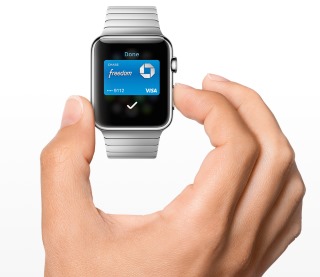
Apple revolutionizes mobile payments with Apple Pay
The focus of Apple's event today was the iPhone 6, iPhone 6 Plus, and the Apple Watch, but one of the more understated stars of the show was Apple Pay. This is not hardware, but a new mobile payment platform which Apple is billing as "your wallet, without the wallet". It works in conjunction with the new handsets to provide a new means of contactless payment and it supports credit and debit cards from American Express, MasterCard and Visa. There's backing from the likes of Wells Fargo, Bank of America, and Capital One Bank, and users need to just add their credit or debit card to their iTunes Store account to start paying for goods and services with their phone -- or Apple Watch.
A number of big names have already jumped on the Apple Pay bandwagon, including McDonald's, Staples, Disney Store, and Whole Foods Market, as well as the 258 US Apple stores. Apple Pay can also be used in the App Store as well as more than 220,000 locations that support contactless payment. In addition to the benefits of contactless payment, Apple is really pushing the security aspects of Apple Pay. Eddy Cue, Apple's senior vice president of Internet Software and Services says:
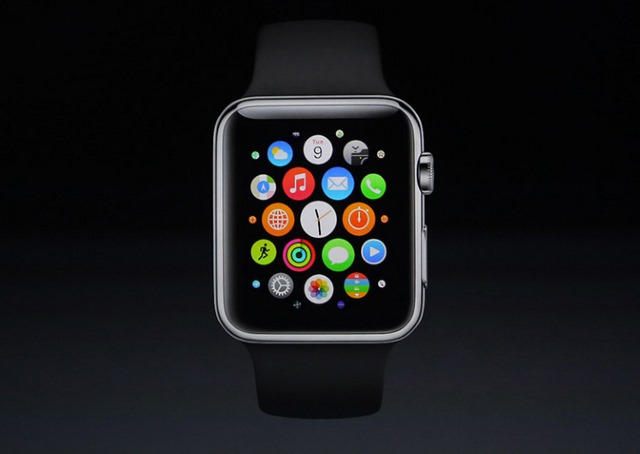
Apple announces its first wearable -- the Apple Watch
Running counter to many of the rumors circulating ahead of the Cupertino event, Apple today announces the Apple Watch, not the iWatch. Unlike the Moto 360, Apple's offering takes the squarer form adopted by many other manufacturers, but there are differences. Taking design cues from older iPhones -- think 3GS period -- the Watch was relegated to the infamous "one more thing" slot after the iPhone 6 and iPhone 6 Plus were announced. Rather than the unibody design that some had expected, the Apple Watch features six different straps, comes in two sizes (38 mm and 42 mm -- his and hers essentially), and will be available in three different finishes.
Just like the iPhone 6 and iPhone 6 Plus, the Apple Watch's display is made from sapphire crystal but there's something interesting to the right of the screen. More usually found on a traditional mechanical watch, there's a crown -- but this is not used for winding up a spring. Instead, this is a new form of input that can be used to scroll around the interface, zoom in and out, and doubles up as a home button. Despite the squared surround, the Apple Watch's UI is very round in flavor, mimicking the look of a traditional watch.
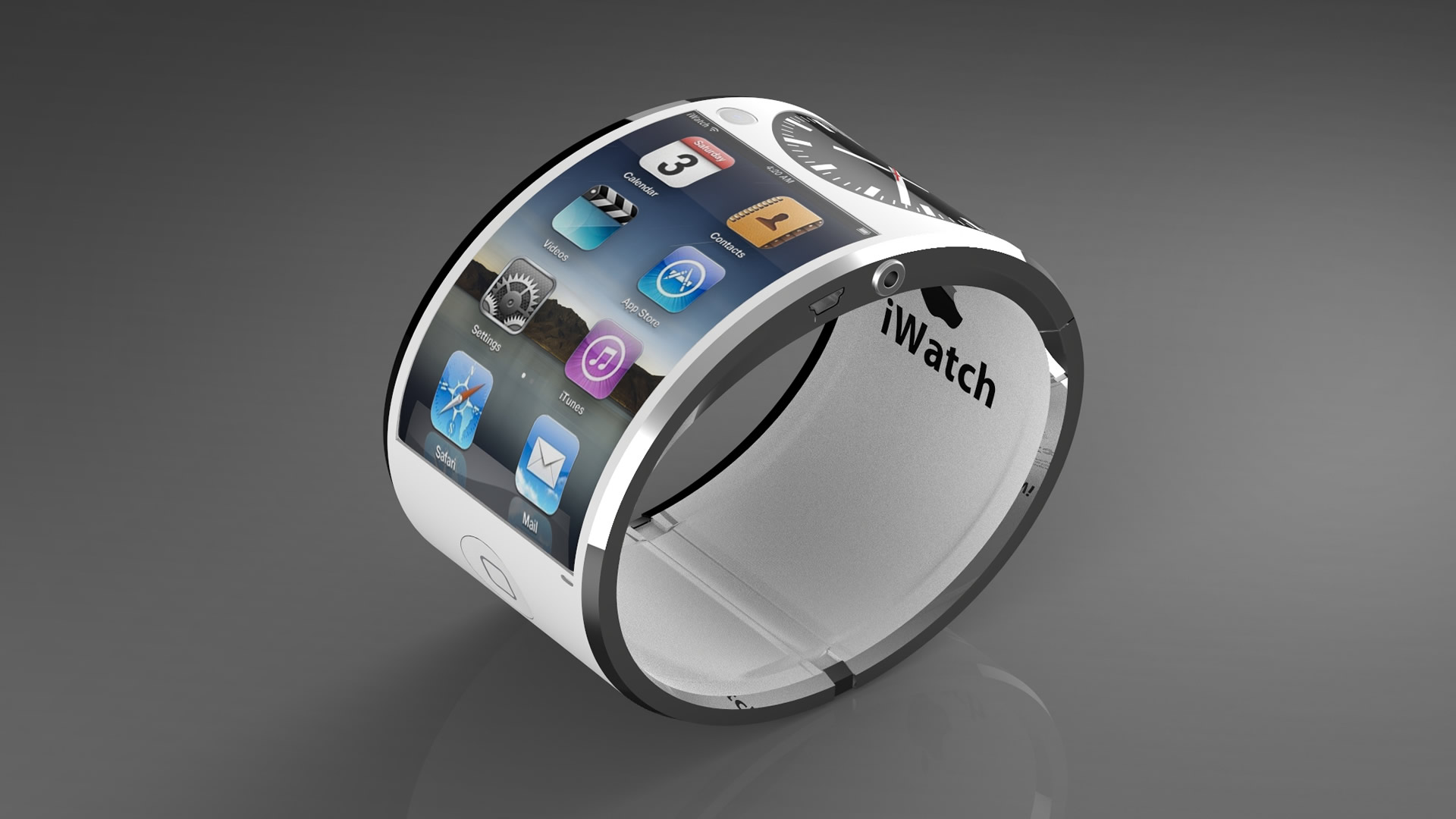
Why I'm hoping Apple's iWatch will be everything Android Wear isn't
Many of my friends don’t wear watches. Most prefer to whip out their phones when they want to know the time. I do wear a watch, and it’s partly for convenience (looking at my wrist is quicker than pulling my phone out), and partly just because I like wearing a watch.
Although I own numerous watches, my timepiece of choice is an Omega Seamaster Professional. It’s good looking, solid and reliable, and I cherish it. I’m not adverse to the idea of wearing a smartwatch, the problem is I’ve yet to see one that doesn’t appear cheap and/or ugly.
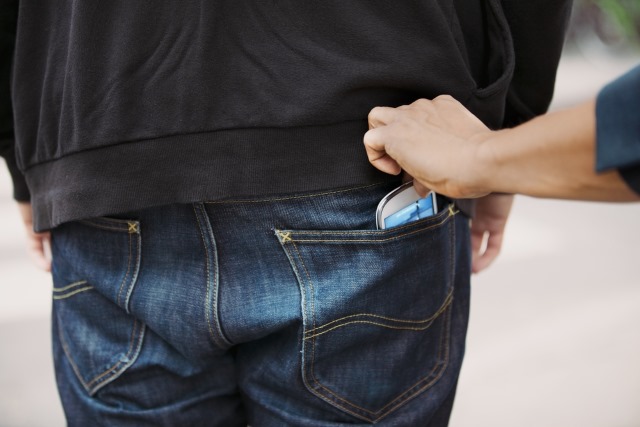
Watch out! More iPhones stolen than any other smartphone
New figures released by the Home Office and published by the BBC show that if you own an iPhone 5, 5C, 5S and 4S in England or Wales, you are most at risk of having your smartphone stolen. If the trend continues, it is likely that the upcoming iPhone 6 will also prove similarly attractive to thieves. Figures show that there were a total of 742,000 phone thefts between 2012 and 2013, and that the largest numbers of theft involved Apple's handsets. Interestingly, despite massively dwindling sales, the next most popular phone to be pocketed by thieves was the Blackberry 9790.
While the iPhone is the most appealing to the light-fingered, the figures show that Apple's claim to be "leading the industry in protecting" seems to be true. New security features introduced in iOS 7 led to a noticeable drop in iPhone thefts, but it still remains the most commonly stolen handset. Apple told the BBC:
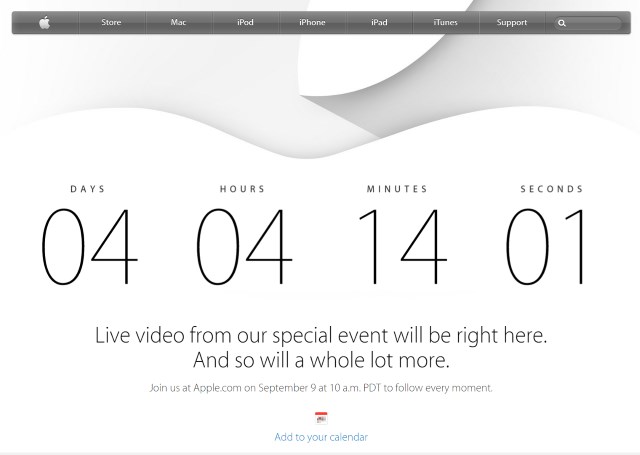
Apple's September 9 event to stream live -- but only to Apple devices
It was all but expected, but Apple has confirmed that Tuesday's "special event" will be streamed live online. This in itself is nothing particularly surprising, but the small print at the bottom of the launch announcement page will upset many people -- if you're not already packing an Apple device, you're not invited. "Live streaming video requires Safari 5.1.10 or later on OS X v10.6.8 or later; Safari on iOS 6.0 or later. Streaming via Apple TV requires second- or third-generation Apple TV with software 6.2 or later". Android, Windows, and Linux users are excluded.
At the event, which kicks off at 10am PT on Tuesday at the Flint Center for the Performing Arts in Cupertino, it is expected that Apple will talk about the iPhone 6 -- possibly two sizes -- as well as a wearable device -- which in all likelihood will be the iWatch. Anyone who is not attending the event will have to either fire up a Mac, iPad, iPhone or Apple TV, or wait for news of the announcements to be written up and posted online.



