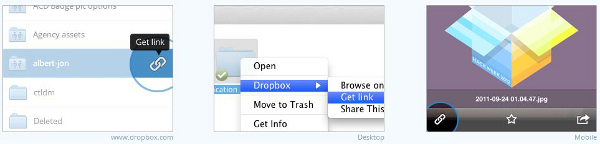
You can use the new link to Dropbox feature like Megaupload (kinda)
Popular file storage and sharing service Dropbox on Monday announced users can now share the contents of their Dropbox via a direct link that anyone can open, even if they're not a Dropbox user.
The feature is noteworthy because it deviates slightly from the traditional Dropbox sharing model. Instead of sharing files between Dropbox users, this feature simply links to content and makes it viewable.

Adobe Creative Suite 6 takes to the cloud
Adobe took the wraps off Creative Suite 6 on Monday, introducing the largest release to date of the content-creation platform. CS6 now includes up to 12 programs and two companion applications, Bridge and Encore, and is available in four editions: Design Standard, Design and Web Premium, Production Premium, and Master Collection.
The CS6 beta is one of the most successful in the company's history, with one million downloads over the past month of availability alone, a record for Adobe. The move was slightly unusual considering the company typically does not offer large-scale betas of its products.

Microsoft enterprise licensing changes favor Windows RT, put Android and iOS in their place
If you can't beat them, manage them. It's a strategy that has worked well for Microsoft in the past, and it is emerging as a key element in announcements last week about how Microsoft will license Windows 8 in all its variations, including the x86 consumer, Professional and Enterprise editions, the embedded Windows RT and the cloud-based Windows Intune.
While Microsoft's primary goal is to stop Apple's growth in the enterprise, which it will do by tilting licensing policies in favor of Windows tablets, the company has a Plan B that will help monetize Apple and Android devices in the enterprise through management.
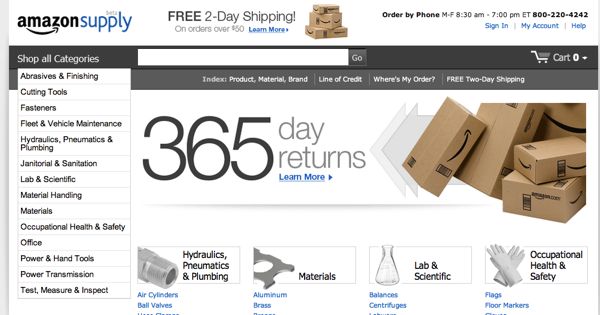
Amazon launches beta of new site for commercial and industrial supply
Leading web retailer Amazon.com on Monday launched the beta of AmazonSupply, a new site dealing in tools, materials, machinery, office equipment, and supplies for business, industry, and commerce.
AmazonSupply launches with approximately 500,000 different items, which are separated into fourteen different classes: Lab & Scientific, Test, Measure & Inspect, Occupational Health & Safety, Janitorial & Sanitation, Office, Fleet & Vehicle Maintenance, Power & Hand Tools, Cutting Tools, Abrasives & Finishing, Material Handling, Materials, Hydraulics Pneumatics & Plumbing, Fasteners, and Power Transmission.
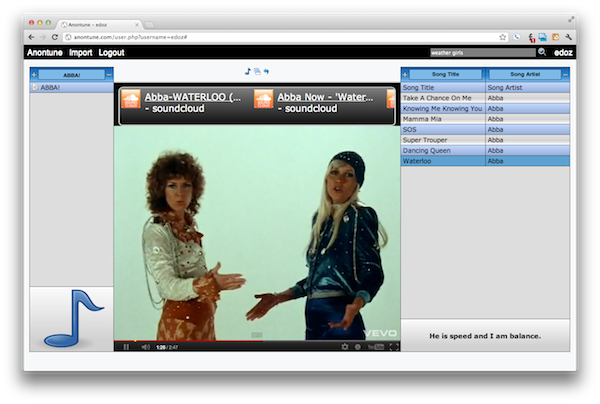
RIAA's Waterloo? Anonymous Looks to set streaming music free
Streaming music content is too restrictive, believes hacktivists Anonymous. Six members of the group have released Anontune, a web-based application that aims to aggregate streaming music online and place it in a central location. AnonTune currently accesses the catalogs of YouTube and SoundCloud, although the developers plan to add content from other services including Yahoo Music, Myspace Music, Bandcamp and others in the future.
True to the groups name, users will be able to listen to tracks anonymously, and Anonymous itself will not store the tracks. Instead it depends on the catalogs of the services it aggregates, thus leaving the sticky copyright issues to those sites. Recording Industry Association of America's Waterloo, indeed. The next one, if Napster wasn't enough a computing generation ago.

Easy Clean better protects, connects to F-Secure cloud
F-Secure has released an updated version of its stand-alone antivirus detector, Easy Clean.
The new build is smaller than previous releases at under 4MB. You can scan your system just by launching the executable; no installation is required. But most usefully, Easy Clean now contacts F-Secure’s cloud-based servers to obtain details about the very latest threats, so there’s no need for it to download regular updates. (Although, of course, this does also mean that you now must have a fully functional Internet connection for Easy Clean to be of any use.)

AppSense's DataNow answers demand for corporate cloud file sharing
Aiming to become the Dropbox of the enterprise, New York City-based AppSense has introduced DataNow, a cloud-based service aimed at giving companies a method to securely share documents across multiple platforms. The company says that its solution lessens the risk of the loss of sensitive information.
File sharing services like Dropbox have already been in the news for just that. Like Facebook and Draw Something, Dropbox has been found to store access tokens in plain text. Last June, a flaw in the software allowed anybody to log in to any account with any password. In the corporate world, such a breach is possibly devastating.

Spotify for Android Ice Cream Sandwich launches in beta
Popular music streaming service Spotify has rolled out a beta of its first Android app optimized for devices running Ice Cream Sandwich.
The most current version of the app, available in Google Play, was built for Android Gingerbread, and no version was released for Honeycomb. Google Play says the Gingerbread version is compatible with Ice Cream Sandwich devices, but this is not strictly true, and installing the Gingerbread version didn't guarantee local playback or playlisting, so this beta is a ramp-up to a significant release for Spotify.

Painless IT administration is easier than you think
IT administration can be a daunting task, and require hours of additional work to ensure a deployment is operating properly and at peak efficiency. Oftentimes, administrators are faced with overly complex administration software that takes months or even years to figure out.
Worse yet, this software is "built in the bubble"; that is, developers create the platform based on what they think the administrator needs rather than what he or she wants. This results in software that does not mold to the needs of its users, and further adds to its complexity.

Microsoft refreshes Windows Intune, debuts cross-platform mobile device management
Tuesday at the Microsoft Management Summit in Las Vegas the topic was the private cloud and the public availability of System Center 2012. Microsoft switched gears on Wednesday and revealed details on the next version of Windows Intune, its public cloud offering.
Wednesday's Intune release is a beta version limited to 10 PCs. It will support all versions of Windows after XP Service Pack 3, but is currently incompatible with Windows 8, and "will not support Windows 8 until after it is generally available" according to the company.

Microsoft releases System Center 2012 to manage private clouds
Microsoft is pushing the cloud heavily at this years Microsoft Management Summit in Las Vegas, and its private cloud offerings are taking center stage. The company announced the general availability of System Center 2012, its private cloud management platform.
Private cloud deployments are exactly what the name entails -- for consumption internally -- and can be hosted either internally or by a third-party provider. System Center's public cloud equivalent is Windows Intune, which launched last March.

Meet Windows Server 2012
It's codename Windows 8 Server no more. Keeping with previous year nomenclature, Microsoft today officially announced Windows Server 2012, during its Management Summit in Las Vegas. Corporate vice president Brad Anderson also confirmed the software would ship later this year, another indicator Windows 8 is on track for autumn launch.
Microsoft tends to be very specific with products that have a year in the name. Windows Server 2008 got its name in Mid-May 2007. The company has some rules about nomenclature, and that one foreshadowed late-year release at best (the software launched in February 2008). The deliberate 2012 nomenclature signals Microsoft's confidence that the new Windows Server will ship this year and likely sooner than later.

Comodo updates PC and cloud storage apps
Comodo Group has released new versions of its backup tools for Windows users. COMODO Backup 4.1.2 introduces a number of new features, including an automatic option for creating WinPE-based rescue discs, while Comodo Cloud 2.1.6 is a maintenance release offering a number of minor bug fixes.
COMODO Backup 4.1.2 allows users to back up selected files and entire drive images to just about any location, including external drives, optical discs, network, FTP and, of course, Comodo’s own cloud-storage servers, with 5GB of online storage provided free of charge. Comodo Cloud 2.1.6 is Comodo’s standlone client for exclusively connecting to your Comodo cloud-based backup space via Windows -- a mobile app is also available for iOS and Android users.

FluffyApp 2.0 lifts Windows users to the Mac cloud
Richard Wang has released Beta 2 of FluffyApp 2.0, his free Windows client for accessing the CloudApp file-sharing service. CloudApp allows Mac users to quickly and easily share files via free and paid-for cloud-based storage, and FluffyApp brings this functionality to Windows users.
Version 2.0’s main improvement is in its user interface, introducing a flyout for displaying drop history as well as providing tabs for uploading files and publishing text and shortened links. Other changes include a consolidated area for options and Hotkeys using the standard Windows mechanism.
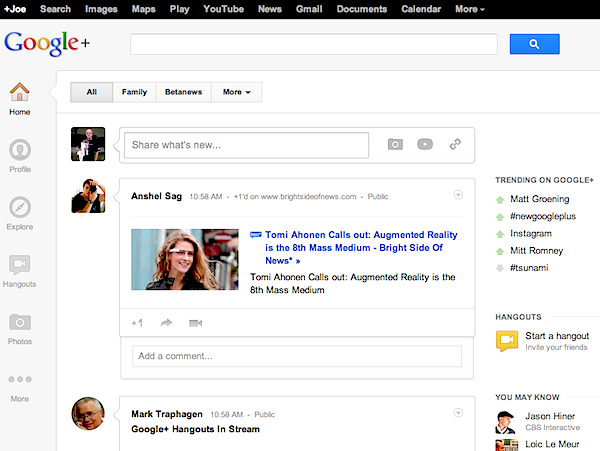
Google+ makeover is much more than a pretty face
Just as Facebook forces users to adopt a more cluttered, confusing appearance, Google+ simplifies and provides social networkers more control over the layout. Much as I've tried to use Facebook more, because that's where my family hangs out, Google+ is inescapable. It's a gravity well too strong to resist. For 170 million, the number of users Google revealed today, Plus perhaps is irresistible, too. That's a lot of people for a service less than a year old.
Google+ is more than a social network. It is the future of Google. Like it or not, the company has embarked on a strategy around social search, and Plus is a pillar. Competing against Facebook clearly is one of Google's goals. But there also is realistic appraisal that social is the web's future -- and why shouldn't it be with gregarious humans? Additionally, Google+ is the sun around which the company's other products will revolve -- even search -- defining a digital lifestyle empowering connections, communications and commerce.