
The challenge of securing APIs [Q&A]
Technology continues to advance at an unprecedented rate. The development and use of Application Programming Interfaces (APIs) being a particularly notable example.
The latest Salt Labs State of API Security report found that overall API traffic increased 168 percent over 12 months, with API attack traffic increasing by 117 percent in the same time period. Perhaps understandably, many CISOs are struggling to keep up.

New platform helps uncover vulnerable secrets
Complex software today includes components that rely on digital authentication credentials commonly referred to as secrets, which include tools such as login credentials, API tokens, and encryption keys. While critical for the software to function, managing secrets across every component of code is a challenge that can result in secrets being left vulnerable.
Supply chain security company ReversingLabs is launching a new secrets detection feature within its Software Supply Chain Security (SSCS) platform.
Consumers turn to biometrics as they struggle to remember passwords
People are struggling to recall an ever-growing number of passwords, with 51 percent of respondents to a new study by Entrust saying they reset a password at least once a month because they can't remember it.
Even more alarming, 15 percent of users who responded reset passwords at least once a week. It's no surprise then that given the option between biometrics or a password, 74 percent of respondents will choose biometrics half the time or more and a third will always choose biometrics when available.
Over 700 million credentials exposed and 22 million devices infected in 2022
The latest Identity Exposure Report from SpyCloud shows that last year its researchers recaptured 721.5 million exposed credentials from the criminal underground, and found over 22 million unique devices infected by malware.
Of the exposed credentials recovered by SpyCloud, roughly 50 percent came from botnets, tools commonly used to deploy highly accurate information-stealing malware. These infostealers enable cybercriminals to work at scale, stealing valid credentials, cookies, auto-fill data, and other valuable information to use in targeted attacks or sell on the darknet.

Applying the Biden-Harris Administration's National Cybersecurity Strategy to your organization in five steps
As cyber threats continue to evolve and grow, it is increasingly clear that a coordinated and comprehensive approach to cybersecurity is necessary. Governments around the world have recognized the need for national cybersecurity strategies to protect their citizens, businesses, and critical infrastructure. In this article, we will explore the importance of a national cybersecurity strategy from the perspective of a cyber threat intelligence team.
The increasing frequency and severity of cyberattacks have highlighted the importance of having a comprehensive national cybersecurity strategy. Cyberattacks can result in the loss of sensitive data, disruption of critical services, financial losses, reputational damage, and even loss of life. A national cybersecurity strategy is essential to protect against cyber threats, safeguard national security, and maintain economic stability. It provides a framework for coordinating and prioritizing efforts to address cyber threats, promotes information sharing and collaboration, and enables rapid response to incidents.
The rise of hardware-based security and why it matters [Q&A]
Cybersecurity is usually viewed as something to be addressed via software. In recent years though we've seen a hardware element start to creep in -- Windows 11's requirement for TPM capability for example.
Can we expect to see more hardware-based security measures? And what benefits do these offer? We spoke to Ed Maste, senior director of technology at the FreeBSD Foundation (the non-profit organization supporting the open source FreeBSD operating system) to find out.

21 percent of government workers don't care if their organization is hacked
With 70 percent of government workers reporting that they work virtually at least some of the time, a new survey shows some worrying trends.
The report from Ivanti finds five percent of government workers have fallen victim to a phishing attempt. However, 34 percent don't believe their actions impact their organization's ability to stay safe.

93 percent of organizations suffer business email compromise attacks
The threat of business email compromise (BEC) is growing year on year and is projected to be twice as high as the threat of phishing in general.
According to a new report from cloud email security platform IRONSCALES, over 93 percent of organizations have experienced one or more of the BEC attack variants in the previous 12 months, with 62 percent facing three or more attack variants.

QuSecure pioneers quantum-resilient satellite link
Much of our modern communication relies on satellites, but the data sent between them and ground stations is vulnerable to theft, leaving satellite communications even more accessible than typical internet communications.
Post-quantum cybersecurity company QuSecure has announced that it's achieved an end-to-end quantum-resilient cryptographic communications satellite link.
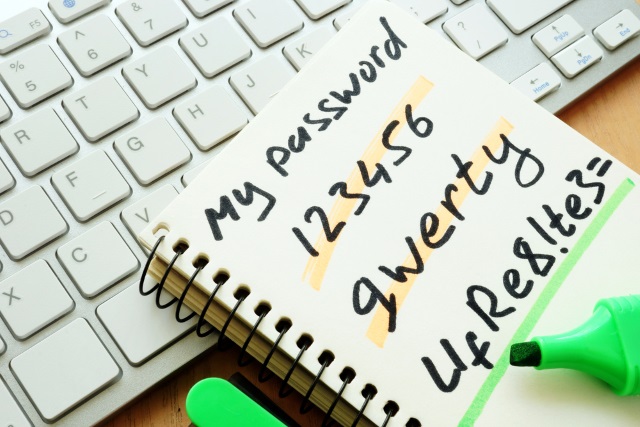
Weak passwords are still allowing attackers into networks
A new study from Specops Software finds that 88 percent of passwords used in successful attacks consisted of 12 characters or less, with the most common being just eight characters (24 percent).
The research, largely compiled through analysis of 800 million breached passwords, finds the most common base terms used in passwords are depressingly familiar: 'password', 'admin', 'welcome' and 'p@ssw0rd'.
Cloud adoption leaves regulated industries open to attack
Switching to the cloud has left organizations in heavily regulated industries like healthcare and financial services with a greater attack surface, according to a new report.
Research published today by Blancco Technology Group, based on responses from 1,800 IT professionals in healthcare and finance, shows 65 percent of respondents say that the switch has also increased the volume of redundant, obsolete or trivial (ROT) data they collect.

Financial services is the most impersonated industry in phishing attacks
Threat protection company Vade has released its latest Phishers' Favorites report for 2022 which finds that financial services is the most impersonated industry, accounting for 34 percent of phishing pages as attackers continue to follow the money.
There are also seven finance brands in the top 20, with PayPal, MTB, Crédit Agricole, and La Banaque Postale all securing a spot in the top 10.

Social engineering remains the top threat for enterprises
The latest Annual Trends Report from Jamf, based on a sample of 500,000 devices protected by the company's technology, looks at the threats impacting devices used in the modern workplace and finds social engineering tops the list.
The combination of an increasingly distributed workforce with the relative ease with which bad actors can carry out phishing campaigns, leads to the leakage of user credentials. In 2022, 31 percent of organizations had at least one user fall victim to a phishing attack.

New Radiant Logic solution improves identity decision making
Enterprises need real-time access to lots of data, but it's important that access to that data is properly controlled.
Radiant Logic is launching a new data intelligence offering that offers identity observability and visualization capabilities, all built on an extensible API-layer and available as a SaaS offering.
Scammers turn to AI to improve their campaigns
The latest quarterly Consumer Cyber Safety Pulse Report from Norton looks at how cybercriminals can use artificial intelligence to create more realistic and sophisticated threats.
Tools like ChatGPT have captured people's attention recently and it seems cybercriminals have noticed them too. Its impressive ability to generate human-like text that adapts to different languages and audiences also makes it great for generating malicious threats.



