
What does a bug researcher look like?
What kind of people spend their time looking for software bugs? Crowdsourced testing company Bugcrowd has released a report looking at how its community is made up that might give you a clue.
Bugcrowd researchers come from all over the world, as of September 1, 2016, the United States (29 percent) and India (28 percent) had the most sign-ups, followed by the United Kingdom on six percent.

Does your personality make you more likely to get hacked?
LogMeIn the company behind the LastPass password manager has released the results of a survey looking at consumer psychology, behavior and attitudes when it comes to managing personal passwords.
Among the findings are that 61 percent of respondents use the same or similar passwords across accounts, and 55 percent of them do it even though they understand the risk. Also more than a third (39 percent) create more secure passwords for their personal accounts than their work accounts.
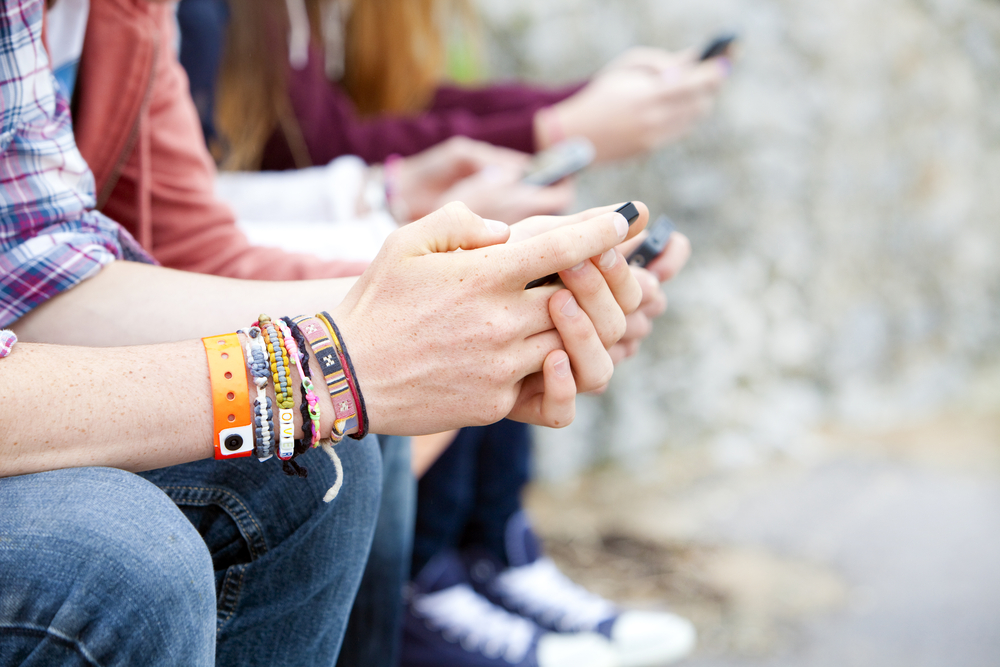
Millennials prefer to deal with companies by text
Of all the communication channels available for dealing with businesses, 60 percent of millennials prefer two-way text engagement, because it’s convenient, fast, and easy to use. This is one of the findings of a new survey by mobile engagement specialist OpenMarket of 500 US millennials (18 to 34-year-olds) on their use of SMS communications.
While 72 percent of millennials say they text 10 or more times a day, and 31 percent more than 50 times a day, the leading factor in millennials' preferences for texting is its ability for two-way communication with businesses.
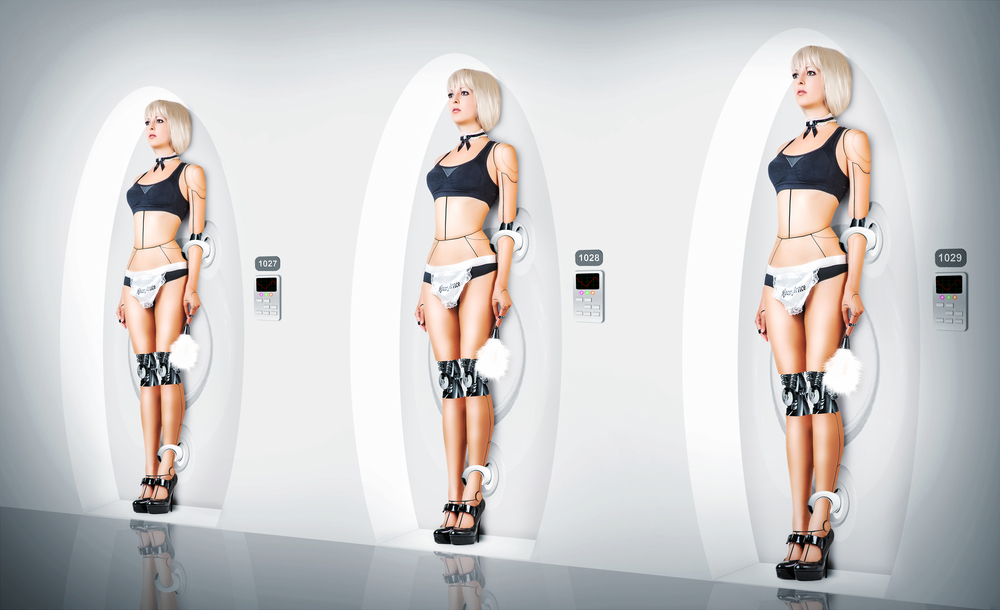
Automatic lovers -- conference explores the sex lives of robots
Robots and technology are invading more and more areas of our lives, but there are some places they have yet to... ahem, penetrate.
A conference in Salford, UK this week organized by the TC9 group of the International Federation for Information Processing (IFIP) is set to explore issues of technology and intimacy.

Are you spending too much of your life using technology?
We all spend more time using computers, mobiles and other devices, but exactly how much of your life is devoted to using technology?
UK technology rentals chain BrightHouse has done some research which shows that 37 percent of Brits spend more than two hours every day browsing the web. What’s more the average 18-year-old spends 343 hours a year checking social media.

Latin America set to see major mobile growth
Until now the Latin America region has been slow to adopt mobile apps, partly because of limited availability of high-speed data connections.
But as the Rio Olympics kick off and the world focuses on the region, Yahoo's analytics arm Flurry is releasing its first-ever report analyzing mobile activity across Latin America.

The NFL comes to Sling TV just in time for the season
With training camp now underway the new NFL season is starting to feel close. That can mean different things to different people. For some it's excitement while others may think of it as a temporary loss of their significant other on Sundays.
Now, just in time for kickoff, Sling TV has announced that the league is coming to its online streaming live TV service with the launch of the NFL Network and NFL RedZone.
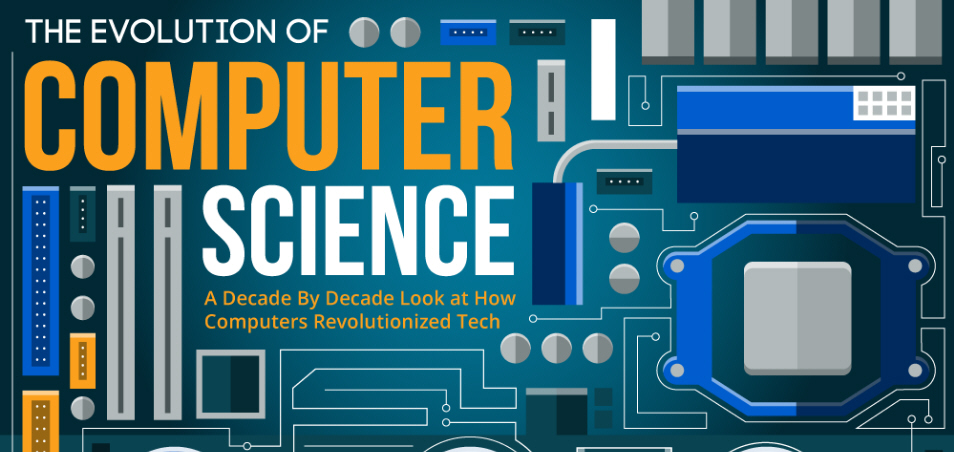
Digital evolution -- how computers have changed the world
We tend to think of computers as a relatively modern innovation, but some of the concepts behind them, the binary system for example, go back as far as the 18th century.
The Computer Science Zone careers advice website has produced an infographic looking at the evolution of computing from the punch card controlled weaving loom to the latest nanotechnology.

What new tech will you see in your lifetime?
Technology has already shaped the world we live in. Things like television, the jet engine and the first computers have made major changes to the way we live our lives.
But what can we expect in the future? The pace of change is faster than ever and there are innovations on the horizon that will change our lives just as radically as those of the past.

Is the Internet of Things the next Industrial Revolution?
The Industrial Revolution changed society and led to the growth of towns and cities with consequent mass production and movement of population.
Electronics retailer RS Components has produced an infographic looking at how the Internet of Things is leading a move to create a new industrial internet, powered by intelligent machines.

37 percent of Americans would prefer better automation at work to a better sex life
Whether it says more about their work lives or home lives is unclear, but it seems that more than 1 in 3 working Americans would prefer having a better way to automate all their routine work tasks, such as booking meetings, than have a better sex life. What's also interesting is that 44 percent of those were women and 30 percent were men.
This is among the findings of a survey by automation specialist Built.io carried out in conjunction with Wakefield Research. It also finds that Americans are willing to give up some personal information in exchange for a more automated life.
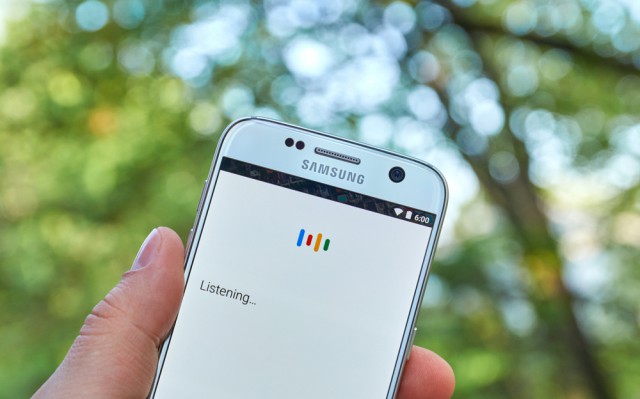
Majority of consumers will embrace digital assistants like Google Now and Siri
Like it or not, we’re all going to have Batman’s Alfred Pennyworth soon. In a digital format, that is, but nonetheless an assistant.
This was concluded by research specialists Gartner, which said that by 2019, at least a quarter of households in developed countries will use the services of a digital assistant, either on a smartphone, or in a standalone device.

Better online security or faster internet, which would you choose?
Your answer probably depends on how old you are. According to a new survey 57 percent of Americans would take the better security. However, where millennials are concerned 54 percent would rather improve their internet speed.
This is among the findings of a new survey by adaptive access control company SecureAuth Corporation and Wakefield Research. Gender and education make a difference too, while men are split fairly evenly between personal online security (51 percent) and speed (49 percent) significantly more women care about online security (62 percent). When it comes to education, 63 percent of college graduates care about security, as against 47 percent of high school graduates.

Millennials value connectivity and electricity more than plumbing and heating
A new study from CommScope has revealed that millennials are so accustomed to constantly being connected that they would rather give up plumbing and heating before giving up connectivity and electricity needed to power their mobile devices.
The millennial generation will place a large burden on global network operators who will have to plan for continued capacity growth, greater flexibility, a larger array of services as well as corresponding billing models if they hope to meet the demand of those born between 1980 and 2000.

Ransomwhat? 43 percent don't know what ransomware is
A new report shows that 43 percent of consumers in the US and Canada don't know what ransomware is. A similar number (44 percent) say they don’t know what data or information could be stolen in a ransomware attack.
The study by Kaspersky Lab surveyed 4,000 US and 1,000 Canadian consumers aged over 16 and found that only 16 percent mentioned ransomware as a cyber threat they were worried about, compared to their concerns about viruses, spyware and Trojans.