Messaging apps provide a false sense of security
In the last couple of weeks we have seen consumer messaging giants WhatsApp and Viber retrospectively add end-to-end encryption technology to their communications platforms. The notion of providing users with improved security is certainly to be applauded, and seeing messaging apps adopt encryption as a necessity as opposed to simply a nice-to-have feature, is long overdue.
However, the manner in which providers are increasingly introducing encryption technology within apps as an afterthought is potentially providing a false sense of security to the billions of people that use them on a daily basis.

WhatsApp's end-to-end encryption is not all it's cracked up to be
Just a few days ago, WhatsApp trumpeted the roll out of end-to-end encryption for its messaging service. The world rejoiced. With events such as the battle between Apple and the FBI turning attention to encryption, the announcement was well-timed to ride the crest of the wave. But it seems that for all of the bluster and bravado, the news about extra protection may not be quite as good as it seems.
Analysis of WhatsApp's privacy documentation reveals that the Facebook-owned company retains a huge amount of data about messages that are sent. If this all sounds familiar, it's because the retention of metadata is precisely what the NSA was (is?) up to, trawling web communications and upsetting Edward Snowden and privacy advocates around the world. WhatsApp's encryption and policies mean that those who are concerned about their privacy should not rest on their laurels.
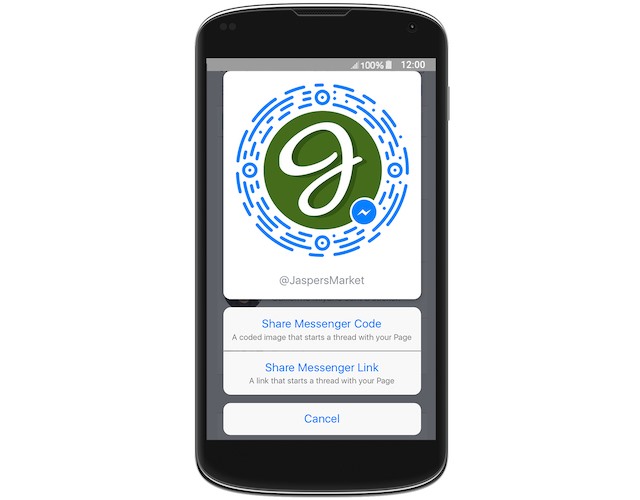
Facebook encourages conversation with Messenger Links and QR-like Messenger Codes
WhatsApp may have a billion users, but Facebook Messenger isn't far behind: Mark Zuckerberg says "900 million people now use Messenger every month". Nowadays, Facebook is about much more than people sharing pictures of breakfast and bitching about their friends, it's also a valuable tool for businesses.
With this in mind, Facebook is adding a number of features to Facebook Messenger that it says will make it easier for businesses to connect and converse with their customers. Usernames will make it easier for people to identify businesses, while Messenger Links and Messenger Codes (just think QR codes with a fresh lick of paint) are being rolled out to make it quicker and easier to start conversations.
Full end-to-end encryption shows WhatsApp is serious about privacy
Encryption has been a hot topic for some time, but the battle between Apple and the FBI really brought it to the fore in recent weeks. In response to the FBI trying -- ultimately successfully -- to crack into the San Bernardino shooter's iPhone, WhatsApp was just one of the companies that promised to increase encryption.
Today the popular chat tool made good on its promise, enabling full end-to-end encryption; this means that calls, messages, photos, videos, files, voice messages, and group chats are all protected with end-to-end encryption. Importantly, this extra layer of security is enabled by default, leading WhatsApp to claim it is "a leader in protecting your private communication".

Encrypt all the things! Facebook, Google and WhatsApp to increase privacy and encryption
Privacy and security has always been a hot topic, but never more so than in recent months. The Apple/FBI case has really brought things to a head, enlivening the debate between privacy and security advocates, and those who side with the government. As Apple fights to prevent the FBI from accessing the San Bernardino shooter's iPhone, Facebook, Google and others are looking to increase encryption and lockdown user data even further.
The Guardian has learned that a number of Silicon Valley companies are working on ultra-secure encrypted messaging systems. With President Obama having made a sideways reference to supporting the inclusion of backdoors for government, Facebook is planning to not only bring encryption to Whatsapp's voice messages, but also to bolster the security of Facebook Messenger.

WhatsApp Web now works in Microsoft Edge
WhatsApp introduced a web interface for its messaging service a year ago, initially supporting only a single browser -- Google Chrome -- and a single mobile platform -- Android. Since then, the number of browsers that work with WhatsApp Web has increased, and iPhones were added into the mix.
Depending on which web analytics resource you believe, Google Chrome is either the most-popular desktop browser (according to StatCounter and W3Schools) or the second (per NetMarketShare's numbers), so WhatsApp's decision to support it first is understandable. But the latest browser to work with WhatsApp Web is an unexpected choice.
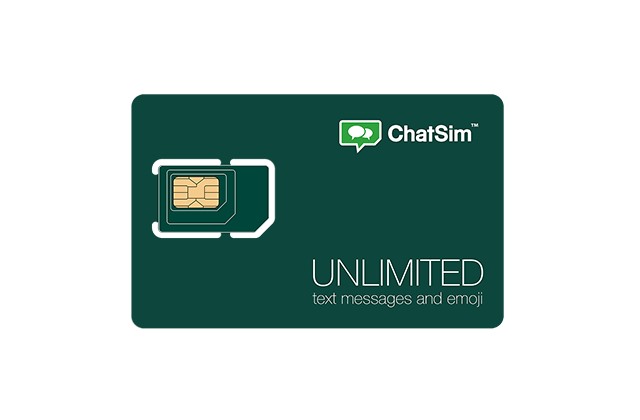
Forget SMS, ChatSim offers unlimited free chatting to mobile users as they travel the world
Described as the world's first "instant messaging mobile operator", ChatSim aims to take the pain out of travelling with a mobile phone. Roaming charges can quickly mount up for travellers who lose track of the number of texts they send, and in order to avoid high data fees, you might find yourself seeking out Wi-Fi connections to make use of the likes of WhatsApp instead.
But there is an alternative. ChatSim lets you stay in touch without worrying about the cost. Buy a SIM card for just $25, £16 or €20, and you can send an unlimited number of messages -- over Wi-Fi or 4G... whatever connection you have available -- without incurring any additional charges. Sounds good? It gets better.

Gmail and WhatsApp boast over one billion monthly active users each
There are many products that have hundreds of millions of active users in a single month, but there are few that have passed the billion mark. However, the select group, which includes the likes of YouTube and Facebook, has just gotten bigger.
And it is Google and Facebook which once again add new members to that list, with Gmail and WhatsApp, respectively, joining the pack. Both services passed that milestone in January, with one taking longer than the other to reach it.

ISIS has its own secure messaging system -- this illustrates the futility of communication surveillance
Moves by governments to monitor web-based communication with a view to thwarting terrorism is utterly, utterly futile. Just like the NSA's dragnet-style dredging for intelligence, mass communication surveillance does little to home in on target -- the ones that government should be concerned about are the very ones who know who to evade detection.
This is something that was perfectly demonstrated this week when it became apparent that ISIS has developed its own secure messaging system. No longer reliant on the likes of WhatsApp, ISIS is using a custom-built, Android-based encrypted messaging tool that is incredibly difficult -- if not impossible -- for the FBI and NSA to monitor.

New malware attack targets WhatsApp users
A new malware campaign is aiming specifically at businesses and consumers using the WhatsApp mobile messaging service.
Uncovered by researchers at Comodo Labs the campaign uses emails masquerading as WhatsApp content. These have an attached zip file containing a malware executable.

Here are apps that drain your battery the most
As most people nowadays rely on smartphone applications to do tasks or to be entertained, security firm AVG Technologies has recently released its updated list of the most battery-draining, as well as the data and storage consuming applications there are today.
According to over a million anonymous devices gathered worldwide, AVG’s report showed that messaging apps Kakao Talk and WhatsApp, as well as social networking apps Facebook and Instagram, remain to be the top apps that drain a device’s battery and use up the users’ storage and data.
WhatsApp Web app vCard vulnerability leaves 200 million users at risk
A security researcher at Check Point has discovered a vulnerability in the WhatsApp Web app. The app -- which allows for WhatsApp messages sent to a phone to be viewed on a desktop computer, as well as syncing data -- can be exploited if a malicious user sends a specially-crafted vCard contact to someone.
A problem with WhatsApp's filtering of the contact card means that it could be used to "trick victims into executing arbitrary code on their machines in a new and sophisticated way". What's particularly worrying about this vulnerability is the fact that all an attacker needs is the phone number associated with a WhatsApp account. With an estimated 200 million WhatsApp Web users, there are a lot of potential victims.

WhatsApp Web now finally supports iPhones
WhatsApp introduced a web interface for its messaging service early this year, giving Android, BlackBerry and Windows Phone users the option to chat with their contacts straight from a browser -- that is, as long as that browser is Google Chrome. Those toting iPhones, however, have been left out.
The reason why WhatsApp Web has not supported iPhones from the start is, according to an official blog post that did not go into specifics, "Apple platform limitations". Luckily, WhatsApp has figured out a way around them, opening its web interface to iPhones.
WhatsApp Calling now available on Windows Phone
WhatsApp officially introduced voice calling in mid-March, after a couple of months of private testing. The feature, which was announced a year before, arrived on Android first, making its way to iOS less than a month after. Windows Phone users, however, were left waiting.
But, thanks to the latest update to the Windows Phone app, WhatsApp Calling is now also available for those using the tiled smartphone operating system.
Facebook could allow businesses to contact you through WhatsApp
Facebook said it might allow businesses to contact users through their chat app WhatsApp, Bloomberg said in a report on Tuesday.
This might be the first hint on how the social media giant plans on making money off the app that it bought for $22 billion (£14 billion).