



MiniTool releases a free screen recorder without watermarks or time restrictions
MiniTool has released Screen Recorder 1.0, a free screen recording tool for Windows designed to handle basic screen, audio, and webcam recording tasks without watermarks or time limits.
The app offers a limited but familiar set of features rather than advanced tools or editing functions. It can be used to record tutorials, presentations, videos, or general on-screen activity with minimal configuration.
Maingear now lets buyers bring their own RAM to avoid DDR5 price spikes
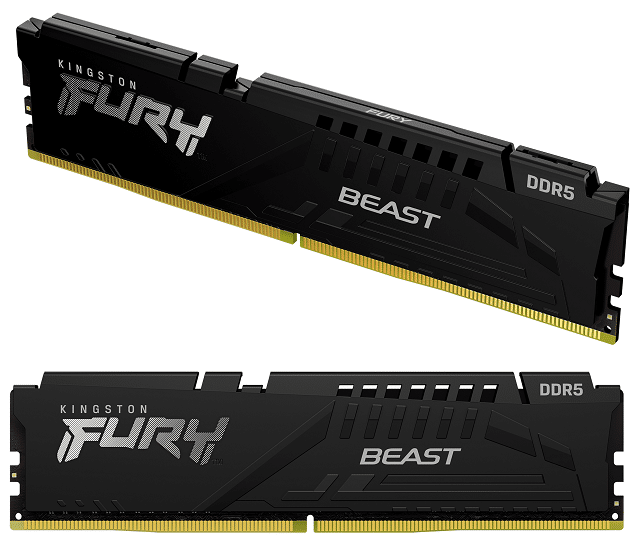
Maingear has introduced a new option called BYO RAM Builds, letting customers order a desktop without buying memory from the company. The move comes at a time when DDR5 pricing has become unpredictable, with significant increases across many kits. BYO RAM gives buyers a way to manage system cost by supplying their own compatible memory.
The price of DDR5 kits have skyrocketed recently as AI infrastructure demand continues to steal memory supply away from consumers. Retail availability is uneven, and pricing swings have made it difficult to plan a new build without watching the prices almost daily.

Lemon Slice 2 turns any single image into a real time, talking AI avatar
Lemon Slice, a new research and product lab focused on interactive video technology, has released Lemon Slice 2. The latest model turns a single image into a real time conversational avatar. It works with a wide range of images and is available as both an API and an embeddable widget.
The company describes its new model as a zero shot system that produces a live video call from one input. The tool accepts many types of visuals, including portraits, illustrations, and stylized artwork. Once uploaded, the model generates a moving avatar that responds in real time during a conversation, as you can see in the video at the bottom of the page.

Wondershare brings new AI Mate editing assistant to Filmora V15
Wondershare has added a new intelligent assistant called AI Mate to Filmora V15 for Windows and macOS. The tool, built into the editor, can help users plan ideas, understand how features work, automate multi step tasks, and complete common actions with less manual effort.
AI Mate offers four options:

Wondershare adds Topaz Labs' AI video tools to UniConverter 17
Wondershare has announced a collaboration with Topaz Labs that adds the company's AI-based video cleanup and upscaling features to its creative software. UniConverter 17 is the first Wondershare product to include Topaz's model, offering creators a way to improve low-quality footage inside the program.
Topaz's Starlight model appears as a processing option in UniConverter V17 and it will be added to Filmora, SelfyzAI, and Repairit at some point too, although there's no word on exactly when that will happen.

Foxit PDF editor gains new collaboration safeguards and AI features
Foxit has released Foxit PDF Editor v2025.3 for Windows and Mac, adding new controls for shared documents along with security and AI updates. The release is aimed at people and organizations that depend on PDFs for daily work, especially where privacy rules and controlled access matter.
The new releases focuses on how shared document collaboration works, and the way users join collaborative sessions has also been improved, with clearer consent steps built into the process. Before accessing a shared file, users will now see a region-specific consent message explaining that their details could be visible to others. Access only continues once consent has been given.

EaseUS adds fragmented file recovery tech to Data Recovery Wizard
Chinese software developer EaseUS has announced a new version of its data recovery software that fixes on a long standing problem with fragmented files on heavily used storage devices. EaseUS Data Recovery Wizard 20.1.0 gains a new recovery engine that can improve results on USB drives, SD cards, and external hard drives that have seen years of repeated use.
SmartSector Rebuild (or SSR for short) can reconstruct files that have been split across storage sectors over time, a condition that often prevents standard recovery tools from restoring usable data.

NordProtect rolls out expanded monitoring features for identity theft detection
NordProtect, an identity theft protection service from Nord Security, has expanded its monitoring features to give users earlier notice of potential fraudulent activity. The changes add extended credit monitoring, loan tracking, and financial account alerts, with the goal of helping users respond before financial damage occurs.
The service now monitors credit activity across all three major credit bureaus. Users receive alerts when changes appear on their credit file, including new accounts opened in their name, shifts in credit score, or hard inquiries made by lenders or other organizations.

Kodi 22 'Piers' Alpha 2 is out with new features and fixes -- download it now!
It’s been four months since the Kodi Foundation released the first build of Kodi 22 “Piers,” the long-awaited next generation of its widely used home theater software.
Following close on the heels of Kodi 21.3 “Omega,” which was released a few days ago, a new build of Kodi 22 has arrived in the form of Alpha 2.

Cloudflare's Impact Report for 2025 reveals how elections, journalism, and nonprofits faced rising online threats
Cloudflare has published its fifth annual Impact Report, outlining how its network and security services have been used to support elections, independent media, and nonprofit organizations while also addressing environmental commitments. The report explains why these efforts matter as cyberattacks, automation, and AI-driven traffic continue to reshape how public interest services operate online.
The Impact Report follows Cloudflare’s recent 2025 Radar Year in Review, the sixth annual report examining broad trends in internet traffic, security, and technology adoption across its global network. That earlier analysis used aggregated data from web requests, bots, and connectivity signals to show how automation, encryption changes, and attacks shaped online services worldwide. The new report narrows the focus to how those trends affected democratic institutions, journalism, and other vulnerable groups.

Adobe partners with Runway to bring AI video generation into Firefly
Adobe has announced a multi-year partnership with Runway that pulls generative video directly into Adobe Firefly and, over time, deeper into Creative Cloud. The idea is to make AI-generated video part of the same tools people already use to edit, finish, and deliver professional projects.
Runway offers AI video generation tools that let users create clips from text prompts, control motion and pacing, and experiment with different visual ideas without shooting footage. It sits in the same general space as tools like OpenAI’s Sora, but is often used as a practical production tool.

DisplayFusion 12 arrives with fixes and improvements for managing multi-monitor setups
DisplayFusion 12 is now available, offering a number of improvements to the tool which helps manage multi-monitor setups on Windows. The updated version focuses on fixing long-standing issues, improving how Windows handles multiple displays, and adds some small small but useful changes that should make managing several screens less fiddly.
Multi-monitor support in Windows is decent, but it stops short of giving users real control. Although adding one or more displays is easy enough, the OS largely treats them as one extended desktop. DisplayFusion takes things further, tightening how windows, wallpapers, taskbars, and profiles behave across multiple screens.

Chuwi announces two new lightweight Ryzen laptops under $600
Chuwi has announced two new lightweight Windows 11 laptops called the CoreBook Air and CoreBook Air Plus. Both systems are powered by AMD’s Ryzen 5 6600H processor.
The CoreBook Air weighs 1kg and has a 14 inch 16:10 WUXGA IPS display. The CoreBook Air Plus steps up to a 16 inch screen of the same resolution and weighs slightly more at 1.35kg. The two laptops use aluminum alloy chassis and slim bezels, and are available in an indigo color.
MiniTool adds a duplicate cleaner and refreshed interface to Partition Wizard 13.5
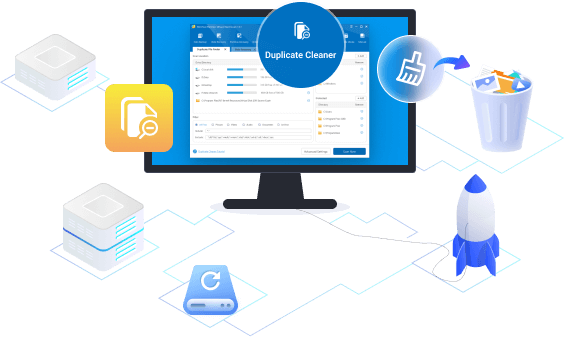
MiniTool has released version 13.5 of its Windows partition manager, adding a new Duplicate Cleaner and updating the interface. The update focuses on making storage tasks quicker to complete and easier to understand.
The new Duplicate Cleaner clears out repeated files across local drives and external devices. It scans selected locations, identifies matches, and lets users remove unneeded copies while keeping control over how those files are handled.

Visa says AI agents will complete shopping purchases for you in 2026
Visa says it has completed hundreds of real-world transactions initiated by AI agents, marking an early test of a (near) future where software can move from shopping recommendations to payment without a human needing to click through the checkout process.
The transactions were carried out with partners across Visa’s payments ecosystem and took place on live systems, rather than in demonstrations or simulations. According to the company, they show that AI-driven purchases can be completed securely using existing payment infrastructure, so long, that is, as the agent operates within predefined controls.



