
Netflix bug bounty program offers top rewards of $15,000
As much as we'd like to think otherwise, no software is free of security issues. That's why it's important for tech companies to play an active role in finding and fixing as many bugs as possible before they're exploited. Implementing a bug bounty program can be very effective, as the product is exposed to various testing mindsets and approaches which can uncover some nasty surprises.
Netflix, which has over 100 million users across the globe, today introduces its first bug bounty program that's open to the public, with rewards that can reach $15,000 for the most-valuable findings that security researchers report.

10 efficient tools every marketing team needs in 2018
If you work in marketing, you'll no doubt know that there are a dozen tools for every task you might conceivably want to undertake.
However, this article contains the most essential, efficient, and useful tools that are going to help you with all your marketing activities. If you’re looking to start up and get it right, these tools will be of help in developing a successful marketing strategy.
Download Windows Server 2019 preview ahead of the launch later this year
Microsoft has revealed details about the upcoming Windows Server 2019. Due for release later in the year, there's a preview available for download right now, giving users the chance to try out the new features, including Linux and Kubernetes support.
Announcing the availability of the build to Windows Insiders, Dona Sarkar said that Microsoft is "pleased to release the first build of the Windows Server 2019 Long-Term Servicing Channel (LTSC) release that contains both the Desktop Experience as well as Server Core in all 18 server languages, as well as the first build of the next Windows Server Semi-Annual Channel release."
AMD admits to new batch of critical processor flaws and promises fixes
AMD has confirmed that some of its processors contain vulnerabilities after they were found by CTS Labs researchers. In all, 13 critical flaws were found, including RyzenFall, MasterKey, Fallout and Chimera. They affect a range of AMD products.
The flaws are not dissimilar to the previous Meltdown/Spectre vulnerabilities, and CTS Labs gave AMD just 24 hours' notice before going public. The chipmaker says that patches are on the way, and tries to suggest that the vulnerabilities are not a cause for major concern.
Kaspersky Lab plans Swiss data center to quell fears about Russian connections
The US has repeatedly voiced concerns about Kaspersky Labs, expressing distrust of the Russian company. So concerned is the Trump administration about possible ties to the Russian government, that Kaspersky software is banned from official computers.
This is clearly something that the company is not happy with, and it has already launched a lawsuit against the US government. In a bid to silence those who say that data is being fed to the Kremlin, Kaspersky is planning to open a data center in Switzerland.

The nine biggest threats organizations face in the next two years
The foundations of the digital world are set to be shaken in the next two years according to the findings of a new report from the Information Security Forum (ISF).
The Threat Horizon 2020 report highlights nine major threats, broken down into three themes, that organizations can expect to face by 2020 as a result of developments in technology.

New developer tool aids deployment of AI applications
There's increasing demand for AI and machine learning solutions from businesses, but often a shortage of skills is holding back implementation.
Cloud computing specialist Paperspace is launching a new tool called Gradient to allow developers to tap into a dedicated cloud of AI solutions for building, training and deploying machine learning applications.
Mozilla launches a petition asking Facebook to do more for user privacy
In the fallout from the Cambridge Analytica debacle, Facebook has been roundly criticized for not only its handling of the situation, but also its attitude to privacy in general. The criticism comes not only from users, but also politicians and technology firms. The latest company to speak out is Mozilla.
After it was revealed that the personal data of 50 million Facebook users was shared without consent, Mozilla is calling on the social network to ensure that user privacy is protected by default, particularly when it comes to apps.
Facebook, Cambridge Analytica and our personal data
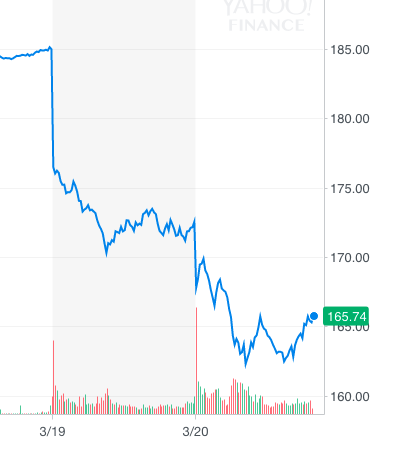
Facebook shares are taking it on the chin today as the Cambridge Analytica story unfolds and we learn just how insecure our Facebook data has been. The mainstream press has -- as usual -- understood only parts of what’s happening here. It’s actually worse than the press is saying. So I am going to take a hack at it here. Understand this isn’t an area where I am an expert, either, but having spent 40+ years writing about Silicon Valley, I’ve picked up some tidbits along the way that will probably give better perspective than what you’ve been reading elsewhere.
Much of this is old news. There are hundreds -- possibly thousands -- of companies that rely on Facebook data accessed through an Application Programming Interface (API) called the Graph API. These data are poorly protected and even more poorly policed. So the first parts of this story to dispel are the ideas that the personality test data obtained by Cambridge Analytica were in any way unusual or that keeping those data after their sell-by date was, either. That doesn’t necessarily make the original researcher without blame, but the Cambridge folks could have very easily found the same data elsewhere or even generated it themselves. It’s not that hard to do. And Facebook doesn’t have a way to make you throw it away (or even know that you haven’t), either.
Don't want to #DeleteFacebook? Opt out of Platform API sharing instead -- here's how
Following the recent Cambridge Analytica scandal, you can't have failed to notice there’s a backlash against Facebook at the moment, with the #DeleteFacebook movement gathering serious momentum. Even WhatsApp co-founder Brian Acton, who sold his app to Facebook for $19 billion in 2014, appeared to back it with a tweet in which he declared "It is time. #deletefacebook".
Unless you don’t use it very often, deleting Facebook is a major step, and one that many people will think is taking things too far. But if you do want to take greater control over your privacy settings you might want to consider opting out of Facebook’s Platform API sharing to prevent future data harvesting.

Samsung unveils rugged Galaxy Tab Active2 business tablet with LTE
Quality Android tablets are becoming increasingly rare on the consumer market. Why? There are many reasons, such as the adoption of large-screen smartphones. When your phone has a 6-inch screen, a 7- or 8-inch tablet can feel redundant. Not to mention, despite an arguably stronger economy, there are still many consumers that don’t have much disposable income.
Where Android tablets still have a fairly bright future is in the enterprise. For many jobs, sitting down with a laptop is not possible. Instead, being active with a tablet can be preferable. Today, Samsung unveils the Galaxy Tab Active2 -- a rugged Android 7.1 business tablet with integrated LTE (carrier unlocked). It is very rugged (MIL-STD 810G certified) making it great for dirty jobs -- even the S-Pen is rugged. And yes, it has USB-C.

Take a personal trainer on the road using Freeletics
Everyone has a favorite go-to workout routine to keep fit. Do you prefer to spin, participate in CrossFit, head to the gym and figure your own routine or, perhaps, an all-body circuit class? There is no shortage of options, but sometimes too many options can get confusing and it’s good to get some guidance based on your goals.
One solution is your own personal trainer, in the form of your smartphone. Luckily you can take your smartphone anywhere (often including the gym), meaning there’s no reason why you can’t have a program downloaded to an app.
Microsoft releases Windows 10 Spring Creators Update Build 17127 to the Fast ring
New builds for the Spring Creators Update are coming thick and fast now, as Microsoft edges ever nearer to the release date for the next version of Windows 10.
Today’s new release, Build 17127, fixes a number of issues, but also adds some improvements to Cortana, including a new profile page, and an updated Notebook design for all markets.
The Google News Initiative is yet another attempt to combat fake news
The seemingly throwaway tag of "fake news" has developed into an absolute phenomenon over the last year or so. Previously unheard of, it's now not only part of the technological zeitgeist, but also something that Twitter, Google, Facebook et al are on a mission to fight.
Today, Google announces its latest weapon -- the Google News Initiative. It sees Google trying to increase the output and promotion of quality journalism as it tries to "build a stronger future for news" and fight the spread of inaccurate information.

New partnership delivers data-driven insights into customer behavior
Businesses have more data than ever about their customers, but it can be hard to extract meaningful insight from it.
A new partnership between data warehousing company Snowflake Computing and data analytics platform Segment aims to give enterprises the ability to carry out rapid analysis of customer data at scale.