Will 2013 be another year of Apple iteration masquerading as innovation?
Apple ended 2012, Tim Cook's first full year as CEO, with a whimper. Analyst, blogger, reporter and social commentator puppy-love adoration gave way to persistent angst-questions about what's next and why the stock, which soared in September, soured through most of fourth quarter. Shares closed at $549.03, 22 percent down from the 52-week high. I can only describe 2012 as Apple's year of iteration and wonder where will be innovation this year. After all, the bitten-fruit logo company has a reputation to live up to.
By the financials, the Cupertino, Calif.-based company is the golden child. Starting in 2010, money poured in faster than the US Mint could print greenbacks. Apple takes in more cash than any other tech company ($156.51 billion during fiscal 2012), commands the largest market cap ($516.47 billion) and sits on a cash horde of at least $120 billion. But these capital gains come from past strategic investments, lucky timing (transition to the so-called post-PC era) and brilliant brand revival marketing and product execution. For the long haul, I predict that 2012 will be remembered as the year Apple stumbled -- as companies often do at the height of success -- and in this case following the tragic loss of its visionary cofounder.

So tell me again why you bought that Smart TV?
You can be forgiven if you recently purchased a television and came home with what is now called a "smart TV." After all, that's the market trend, and you will be hard pressed to find a boob tube without Internet capability. Honestly, I, for one, am just happy that the industry seems to have stopped trying to force 3D on what looks to me like a most unwilling audience.
Now comes this report -- NPD claims "that nearly six out of ten consumers who own a connected HDTV are accessing Over-the-Top (OTT) video services through the device". OTT means an external device -- any external device, such as a Blu-ray player, DVR, game console or other device. Even those like Roku, Google TV and Boxee.

HeyDoc! cures the bugs
Last month we took a look at SD Software’s HeyDoc!, a very capable tool which can track just about every aspect of your entire family’s medical history: appointments, medicines, diet, symptoms, weight, blood pressure, it’s all included.
As we also reported, though, HeyDoc! had one notable issue, in an error message that appeared on some systems whenever you selected a user profile. And so we were pleased to see that the developers had released HeyDoc! 1.8.5, in an effort to address the problem.
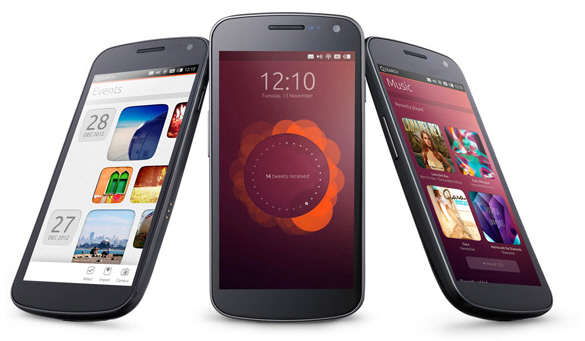
Canonical announces Ubuntu for smartphones
Canonical’s popular Linux distro Ubuntu has been adapted to run on smartphones, replacing Android. The new OS has a distilled interface, and uses the screen edges in place of buttons. According to Canonical the controls only appear when required and "thumb gestures from all four edges of the screen enable users to find content and switch between apps faster than other phones".
Swiping from the left will display Ubuntu's launcher, while swiping from the top will show system indicators, such as Networks, Date and Time, Sound, and Battery. Swiping from the right will take you back, and the bottom edge will give you access to options inside an app.
Building Android from AOSP -- goals, setbacks and achievements
"How hard can it be?" is a question that I have hopelessly asked myself too many times down the road. The answer is almost never "Give me five minutes and I'm done" because for me there's no such thing as an easy task to undertake. Case in point is my latest hobby, if it can be named as such, building Android 4.2 Jelly Bean from the Android Open Source Project. Do you still remember the question?
The idea is to get a working Android 4.2 Jelly Bean-based build with only minor alterations, that I apparently cannot find anywhere else combined in an already available custom distribution. My requirements are fairly simple at first glance, as I only want a center clock, blacked-out Settings menu, to remove a few tiles and add new ones and, maybe, add some Linaro optimizations to the build. Straightforward, right?
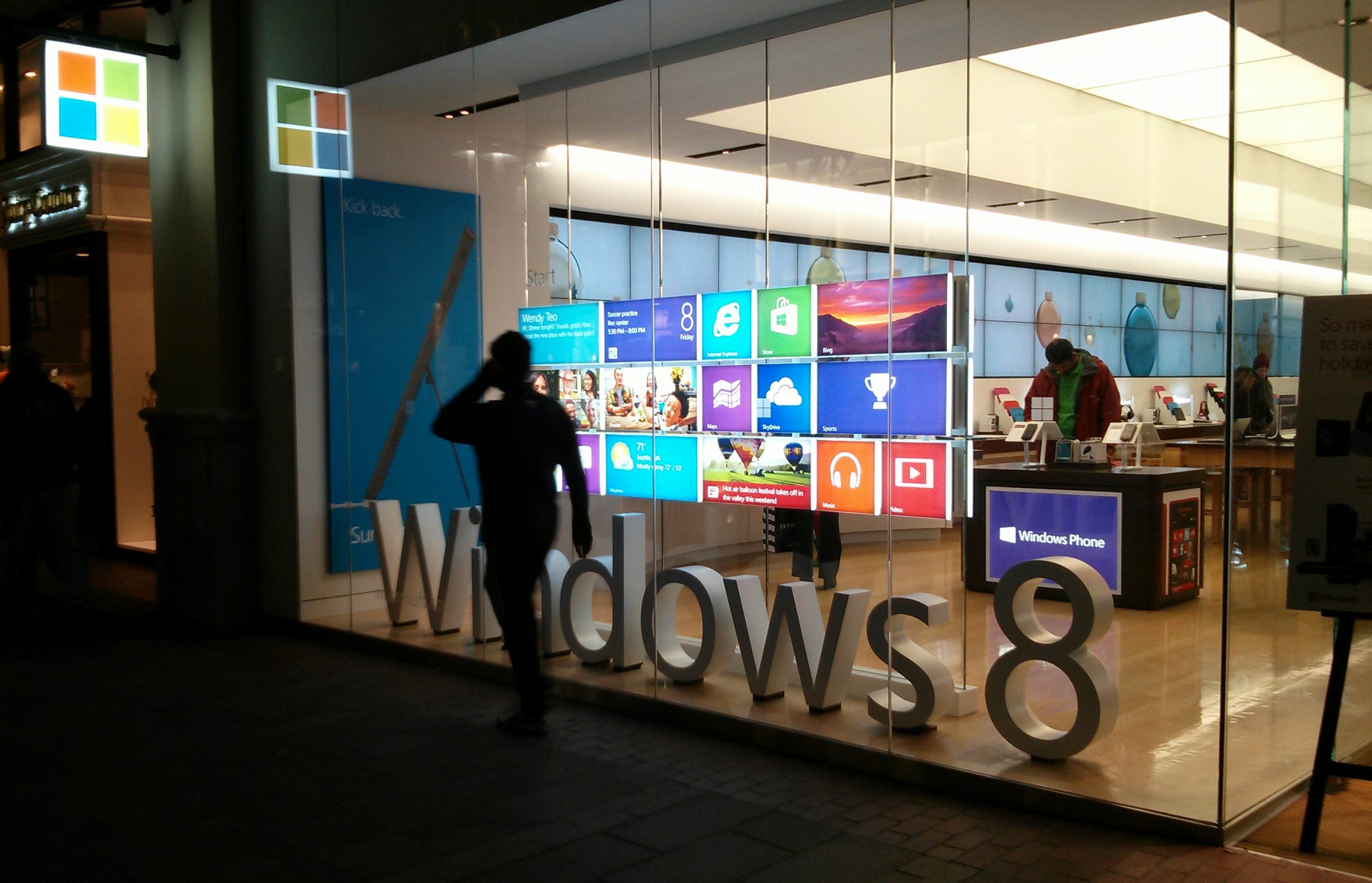
Stupid bloggers misstate Windows 8 market share
Yesterday, Net Applications released usage share data for December, although the number is widely reported today as being market share. It's not. Already, several blogs pulled out Windows 8 and Internet Explorer 10 stats, and their writers and story commenters draw conclusions about the operating system's early adoption. They're wrong to do so, and you'd be wise not to believe them.
NetApps culls its data from browser usage, which often isn't synonymous with operating systems. High usage of one browser can skew the data, which it does for mobile operating systems. For example, the data shows that in December, iOS mobile OS share (on phones and tablets) was 60.56 percent compared to Android's 22.1 percent. But, whoa, the numbers are similar for the Apple and Android browsers -- 60.13 percent and 24.6 percent, respectively. A quick read of NetApps mobile OS share suggests iOS is more than twice Android. That's not the case based on data from Apple, Google and analyst firms like comscore, Gartner, IDC and IHS iSuppli.

Get ready for the Google ToiletSense algorithm
This may seem like a distraction from my theme of Silicon Valley and Hollywood, but please stick with me for a moment as we consider the fate of Blake Krikorian, who is best known for the Slingbox and now seems to be selling his current company, the awkwardly named Id8 Group R2 Studios. I think Krikorian’s career arc and our fascination with it give some insight into the whole tech-vs-Hollywood theme, showing how aimless and confused are some of these big technology companies.
The post I read that got me thinking in this direction came from Kara Swisher at allthingsd.com, which is part of the Wall Street Journal. Krikorian is reportedly selling his home automation startup to Amazon or Apple or Google or maybe Microsoft -- in other words the usual suspects. Amazon may be now out of contention because Krikorian just resigned from the Amazon board. But in any case, Swisher says, they all want Krikorian because "he is considered one of tech’s most savvy execs with regard to video and media distribution". Yeah, right.

Hacktivist group Anonymous to continue through 2013
Over the long weekend I saw McAfee had predicted that the threat from Anonymous would decline in the new year. The group apparently disagrees and has posted a video boasting of its accomplishments in 2012 and stating emphatically: "We are still here".
The two minute and twenty second video, posted to YouTube, lays out a rather lengthy list of past endeavors including attacks on government websites in the United States, Syria and Israel, as well as on groups such as the Motion Picture Association of America and the infamous Westboro Baptist Church.

Repair malware damage with Windows Medkit
While anti-virus packages are fine at removing malware, they’re often less useful at undoing the damage an infection has caused. And so even if you’ve managed to get rid of the initial threat, you might still have problems running Explorer, opening particular files, launching key Windows components, and so on.
Windows Medkit is an interesting collection of tools which promises it can help regain control, fix the Registry and get everything working again. Sounds impressive, especially when you notice that the package comes in the form of a tiny (107KB) download, but can it really deliver? We took the program for a spin.
Oh the irony -- Microsoft kills Live Mesh but SyncToy lives on
Microsoft chose to kill off Live Mesh, its PC-to-PC syncing service, late last year. Of course we knew this was coming when Windows Essentials 2012 was released without the Live Mesh app as a part of the suite, but for some reason, the company waited to hold off making the official announcement until a bit later.
The reason for the move is clear -- Microsoft wants customers to migrate to SkyDrive. Although it's unquestionably a great cloud service, SkyDrive doesn't provide P2P syncing like Live Mesh, instead forcing customers to use the cloud as an intermediary. Sounds fine, but it only comes with 7 GB of free storage, or 25 GB if you were grandfathered in as an early adopter.

Apple products top the list of ‘unwanted’ Christmas gifts
According to UK credit score agency Experian, Apple topped online searches for "returns policy" on Christmas Day, suggesting that the tech firm was responsible for the most unwanted gifts this past holiday season.
James Murray, digital insight manager for Experian Marketing Services, said that the clamor to return the technology giant's products was likely down to buying confusion: "This is probably a case of parents and grandparents confusing the various models of iPads and iPods available, as although an iPad Mini and an iPod Nano might sound similar, they are clearly very different products," he said.
Quickly download entire web galleries with NeoDownloader Lite
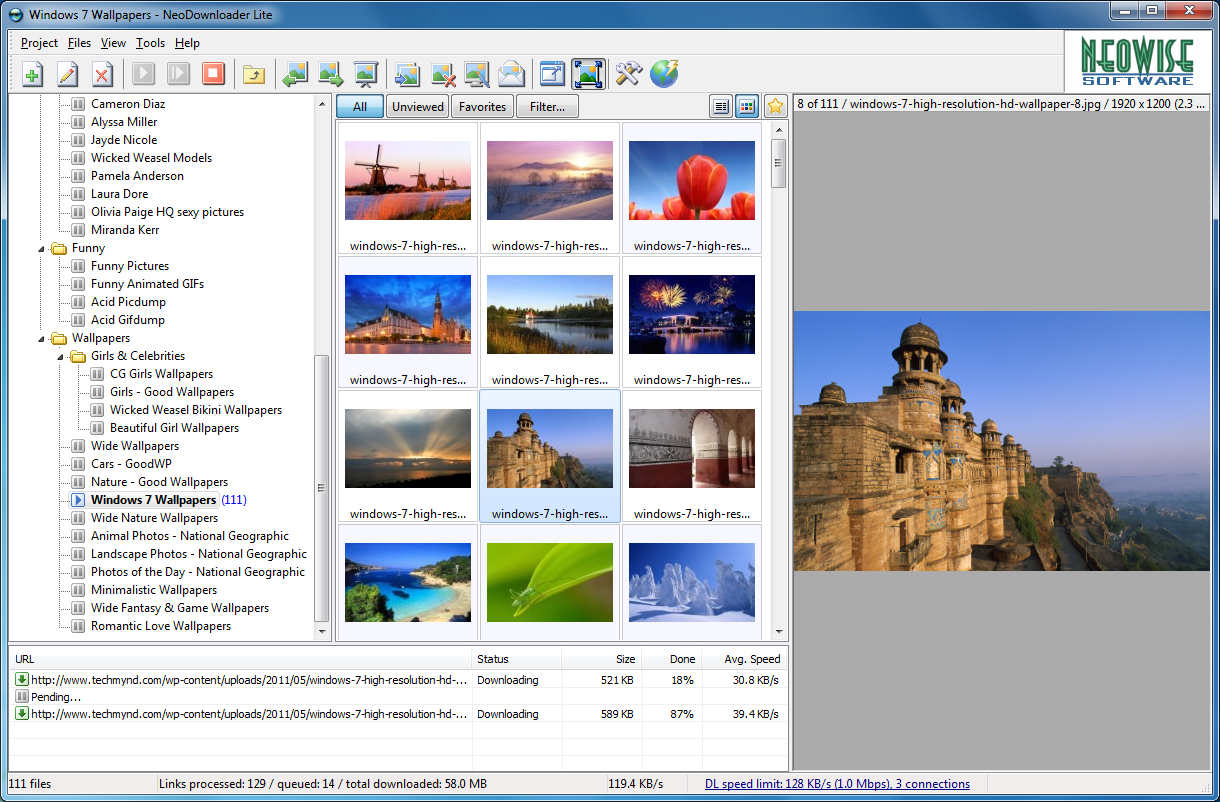
Browsers are fine for displaying content, but not nearly as useful when you want to download it, and this is especially true with web galleries. No matter how simple the collection of images, you’ll still probably have to work them all manually, right-clicking each in turn and trying to figure out the appropriate option ("Save as", "Save link as", whatever it might be).
If you’d prefer an easy life, though, you could forget all the usual hassles and turn to NeoDownloader Lite, instead. While the program has some issues, it’s still a great way to simplify and speed up the process of downloading images from the web.

It's movie time! Grab the popcorn and Media Player Classic-BE
If you’ve ever explored the world of Windows video players then you’ll almost certainly have come across Media Player Classic (compact, easy to use, but a little dated now) and its spin-off Home Cinema project (more powerful, plenty of features).
What you might not have noticed, though, is the latest addition to the family, Media Player Classic-BE (for “Black Edition”, apparently). It’s a recent offshoot from Home Cinema and looks almost exactly the same, but already has one notable addition and plenty of smaller tweaks to enjoy.
My tech life completely changed in 2012
I join colleagues Mihaita Bamburic, Alan Buckingham and Wayne Williams recounting what tech I used in 2012. But unlike them, I made dramatic platform changes, more significant than first using Windows over New Years holiday 1994, buying a reburbished PowerBook in February 1999, adopting Facebook and Twitter in 2006 or purchasing Nexus One in January 2010. Each of these marked major platform changes -- and some not always lasting. Consider this: in early 2012, I owned a 1.8GHz Intel Core i7 MacBook Air, iPhone 4S and iPad 3. I end the year using Chromebook and Android smartphone and tablets.
During the year I moved from OS X and Windows running on Intel to an ARM-and-Chrome OS laptop, and after several failed attempts at adopting tablets (three generations of iPads, really), I embraced not one but two Android slates. I store all my data in the cloud -- local storage is now merely a way station between destinations rather than personal repository. This old dog is learning new tricks, and if I make such dramatic platform changes what does that mean for younger users who are more flexible and not as financially or habitually Apple/Microsoft/Intel committed? Look around, the PC era rapidly evaporates around you and its disappearance will be difficult to ignore in 2013.

Tech companies will conquer Hollywood in 2013
I wrote here nearly a year ago that there would be no more annual lists of predictions and I’m sticking to that, but I want to take the time for a series of columns on what I think will be an important trend in 2013 -- the battle for Hollywood and home entertainment.
The players here, with some of them coming and some of them going, are Amazon and Apple and Cisco and Google and Intel and Microsoft and maybe a few more. The battleground comes down to platforms and content and will, by 2015 at the latest, determine where home entertainment is headed in America and the world for the rest of the century. The winners and losers are not at all clear to me yet, though I have a strong sense of what the battle will be like.