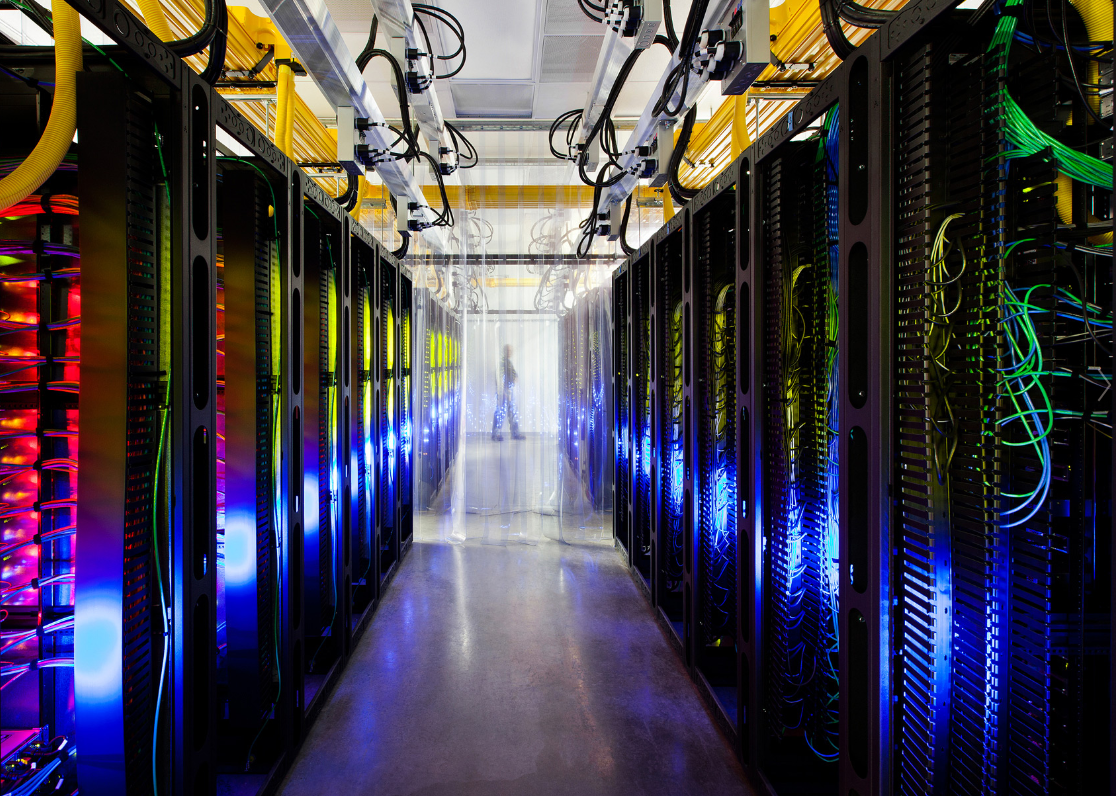
Google opens the door (virtually) to its data centers
Ever wondered what the inside of Google’s high-tech data centers look like? Or fancied taking a stroll around the server floor -- a place where only a select group of the company’s employees are allowed to tread? Well, the good news is now you can, virtually at least.
No, Google hasn’t fully unleashed its Street View trikes inside the data centers (more on that in a second), but it has given photographer Connie Zhou unrestricted access to them. The result is a website filled with striking, and surprisingly colorful high-res images of some of the most advanced server networks on the planet.

LinkedIn delivers new profile page
Changing a successful recipe is often met with skepticism, and judging by the introduction of Timeline in Facebook profiles that holds true as well for social netwoks. The business-oriented LinkedIn decided to launch a revamped Profile page, with improvements touted in three main areas. Will users embrace or reject the change?
Due to its business-oriented nature and purpose to deliver a virtual resume LinkedIn's new Profile page is designed to give its 175 million users an improved tool in marketing their skills and accomplishments. Compared to the current one the redesign gives a more up-to-date look and provides a different experience when viewing people's profiles, by focusing on the activity and connections. The redesign shows insights on companies and people on the network, which LinkedIn says makes easier establishing common ground with and connecting to people outside of one's network.
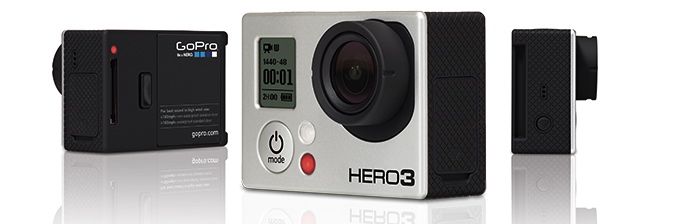
GoPro shrinks next-gen cameras to half previous size, up to 4K resolution
California-based camera company GoPro announced on Wednesday the third generation of its popular ruggedized, wearable video camera, the HD Hero3, and a whole lineup of new hardware for the 2012 holiday season.
GoPro's cameras up until now have been rather boxy, and with the Hero2's accessory to add Wi-Fi connectivity, the little cameras became bulky things indeed. This new generation of cameras, however, is half the size of previous models and has the Wi-Fi capability built in. Functionality has been improved while size has been reduced. It's a great combination for a generational upgrade.
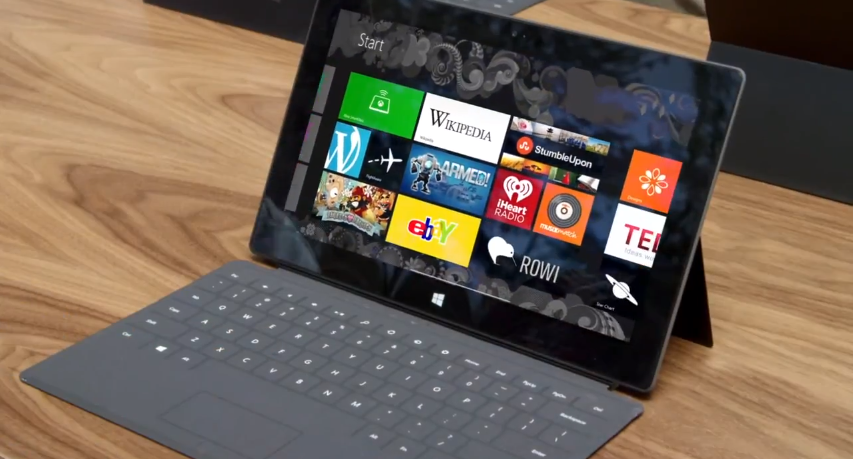
Microsoft Surface RT doesn't compete with iPad
Microsoft revealed pricing for its long awaited Surface RT yesterday. Starting at $499 with 32GB of storage and going up to $699 for the 64GB model with Touch cover included, the devices are priced in about the same price range as Apple's new iPad. It feels natural to compare Microsoft's entry into the tablet market with the leading product that is already there, and many have done so. Joe Wilcox, for instance, believes that Microsoft prices Surface RT to go head to head against Apple.
There is certainly some truth to that, but it may be a different truth than what seems obvious.
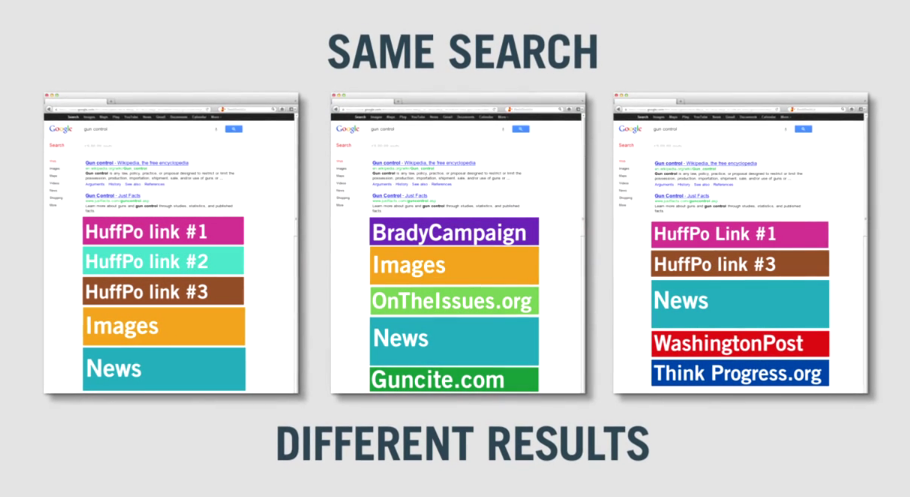
Your search results may vary -- why I switched from Google
Search engine DuckDuckGo released a video a few days ago that shows how Google personalizes results for all signed in and signed out users. It asked 131 people to search for the same Election related topics ("abortion", "gun control", and "Obama") on Google at the same time, and most of them received slightly different results.
That Google personalizes results in this way is hardly new information. The company has been doing it since 2009 and Eli Pariser covered the topic in depth in his 2011 book, The Filter Bubble (a great read). He also gave an enlightening Ted Talk on the subject in which he observes that "the Internet is showing us what it thinks we want to see, but not necessarily what we need to see."
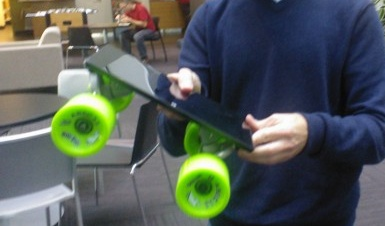
Microsoft Surface can act as a skateboard, sadly can't be pre-ordered as one
Microsoft yesterday opened up pre-ordering for its controversial Surface tablet and before, the President of the Windows and Windows Live Division, Steven Sinofsky decided to literally take it for a spin... as a skateboard.
Even though you and I can't pre-order the Surface as a skateboard, the 10.6-inch tablet was strapped to two pairs of trucks and wheels and turned into one. Why?
Need to restore your PC? Try Windows Post-Install Wizard
The prospect of reinstalling Windows is not one that many people relish, particularly if it is something that needs to be done on a regular basis, to numerous machines, or both. Part of the problem is that getting everything set up how you want it to be is that once Windows itself is up and running, there is still a great deal to do in terms of configuring the operating system to your liking as well as installing the applications you need.
Whether you are someone who frequently wipes the hard drive to start afresh, or you are an admin looking after several computers that need to be refreshed from time to time, Windows Post-Install Wizard is a tool that exists to help make your life easier. The seemingly simple task of cleaning up a system by installing the operating system from scratch can very easily turn into a chore that takes up and entire day -- until your create your own custom installation disc that is.

VirusTotal Scanner offers near-instant malware scans
If you’re worried about the safety of a file on your PC then uploading it to VirusTotal.com is a great way to get some piece of mind. The site will run it through more than 40 of the top antivirus tools -- GData, AVG, Avira, Kaspersky, they’re all here -- and let you know if any of them have raised a red flag.
There could be a lengthy delay while the file is uploaded, of course. But you don’t have to put up with that, because VirusTotal Scanner delivers the same results without having to upload the file at all.

WinZip 17 reaches for the cloud
Connecticut-based WinZip International LLC has updated the Windows version of its world-famous compression tool with a plethora of major new features, including cloud integration and sharing. WinZip 17.0 launches with the ability to zip, manage and share files directly from cloud-based services and social media sites.
Version 17 also adds tools for converting Office documents to PDF, resizing images and adding watermarks, plus revamps its interface in a move designed to make the program more intuitive to use.
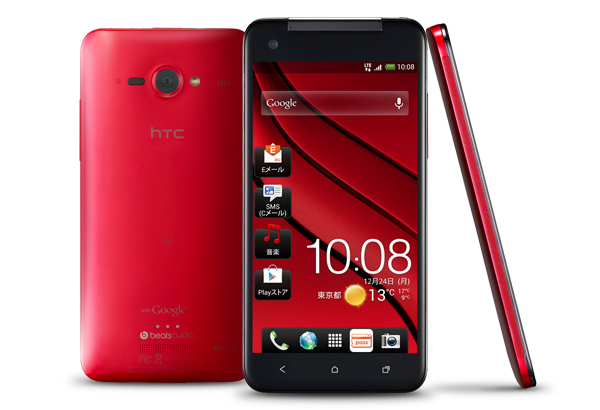
HTC teases the J Butterfly -- 5-inch HD display, quad core, but only in Japan (for now)
HTC recently introduced the One X+, a quad-core powerhouse that took the flagship role in the company's smartphone lineup. Today, the Taiwanese phone maker announced the J butterfly (codename "htl21"), a 5-inch device with a whopping 1080p display.
The HTC J butterfly comes with impressive specifications, the first of which is a 5-inch SuperLCD 3 display with a 1920 x 1080 resolution and a density of 440ppi. Power comes from a 1.5GHz quad-core APQ8064 Qualcomm Snapdragon S4 processor, that is identical to the one found in the LG Optimus G, and 2GB of RAM. On top of the rather modest 16GB of onboard storage, HTC included a microSDHC card slot which is a change of heart from the previously released One S, One X and EVO 4G LTE smartphones that had no expandable storage.
Will you buy Surface RT?
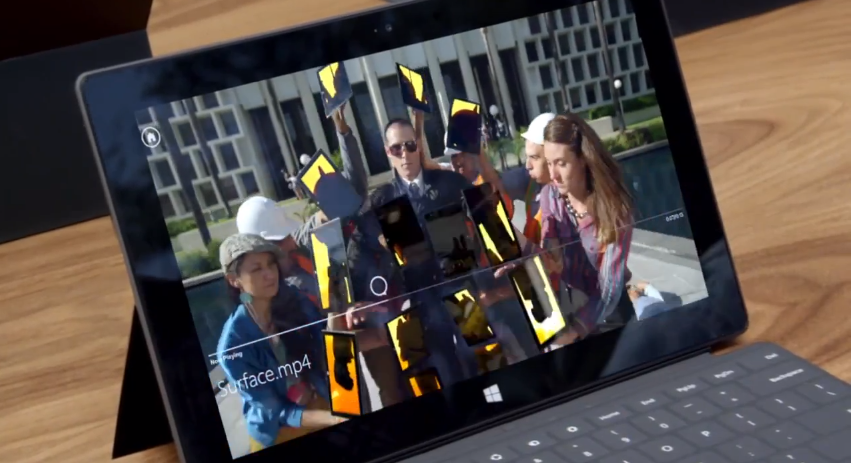
Today, Microsoft started taking pre-orders for Surface RT, one of its two branded tablets. The other, which isn't formerly priced, will cost more and comes with Windows 8 Pro. RT prices range from $499 to $699, on par with the new iPad. Microsoft chose not to sell the tablet against lower-cost Androids, such as Samsung Galaxy Tab 2 10.1, which Amazon has for $359.
Surface marks Microsoft's first real push into the tablet market. True, the company released Windows XP Tablet Edition a decade ago but OEMs shipped hardware. Now Microsoft competes with them, by offering its own device, which is optimized for its software and services and ships free of bloatware.
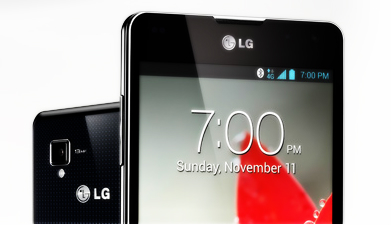
LG Optimus G and Samsung Galaxy Note II coming soon to Sprint
Yesterday my colleague Joe Wilcox wrote "AT&T starts LG Optimus G preorders Oct. 16, sales Nov. 2," but today Sprint announced that the LG-made quad-core power-house is coming its way, just like the controversial Samsung Galaxy Note II "phablet".
Unlike the AT&T variant the LG Optimus G will come with a 13MP camera, instead of the 8MP shooter announced yesterday, and it will be available for pre-order from November 1, with sales to start on November 11. On a two-year contract the Qualcomm-powered smartphone will cost $199. Also announced is the Samsung Galaxy Note II, that will be available for purchase on October 25 for $299.99 with a two-year contract.
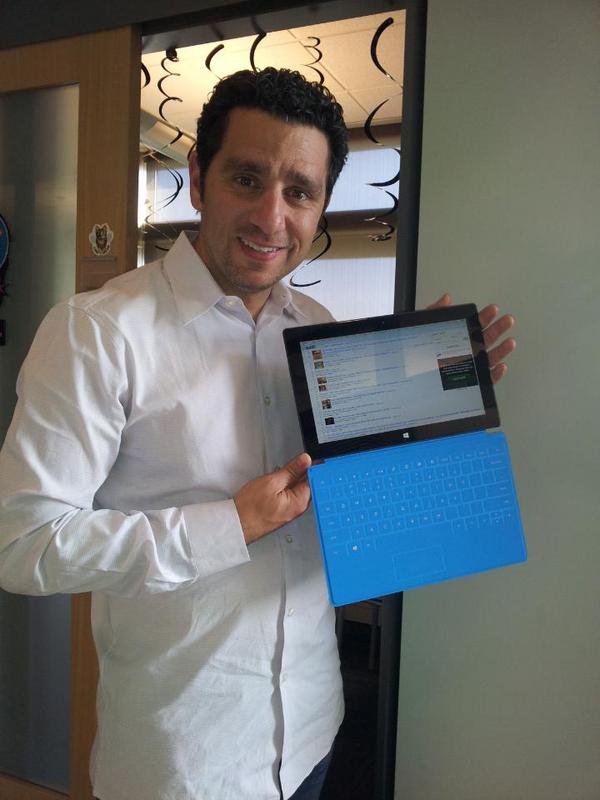
Microsoft's Surface town hall meeting: All the questions, All the answers
Tuesday afternoon, seven members of Microsoft's Surface team, led by General Manager Panos Panay, fielded questions from the public in an "ask me anything" (AMA) forum on popular Web community Reddit.
In the two-hour session on Reddit, the team was hit with several hundred questions about Surface; of which, about 50 were directly addressed. Like the United States Presidential debates, there is a considerable amount of equivocation and evasion involved in this sort of question and answer session, so some questions get glossed over with no mention. This happened quite frequently with two questions in particular: Why is there no NFC (near field communications) and why does it cost as much as it does? Neither was directly answered.

Raspberry Pi adds more RAM, keeps price the same
Raspberry Pi, the massively popular credit-card-sized computer, has had a surprising update -- the Model B version will now come with 512MB of RAM as standard, but will remain priced at $35.
If you’re not familiar with the device, it’s essentially a bare, single-board uncased ARM GNU/Linux computer that you connect to your TV and a keyboard. It’s designed to encourage programming and while aimed at children and students has proved a hit with all age groups, and has been put to some great uses, including sending back photos from the edge of space.
TWRP 2.3.1 is released, fixes bugs
Barely yesterday I wrote "TWRP 2.3 is released, touts speed improvements", but now there is a new version available. This time around, Team Win Recovery Project 2.3.1 focuses on fixing a number of bugs encountered in the previous announced version.
TWRP 2.3.1 brings USB Mass Storage core improvements, better handing of mounting storage during boot for a number of unspecified devices as well as unmount system after boot to prevent errors on .zip install. Other differences include fixing a problem related to the size of images after resetting to default, size errors during backup for "some" devices on recovery and a problem with restoring backups when more than one archive is present.