
Will Windows 8 make Linux the new gaming OS?
Windows 8 gets grief from all angles, including from the gaming industry. Valve’s boss Gabe Newell recently called the forthcoming OS "a catastrophe for everyone in the PC space", and Blizzard's Executive vice president of Game Design, Rob Pardo, tweets that Windows 8 "was not awesome for Blizzard either".
There are a couple of reasons why Gabe Newell, who worked at Microsoft for 13 years before leaving to form Valve, doesn’t like the new operating system. The awkwardness of running games through the interface formerly known as Metro is the most obvious issue, but the integrated Windows Store, which will directly compete with Valve’s distribution service Steam, is a much bigger concern for the company.
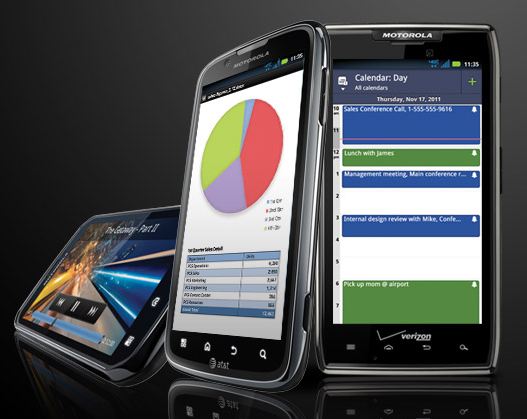
Google slashing-and-burning Motorola Mobility into leaner, smart device-only outfit
Google will be massively scaling back the size of Motorola Mobility, an 8-k form filed with the Securities and Exchange Commission revealed on Monday. This reduction will include laying off approximately 4,000 more employees from Motorola Mobility, closing or consolidating 30 of Motorola's 90 facilities, and limiting the company's portfolio to "more innovative and profitable devices."
The reduction eliminates 20 percent of Motorola Mobility's current staff of 20,000, and will cost Google $275 million in severance packages for terminated employees. It is the second round of layoffs for Motorola Mobility in twelve months. The last round was announced in October, and reduced the staff by 800.

Red Hat's OpenStack preview debuts, supported version due in 2013
Red Hat released a preview of its OpenStack cloud platform, and says a fully supported version will debut in 2013. The move puts the open-source software company in direct competition with Citrix and its CloudStack offering, a move aimed to solidify its position in the cloud computing industry.
The company's software joins at least two other enterprise-grade OpenStack distributions: Piston Computing's Enterprise OpenStack, and another called Nebula, which was created by OpenStack cofounder Chris Kemp. Nebula will debut within the next several months.
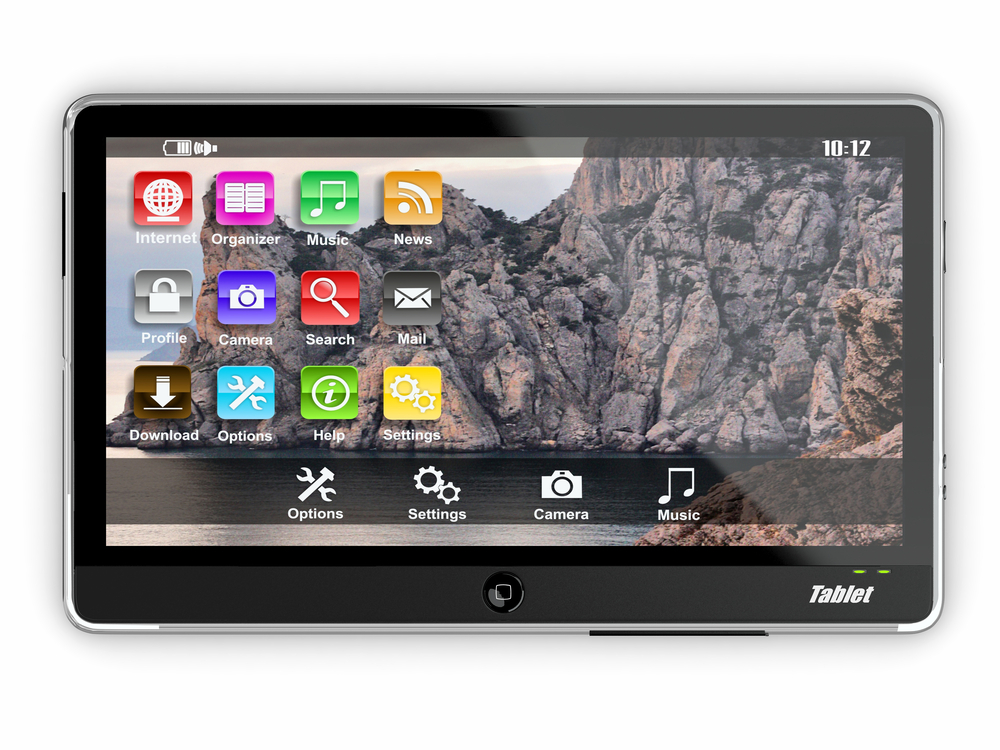
I need a 15-inch tablet to replace my laptop
Some people don’t like tablets, while others defend them. I’ve often wondered why people seem so crazy about them, but that is mostly because what I do requires me to run Windows, and Windows-based tablets (aka slates in the Microsoft Store) are neither popular nor cheap, especially with the hardware configuration that I need.
I say need, not want, because it is mission-critical that I finish the task at hand in a decent amount of time, and to do that requires powerful hardware. But there’s another reason as well, and it involves the size of the display. In one of my previous articles, I wrote that real work can’t be done on a tablet and I gave five reasons as to why it’s (still) true. Today, I’d like to add the sixth reason to that list: Most tablet displays are too small.

If it rains, is your data safe in the cloud?
This is a followup to my recent column about Steve Wozniak’s warning on the perils of cloud computing, especially cloud storage. It might surprise many users to know there are firms that sell cloud storage and do not back it up. They rely on the disk RAID and some redundancy in the cloud to “protect” your data. If something happens to their datacenter, they could probably not recover your data.
Remember MailandNews.com? They did not have a viable business model. They also didn’t back up their servers. One day they had a big crash and relied on the RAID array to recover the data. It took two weeks and still not all of the data was recovered.

Windows 8 will be Microsoft's new cash cow
Many Windows users question why Microsoft seems so fixated on Windows 8's Start screen and prevents them from bypassing it on start. Why not add a switch to the operating system, for instance, in form of a Group Policy or Registry key that determines whether the user wants to boot into the Start screen or the desktop?
To understand Microsoft's reasons, you have to look elsewhere. Valve Software released the Team Fortress 2 for about $20 as a standalone game as part of the company's Orange Box. Valve later added an in-game store in which users could, but did not have to, purchase items. The store turned out to be so successful that the company turned Team Fortress into a free-play game, which increased store earnings to four times the revenue that Valve made initially from selling the game. This changed Valve's business model fundamentally, and upcoming games like Dota 2 will start out as free-to-play right away to repeat the success story.

Add tabs to Windows Explorer
Every new version of Windows sees Microsoft apply a few more tweaks to Windows Explorer, and if you’re like us you’ve probably hoped that tabbed navigation might one day appear on the list. But the reality is usually a disappointment, and Windows is the same old story: we’ve got the ribbon, instead.
If you really want tabs in Explorer, then, it’s probably best to forget about Microsoft and add them yourself. And the free TabExplorer is a quick and easy way to get started.

Spend your vacation with one of these 18 software downloads
The release of Windows 8 draws ever closer and this means that there is a slew of apps being updated to add support it. Paragon Image Backup for Windows 8 is one such program, giving you the chance to backup and restore your data free of charge. Fans of system tweaking and optimization should take a look at Auslogics Disk Defrag 3.5.0.0 and Auslogics BoostSpeed 5.4.0.0, which can be used to ensure the best possible performance from your hard drive as well as giving you a raft of tools to help boost the speed of Windows.
Whether you’re upgrading to Windows 8 or not, you should keep an eye on your internet connection to check how it is being used by different programs, or malware, and this is something that Net Guard 2.0.7.0 enables you to do. This week also saw the release of Windows Essentials 2012, the latest collection of free tool from Microsoft including Live Messenger, Movie Maker, SkyDrive and more.

What does Apple REALLY want from Samsung?
Answer: One-hundred percent of all profits gained from Sammy's smartphones and injunction barring sales of future models. Is that clear enough for you? Because it might not be from the stilted news stories about the Apple-Samsung trial under way here in California. Apple feels entitled to everything. That's how highly the company's top-brass thinks about their intellectual property and how little they do about Samsung's.
Instead of reading about how much Apple demands, blogs and news reports focus on the puny 2.4 percent per phone Samsung asks Apple for so-called essential patents or the extent of copying as told by the fruit-logo company. The story you read everyday about the Apple-Samsung trial is a good yarn, but there's enough urban legend to warrant a Snopes.com entry.

Google wants a slice of Apple’s pie, starts punishing pirate sites
It had to happen eventually. Representatives of the media and entertainment industries have been complaining for years about Google linking to sites that offer copyrighted content, accusing the Internet giant of not doing nearly enough to prevent access to infringing material. The company’s stock response has always been that it only indexes the web, and the results that appear when someone types a query into Google simply reflects the sites that people go to, and other sites link to. It’s a fair argument, although one somewhat undermined by last year’s algorithm update that targeted content farms, and showed the company’s willingness to tweak what sites appear where in its index.
Google does of course remove pages when it receives copyright removal notices to do so. In fact, in an effort to demonstrate just how actively, Google recently expanded its Transparency Report to show how many URLs it removes, from where, and at whose request. The figures are staggering. In the last month alone, Google removed over 4.3 million URLs from its index.

Need a quick-and-easy image viewer? Try ACDSee Free
ACD Systems has announced the release of ACDSee Free, a simple and speedy PC image viewer.
The program supports the most important image formats (BMP, GIF, JPEG, PNG, TGA, TIFF, WBMP, PCX, PIC, WMF, EMF), and really does seem to be fast, loading and displaying just about anything at very high speed.

Anonymous targets Ukraine for Demonoid torrent tracker takedown
This week, the loosely connected online activist and hacking community Anonymous began a new "operation": attacking the Ukrainian government.
In retaliation to Ukraine's take down of popular BitTorrent tracking site Demonoid, Anonymous is seeking "revenge against all criminals responsible" in the country's government.

Apple price matches iPhone, but it's nothing new -- should you wait anyway?
Here come the iPhone price cuts. With the launch of the iPhone 5 likely a little over a month away, retailers are beginning to drop prices on iPhone 4 and iPhone 4S models in stock in order to make way for the new device.
There's a key difference here over previous pricing changes, and that's the adjustments are originating with the carriers first and trickling down to retailers. AT&T and Verizon's pricing on the iPhone 4 and 4S remain at $99 and $199 for the 16GB model: however Sprint has lowered the price of the 4S to $149.99.

Chinese 'kidney for iPad' trial starts
Nine people have gone on trial in the central province of Hunan, China, accused of illegal organ trading and intentional injury after a 17-year old high school student sold one of his kidneys to buy an iPad and iPhone. The teenager, identified in a report by the state-run China Daily as Wang Shangkun from the Anhui province, was allegedly recruited through a chat room by one of the defendants, and paid 22,000 Yuan ($3,456) for the organ, which was removed in an illegal transplant operation by a team from a local hospital. The kidney was sold by the gang behind the trade to an unknown buyer for 150,000 Yuan ($23,566) and a further $10,000 in cash, netting them a profit of around $30,000.
While to Westerners $3,458 seems a shockingly low price to sell a kidney for (especially considering how much the recipient was willing to pay), it’s important to put that figure into context. The average wage paid to workers assembling Apple products at Foxconn is around 2,200 Yuan ($346) a month, so the figure Wang received would have equated to nearly ten months’ salary for someone working at the plant -- a colossal amount of money to a young man still in full-time education.

Legendary fiber optic cable ship burns to a crisp on Skeleton Coast
France Telecom-Orange on Friday announced that an unexplained fire had erupted on its cable ship, The Chamarel, off the Skeleton Coast of Namibia in the Atlantic Ocean. After battling the blaze for several hours, the crew abandoned ship. The vessel was returning from a mission to repair the Sat3/WASC/Safe submarine cable which connects Portugal and Spain to nine West African countries, circles around the southern tip of Africa, and connects to India and Malaysia.
The entire crew of 56 escaped the Chamarel safely, and were recovered by a Namibian fishing vessel and returned to Walvis Bay, Namibia. No injuries were reported, but this is the second incident in a single month where a ship has caught fire in Namibian waters. On August first, a South African Tuna fishing boat caught fire and sank outside of Namibian port city Lüderitz.