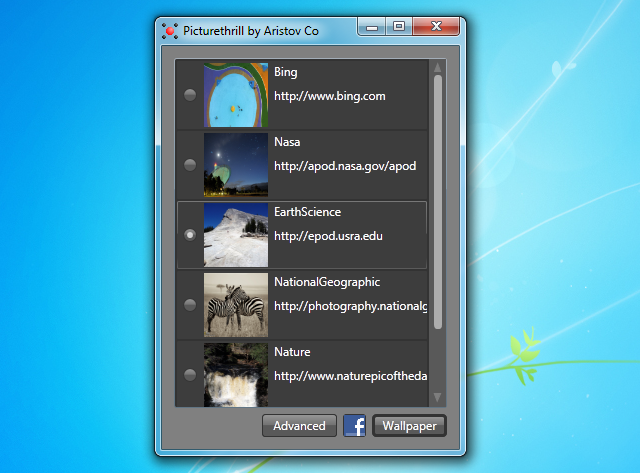
Bored with the standard Windows wallpapers? Try Picturethrill
Picturethrill is the latest tool that promises to give your desktop more zing, and it’s a little different from most of the competition.
This starts with the simple, app-like interface. The program displays the thumbnails of the current image from each of its selected sites -- Bing, Nasa, National Geographic, Nature, Earth Science -- leaving you to choose your preferred source.

Linux fans rejoice: Dell XPS 13 will come with Ubuntu
Dell must have read my story on “What will it take to make Linux popular?”, agreed with Linus Torvalds' initial thoughts, then thought that it might be a good idea to publicly announce “Project Sputnik”, which despite the name doesn’t have anything to do with spacecraft like Dell would want you to believe. (Okay, so the skunkworks project predates my story by six months, but surely official timing can't be a coincidence?)
What Project Sputnik does is bring “an official developer laptop based on the Dell XPS 13 with Ubuntu 12.04 LTS preloaded, available in select geographies”, meaning Linux for the people on the Dell XPS 13 in much simpler words. Dell is taking the project to the next level by officially releasing it this fall. Timing is interesting with Windows 8 launching October 26. Since the laptop comes with Linux, presumably it will cost less than its counterpart running Windows.
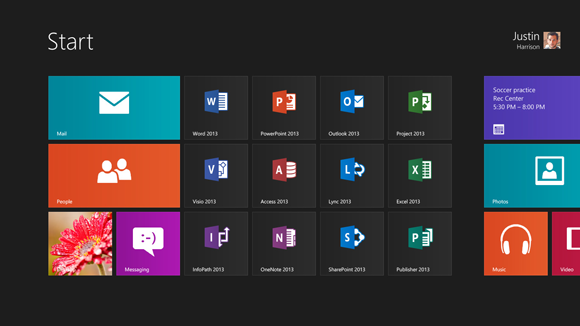
A (p)review of Microsoft Office 2013
Microsoft released the preview version of Office 2013 less than a week ago. This new installment of the productivity suite has many of the same features as its previous versions, 2003, 2007, and 2010: Word, Excel, Access, PowerPoint, and Outlook. But there are other programs as well, and Microsoft has connected the Office Suite to the Azure Cloud.
In this review I’ll discuss the requirements for installation and the installation process. I’ll also discuss the contents of three of the Office 2013 suite programs, Word, Excel and PowerPoint, and how the cloud-based Office 365 may change the way many users work with the suite. I’ll also talk about Windows 8 integration, and wrap up with a discussion about the impact that Office 2013 can have in business enterprises.

36 software downloads you shouldn't miss this week
This has been another action-packed week for software releases, but it is one dominated by one name -- Microsoft Office 2013 Consumer Preview. The latest version of Microsoft’s office suite has received a public preview, meaning that anyone keen to get a glimpse of the Windows 8-friendly, metro-interface suite can do so right now.
Olympic fever is starting to take hold and two new mobile apps BBC Olympics 1.0.0 (UK ONLY) and London 2012: Official Join In App for the Olympic and Paralympic Games 2.0 have been released to help you to keep up to date with the latest news and events, whether you are attending or not.
iOS is more profitable ad platform than Android, but for how long?
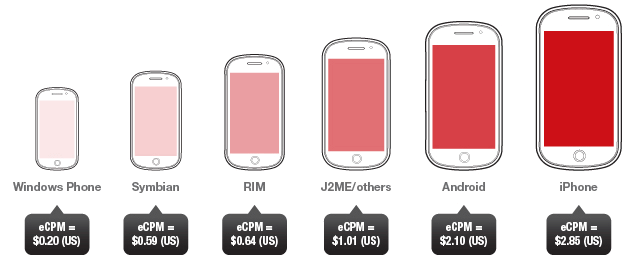
Ad network reports about mobile platforms are a dime a dozen. Many boast about iOS presence and the oodles of eyeballs. Opera has joined in, releasing their first State of Mobile Advertising report, which, for the second quarter of 2012, focuses on mobile advertising revenues. The browser maker puts all the big players -- Android, iOS, BlackBerry, Symbian and Windows Phone -- under the microscope.
Like other ad network reports, Opera's puts iOS at the top of the revenue food chain, with an average eCPM (effective cost per thousand impressions) of $2.85. iOS' main rival, Android, follows, with average eCPM of $2.10. On the tablets, iOS is even more profitable than on the smartphone market, with a $3.96 eCPM.
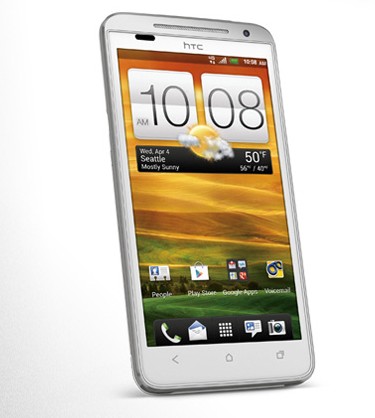
HTC EVO 4G LTE review
With the roll over to LTE from WIMAX, Sprint has taken the path to have Android 4.x on all its new 4G Android devices, the first being the Google flagship Galaxy Nexus. But one of the first third-party LTE Androids is the update to the HTC EVO line. The original HTC EVO 4G became the top-selling launch-day phone on Sprint back in 2010. Minor updates to the line followed, such as the EVO 3D, as well as a Star Wars-branded White R2D2 model. So how does the new HTC EVO 4G LTE, an Ice Cream Sandwich (Android 4.0.3) using HTC Sense 4.0 UI stack up to the family title in 2012?
The EVO 4G LTE is only 0.35 inches thick, compared to the 0.5 inches of its predecessor, with a form factor of 5.3 inches by 2.7 inches. The screen is a sharp 4.7-inch Capacitive Super-LCD 2 -- 312 dots per inch with 720 x 1280 pixel resolution at 24-bit (16.7 million) color. To watch HD video is a joy; its easy and fair to say it is impressively crystal clear.
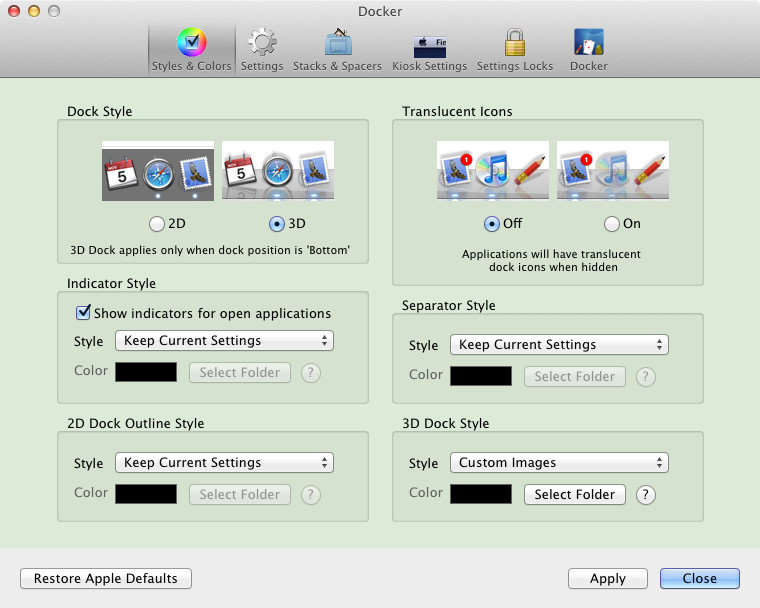
Get the OS X you want with Docker 1.6.7
Apple doesn’t make it easy to change certain parts of your Mac’s user interface, but arm yourself with the right tools and you can make radical changes with the help of third-party tools. And when it comes to customizing or tweaking your dock, you can’t do much better than Scottish donationware tool Docker.
The app simplifies the task of changing the physical appearance of the dock, plus provides all the tweaking options you need for your dock, including those not provided in OS X itself -- all under one roof.
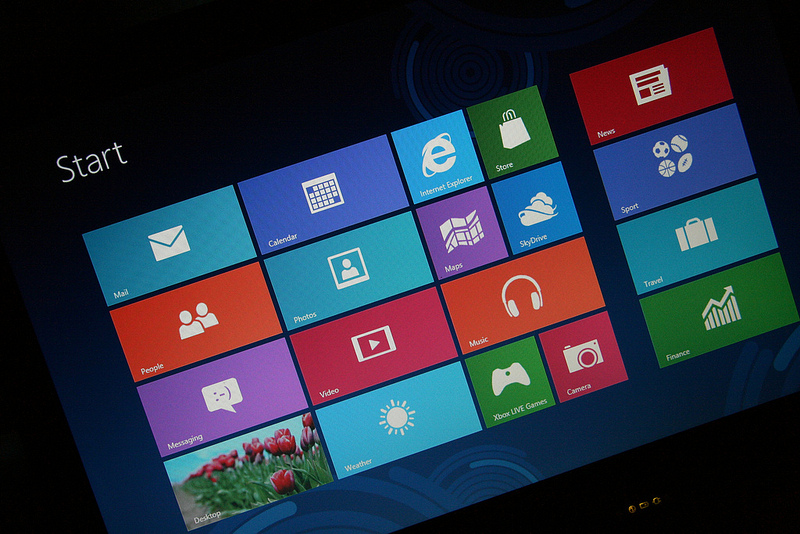
EU trustbusters tire of Microsoft tricks, probe Windows 8
Just days after opening a new Microsoft investigation, European antitrust regulators have broadened the scope. The software giant already faces possible multi-billion dollar sanctions for non-compliance with a 2009 agreement. European Windows users are supposed to get browser choice, but a ballot box mysteriously disappeared when Windows 7 Service Pack 1 released in February 2011. The European Competition Commission has since added Windows 8 to the investigation.
The agreement, which expires at the end of 2014, requires that a browser choice screen must appear in all copies of Windows, including version 8. The browser choice screen allows a dozen alternate third-party browsers to be shown as options for installation besides Internet Explorer -- when starting IE each time, or starting Windows for the first time. Microsoft faces new allegations the browser choice screen is missing from the final version of Windows 8 and Windows RT.
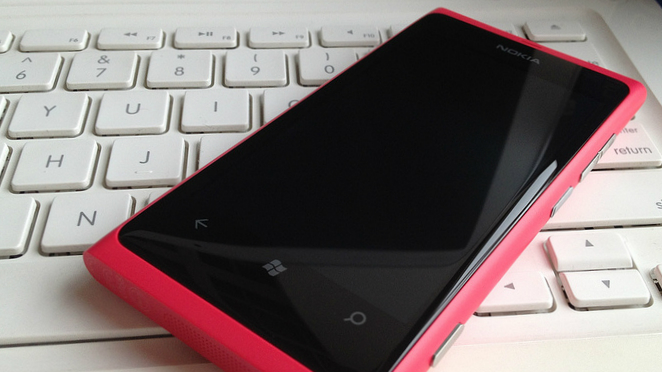
Nokia and Windows Phone are misfits
Some relationships aren't meant to be. That's how I felt about Microsoft and Nokia when they announced their partnership in February 2011. You've seen some of my missives: "Nokia does the Windows Phone death dance" (April), "Windows Phone can't save Nokia" (February) and "Windows Phone transition is killing Nokia" (July 2011), among others. Let's not forget the memorable "Windows Phone 7 Series is a lost cause", from February 2010.
The problem is simple: Microsoft's usage philosophy around Windows Phone is fundamentally flawed and doesn't jive well at all with Nokia's enormous install base. As such, Nokia should never have cut the deal with Microsoft that replaced Symbian with Windows Phone. Symbian was the most widely used mobile operating system in the world when the companies cut the deal -- and in many geographies where Nokia remains market share leader, it still is. Seventeen months ago, new CEO Stephen Elop should have fretted more about holding onto existing customers -- how to move them to new Nokia handsets -- rather than compete with iPhone. The ex-Microsoft president doomed Nokia, instead.
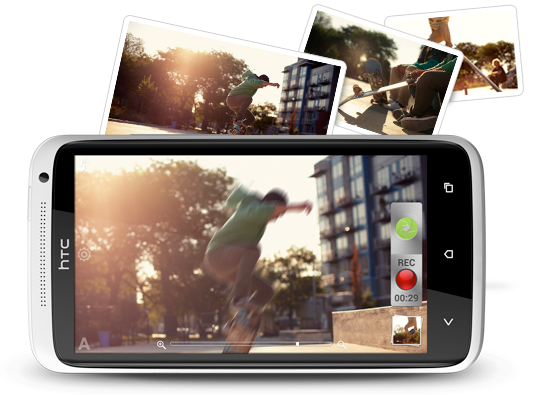
HTC One S, X and XL will get Jelly Bean, but when is anyone's guess
Have you ever wanted the latest and greatest but you couldn’t get it? That is the ongoing problem for Android phone users. Google announces the new version and they wait. And wait and wait. Android 4.1 Jelly Bean released last week, leaving many people like you asking: Will I get it? If so, when?
HTC has an answer to the first question, but not the second -- that is for One series owners.
DirecTV the apparent winner in new deal with Viacom, 10-day blackout ends
A 10-day dispute between Viacom and satellite provider DirecTV ended Friday as the two sides consented to a new long-term agreement that put Viacom channels back on the air.
DirecTV customers lost access to 26 channels on July 10 after the company walked away from negotiations, claiming Viacom wanted a 30-percent increase in carriage rates. While the two sides did not disclose the financial terms of the deal, both Bloomberg and Reuters report that it is worth about $600 million, or a 20 percent increase over current rates.

Well done Microsoft for bringing Office closer to the cloud
One of the areas of this week's Office 2013 launch that received slightly less attention as the updated Office Web Apps. These are the light weight web counterparts of the ‘full fat’ desktop applications, and are Microsoft's answer to Google Docs. Existing users of Skydrive, Office 365, or SharePoint 2010 will be familiar with them.
The apps received various updates, some major and many minor. Most obvious is the Metro look and feel, in line with everything else you have seen of Office 2013. Excel gains the ability to insert forms, PowerPoint sees its rendering engine markedly improved, and OneNote doesn’t seem to get anything other than a lick of paint. All in all its an incremental improvement, and certainly nothing to make happy Google Docs users sit up and take notice.

Twitter fights for its users
Twitter will appeal the ruling of a New York Criminal Court, which ordered the social network to turn over the tweets of Malcolm Harris. He is an Occupy Wall Street protester charged along with several hundred others for allegedly marching onto the Brooklyn Bridge roadway on Oct. 1, 2011. The ruling came last month, after a series of legal back-and-forth actions.
Today, Twitter legal counsel Ben Lee declares that Twitter will fight back: "We're appealing the Harris decision. It doesn't strike the right balance between the rights of users and the interests of law enforcement". The case, and more significantly, the appeal is a loaded gun, pitting free speech against the state's right to prosecute and searing emotions about Occupy's crusade against the so-called 1 percent, whom some will accuse the ruling benefits. Twitter does the right thing, by protecting its users. But considering the statements Judge Matthew Sciarrino made in his ruling, do they have a chance to win the appeal?

BYOD apocalypse deniers suffer from post-PC depression
It’s a form of denial. In my recent post on the Office team dissing Windows 8, I noted how the lack of full touch support in Office 2013 undermines Microsoft’s efforts to break into the Post-PC space. And while I expected some push back from the Redmond choir, I was surprised at how many readers seem to be having a hard time accepting the reality of the Post-PC phenomenon.
Simply put, the PC as a technology driver is dead. Yet some people -- most notably, IT professionals who fear the coming BYOD apocalypse -- are determined to prop-up the corpse, slap some lipstick on those rotting lips and pretend that it’s still 2009.

Google+ wins me over
“Bigger is always better” is an expression we’ve become accustomed to over the years and while counter-intuitive it best describes everything that’s wrong with Facebook. The most popular social networking website is the best example of size losing over quality. Are we really satisfied with our Internet alter-ego living in the largest environment or the better one?
The American Customer Satisfaction Index has revealed rather interesting user satisfaction results on Facebook and Google+. Satisfaction is the word of the day and Facebook users don’t really get it, which is curious because there are more than 900 million of them. The satisfaction index rating decreased from 66 in 2011 to 61 in 2012. That's out of 100 points. Surely CEO Mark Zuckerberg should be concerned. Why? The sun shines brighter on Google+, which ranks 78 its first time on the index, equal to Wikipedia.
People don’t like Facebook, They like their Friends