

PSN is back up, but Sony's servers are still not secure
Reports indicate that Sony still does not have its network fully secure: an exploit is now available allowing users to reset your account password with only an e-mail address and date of birth. With this data now publicly available due to the previous hack of the PlayStation Network, it puts millions of users again at risk.
The issue, first reported by gaming blog Nyleveia late Tuesday, shows how stunningly insecure Sony's servers just may be. Details of the vulnerability were released to the Japanese company before being publicized.

Microsoft helps stop malware, while Apple blows off malware victims
Yes, it looks like real malware has finally come to Macintosh, and Apple is blowing off users who call for support for the problem. But I'm sure Apple is doing it with style, and that's what really matters. The style of the day is unaccommodating.
If you're not already angry about something, read Ed Bott's blog at ZDNet to see how Apple is handling what appears to be the first real outbreak of malware on Apple Macs in the OS X era. An AppleCare support rep tells Ed that a notice from management tells them that "...we're not supposed to help customers remove malware from their computer."
Which Windows 8 version will you buy?
That's a question many customers may ask, if a report from Bloomberg proves to be right: There will be at least five Windows 8 editions -- four for ARM processors. Bloomberg quotes Intel's Renee James, from a presentation given earlier today. It's not exactly Intel's place to be revealing Microsoft Windows versioning plans, which is reason enough to question the claims. But, hey, the duopoly is called Wintel for a reason.
Microsoft has already announced that the next Windows version will support ARM processors. So it's unsurprising that Windows 8 might fork down separate ARM and x86 paths. For the purpose of this story, I'm calling it Windows 8. But Microsoft hasn't announced or seriously hinted at the nomenclature. You can take the name or leave it.
Verizon announces Motorola Droid X2: Dual-core, but not 4G
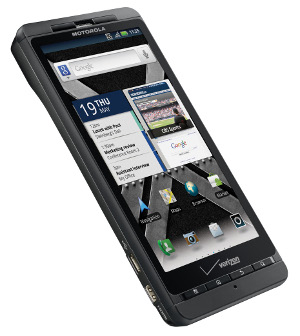
Motorola Mobility and Verizon Wireless on Wednesday unveiled the Motorola Droid X2, the latest flagship Android smartphone under the "Droid" brand and follow up to last year's Droid X.
In most respects, the Droid X (shown above on the left), and the Droid X2 are identical. Their size, weight, RAM and onboard memory, camera, and launch price are exactly the same. However, the Droid X2 has received a moderate improvement in certain important areas.
Microsoft's Software Assurance pressures businesses to buy before they're ready
Third in a Series. A decade has passed since Microsoft introduced "Software Assurance" as part of Licensing 6.0. The company rewards loyal customers by asking them to pay ahead for upgrades -- 29 percent of total desktop software price and 25 percent for server products, annually, for two or three years. Customers must make the decision to add Software Assurance when acquiring a new license. It's a one-shot option, with no assurance what the product will be or when it will be available.
Imagine that you have just purchased a new 2011-model car. You've signed the contract, figured you could afford the monthly payments and are thinking Point B looks a lot better from Point A than it ever did.
Microsoft: IE9 security warnings cut malware threat 95%
Since 2008, Microsoft has included a reputation-based anti-phishing and anti-malware tool in Internet Explorer called SmartScreen Filter. In IE9, the latest version of Microsoft's browser, SmartScreen got a bump in functionality and began to check the reputation of applications as well. Today, the IE9 security team released some interesting data culled from all of SmartScreen's app reputation queries.
According to the team, 1 in 14 programs that are downloaded are later determined to be malware, and in most cases, the malicious software was installed as a result of good old fashioned social engineering.
Sony offers virtual goods as payback for PlayStation Network outage: a worthy refund?
To compensate for the 24-day long outage of the Playstation Network that occurred as a result of a major security compromise, Sony Computer Entertainment is offering PSN users a "welcome back" package of free content.
SCEA is calling it a "customer appreciation program" that is available to all registered PSN users in the US and Canada. For 30 days after the PlayStation Store is restored, users can download and keep two games for either the PS3 or PSP, including: Dead Nation, inFAMOUS, LittleBigPlanet, Super Stardust HD, and Wipeout HD + Fury (PS3) or LittleBigPlanet PSP, ModNation Racers, Pursuit Force, or Killzone Liberation (PSP).
OSForensics gives up your PC's deepest, darkest secrets
Computer forensics packages are normally used by law enforcement officials, governments and big corporations to find out exactly what someone has been doing on a particular PC. But that's only part of what they can do. A good forensics tool can also help you find lost files, recover passwords, detect malware, and carry out all kinds of other interesting low-level system checks.
It's hard to test this for yourself, of course, because most forensics packages are hugely expensive. But OSForensics is a rare exception. As it's new, and in beta, you can try it out for free -- and there are plenty of reasons why you should grab a copy for yourself.
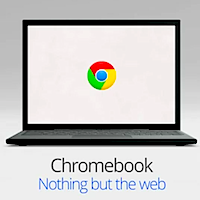
Chrome OS is only a failure to people living in the past
Point-Counterpont. In the second of two posts about Google's cloud-connected operating system and Chromebook, Joe Wilcox argues that PC defenders are an unimaginative lot living in the past. He refutes Larry Seltzer's morning commentary: "I'll take Windows and a good browser over Chrome OS."
I'll be the first to admit that laptops running Chrome OS aren't for everyone. But they're for many more people than my colleague Larry Seltzer suggests. He argues that a Google OS-powered notebook is "defined not by what it can do but by what it does not do; there's nothing that a Chromebook can do that a Windows notebook running Chrome browser cannot." The same reasoning could easily apply to smartphones, tablets, televisions and other high-tech devices running an operating system and web browser. Yet consumers and businesses use these devices in droves. Context often defines what's good enough, and that's missing from most Chrome OS criticisms.
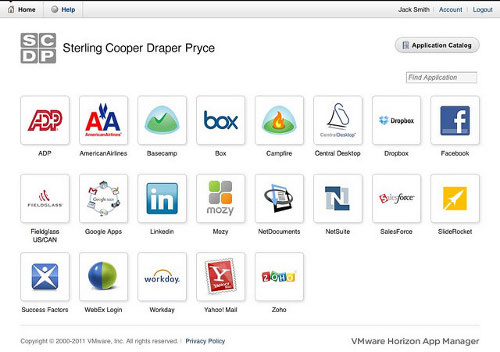
VMware unveils Web app management service for Google apps, Salesforce, more
VMware on Tuesday unveiled Horizon App Manager, an IT solution for provisioning and managing public and private cloud-based services.
At TechEd 2011 in Atlanta, Microsoft put a great deal of emphasis on the accelerating adoption of cloud-based SaaS solutions among corporations who want the ability to deliver and run applications on the widest array of hardware possible. VMware's Horizon App Manager looks to tackle the control, visibility, and compliance aspect of these services.
I'll take Windows and a good browser over Chrome OS
It's point-counterpoint time. In the first of two posts about Chrome OS and Chromebooks, Larry Seltzer argues that Google and its partners are putting "old win in new bottles" -- that Google's cloud-based OS and laptop concept isn't defined by what it can do but by what it can't. Joe Wilcox responds with "Chrome OS is only a failure to people living in the past."
The web as a platform is a really old idea, by tech standards. You really began to hear people talk about it seriously 15 years ago, although of course the tools were primitive then. It was no later than 1998 when I began to see products to implement this, including client systems that were "web-only." I recall terminals from the likes of Neoware and Wyse that were really Linux boxes with a browser user interface as the shell. The Java PC from Sun and IBM was a similar idea in that the client was dumb and manageable and all the software resided on the servers, although it used mainly Java apps. Yes, the web has changed and improved a whole lot since then, but so have client systems and the management of them. This is why the Chromebook is old wine in new bottles.

The Qik and the dead
Can it only be a week ago that Microsoft announced an agreement to buy Skype for a stunning $8.5 billion? The investment group selling Skype will make more than $5 billion on its September 2009 investment -- pay off that is sure to send venture capitalist vultures circling around the craziest Silicon Valley startups. But there's a cautionary tale -- a troubling backstory: The fate of Qik.
It's a far too common story, and Microsoft has been there before: Somebody buys a tech company that recently acquired a smaller one, which gets lost in the acquisition. Skype bought Qik in January for around $100 million. Qik's fate is perhaps the great uncertainty in the Skype acquisition, and none of the companies involved will say anything during the quiet period between regulatory approval and the deal closing.

Software Assurance: How Microsoft gambles with your money
Second in a series. Microsoft makes no assurance that Software Assurance customers will get access to new products, even though they pay 29 percent of the full desktop software price, annually, over a two- or three-year period. It's 25 percent for server software. As I explained earlier today, Licensing 6.0, which Microsoft debuted 10 years ago this month, commits seven deadly sins. I present here the first of seven.
Win, Lose or Draw

Easily customize the Windows 7 startup screen
Customizing the Windows boot screen is something that Microsoft has never made easy. The fact that the images involved are hardcoded into system files is enough to put off all but the most seasoned of tweakers. Windows 7 Boot Updater is a free tool, currently in the early stages of beta, that can be used to customize the animation and text that are displayed during Windows' boot process.
The utility can be used in a few different ways, with the most basic options making it possible to simply change the default text from 'Starting Windows' and '© Microsoft Corporation' to anything of your choosing. You can also adjust the font size, color and position as well as choosing a background color other than the black default.

File Governor takes charge of pesky locked files
You've found a stray file you no longer need, and tried to delete it, only to see an error message like "Cannot delete file: Access is denied," or "The file is in use by another program or user." Annoying, isn't it? Especially if you can't figure out exactly which application might be holding on to the file.
Don't give up just yet, though -- the answer may be closer than you think. Especially if you've a copy of the (newly freeware) File Governor to hand.