

Last of IPv4 addresses assigned as focus turns to IPv6
The last IPv4 addresses have been allocated, highlighting the need for companies and organizations to move to a new system amid the ever increasing number of net-connected devices. The Internet Assigned Numbers Authority (IANA) made the announcement at an event in Miami on Thursday.
Each of the five regional Internet registries has been allocated a single block of around 16 million addresses. While true exhaustion would be hard to gauge -- a small number of IP addresses will be held for several years for the transition -- the rate at which the different registrars will burn through their allocations will likely vary.
Diskeeper launches Emergency Undelete as standalone application
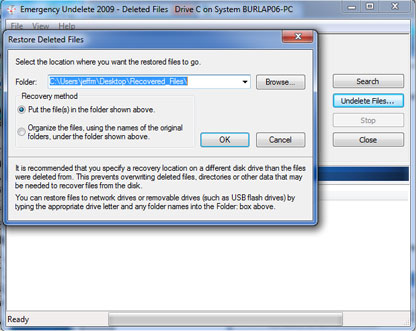
California software company Diskeeper today announced that its Emergency Undelete is now a standalone product, independent from the Undelete 2009 software suite where it originated.
Diskeeper's Undelete 2009 is available in two editions, Professional for $59.95, and Server for $499.95. But for users who don't need full-scale disk recovery software and just want to protect themselves from accidentally deleting important files, Diskeeper's Emergency Undelete is available for $19.95 today.
Leaks suggest MeeGo device from Nokia and Intel coming soon
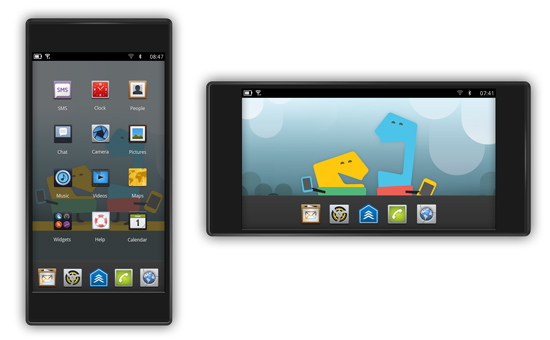
Nokia, a company that last made news for cancelling its X7 smartphone's U.S. launch, has an opportunity to make some positive headlines at GSMA's Mobile World Congress in two weeks. According to a report in The Nokia Blog, an event at MWC called Intel AppUp Application Lab will showcase the first hardware running the MeeGo mobile operating system.
Though the registration form for the event does not expressly mention that MeeGo will be shown running on dedicated hardware, but the MeeGo team had a workable version of MeeGo for tablets at the same time as it released the very first version of MeeGo for handsets, and hardware manufacturers Asus and Acer have pledged support for the OS. Recently-leaked information about a prototype Nokia tablet has led some to believe there may be a device ready to show off for MWC.
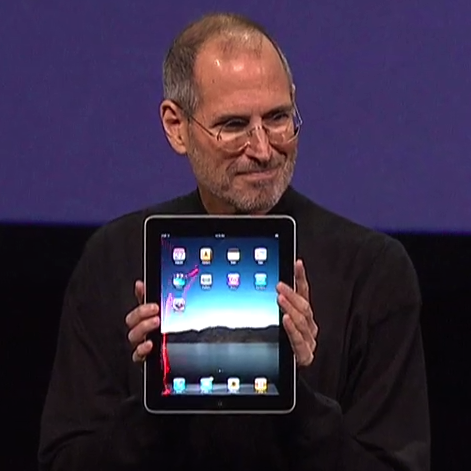
iPad is a devil's deal for publishers
Apple's approach to magazine and newspaper subscriptions and third-party e-book sales stink of the kind of practices that got Microsoft into trouble with trustbusters on two continents during the late 1990s and early 2000s. A year ago, publishers embraced iPad as the savior of their industry. Now iPad looks like a devil's deal instead.
Trouble started three days ago, when Sony said that Apple rejected its Reader software from the App Store in a policy change. Apple responded that there is no policy change. Oh? Well, if there is no overt policy change, it is effectively one of enforcement. Either way, the demands Apple is placing on publishers is too much, and arguably being made from a monopoly position. Essentially, the company wants sales to go through the App Store, which would compel the likes of Amazon and Sony to sell e-books indirectly through Apple and would prohibit magazine and newspaper publishers from offering existing subscribers the benefits of iPad editions without paying more.

Verizon to slow wireless bandwidth hogs, iPhone 4 sales strong
Amid what it called "unprecedented" demand for the iPhone as pre-orders began Thursday morning, Verizon is now quietly taking measures to curb those that may put a strain on its data network. Effective immediately, those who fall in the top 5% of data users may find their throughput speeds reduced.
The change in policy could affect around 1.1 million customers: Verizon counts about 21 million smart phone users. Those throttled would find their speeds reduced for the remainder of the current cycle, as well as the next full billing cycle, a document posted to the Verizon website reads.
Apple's modern success story began with four investments made 10 years ago
Apple executive briefing at first Apple retail store, May 2001.
Ten years ago -- that's right, 2001 -- Apple made four investments that bore fruit in a 21st-century success story. Everything that came afterwards, even iPad and iPhone, traces back to what I call the "2001 Four."

Search wars: Microsoft outdoes Google's copying claim by alleging fraud
Uh-oh, the plot thickens in the war of words between Google and Microsoft over pilfered search queries. No less than Yusuf Mehdi, senior vice president of Microsoft's Online Services Division, has piped up a fervent denial. You know what, emotionally, I want to believe him. Mehdi is one of the few at Microsoft I respect, and he doesn't get enough respect inside the company.
He blogged this afternoon: "We do not copy results from any of our competitors. Period. Full stop. We have some of the best minds in the world at work on search quality and relevance, and for a competitor to accuse any one of these people of such activity is just insulting." Well, I'm glad that's cleared up, or is it?

A look at Firefox 4 beta 4 for Android
Mozilla on Wednesday released the fourth beta version of Firefox 4 for Android and Maemo mobile operating systems. The update fixes some compatibility and performance issues, and attempts to provide an overall faster browsing experience.
In the Mozilla Blog today, the team wrote "Our recent tests on JavaScript benchmarks show Firefox 4 Beta is faster than the stock Android browser; roughly three times faster on Kraken, about twice as fast on SunSpider and slightly faster on V8. Everything from start-up time and page load time to responsiveness and panning and zooming are snappy in this release. Other advancements in this release include increasing stability, reducing installation memory usage, improving readability with zooming, and fixing some keyboard issues."

Internet and cell service restored in Egypt, reports indicate
Internet access started to return across Egypt on Wednesday, nearly one week after the government cut access over increasing civil unrest in the country. By midday local time, many websites were once again accessible within the country according to local ISPs.
Facebook and Twitter were once again accessible, which are said to play a key role in helping organize anti-government protests. It is not exactly clear why the government decided to restore Internet service, although it may be part of a wider effort to restore some sense of stability to daily life in Egypt following President Hosni Mubarak's statement that he would step down in September.

Defraggler 2.02 improves Windows defragmentation
Piriform Software has released a new monthly build of its free defragging tool. Defraggler 2.02 includes a number of enhancements to increase performance, such as improvements to the speed and accuracy of the program's search algorithm, and a redesigned NTFS process for optimising both performance and memory.
Defraggler is a fully functional defragmentation tool for Windows users that has evolved from a program that originally defragmented selected files and folders only. Version 2, which was released late last year, featured a new tool for defragging system files at boot time along with a redesigned interface.

Google shows off the graphical power of Android 3.0 Honeycomb
At a special event in Mountain View, California Wednesday, search leader Google gave the first in-depth look at "Honeycomb," the tablet-specific version of the Android operating system. This is the biggest overhaul the platform has gotten since it debuted in 2008.
The arrival of Honeycomb is important because it means the Android-based tablets that were announced at the International Consumer Electronics Show in January can finally be shown off in full working order.

What 'The Daily' means to you
At Noon ET today, News Corp. launched its original iPad newspaper The Daily. During an event that started an hour earlier, News Corp. president Rupert Murdoch said the target audience is the 50 million American users expected to have purchased iPads by end of this year.
The Daily means nothing to you if you don't live in the United States, don't own an iPad or don't plan to buy Apple's tablet. For US iPad users, The Daily builds on some other innovative publications already available for iPad, such as Virgin's Project or Wired. From a user experience perspective, what really differentiates The Daily, immediately anyway, is the subscription model -- "14 cents a day," Murdoch says. Right now, iPad publications like The New Yorker and Wired are only available on one-off bases, and they cost lots more.

News Corp's digital newspaper The Daily launches for iPad
In a move that had been widely expected for months, News Corp unveiled its new news effort called "The Daily." The currently iPad-exclusive app would provide a much needed bridge between the declining state of print media and the rising fortunes of online news, the company hopes. The first edition released today at 12pm through the app store.
The Daily also signals an important change in how Apple handles subscriptions: users will be able to do so within an app, and be automatically billed if they request to. Previously, subscriptions were hindered by the cumbersome process of having to manually renew through the App Store itself.
Government picks another 95 MHz of wireless spectrum for broadband use
This week, the National Telecommunications and Information Administration (NTIA) announced that it will analyze the 1755-1850 MHz band for commercial broadband licensing. This would be part of the 500 MHz of additional spectrum planned to be re-claimed over the next ten years for mobile broadband, as detailed in the National Broadband Plan.
"NTIA is conducting this evaluation as directed by President Obama to reach his goal of nearly doubling the amount of commercial spectrum available over the next decade, an initiative that will spur investment, economic growth, and job creation while supporting the growing demand by consumers and businesses for wireless broadband services. We look forward to our continued work with the FCC and other federal agencies as we work to free up additional spectrum while protecting vital government spectrum uses," said Assistant Secretary of Commerce for Communications and Information and NTIA Administrator Lawrence E. Strickling on Monday.

There's nothing unusual about Microsoft reverse engineering Google search results to improve Bing, but is it right?
When Microsoft announced its July 2009 search deal with Yahoo, and even before, Steve Ballmer said the increased scale would help improve the quality of Bing search results. Perhaps Microsoft's CEO was wrong, or Yahoo search didn't give enough scale. Bing started serving up Yahoo search results late last year. But Bing also is serving up Google results, as was widely reported yesterday. How desperate is that -- or is it, gasp, clever?
To briefly, recap: Yesterday morning, at Search Engine Land, Danny Sullivan reported that "Bing has been watching what people search for on Google, the sites they select from Google's results, then uses that information to improve Bing's own search listings. Bing doesn't deny this." They say imitation is the greatest form of flattery, but c`mon, what's right about this and wrong with the math behind Microsoft's search algorithm?