
Tech companies will conquer Hollywood in 2013
I wrote here nearly a year ago that there would be no more annual lists of predictions and I’m sticking to that, but I want to take the time for a series of columns on what I think will be an important trend in 2013 -- the battle for Hollywood and home entertainment.
The players here, with some of them coming and some of them going, are Amazon and Apple and Cisco and Google and Intel and Microsoft and maybe a few more. The battleground comes down to platforms and content and will, by 2015 at the latest, determine where home entertainment is headed in America and the world for the rest of the century. The winners and losers are not at all clear to me yet, though I have a strong sense of what the battle will be like.

My New Year’s tech resolutions
Some years I make resolutions, others I don’t. The ones I make are usually the same -- lose weight and get fitter (something I finally achieved this year thanks to the Zombies, Run app), get that novel finished and land a book deal (another tick in the 2012 "done" box), and cut back on the amount of caffeine I consume (well, you can’t win them all).
For 2013 I thought I’d make a short list of tech-related resolutions, things I genuinely plan to do or achieve, and share them with you. So, in no particular order, here they are:
Best Windows 8 apps this week
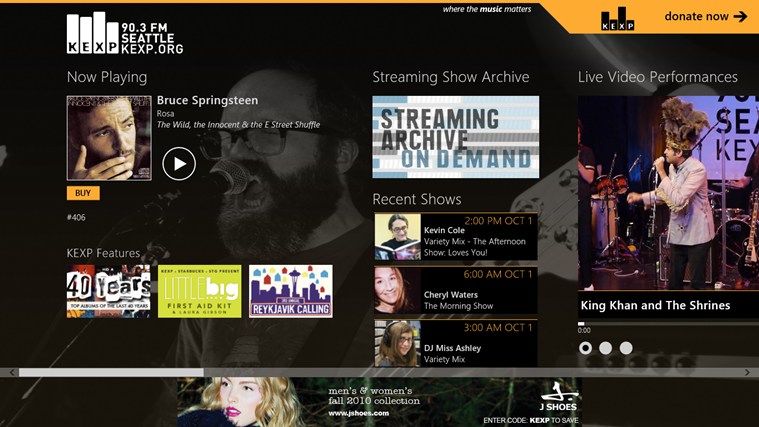
Ninth in a series. The world did not end last week, so here we are with this weeks installment of our weekly look at the greatest Windows 8 apps that got released or updated this week.
The store recently crossed the 35,000 apps mark worldwide according to MetroStore Scanner, and while you won't find that many apps in your local store -- the US app store has 22,876 currently -- it is remarkable after two months of release; 18,618 of those apps in the US store are free to download and use, while 4,249 are paid apps. That is a ratio of more than four to one, and while some free apps may include advertisement or in-game purchase options, it's still a healthy ratio for the store.
10 must-have apps for your new Android device
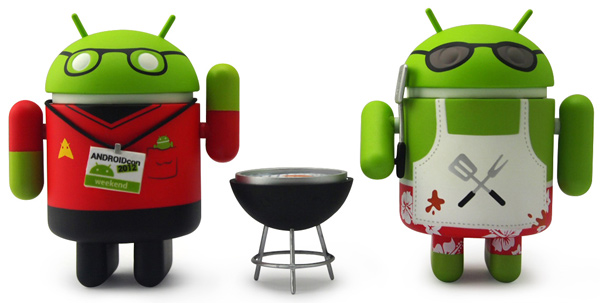
Yesterday my colleague Wayne Williams posted hist list of must-have iPad apps. Of course I did not want Android fans to be left out, so I sat down and thought about the apps I use most on my Galaxy Nexus. This was a tough decision because there are many. Of course, it is also purely driven by personal opinion and tastes, but many of these types of lists are.
So, if you found a new phone or tablet under your tree on December 25th and you are wondering what you should install then here is a top-10 list of my personal recommendations.
[Alan] The tech I used most in 2012
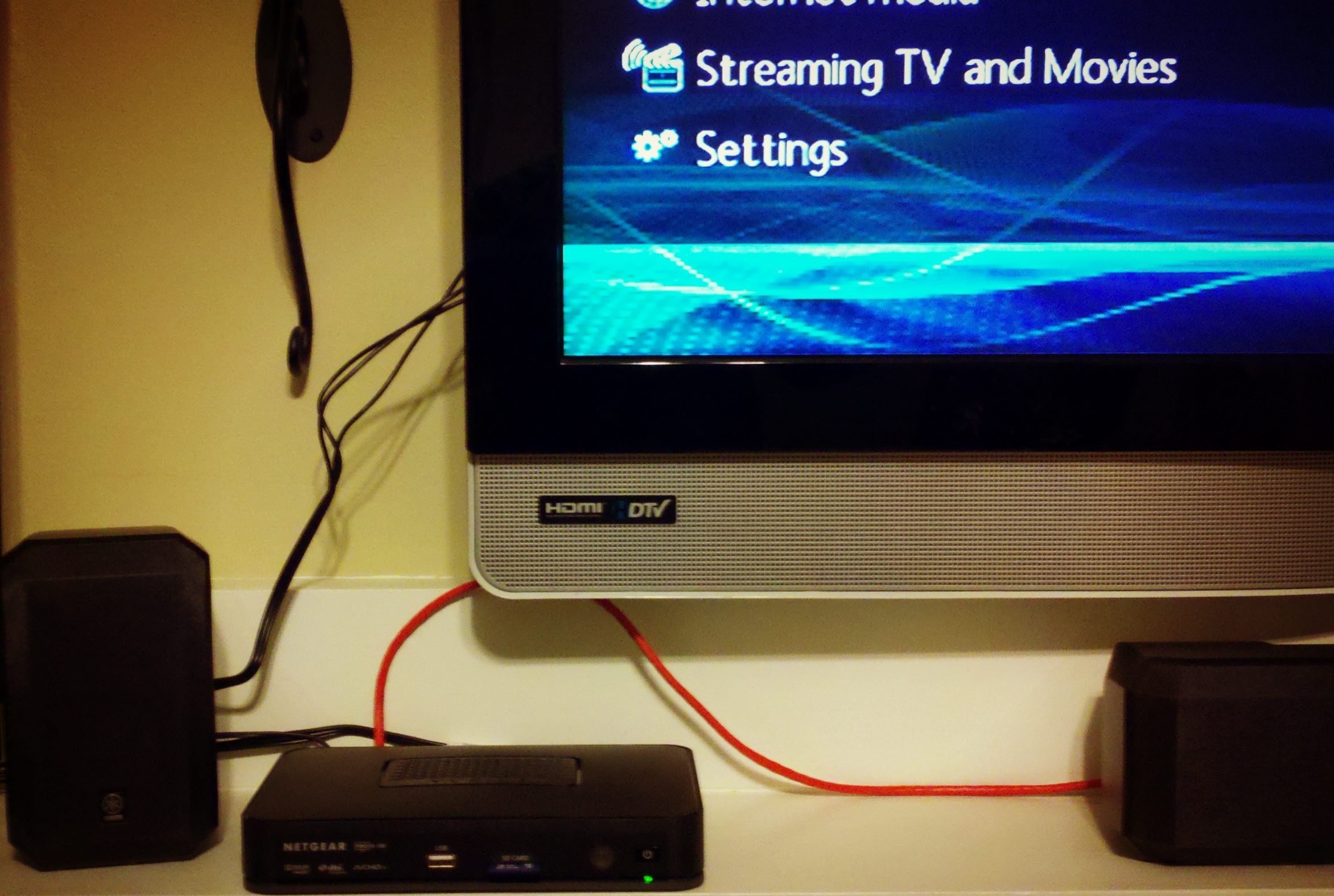
The year has almost passed and that makes it a great time for reflection. Of course, I have thought most about my family -- what we did in 2012 and our plans for 2013. I have thought of household repairs and projects planned for the coming year, goals I would like to attain, but I also considered what technology I used the most and the changes I made.
My colleagues and I plan personal tech retrospectives. I'm first up.
Amazon boasts big holiday shopping sales
Amazon, the internet-based retailing monster, has posted its numbers for this recently passed holiday shopping season. While the company may have disrupted a few Christmas Eves by taking out Netflix when customers were ready to watch that special holiday movie, it still seems to have come out big on the retail side of things.
Of course, like any company, Amazon toots its own horn here, but still, the company must produce real numbers, even if it portrays them in advantageous ways.

Google announces free Voice calls to continue through 2013
Google released its Voice feature back in 2010 and made the service free for the first year, but has continued to extend that offer each year since then. Google Voice allows Gmail customers to make phone calls from within their account. Not only does this provide free long-distance, but it also provides some added convenience.
Now the search giant has announced that, once again, it will extend the free service for yet another year. In a very brief post from product manager Mayur Kamat, the company states that: "Many of you call phones from Gmail to easily connect with friends and family. If you're in the US and Canada, you'll continue to be able to make free domestic calls through 2013. Plus, in most countries, you can still call the rest of the world from Gmail at insanely low rates".

Meme of the year: Grumpy Cat
[portfolio_slideshow id=120704]
Psy's Gangnam Style may be the most popular YouTube video of all time, with 1.05 billion views, but there are other measures of popularity that say much about other things. In the old days of comedy, being mocked by talk show hosts like Conan O`Brien is one example. But in the social era, where anyone can be a comedian and the hive mind collectively produces one, memes rule. One clearly stands above all others, at least during second half of 2012: Grumpy Cat.
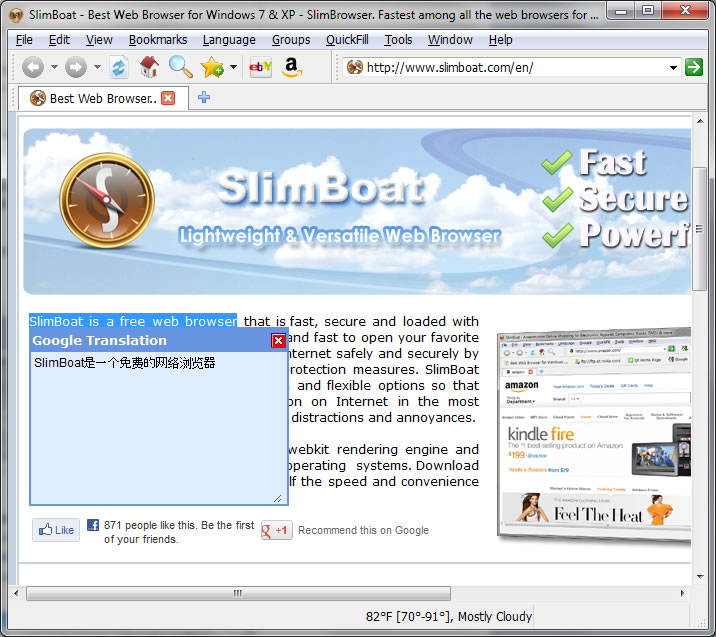
Tired of the same old browser? Try SlimBoat
If you’re tired of the big-name web browsers, then there are plenty of alternatives around. Most aren’t particularly inspiring, but there are a few which try to create something new, and SlimBoat (a WebKit-based tool from the people who brought you SlimBrowser) is an especially interesting example.
That’s not to say the program offers anything particularly revolutionary, of course -- there’s no major new browsing metaphor here, no new way of working (in fact it’s essentially the same tabbed interface as offered by everybody else). Instead SlimBoat tries to win you over with its sheer weight of functionality, by simply providing more features out-of-the-box than anyone else.

10 predictions how cloud computing will transform traditional IT in 2013
Cloud computing -- the new business model for provisioning and consuming information technology -- is enabling new computing capabilities and driving process efficiencies for both businesses and government. But it’s also disrupting the entire IT industry to its core. Although the current hype around cloud computing is around expected cost savings, its true value is in greatly improving business or mission capabilities without a commensurate increase in resources (time, people or money).
Combining off-the-shelf IT components with highly automated controls is what fundamentally enables cloud computing. This combination is also what’s driving the economic model that makes this new technology force so disruptive to the status quo.

Dropbox preview release available for Android, delivers opt-in for experimental builds
For early adopters that prefer to live on the bleeding edge of technology, popular cloud storage service Dropbox unveiled a new preview release. The most noteworthy feature for keen beta users is the ability to receive updates to future early and final releases.
The current preview build also introduces the option to share multiple pictures at once. The functionality is enabled by a long tap on a photo and selecting the remaining ones afterwards. In a similar manner users can also organize pictures into albums, the latter of which can also be shared, and delete multiple photos.

Microsoft makes Windows Azure even better
On Friday, Microsoft unveiled a host of new features for the company's cloud platform, Windows Azure. The latest update beefs up the software corporation's offering by expanding the availability of Windows Azure Store into more regions as well as adding support for Mobile Services in Northern Europe.
Microsoft states that the company also plans to extend support for Mobile Services to "all Windows Azure regions world-wide", but did not provide any specific details as to when that will happen. The Redmond, Wash.-based corporation touts a number of other changes in the last Windows Azure update to Mobile Services, Web Sites, Media Services, SQL databases, Virtual Network improvements as well as Subscription Filtering support.

Best Windows 8 apps this week (Doomsday Edition)
Eighth in a series. Since the world is going down today anyway there is not really much need for today's article and while I thought for a moment about taking the day off, I'd like the idea of leaving the world with work done. So, here it is, the eighth part of the best Windows 8 apps of the week series on Doomsday.
Pssst: If the world doesn't end, and you have Windows 8, now you have something to look forward to.

Amazon rounds out EC2 lineup with top-of-the-line High Storage instances
Catering to applications that need to query huge stores of data very quickly, Amazon announced High Storage instances for its Elastic Compute Cloud (EC2) cloud application platform on Friday. They fall in line with Amazon's High CPU, High Memory, and High I/O instances.
These instances offer users 35 ECUs (also known as an EC2 Compute Unit, the equivalent CPU capacity of a 1.0-1.2 GHz 2007 Opteron or 2007 Xeon processor), 117 Gibibytes of RAM, and 48 Terabytes of storage spread out across 24 HDDs. With 10 Gigabit Ethernet, these instances can offer 2.4 Gigabytes per second of sequential I/O.

Red Hat acquires ManageIQ
Concurrent with third-quarter earning results late this afternoon, Red Hat announced plans to acquire ManageIQ, an enterprise cloud provider. The all-cash deal is for $104 million. Red Hat is uniquely positioned, opportunity and risk, for enterprise server consolidation and transition to private clouds -- for which virtualization is a linchpin technology. The Raleigh, N.C.-based company plans to expand its own capabilities by fitting ManageIQ's monitoring and management tools onto existing solutions.
Red Hat's acquisition rides the cusp of a trend. Last month, IDC forecast big cloud-related mergers for 2013 -- totaling $25 billion over 20 months. The analyst firm sees three converging trends vertically related. "The IT industry as a whole is moving toward the mobile/social/cloud/big data world of the 3rd Platform much more quickly than many realize: from 2013 through 2020, these technologies will drive around 90 percent of all the growth in the IT market," Frank Gens, IDC chief analyst, says. "Companies that are not putting 80 percent or more of their competitive energy into this new market will be trapped in the legacy portion of the market, growing even slower than global GDP.