

Cohesity adds protection for physical servers
As demand for data grows, companies often struggle to stay in control of a range of different secondary storage solutions.
Californian company Cohesity has pioneered hyper-converged secondary storage and today announces new releases of its DataProtect and DataPlatform products that expand data protection to physical servers, enable faster recovery times, and double performance levels.

New cloud platform delivers IT resilience
Economic pressures means IT departments need to provide high levels of service whilst cutting costs and using fewer resources. Legacy infrastructure not only gets in the way of this it limits IT's ability to quickly respond to incidents, outages and security breaches.
Disaster recovery specialist Axcient is launching Fusion, a cloud-converged platform for IT resilience and agility that will allow enterprises to reduce infrastructure overhead and cost, regain valuable IT staff time and deliver a more reliable and high-performing service to their end users.
Microsoft releases .NET Core 1.0, complete with Red Hat Linux support
Today at the Red Hat Summit, Microsoft announced the launch of .NET Core 1.0. Continuing the company's embrace of other platforms, the latest version of the open source .NET runtime platform supports Windows, OS X, iOS, Android and -- of course -- Linux.
At the summit, Red Hat said that .NET Core 1.0 will be fully supported by Red Hat Enterprise Linux. With Microsoft's partnership with Red Hat late last year, and the company's on-going expansion into the cross-platform cloud, Linux support is not entirely surprising. Also announced today was ASP.NET Core 1.0 and Entity Framework 1.0 for developers to get to work with.

Hybrid cloud security: What it is and best practices
A virtualized hybrid cloud infrastructure comes with the assurance of better business outcomes but the rapid transformation that accompanies cloud also leaves the infrastructure vulnerable to cyber attacks. This makes risk management critical for every enterprise. Since no two enterprises work exactly the same way, a standard risk tolerance profile cannot sustain the potential risks posed by technical hurdles.
Despite a cloud service provider’s best possible efforts, security issues are inevitable. With hybrid-cloud deployments you will also need to ensure that sensitive business data remains secure between private and public cloud. This is why hybrid cloud environment strategies need to take into account the possibility of regular movement of data between private and public clouds. Here are security issues to take into account when handling hybrid cloud security:

New platform offers self-service data preparation
Companies are keen to gain the edge that big data can offer, but collecting and analysing information and getting it to a point where it's useful takes time and resources.
Cloud integration and big data specialist Talend is launching the latest version of its Talend Data Fabric, a platform designed to meet the integration needs of both developers and business users whether their applications are on-premises or in the cloud.
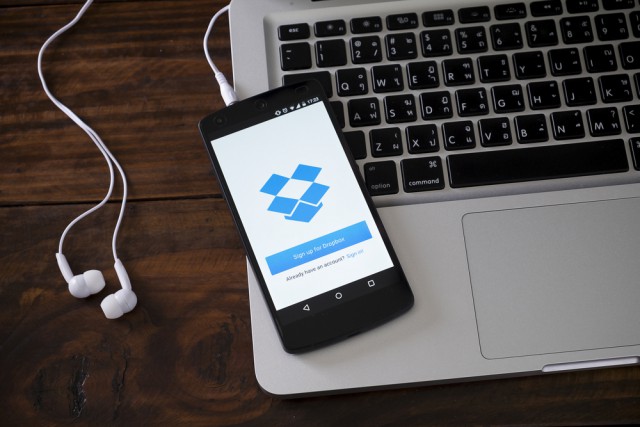
Dropbox update introduces document scanning on Android, iOS
Dropbox has just announced a host of new features that will hopefully help the service retain its current users and possibly attract some new users as well.
The company has added many new features to its cloud storage software, but the most notable is the ability to use a mobile device’s camera to scan documents. Receipts, articles, whiteboard drawings and other text found in the real world can be captured with the app and then saved to Dropbox as a digital copy.

'No-cloud' policy to soon go extinct
Within the next four years, the extreme "no-cloud" policy among businesses will be as rare as "no-internet" policy is today, Gartner predicts.
By 2020, however, not everything will be cloud-based, but companies having absolutely nothing in that respect will be almost extinct.

Microsoft launches data protection tool for enterprises
As businesses rely more on mobile and cloud systems, greater emphasis is placed on protecting their information while retaining the productivity benefits.
Microsoft is launching a new service to help businesses guard their data as it travels between devices and servers. Azure Information Protection builds on both the existing Microsoft Azure Rights Management (Azure RMS) and the company's acquisition last year of information protection business Secure Islands.

Improving data center efficiency [Q&A]
With the growth of the cloud, data centers have become big business. In fact, it's estimated that they now use around 10 percent of the world's energy.
It's not surprising then that companies are looking to increase the efficiency of their IT operations, cut their energy use and reduce their carbon footprints. However, the solution to finding more efficiency may be closer than they think. Jeff Klaus, general manager of Data Center Solutions at Intel argues that enterprises need to look to home grown solutions before turning elsewhere. We spoke to him to find out more.

Microsoft Azure will get blockchain through Project Bletchley
While many companies have been hesitant to adopt the cryptocurrency Bitcoin, the blockchain technology that made it possible is now being sought after by a number of companies due to the way it acts as a decentralized ledger that can be used to store data and keep track of how assets are exchanged.
Microsoft has just released the first details into how it will use blockchain in its upcoming Project Bletchley, which will add the technology into Azure services through some new middleware.

Samsung buys cloud company Joyent
In a continued effort to strengthen the software and services behind its mobile division, Samsung Electronics has decided to purchase US cloud services company Joyent for an undisclosed sum.
The company plans on integrating Joyent into its own mobile business, but it will continue to operate independently with its top management remaining in charge of its day to day business. This is Samsung’s third major acquisition of a US-based startup over the last two years after acquiring SmartThings for its connected home technology and LoopPay for its contactless payment service.
Amazon killing off older Versions of Cloud Drive
Cloud storage has become a prominent part of everyone's life these days, with services abounding. But what happens when one either goes out of business or sets an end-of-life date for support for one of its apps?
Amazon is encountering that very situation right now, with older versions of its Cloud Drive app. The company is now sending notifications to customers explaining the situation.
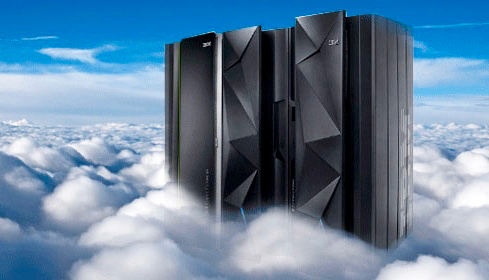
The mainframe is dead... Long live the mainframe!
Rumors are flying within IBM this week that the z Systems (mainframe) division is up for sale with the most likely buyer being Hitachi. It’s all a big secret, of course, because IBM management doesn’t tell IBM workers anything, but the idea is certainly consistent with Big Blue’s determination to cut costs and raise cash for more share buybacks. And the murmurs are simply too loud to be meaningless. Think of this news in terms of a statement made last week by an IBM senior executive: "In a world of Cloud Computing, it does not matter what equipment or whose hardware the cloud runs on. We are a Cloud company…"
This move by IBM would not surprise me in a bit. It is my guess IBM wants someone else to make and support the hardware. They’ll be happy to sell time sharing services, AKA cloud services. They’ll be happy to let someone else sell and maintain systems.

Why is Microsoft buying LinkedIn? [Q&A]
Major tech companies rarely manage to surprise us, but Microsoft did it earlier this week when it announced the acquisition of LinkedIn. The software giant is spending an enormous sum -- $26.2 billion, to be exact -- to get its hands on the popular business-focused social network. The new Microsoft likes to take chances, and this high-profile purchase is certainly proof of that.
CEO Satya Nadella says that buying LinkedIn will allow Microsoft to "change the way the world works", but what is its motivation behind the purchase, how does it tie into its current strategy, and what do the two companies stand to gain from it?

New automation capabilities help keep IT in control of SaaS
Business IT is undergoing a major shift as many organizations get closer to adopting a fully cloud-based approach. But this means that IT departments inevitably give up some degree of control over data governance, security and overall data management.
Security automation specialist BetterCloud is launching a new automation engine called Workflows that orchestrates critical, complex processes to ensure accuracy, precision, and compliance across SaaS applications.



