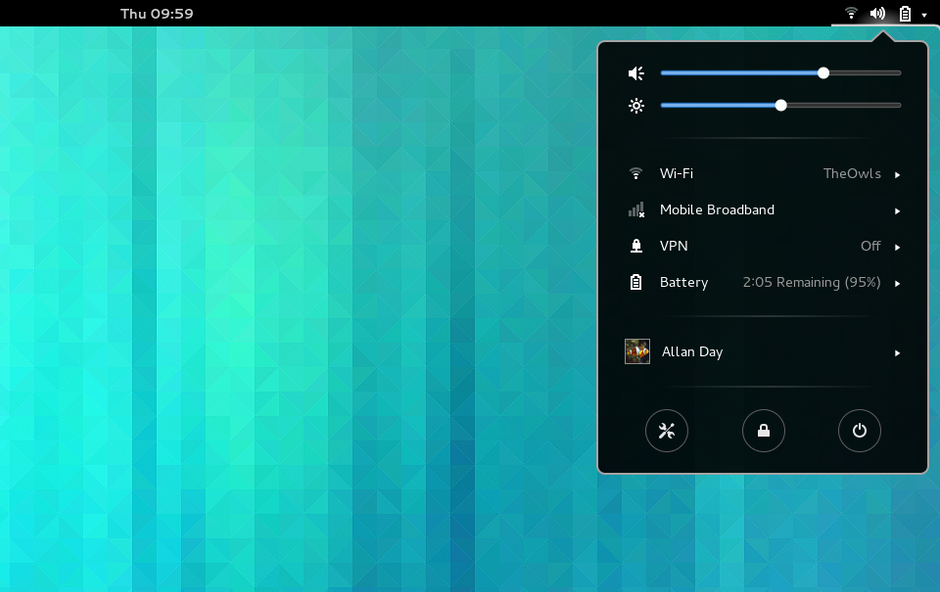
Linux desktop environment Gnome 3.10 now available
When it comes to Linux, the potpourri of available desktop environments can be both scary and exciting. It can be a hard decision for a beginner, but a fun one too. Over the years I have tried a plethora of environments and they all have strengths and weakness. Ultimately, I fell in love with the controversial Gnome 3. I say controversial because the changes from version 2 to 3 were quite radical and many users did not like them. However, as version 3 progresses and improves, Gnome 2 loyalists are starting to take notice.
Yesterday, the newest iteration, Gnome 3.10 was released. According to the Gnome website, "the GNOME project is proud to present GNOME 3.10. The release comes six months after 3.8, and contains 34,786 changes by approximately 985 contributors. It contains major new features as well as a large collection of smaller enhancements. 3.10 provides an improved experience for users, as well as new capabilities for application developers".

SteamOS brings Linux to your television
Last year, Gabe Newell of Valve infamously called Windows 8 "a catastrophe for everyone in the PC space". However, this was not just lip service -- the company put its money where its mouth is and released its game-distribution service, Steam, for Linux. Today, Valve takes this a step further and announces a new Linux-distribution called SteamOS.
"As we've been working on bringing Steam to the living room, we've come to the conclusion that the environment best suited to delivering value to customers is an operating system built around Steam itself. SteamOS combines the rock-solid architecture of Linux with a gaming experience built for the big screen. It will be available soon as a free stand-alone operating system for living room machines", says the company.

Hewlett Packard brings Ubuntu to China
China has been in the spotlight lately. Most recently, the country was rumored to be the major catalyst for the "low cost" iPhone 5c. However, this has largely been discredited since the phone was revealed to not be "low cost", but instead a relatively expensive, premium device. However, China is still a major player in the computer market and manufacturers are chomping at the bit to take advantage of it. Today, Canonical announces that Hewlett Packard is focused on the nation and will be selling Ubuntu-based laptops in its 1,500 retail stores.
Canonical says, "Ubuntu’s retail presence has grown again as HP brings a range of laptops pre-installed with a Chinese-centric version of Ubuntu 12.04 LTS to over 1,500 of its stores across all major cities in China. Consumers in China will now be able to purchase HP laptops running Ubuntu directly from stores, where they will also find information packs and marketing materials to help with their purchase".

Both basement nerds and major corporations contribute to the Linux kernel
When it comes to Linux, people tend to picture pale nerds in a basement coding away; which is only partly true. You see, in addition to those independent basement nerds, major companies such as Google and Samsung are also involved. The Linux foundation periodically publishes a report on who contributes to the Linux kernel. Today, the foundation releases the newest report titled "Linux Kernel Development: How Fast It is Going, Who is Doing It, What They Are Doing and Who is Sponsoring It."
According to the report, "The Linux kernel is one of the largest and most successful open source projects that has ever come about. The huge rate of change and number of individual contributors show that it has a vibrant and active community, constantly causing the evolution of the kernel in response to number of different environments it is used in. This rate of change continues to increase, as does the number of developers and companies involved in the process; thus far, the development process has proved that it is able to scale up to higher speeds without trouble".
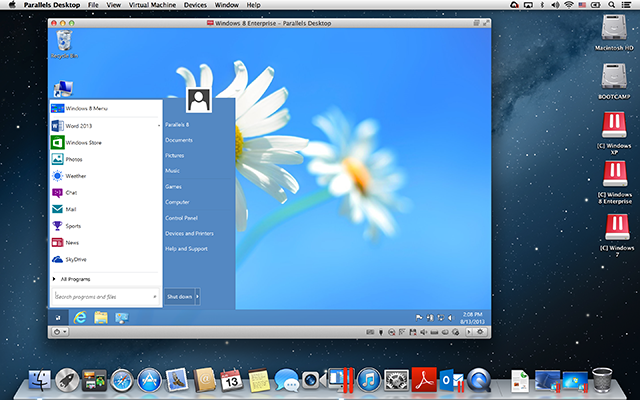
Parallels 9 for Mac -- great for Windows 8, Linux not so much [Review]
When I first switched to OS X, by way of Hackintosh, I was in pure ecstasy. I loved the interface and the beauty of the programs. For instance, iPhoto is the most intuitive and beautiful photo management program that I've ever used. However, while Apple's operating system met most of my needs, I would still find a need for a Windows program on occasion; mostly for business.
I decided to make my desktop a tri-boot machine. In other words, I decided to have it run three operating systems: Windows 8, Fedora 19 and OS X 10.8.4. Rather than play around with partitioning, I plugged three SSDs into my computer, installed the respective operating systems and used the BIOS as the boot manager.

Ubuntu Linux flavors hit major 13.10 beta-1 milestone
I love frozen yogurt; particularly Red Mango. If you aren't familiar, the company offers multiple flavors of the tasty treat which you can then customize with the toppings of your choice. Basically, the variety is what makes the experience fun. For many users, the same can be said for Linux. You see, it offers many different desktop environments -- variety and choice are the spice of unix-like life.
There are many different flavors of the Ubuntu Linux distribution, all special in their own way. Today, many of those flavors have reached the beta-1 milestone of the highly anticipated 13.10 (Saucy Salamander) release. This includes Kubuntu (KDE), Xubuntu (XFCE), Lubuntu (LXDE) and Ubuntu Gnome (Gnome3). Sadly, the standard Ubuntu version, based on Unity, is not included in the fun.

Ubuntu Linux finally defaults to 64-bit
I still remember buying my first 64-bit processor -- the AMD Athlon 64 3200+. I bought it a decade ago for a system built in 2003. At the time, home computers were still mostly using 32-bit processors and running 32-bit software. However, one of my favorite Linux distributions, Ubuntu, has been offering 64-bit versions since 2004 with the Warty Warthog release.
Even though Ubuntu has offered a 64-bit version since then, Canonical has always suggested the 32-bit variant as the recommended or default download option -- even today. However, things are about to change. According to Dmitrijs Ledkovs of Canonical, "on the download pages starting from 13.10 release the messaging will be adjusted to direct users by default at the 64-bit image, and hints will be given as to when users should select a 32-bit option instead."

Linux environment Gnome fires Google over security concerns
I love Linux, it is no secret. Sure, I may stray to Mac and Windows every once in a while, and bash code-names, but I always come back to my first love; Linux. This week, I even had an argument with its creator Linus Torvalds over some measles, but even that can't stop my love.
My love for Linux, however, is very much focused on Fedora and Gnome3. And so, I am happy to see that Gnome has kicked Google to the curb as the default search engine for its Epiphany Web Browser (aka "Web"). Instead, it will use the privacy-focused DuckDuckGo.

Ho Ho Ho! Fedora 20 could be called 'Santa Claus' (or 'Cherry Ice Cream')
A month ago my colleague Brian Fagioli complained that childish names were undermining Linux. He singled out Fedora 18 -- "Spherical Cow", and Fedora 19 -- "Schrödinger's Cat", as prime examples of the problem.
Fedora contributors are currently voting on the name for Fedora 20, and Brian will no doubt be lobbying hard for fan favorite "Santa Claus", although "Cherry Ice Cream" and "Superego" both also have a shot of being picked as the next release name.

Football Manager 2014 comes to Linux -- Tux goes for goal!
It was only six months ago that Steam officially launched for Linux as a direct result of Valve's dissatisfaction with Windows 8. Company co-founder Gabe Newell famously called the controversial operating system "a catastrophe for everyone in the PC space". As a result of Steam, Linux is finally getting taken seriously by game developers.
For the first time, the popular football management simulation franchise Football Manger is coming to Linux by way of Steam. My fellow Americans, this has nothing to do with the NFL, but instead true football, which we stateside call soccer.

Linux gets hit by a trojan -- it's time to sudo apt-get scared!
When evangelists pontificate the benefits of Linux, the topic of security always comes up. A big selling point of Linux-based operating systems are that they are generally immune to viruses, trojans and malware. However, this is a falsehood -- no OS is 100 percent safe when it comes to these things. According to security company RSA, a team of Russian cyber-criminals have developed a trojan, named "Hand of Thief", which targets Linux.
The security company explains that the trojan is "designed to steal information from machines running the Linux OS. This malware is currently offered for sale in closed cybercrime communities for $2,000 USD (€1,500 EUR) with free updates. The current functionality includes form grabbers and backdoor capabilities, however, it's expected that the Trojan will have a new suite of web injections and graduate to become full-blown banking malware in the very near future. At that point, the price is expected to rise to $3,000 USD (€2,250 EUR), plus a hefty $550 per major version release".

Linux Kernel 3.10 gets long-term support
A common misconception is that Linux is an operating system. While it is easier to think of it this way, in reality, Linux is a kernel that operating systems (or distributions) use. For example, Ubuntu and Android are operating systems that utilize the Linux kernel. And so, this kernel is extremely important, as it impacts many users on many different operating systems.
Since the Linux Kernel can change very rapidly, there is a need by some (usually companies) to have a long-term support version; supported for 2 years.

Childish names are becoming a real problem for Linux
Linux creator Linus Torvalds is an interesting fellow. He is notorious for speaking his mind, demeaning developers and using profanity -- behavior which is appreciated by some members of the Linux community. On July 14, the RC-1 of Linux Kernel 3.11 was announced. Continuing his quirky behavior, Mr. Torvalds has named it "Linux for Workgroups".
While some may view this as a fun, tongue-in-cheek spoof of Windows for Workgroups 3.11, I find it to be childish and damaging to the overall Linux cause. Silly names are becoming a real problem for the Linux community. Below are some examples.

Fedora 19 -- Schrodinger's Cat seeks Linux purr-fection
Fedora Linux is not the most popular Linux distribution -- its popularity is currently ranked number five on distrowatch.com (Linux Mint is number one). However, as the distribution of choice by Linux founder Linus Torvalds, the Linux community takes notice when a new version is released. On July 2, 2013, version 19 of the operating system -- dubbed Schrödinger's Cat -- was released.
Fedora is my go-to distro for many reasons. Most notably, it is very stable while at the same time being relatively bleeding edge. Kernel updates are constant and up to date while packages are kept fresh and modern. I consider myself a Gnome 3 fan and enthusiast. Fedora is the best operating system for the Gnome 3 community -- the Gnome 3 experience is pure and untouched.

Linux Mint 15 -- The best Linux distro gets better
Linux users are a strange bunch. As a distro gets popular, it tends to lose credibility with the Linux elitists. It is much like an underground rock band. As the band gains mainstream success, the original fans view the band as "sell-outs". For instance, Ubuntu, the most popular Linux distro, is viewed negatively by many as a beginner distro (Linux users only feel this way because of its success -- Ubuntu is a wonderful OS). Linux Mint however, is the exception to the rule -- it is revered by newbies and elite users alike. This is despite its long-held top spot on www.distrowatch.com and the fact that it is based on Ubuntu.
On May 29, 2013, Linux Mint 15, codenamed "Olivia" was released. This is the newest version of Mint and is based on Ubuntu 13.04. While Linux Mint is built on Ubuntu, it removes what many users hate about that distro -- the Unity desktop environment and integrated Amazon.com search.