
Businesses underestimating the Wi-Fi demand caused by BYOD
Enterprises continue to struggle with Bring Your Own Device (BYOD) as employees continue to demand the freedom that comes with mobility in accordance with new trends. Security has long been discussed as the primary challenge when it comes to BYOD. Yet, other reasons such as network access is fast becoming a key concern for IT departments but also the key frustration for employees.
When it comes to connectivity, employee expectation is that it just works and as such this expectation must not be overlooked when implementing a BYOD roll-out.

Jolla crowdfunds its first tablet, hits goal within hours
Crowdfunding a mobile device is a tricky thing to get right. Just ask Ubuntu maker Canonical. To make its Edge smartphone happen, it turned to Indiegogo to get $32 million, of which it only managed to raise (a record) $12.8 million. Its failure can be linked to the sky-high goal, a mistake from which Finnish mobile device vendor Jolla appears to have learned from.
Jolla is also turning to crowdfunding, for its first tablet called Tablet, but the goal it set, of just $380,000, is much, much, much more easier to reach. In fact, at the time of writing this article, Jolla has raised more than $490,000 (a figure that is quickly rising), with 21 days left until the crowdfunding campaign ends, on December 9.

Comodo 8 delivers smarter sandboxing
Comodo Group has announced the release of Comodo Antivirus 8 and Comodo Internet Security 8.
The new build brings smarter sandboxing with a new default "auto-sandboxing policy", keeping unknown programs isolated from your system.
Will LinkedIn make a move into the enterprise?
News surfaced this week that Facebook was considering a move into the enterprise sector with the imaginatively titled 'Facebook at Work'. Not a great deal is known about the service yet, but pretty much everyone is in agreement that it could provide interesting competition to incumbents like Microsoft and even the likes of LinkedIn.
It has long struck me as surprising that LinkedIn hasn’t made a similar move. Back in 2011 Jeff Weiner, CEO of the company, suggested that enterprise social tools was "an area where we want to add value". Yet so far we’ve seen nothing particularly interesting.

Celebrating 60 years of software
There's an old computing joke that says the difference between software and hardware is that hardware is the bit you can kick.
To celebrate software's 60th birthday business package selection specialist Capterra has produced an infographic charting the history of the bit you can't kick. It'll provide a trip down memory lane for anyone involved in computing.
Facebook continues to show it 'gets' mobile with new Groups app
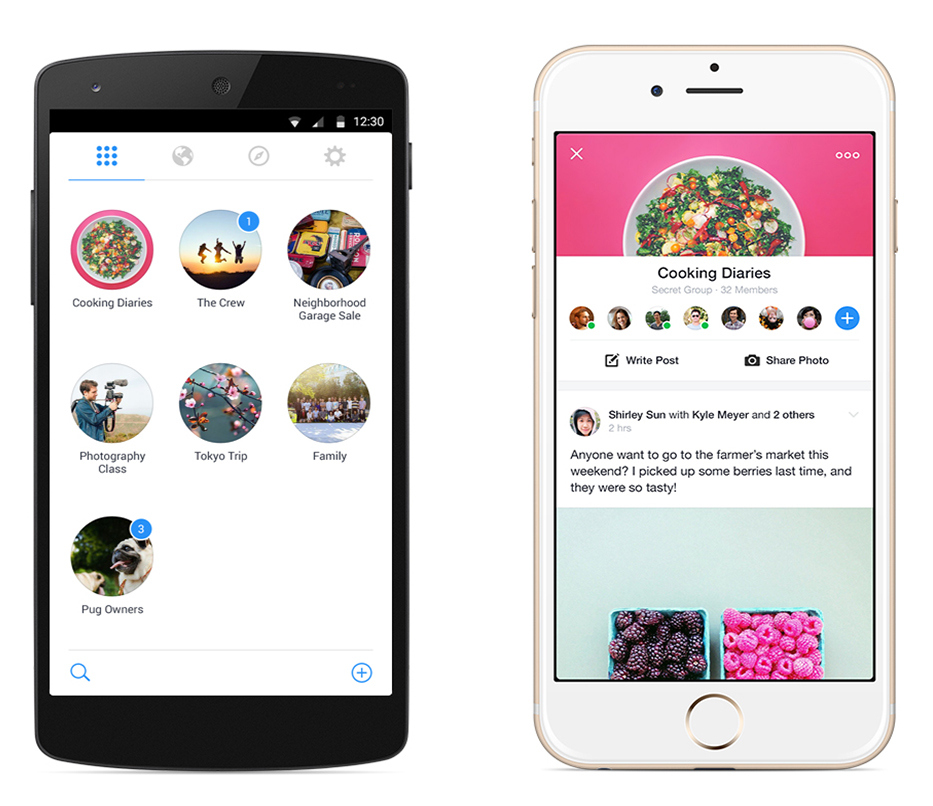
If you use Facebook on mobile, you will be familiar with Messenger, Facebook's separate app dedicated for messaging. While some people hated having to download another app, others enjoyed it -- including myself. Mobile is a world meant for apps that do one thing well. With a relatively small screen size, optimized apps have the best experience -- not ones that cram in all the functionality they can. Facebook is continuing to follow this philosophy with its new dedicated app for Facebook Groups.
The official Facebook app includes everything, however, the only thing it does well is allow you to browse your newsfeed. To view your Groups on the mobile app requires going into the 'more' tab and scrolling down to select a Group. With a new dedicated app, all you have to do is open the app and you have all your Groups laid out in a grid waiting for you. Also, I find using the Groups app a much more pleasant experience. There are nice animations, and easy access to notification and privacy settings, among various other small features.
Google Chrome 39 goes 64-bit on Mac, promises performance, stability improvements
Google has unveiled Chrome 39 FINAL for Windows, Mac and Linux. The big news with version 39 is the long-awaited arrival of a native 64-bit build for Mac users.
Unlike the Windows version, which offers both 32-bit and 64-bit builds, the Mac build is now 64-bit only, and existing users with supported Macs will be automatically upgraded to the new version.

New report claims 81 percent of Tor users can be identified
A new report claims that more than 81 percent of Tor users are identifiable using a method that threatens Internet anonymity.
The study, titled "On the Effectiveness of Traffic Analysis Against Anonymity Networks Using Flow Records", claims that a technique known as traffic confirmation can be used to identify users.

T-Mobile is making it rain free tablets on Black Friday -- here's how to score one early
Do you like free stuff? Of course you do -- everyone likes something for nothing. Hell, I go to Costco with no plans to buy anything; I just walk around eating all the free samples. Is it low class? Yeah, totally, but it's essentially a free buffet with a cornucopia of flavors -- Swedish meatballs, salad, granola bars and more.
Today, T-Mobile announces that it too is going the free route, offering a tablet at no cost! It is an Android tablet -- the Alcatel ONETOUCH Pop 7. Never heard of it? Me neither, but it actually looks pretty nice. It runs Android 4.2.2, has a dual-core processor and best of all, supports 4G data. Even though it is a "Black Friday" deal, the carrier will be offering it a week early. Will you be successful in scoring one?
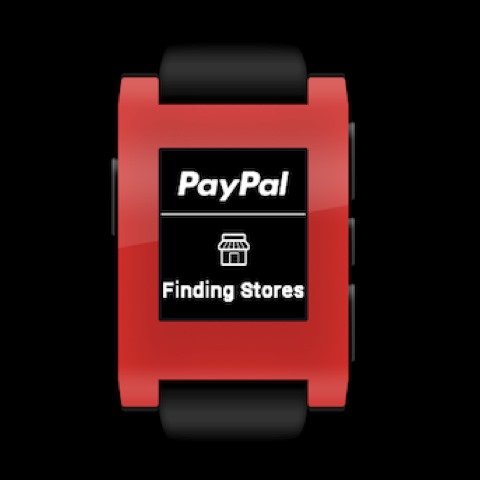
PayPal comes to Pebble so you can pay while tracking perambulatory progress
Wearables are starting to come of age, and they're now about much more than just tracking blood pressure and distance while running. Today Pebble continues the expansion of its range of apps with the launch of a dedicated PayPal app. It allow for payments to be made at participating retailers and shows payment notifications so there's no need to rely on a phone.
Pebblers -- as PayPal insists on calling owners of the smartwatch -- now have the ability to make PayPal payments without having to reach into their pockets. The app can be used to pay with a payment code, or to check in to make a payment.
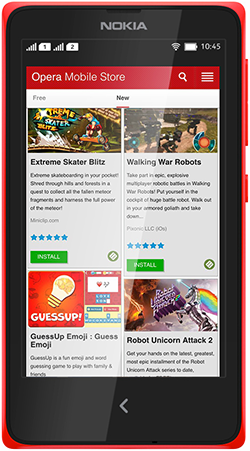
Microsoft and Opera agree to terms on App Store deal for Nokia phones
Microsoft purchased Nokia, in part, earlier this year and has now begun the slow process of making it their own. New phones are being rebranded, which is not particularly surprising. Though, parterning with Opera (yes, the browser maker) is bit of a shock.
However, today the Norwegian company announced a deal with the software giant to begin powering the app store on certain models of handsets.
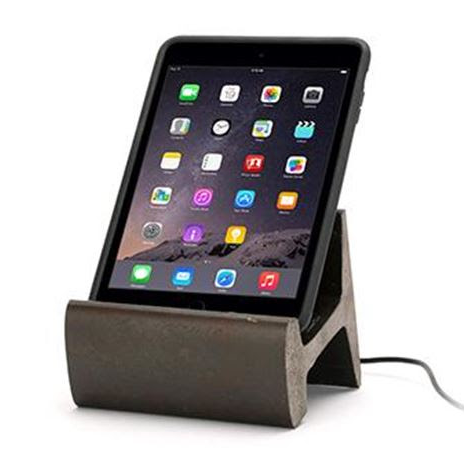
Stick your tablet on the railroad tracks with the Griffin and Rail Yard Studios tablet stands
As a child, I was obsessed with the railroad tracks. We lived very close to them, so it was a great place to hang around with friends and pass the time. One of our favorite things was to put pennies on the tracks so they would get flattened. Sure, it was a silly thing, but to a kid, it is the coolest thing ever.
Now that I am an adult, hanging out on the tracks would be weird, as that is mostly reserved for grown-ups that are up to no good. Luckily, thanks to Griffin, I can now relive my youth with the all-new Rail Yard Studios tablet stands. You see, these are made from actual decommissioned railroad steel!

Google to harness the power of nature using windmills for new data center
There are many great ways to generate energy, such as using oil and coal. However, as society trends towards going "green", we see renewable energy being embraced too, such as solar, ocean waves and wind. Wind in particular is interesting, as it has been used for over a thousand years. Many people associate windmills with the Dutch, but many societies, including the USA, use modern versions today.
Google is one of the most forward-thinking companies, on the forefront of technology, and surprisingly, it too will be harnessing the power of wind for a new Dutch data center. In other words, even though the wind blows, Google's use of windmills does not.
IBM Verse aims to transform email with advanced analytics and a social focus
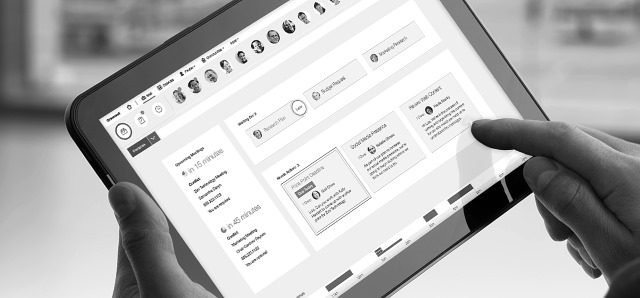
There are now many names vying to control your inbox. It is not enough to have your email delivered to the inbox of your choice now the battle is to present email in the most understandable, the most accessible, and the least cluttered way possible. IBM Verse is the latest kid on the block, as it looks to divert attention away from Google Inbox and Microsoft Clutter.
Billed as a "new way to work", IBM Verse is more than just another inbox tool -- it is a combination tool that manages email, tasks, collaboration and more. It clearly has enterprise markets in its sights as it brings communication, tasks, sharing and social features under one roof. To further differentiate it from other comparable services, IBM Verse uses advanced analytics to completely tailor itself for individual users.

Build your own 3D printer in 90 weekly parts
We've all seen those adverts for partworks allowing you to build a scale model of the Titanic at a cost not far off that of raising the real thing.
Now though UK publisher Eaglemoss Collections is producing a partwork that allows you to produce something a bit more useful. In 90 weekly parts it lets you make your own working 3D printer.