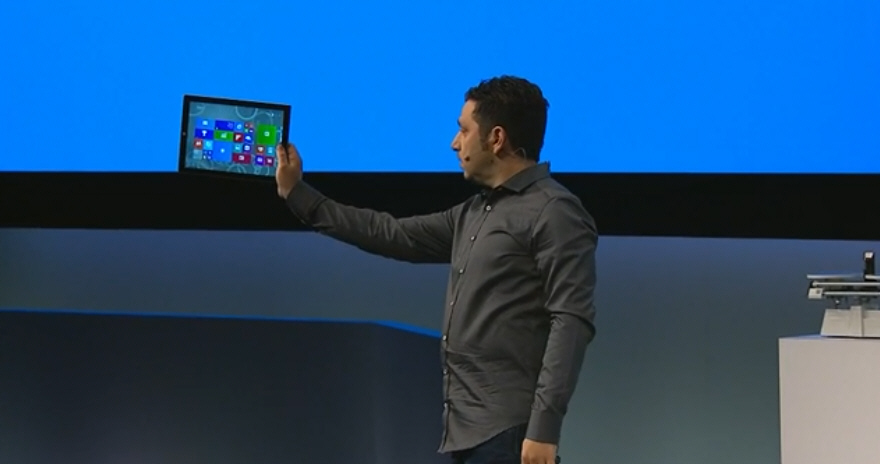
Watch the Microsoft Surface Pro 3 announcement here
You probably already know, but Microsoft is set to announce a new Surface product today at an event in New York City. The initial rumors suggested we would be seeing a mini version of the company’s flagship Windows slate (a conclusion jumped to because the invites mentioned a "small gathering"), but latest rumblings suggest the exact opposite -- with a 12-inch Surface Pro 3 now tipped to be the product revealed on stage.
While I personally would like to see a Surface Mini, a larger Surface Pro makes a lot of sense, and will appeal to power users. At the moment no one outside of Microsoft knows for definite what to expect, but it should be very interesting nonetheless.

TechEd 2014 Wrap-Up: 12 major cloud announcements; zero big on-prem news
As a yearly event geared towards my neck of the woods, the IT pro community (non-developers!), TechEd is the sort of Microsoft-focused conference that resonates with me. It's the one large event solely dedicated to the products and technologies I am knee deep in consulting customers on.
While most Microsoft watchers may not have caught it outright, did anyone notice the subliminal theme that arose? All of the major product announcements at the conference were planted in some facet of Microsoft's growing cloud landscape. Before anyone jumps on me for being technically inaccurate, yes, they did announce a few news items based around their traditional on-prem products.

Apple’s iPad problem
My three sons share an Apple iPad given to them by Mimi, their grandmother. When she bought it a couple years ago the iPad was top-of-the-line with 64 gigs and a Retina display. The boys run it hard on car trips where it functions as a hotspot and under covers in their bedrooms along with a couple iPhones, iPod Touches, various Kindles and some cheaper seven-inch Android tablets.
In all we have probably a dozen touchscreen devices in the house but most of the action takes place on iPhones or that one iPad. Great for Apple, right? Not really. Apple’s iPad sales are dropping you see and the reason nobody seems to talk about is they don’t wear out.
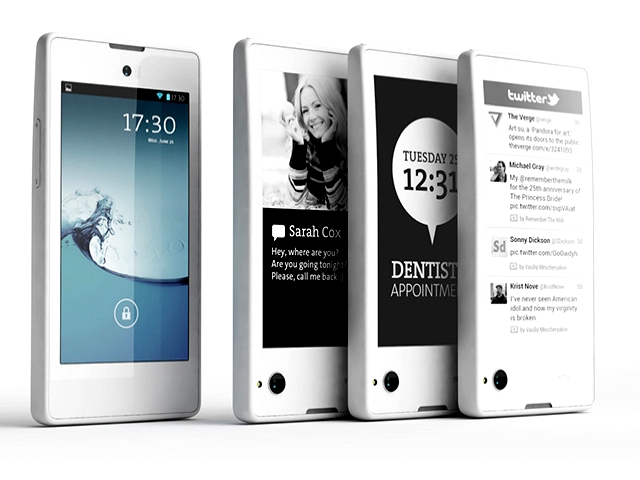
Hands on with YotaPhone: Great idea but some rough edges
There's a new Android phone on the block called YotaPhone. It shows off a really innovative, really smart concept: It has two screens. On one side is what we will call an ordinary smartphone screen -- you know, full color, touch-sensitive. On the other side is an E-ink screen of the type usually found in eBook readers.
I was a big fan of this idea when I first heard about it, and I am still a big fan of the idea now that I've been playing with the YotaPhone for a while.

Net Neutrality: When you are the competitor
As the Net neutrality debate rages and feels fresh, it's easy to forget just how long this thing has been raging. While searching for a post over at my personal website I stumbled onto a forgotten analysis from April 2006, when I lived on the East Coast and had Verizon FiOS.
Critics complain the Federal Communications Commission seeks to create two Internet Information Highways -- one fast lane and the other slow. But something I identified 7 years ago is still relevant today.
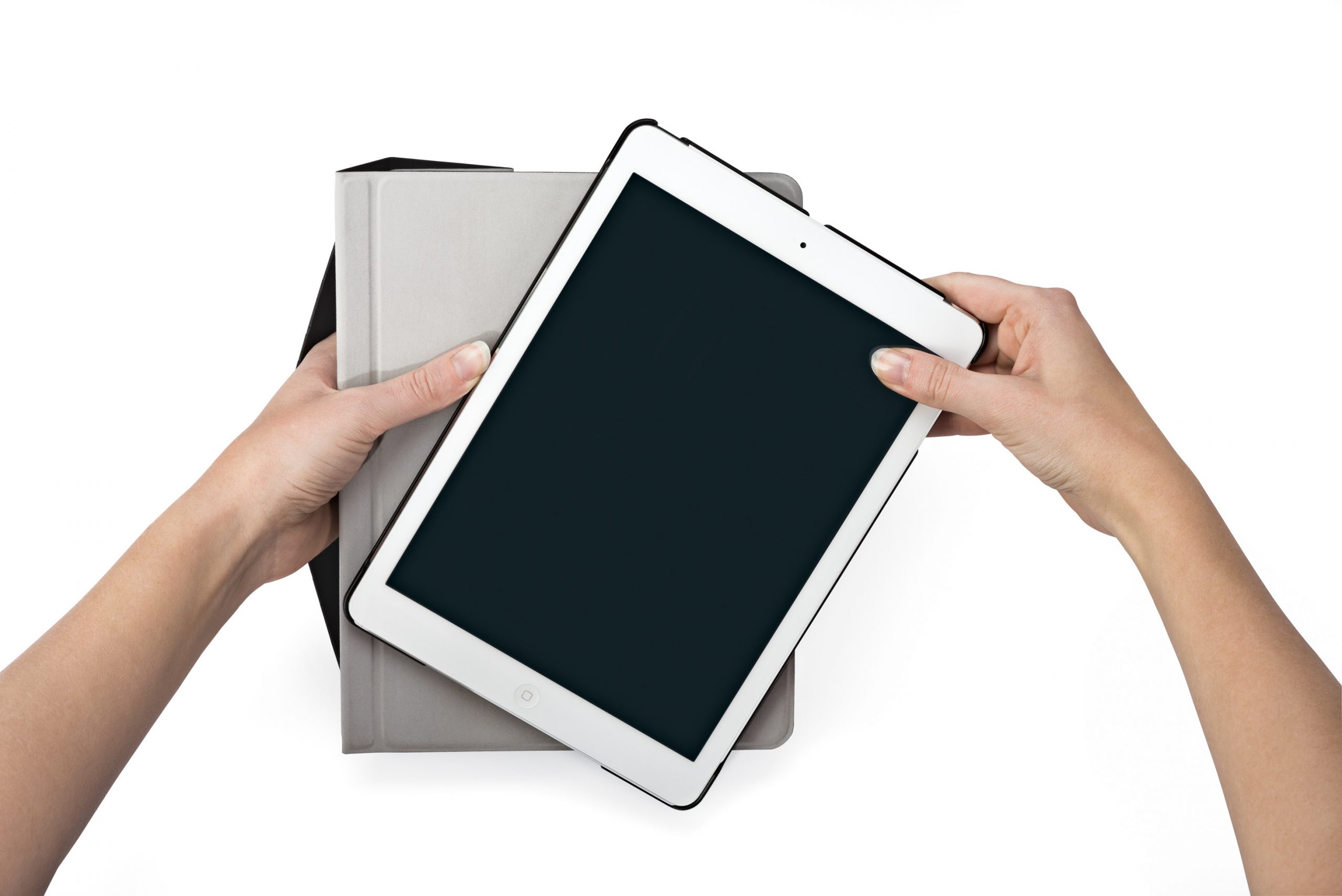
Ergo Book by Acme Made -- an ingenious and svelte iPad case on Kickstarter
Tablets have forever changed the landscape of computing. An entire industry has been formed from Apple's tablet alone -- iPad cases. Yes, cases for the tablet are very abundant from many manufacturers. A search on Amazon, results in a smorgasbord of options, such as color, size and price.
Unfortunately, the market is so flooded that it is nearly impossible to impress with a new case. Surprisingly, a company called Acme Made has done just that with the Ergo Book. It is an extremely svelte case, for which the manufacturer is seeking funding from Kickstarter. Will you back it?
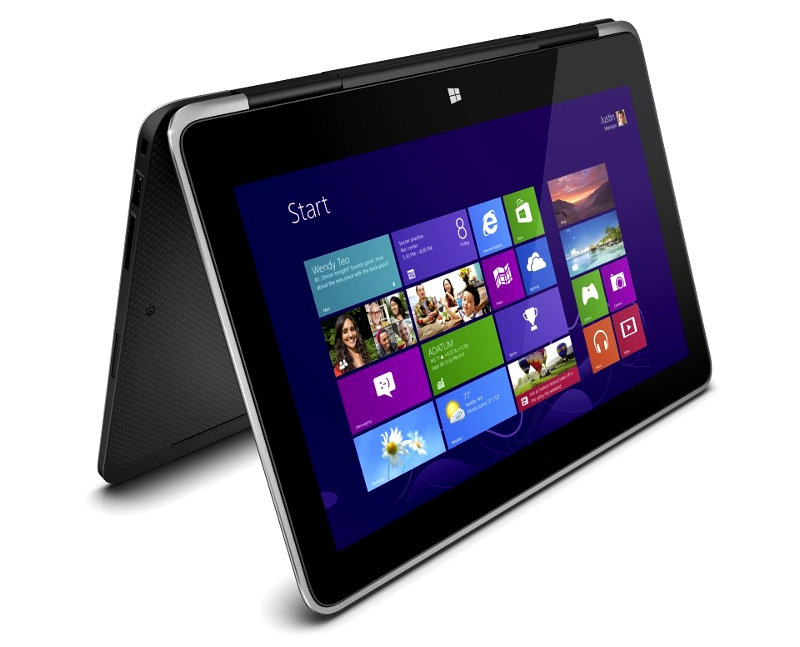
Dell XPS 11 2-in-1 Ultrabook: So nearly a great hybrid [Review]
The hybrid has very much taken over from the Ultrabook as the focal point for notebook development. Where Dell's regular notebooks have had incremental developments, such as the Latitude 3330, the XPS 11 2-in-1 Ultrabook is something of a radical departure. Measuring just 15mm thick, clad in soft-touch carbon fiber, and with a keyboard that rotates 360 degrees to transform the device into a tablet, this is a decidedly stylish product. But it also comes with a few limitations.
If looks were the only consideration, the XPS 11 would win our recommendation in a heartbeat. The carbon fiber chassis exudes quality and feels solid despite the 15mm thickness. Weighing in at just 1.13kg, it's also very pleasant to carry around and is sure to turn a few heads like the MacBook Air did a few years ago. Add in the party trick of transformation into a tablet and you have a very attractive package, at least on the aesthetic level.
Google, somehow, gains 100% rating for protecting user data
It may seem as though Google feels the sharp end of many tongues -- be it about problems with Glass, for shaping the content of the internet, or the way it handles advertising. But more often than not, the big G finds itself on the receiving end of criticism for being in bed with the NSA for the way it handles user privacy. In spite of all of the ammunition unleashed in Google's direction, the company has -- incredibly -- been awarded a full six stars out of six by the Electronic Frontier Foundation for protecting user data from government requests.
The EFF's Who Has Your Back? report ranks and rates the performance of some of the biggest names in the world of tech for handling user privacy in the face of government data requests. Finding ourselves in a world now tainted by the activities of the NSA, privacy and accountability have become more important to internet users than ever before. The Electronic Frontier Foundation prides itself on "defending your rights in the digital world", and its annual report looks at the performance and promises of 26 companies who handle your data.

Secure files with little fuss and 256-bit AES encryption using Quick Crypt
Valkova Technology has released Quick Crypt 1.0, a tiny, portable and -- above all -- free tool for Windows users looking to encrypt and decrypt files on the fly.
The tool, which requires Windows 7 or later, allows users to quickly select individual files, then encrypt then with a password, optional key file and 256-bit AES encryption. Files can even be tied to a single machine.

Microsoft and Ubisoft embrace open source to bring 'Assassin's Creed: Pirates' to the web
The web browser has become one of the most important inventions of all time. It has become ubiquitous in our lives -- hell, for some of us, it has become our lives. Many of us spend hours on the web, navigating around with Safari, Chrome or Internet Explorer to name a few. And so, the browser has actually become a computing platform in itself. Google's Chrome OS and Mozilla's Firefox OS are both built with that philosophy in mind.
Today, the ever-increasingly cool Microsoft announces that it has teamed up with Ubisoft to bring Assassin's Creed: Pirates to Internet Explorer (and other modern browsers too) by embracing HTML5 and other technologies. The results are breathtaking.
Google preparing an online tool for 'right to be forgotten' removal requests
Google is reportedly readying an online tool which people will be able to use to request that search results pertaining to them are removed from Google's search engine.
This follows a ruling by an EU court earlier this week on the "right to be forgotten", which decided in favor of a Spanish man who had requested that Google remove links (not web content, but search links) which pointed to articles concerning his house repossession for debt repayments. The man claimed that because the incident occurred in the late nineties, it was now "irrelevant", and for it to be made publicly viewable by Google was a violation of his privacy rights.

Microsoft and SAP expand partnership to deliver productivity solutions
Twin colossi of the software world Microsoft and SAP are extending their long-term partnership to deliver improved productivity and workforce mobility solutions.
The announcement focuses on three areas, enterprise cloud computing, improved data exchange between SAP applications and MS Office, and mobile support with expanded development for Windows and Windows Phone 8.1.

PayPal now an option for UK Google Play purchases
Going forward, if you're buying apps (or other content) from the Google Play store, you'll be able to use your PayPal account to pay for your digital goods.
Previously, you could use a credit or debit card (of course), gift cards, or your network if you're on T-Mobile (EE) in the UK, but now PayPal is another option for those splashing cash in Google's funfair of apps.
List Explorer’s recently opened files with RecentFilesView
If you’d like to know what someone else is doing on a PC then the "Recent Items" (or "Recent Files") folder is a good place to start looking.
Just browse to C:\Users\%UserName%\AppData\Roaming\Microsoft\Windows\Recent and you’ll find shortcuts for anything recently double-clicked in Explorer, or that’s been opened by a standard Open dialog box.
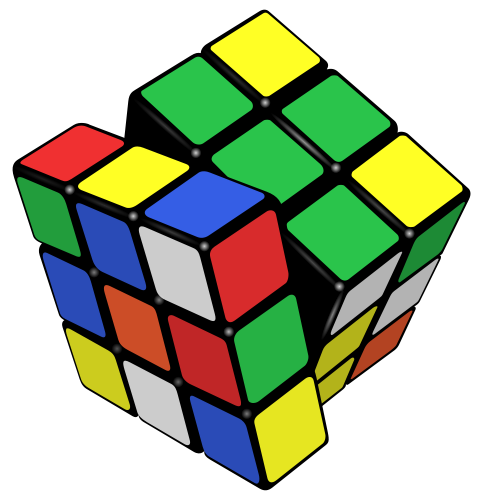
Google celebrates the Rubik's Cube's 40th birthday with an interactive doodle
I’ve met and/or spent time with some famous icons over the years -- including drinking beer with the Sex Pistols in LA -- but oddly I’m most pleased to have met Alexey Pajitnov, the creator of Tetris, and Ernő Rubik, the man who invented the Rubik’s Cube (I didn’t meet them both at the same time, sadly -- that really would be a story).
Rubik’s most famous invention is forty years old today, and as clever and as frustratingly difficult to master as ever. When I was a kid, the only way I could crack it was by actually cracking it open. Popping the corners out, dismantling the cube and then reassembling it. Or cheating, as some people might say.