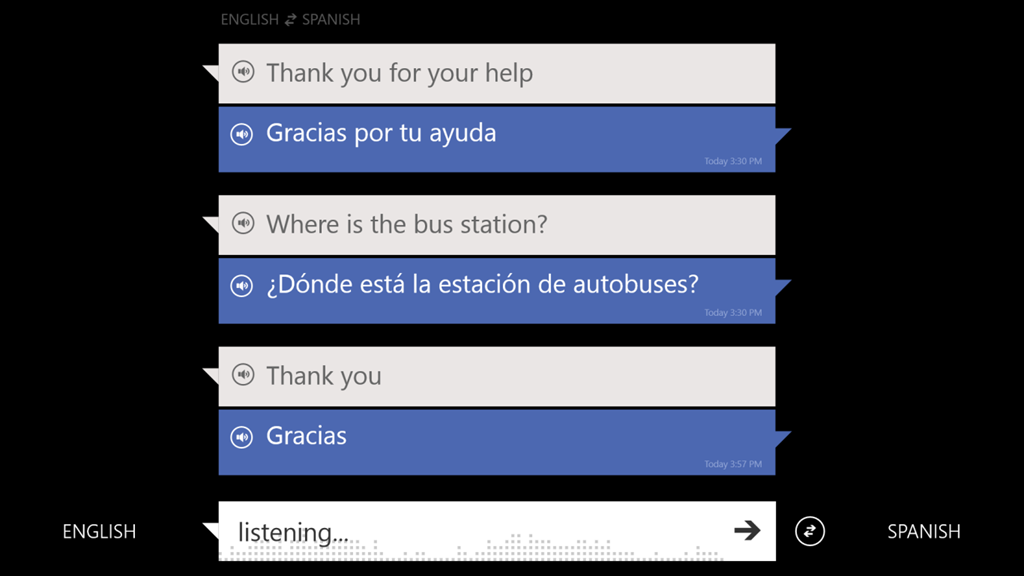
Microsoft brings speech-to-speech translation to Bing
Translation has become a big thing for search engines. If you use Chrome then you have likely seen a translation option pop up when you click a story that isn’t in your native tongue. But Google is not the only one that can do this -- Bing too has translation capabilities.
Now Microsoft's search service is upping its game, announcing new features to its translation engine. The update is available for both Windows Phone and the desktop.

Microsoft investigating Windows 8.1's metadata and tagging problem
Libraries have been removed from File Explorer's sidebar by default in Windows 8.1, but fortunately it's easy enough to restore them -- you just need to click the View tab, click the Navigation button and select Show Libraries. However, there is another more fundamental problem with Libraries and -- worse still -- file searches, which BetaNews reader Rob Howarth alerted me to last week.
In an email he explains, "It is now impossible to add metadata to files as a result of a search from within Windows 8.1. If, for instance, I search for files with the tag 'architecture' Windows will return all the files with that tag wherever they are stored on my machine. This is excellent. But, if I try to amend, modify, or add metadata tags via a search [by right clicking a file and going to Properties/Details] I can no longer do so. I have to find the original source file and update from that location. With over 100,000 files to manage, this is a big hassle for me".

Adobe releases Flash Player 12 and Air 4
Adobe has unveiled three major updates with the release of Adobe Flash Player for Other Browsers 12.0, Adobe Flash Player for Internet Explorer 12.0 and Adobe AIR 4.0.
The new versions of Adobe’s cross-platform web media playback and runtime tools will initially appeal more to developers, but should have benefits for end users going forward when apps are released that take advantage of some of the new features.

VarieDrop resizes multiple images by dragging and dropping
Resizing one image is easy -- even Windows Paint can do it -- but working with multiple images is a little more challenging. Even specialist batch processing tools can require a little work to get them set up correctly.
VarieDrop tries to simplify this process by allowing you to define up to four "drag and drop areas", each of which have their target size, file format, output folder and so on. Once it’s set up, just select your target images, drag and drop them onto that area, and they’ll be converted and resized accordingly.

Weather Channel and DirecTV part ways, satellite provider pushes new network
It seems there is always a dispute going on between a network and a cable or satellite provider. Time Warner and CBS recently had a spat over their contract. These things tend to get worked out when a big event is coming -- no TV provider wants its customers to miss the Super Bowl, it's simply bad for business.
That leads us to this -- have you been scanning the channels trying to find the latest weather forecast? Your go-to channel will not be there if you happen to be a DirecTV customer. The two have, at least for now, parted ways in a battle of wills.
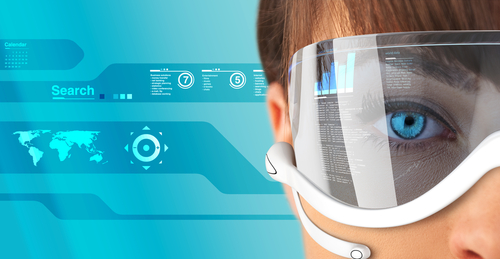
Augmented reality is coming to the workplace
Unlike virtual reality, which seeks to replace the physical world with a virtual one, augmented reality aims to supplement the real world with computer input.
This might be simple, real-time stuff like displaying the score on the screen during a football match, or more advanced technology like object or facial recognition. Now though analyst company Gartner sees AR reaching a point where it can enhance business workflows and training.

Rankaware checks your site’s ranking on Google, Bing, Yahoo
If you have a website then you can spend a very long time optimizing it to get the best possible search engine rankings. But it’s a complicated process. Other sites will be doing the same thing, and search engines are tweaking their algorithms all the time, which makes it difficult to assess how well you’re really doing.
Rankaware is a free tool which can help by checking your site’s rankings for multiple keywords on Google, Yahoo and Bing, compiling an attractive report to show how this is changing over time.

Google begins its home invasion
I contacted Nest's PR late last week but heard nothing back. Now I know why. The company has been sold to Google for $3.2 billion. Quite what the acquisition means for Nest and its products long term is difficult to say -- "Nest will stay Nest" according to Nest’s CEO Tony Fadell (the "godfather of the iPod" as he’s also known) -- but it does signal an important move for Google.
The company already knows a lot about you. Depending on which of its services you use it knows what your interests are, where you go on the Internet, and (via Android) in the real world, where you live, who you know, the topics you discuss in emails, the videos you watch and comment on, and more. And now, it could soon begin to know more about what you do in your own home.
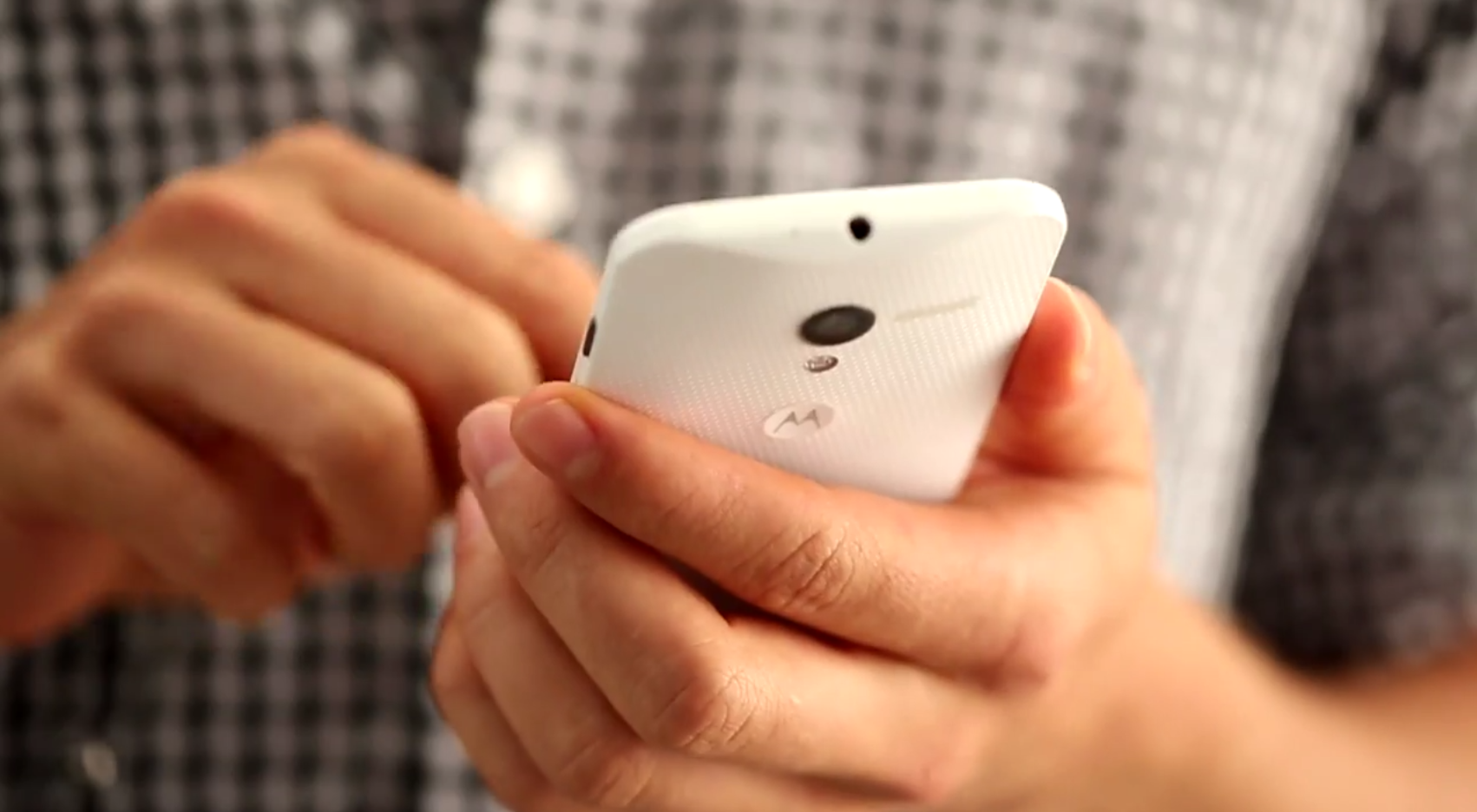
Moto X comes to Europe -- without the customization options (for now)
A few minutes ago, I finished listening to a presentation in London by Andrew Morely, vice president and general manager of Motorola Mobility (UK), in which he announced details of the European version of the Moto X phone which was, until now, only available in North and South America.
The main difference from the North American version is that in Europe the phone comes only in two colors (black and white) and the Moto Maker service, which allows buyers to customize the front/back/accent colors as well as add a personalized message to the back of the phone, is not available here (at least for now).
Identify unknown PC hardware with PCI-Z
If you need to know more about your PC’s hardware then running any system information program -- or even just Device Manager -- will usually point you in the right direction. But sometimes it doesn’t quite work, and you’ll find some devices are referred to as "unknown", or perhaps by their PCI identifier ("PCI\VEN_1B21& DEV_1080& SUBSYS_78161462& REV_03", or something similarly cryptic).
PCI-Z is a tiny portable tool which tries to get around this problem by querying the PCI ID Repository -- a public database of device ID codes -- and returning readable names, rather than meaningless codes.

The Internet of Crap
Cisco CEO John Chambers gave a keynote speech last week at the Consumer Electronics Show laying out Cisco’s vision for what he called the Internet of Everything and other people are calling just the Internet of Things. The idea is very simple: put intelligence in every device and connect them all together on the Internet. And the idea behind the idea is even simpler: the everything is what we’ll first have to throw away. Because that’s the only way the Internet of Everything can work.
Throw away your routers, wireless and wired. Throw away your network adapters, wireless and wired. Throw away your modems. Throw away your network extenders. Throw away anything with a radio or an RJ-45 port except maybe your PC, though plenty of those will have to be thrown away, too.

Instantly enhance the Windows clipboard with Clipjump
The Windows clipboard makes it very easy to transfer data; Ctrl+C to copy here, Ctrl+V to paste there, and you’re usually done. But there are also has plenty of limitations. In particular, the clipboard can hold only one item of any given type: copy in something else and the previous item will be lost.
We’ve covered various clipboard managers which can help you get around this problem -- Save.Me is an especially powerful example -- but these usually require that you learn a new way of working, a significant issue with something as fundamental as the clipboard.

BlackBerry Enterprise Server to soon support Windows Phone?
BlackBerry's efforts to improve its sliding sales and consumer relevance with the BlackBerry 10 touch-friendly lineup have failed. In fact, the company's latest available handsets are actually selling less nowadays compared to the old, and dated, BlackBerry 7 OS devices. For anyone paying attention that means the writing is already on the wall, but BlackBerry is (still) planning and hoping to make a comeback.
After bringing BBM to Android and iOS, the Canadian maker will shift focus back to QWERTY keyboards, and away from all-touchscreen designs, and could also embrace more competing platforms in BlackBerry Enterprise Server. The company's CEO John Chen hinted that the enterprise-grade device management software might add support for Windows Phone, on top of Android and iOS.
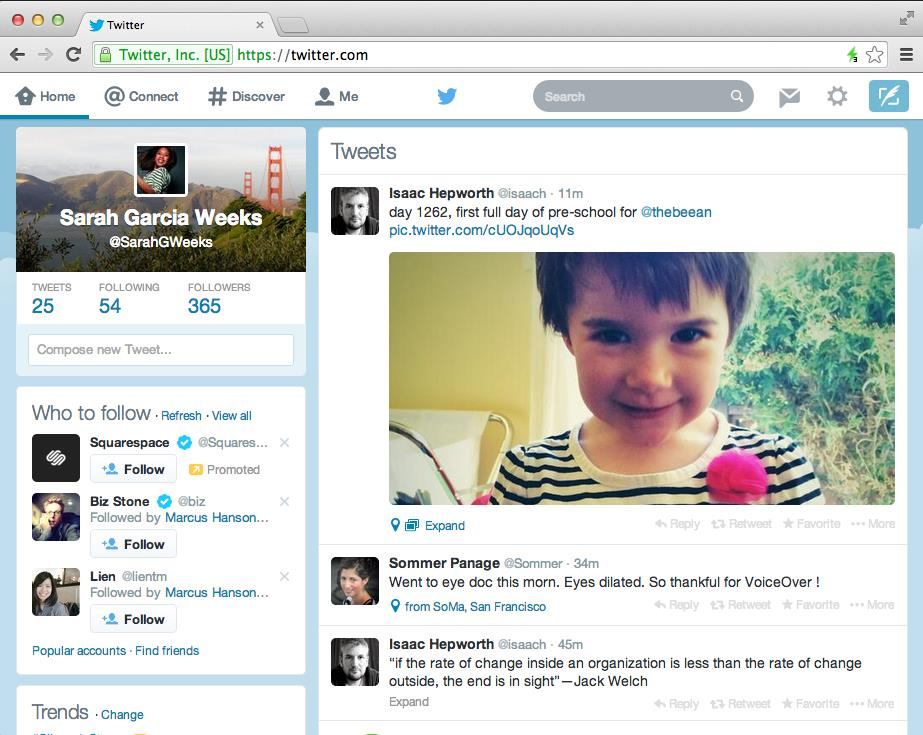
Twitter gets an online interface revamp for 2014
It was announced very casually with very little fanfare. Twitter is getting a new look. It is in the process of rolling out around the world and when the revamped interface hits your account you'll find that the new look closely mimics that found in the iOS and Android apps. The redesign follows a recent update to the mobile apps, and while there are not many dramatic changes, the standardized look helps to create a more uniform experience moving between devices.
The tweet composition section is now found to the left hand side of the screen -- gone is the pop-up box in favour of an inline option. The two-column design has a very neat look to it, and does an excellent job of keeping related data together. The left hand column houses the profile box and composition field, and beneath this you'll find suggestions for who to follow, as well as a list of trending topics.

Google buys Nest -- will the search giant lay golden or rotten eggs in it?
The concept of a thermostat is pretty simple. If you are cold, turn the heat up and if you are hot, do the opposite -- a no-brainer. However, as the internet of things continues to expand, enhanced capabilities and internet connections are introduced to previously simple devices.
If you aren't familiar, Nest Labs was founded by two ex-Apple employees, Tony Fadell and Matt Rogers. The design of the company's products makes that apparent. The first product released by the company, a thermostat has a round, clickable interface that is reminiscent of the iPod Classic. It can be connected to the internet, to allow networked control. Today, Google announces the acquisition of the company for $3.2 billion -- a surprising announcement to say the least.